
In the challenging world of greenhouse cultivation, growers often fixate on air temperature, humidity, and light levels, and rightly so. These factors are undeniably critical. However, there’s a silent, subterranean hero that often gets overlooked, especially in hot climates: the root zone temperature. While your greenhouse air might be perfectly cooled, an overheated root zone can silently sabotage your plants, leading to stunted growth, nutrient deficiencies, and increased susceptibility to disease. For optimal plant health and maximizing yields, understanding and actively managing the temperature where your plants’ roots reside is paramount. This article delves into why root zone temperature is so crucial in hot climates and provides practical strategies to keep your plants’ unseen foundations cool and thriving.
Why Root Zone Temperature is a Silent Success Factor
The roots of a plant are its lifeline. They are responsible for anchoring the plant, absorbing water and essential nutrients, and synthesizing vital hormones that regulate growth and development. When the root zone temperature (RZT) strays from its optimal range, these critical functions are severely compromised, even if the above-ground conditions seem perfect.
The Impact of High Root Zone Temperatures
- Reduced Water Uptake: Extremely warm water holds less dissolved oxygen, which roots need to respire. Furthermore, high temperatures can damage root cell membranes, impairing their ability to absorb water, leading to wilting even when moisture is abundant.
- Impaired Nutrient Absorption: High RZT can decrease the solubility of certain nutrients and inhibit the activity of enzymes crucial for nutrient uptake. This can lead to visible nutrient deficiencies (e.g., iron chlorosis) even when nutrients are present in the substrate.
- Stunted Growth and Yield Loss: With reduced water and nutrient uptake, plants redirect energy to survival rather than growth, leading to smaller plants, delayed flowering, and ultimately, reduced yields.
- Increased Stress and Disease Susceptibility: Overheated roots are stressed roots. Stressed plants have weakened immune systems, making them more vulnerable to root rot pathogens (like Pythium and Phytophthora) and other diseases, which thrive in warm, low-oxygen conditions.
- Hormonal Imbalance: Root tips produce cytokinins, hormones essential for shoot growth. High RZT can disrupt this production, negatively impacting the overall plant architecture and vigor.
Every plant species has an optimal RZT range, but generally, most warm-season crops (tomatoes, peppers, cucumbers) prefer root temperatures between 65-75°F (18-24°C). Temperatures exceeding 85°F (29°C) can cause significant stress, while anything above 90°F (32°C) can be severely damaging or even lethal for many species.
Identifying and Monitoring Root Zone Temperature Issues
Before you can fix a problem, you need to know it exists. High RZT often presents symptoms that mimic other issues, making accurate diagnosis crucial. Regular monitoring is key to proactive management.
Symptoms of Overheated Roots
Because roots are out of sight, their distress signals often manifest in the foliage, potentially misleading growers:
- Wilting: Even with adequate water in the substrate, plants may wilt due to impaired water uptake.
- Stunted or Slowed Growth: Overall lack of vigor, smaller leaves, shorter internodes.
- Chlorosis (Yellowing Leaves): Often mimicking iron deficiency, as nutrient uptake is compromised.
- Necrosis (Tissue Death): Browning leaf edges or tips in severe cases.
- Increased Susceptibility to Pests and Diseases: Stressed plants are magnets for trouble.
Effective Monitoring Techniques
The only way to truly know your RZT is to measure it directly.
- Soil Thermometers/Probes: These are indispensable tools. Insert them directly into the growing medium at various depths and locations. For containers, measure in the middle of the root ball. For grow beds, check multiple spots.
- Infrared (IR) Thermometers: While useful for surface temperatures, IR thermometers are less accurate for measuring internal root zone temperatures. Use them to get a quick idea of container surface heat or water temperature, but rely on probes for actual RZT.
- Data Loggers: For commercial operations or advanced hobbyists, data logging probes can provide continuous RZT readings, allowing you to track fluctuations and identify trends over time.
Measure several times a day, especially during the hottest periods, to understand the full temperature swing your root zone experiences.
Passive Strategies for Root Zone Cooling
Before investing in active cooling systems, there are several cost-effective, passive methods that can significantly reduce root zone temperatures in hot climates.
1. Smart Substrate and Container Choices
- Substrate Selection: Choose growing media with good aeration and drainage. Dense, heavy soils retain more heat. Coco coir, perlite, and rockwool are excellent choices for their insulative properties and ability to allow for good air exchange. Avoid dark-colored, finely textured potting mixes that can become waterlogged and hold heat.
- Container Color: Dark-colored pots (especially black plastic) absorb significant solar radiation, transferring that heat directly to the root zone. Opt for white or light-colored containers that reflect sunlight. White paint can be applied to existing dark pots.
- Container Material and Design: Fabric pots or air-pruning pots promote air circulation around the root ball, facilitating evaporative cooling. Terracotta pots can also provide some evaporative cooling, but they dry out quickly.
- Insulate Containers: Place a layer of reflective material (e.g., reflective foam board, Mylar) under and around containers, especially those exposed to direct sunlight. You can also double-pot by placing a smaller growing pot inside a larger, lighter-colored outer pot, with an air gap between them for insulation.
2. Strategic Shading and Placement
- Shade Cloth: Applying shade cloth (e.g., 30-50% shade) over your greenhouse can significantly reduce overall heat load, indirectly cooling the root zone. You can also use temporary shade cloth directly over individual plants or rows during peak heat hours.
- Reflective Ground Covers: White or reflective ground covers (e.g., white plastic mulch, reflective Mylar sheets) placed under benches or around containers can reflect sunlight away from the root zone, preventing heat absorption from the ground up.
- Optimize Plant Spacing: While it might seem counterintuitive, allowing adequate space between plants can improve air circulation around pots, helping dissipate heat.
3. Mulching
Mulches act as an insulative layer, protecting the root zone from extreme temperature fluctuations. For in-ground growing, organic mulches like straw, wood chips, or bark can be highly effective. For containers, consider lighter-colored decorative pebbles or a layer of perlite on top of the substrate.
Active Management Techniques for Hot Climates
When passive strategies aren’t enough, especially in truly scorching climates or for sensitive crops, active cooling measures become essential.
1. Irrigation Temperature Control
This is one of the most critical and often overlooked active strategies. Irrigating with hot water can instantly shock and damage roots.
- Cool Your Water: Ensure your irrigation water is not excessively warm. Water sitting in above-ground pipes or reservoirs exposed to sunlight can heat up quickly. Use shaded reservoirs, bury pipes, or install a water chiller for larger systems.
- Timing Irrigation: Irrigate during the cooler parts of the day (early morning or late evening) to avoid adding warm water during peak heat. This also allows the plants to take up water before extreme midday temperatures.
- Avoid Over-watering: While it might seem like more water equals more cooling, over-watering can lead to waterlogged conditions, depleting oxygen and promoting root rot, especially in warm temperatures. Focus on precise, measured irrigation.
2. Hydroponic System Chillers
For hydroponic growers, maintaining reservoir temperature is non-negotiable. Nutrient solutions can quickly heat up in hot environments, turning into a deadly stew for roots.
- Dedicated Hydroponic Chillers: These are refrigeration units designed to maintain a consistent, cool temperature in your nutrient reservoir (typically 65-70°F or 18-21°C). They are a significant investment but are absolutely vital for successful hydroponics in hot climates.
- Insulate Reservoirs: Wrap reservoirs with reflective insulation (e.g., Mylar-faced bubble wrap, insulation foam boards) to minimize heat transfer from the surrounding air.
- Aerate Aggressively: Cool water holds more oxygen, but aggressive aeration (air stones, pumps) is still crucial to ensure roots have ample oxygen, especially as water temperatures approach the upper optimal range.
3. Evaporative Cooling and Air Movement
While primarily for ambient air temperature, these methods can indirectly benefit RZT.
- Misting Systems: Misting under benches or around containers can create a microclimate with evaporative cooling, lowering the temperature of the air immediately surrounding the root zone. Ensure good air circulation to prevent excessive humidity and fungal issues.
- Circulation Fans: Strategically placed fans can help move warmer air away from pots and benches, promoting better heat dissipation.
- Greenhouse Cooling Systems: Larger systems like evaporative coolers (swamp coolers) or pad-and-fan systems lower the overall greenhouse air temperature, which in turn helps keep the root zone cooler.
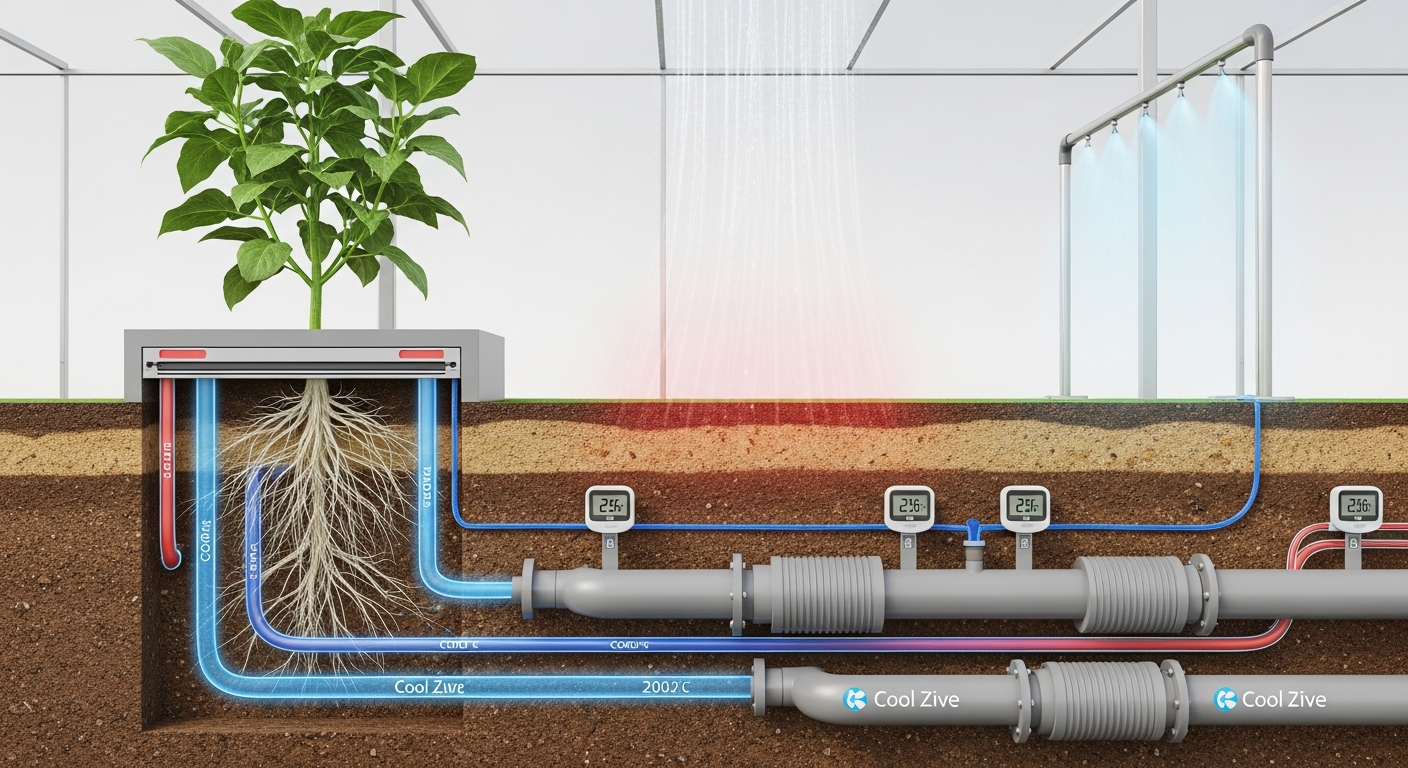
4. Advanced Root Zone Heating/Cooling Systems
For high-value crops or commercial operations, direct root zone temperature control systems offer the ultimate precision.
- Active Root Zone Heating/Cooling Mats: These systems circulate temperature-controlled water through mats or pipes placed under or within grow beds/benches, allowing for precise temperature regulation directly at the root level. These can either warm roots in cold conditions or cool them in hot ones.
Conclusion
Maintaining an optimal root zone temperature is not merely a beneficial practice; it’s a fundamental pillar of successful greenhouse cultivation, particularly when battling the challenges of hot climates. By understanding the critical role roots play and implementing both passive and active cooling strategies, growers can prevent heat stress, enhance nutrient uptake, boost plant vitality, and ultimately achieve healthier plants and more bountiful harvests. Don’t let your roots suffer in silence – make root zone temperature a central part of your greenhouse climate control strategy and watch your plants thrive.