
In the controlled environment of a greenhouse, managing irrigation efficiently is paramount to plant health, resource conservation, and ultimately, profitability. Traditional irrigation schedules, often based on guesswork or fixed timers, frequently lead to overwatering, underwatering, or significant water waste. Imagine an irrigation system that intuitively understands your plants’ real-time needs, adjusting watering cycles not just by a schedule, but by the actual atmospheric conditions inside and outside your greenhouse. This isn’t futuristic fantasy; it’s the power of integrating weather station data with smart irrigation controllers, a game-changer for modern greenhouse operations.
The “Why”: Benefits of Smart Irrigation with Weather Data
The transition from a static irrigation schedule to a dynamic, data-driven system offers a multitude of benefits that impact every facet of greenhouse management. It’s not just about turning sprinklers on and off; it’s about intelligent resource allocation.
Precision Watering for Optimal Growth
By leveraging real-time weather data, your smart irrigation controller can accurately calculate the evapotranspiration (ET) rate – the combined loss of water from the soil surface by evaporation and from plants by transpiration. This allows for watering precisely when and how much your plants truly need, preventing both waterlogging and drought stress. The result? Healthier root systems, stronger plant growth, and higher yields, leading to more productive crops.
Significant Water and Cost Savings
Overwatering is a common culprit of water waste in greenhouses. Integrating weather data prevents unnecessary watering by pausing cycles during rain events, reducing duration on cloudy days, or increasing it during hot, windy periods. This targeted approach can lead to substantial reductions in water consumption, translating directly into lower utility bills and less strain on water resources. Furthermore, less pumping means lower energy costs, and reduced runoff can minimize nutrient loss, boosting your greenhouse’s overall efficiency.
Mitigating Disease and Pest Risks
Excessive humidity and prolonged leaf wetness, often a byproduct of overwatering, create ideal conditions for fungal diseases like powdery mildew and botrytis, as well as certain pest infestations. A smart system, informed by atmospheric data, helps maintain appropriate moisture levels, reducing these risks and potentially decreasing your reliance on chemical treatments. Healthier plants are more resilient plants.
Enhanced Resource Management and Sustainability
For any greenhouse operation, sustainability is becoming increasingly important. By optimizing water use, you contribute to environmental conservation while also building a more resilient and efficient business model. This intelligent approach minimizes waste and maximizes the effectiveness of every drop, aligning perfectly with modern agricultural best practices and supporting sustainable growing initiatives.
How It Works: The Mechanics of Integration
Understanding the “how” behind this powerful integration demystifies the technology and helps in selecting the right components for your specific greenhouse setup.
Data Collection at the Source
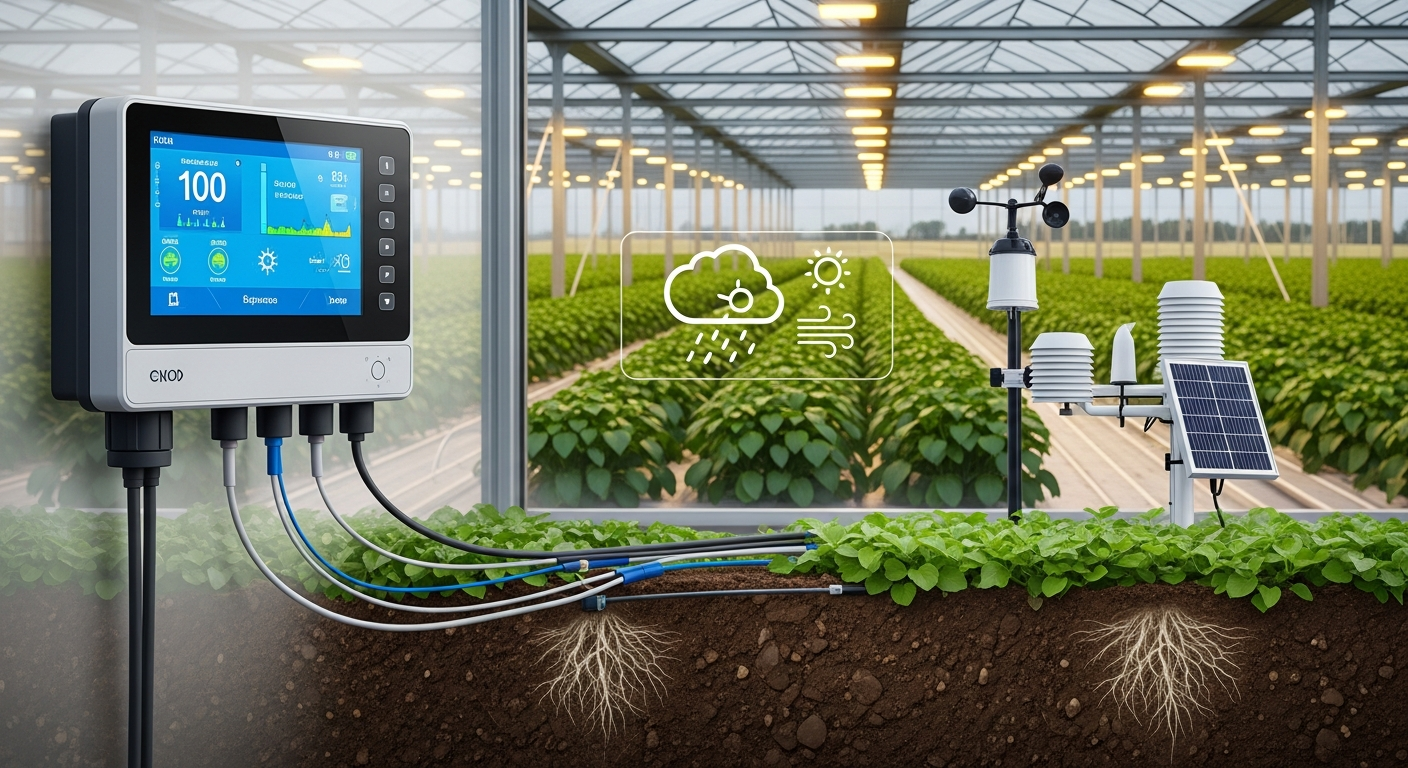
The process begins with a weather station, either installed within or just outside your greenhouse. This station is equipped with various sensors designed to measure key atmospheric conditions. Common sensors include:
- Temperature and Humidity Sensors: Crucial for calculating ET and assessing potential heat stress or fungal conditions, providing essential greenhouse climate control data.
- Rain Gauge: Detects precipitation, allowing the system to skip or delay irrigation cycles, especially important for outdoor gardens or greenhouses with open ventilation.
- Anemometer (Wind Speed): Wind increases ET, requiring more water, particularly relevant for naturally ventilated greenhouses.
- Pyranometer (Solar Radiation): Solar intensity is a major driver of transpiration and plant growth, directly influencing water demand.
- Soil Moisture Sensors (Optional but Recommended): Provide direct feedback on actual soil conditions, complementing atmospheric data with real-time root zone information.
Seamless Data Transmission
Once collected, this data needs to reach your smart irrigation controller. This typically happens in one of two ways:
- Direct Local Connection: Some weather stations can be hardwired or wirelessly connected directly to a compatible smart controller. Data is exchanged locally, often within a dedicated network, offering robust, low-latency communication.
- Cloud-Based Integration via API: Many modern smart controllers and weather stations are internet-enabled. The weather station uploads its data to a cloud service, and the smart controller accesses this data through an Application Programming Interface (API). This allows for greater flexibility, remote management, and often real-time updates from professional weather services or your own remote station.
Intelligent Interpretation and Adjustment
The smart irrigation controller isn’t just a switch; it’s a small computer with sophisticated algorithms. Upon receiving weather data, its internal processors analyze the information. It uses complex formulas, often incorporating ET calculations, plant type, soil type, and other user-defined parameters, to determine the precise watering needs. For example, if high temperatures and strong winds are detected, the controller might increase watering duration or frequency. If recent rainfall is registered, it might skip a cycle altogether, ensuring optimal water efficiency.
Dynamic Schedule Optimization
The beauty of this system is its dynamic nature. Instead of adhering to a rigid schedule, the controller continuously adjusts its watering plan based on the most current data. This ensures that your plants receive exactly what they need, exactly when they need it, adapting to the ever-changing environmental conditions within your greenhouse.
Key Weather Parameters for Irrigation Control
While a comprehensive weather station gathers various data points, certain parameters are particularly critical for effective precision irrigation control in a greenhouse setting.
Evapotranspiration (ET) Rates
This is arguably the most crucial metric for greenhouse irrigation. ET combines the water lost from the soil surface (evaporation) and the water transpired by plants (transpiration). Smart controllers often use the Penman-Monteith equation or a simplified version, factoring in temperature, humidity, solar radiation, and wind speed, to estimate reference ET. By knowing the ET, the controller can replenish the exact amount of water lost from your growing media, preventing both underwatering and overwatering.
Air Temperature and Relative Humidity
High temperatures increase plant metabolic rates and drive transpiration, while low humidity creates a higher vapor pressure deficit, pulling more moisture from plants. These two factors are fundamental inputs for accurate ET calculations. Monitoring them also helps in identifying potential stress conditions for specific crops or managing the greenhouse climate to prevent issues like condensation.
Rainfall Data
Even in a greenhouse, ambient rainfall can influence your irrigation strategy, especially if you’re collecting rainwater or have vents open. A rain sensor or gauge connected to your system will automatically pause or cancel irrigation cycles when precipitation is detected, preventing unnecessary watering and saving resources. This is a simple yet highly effective way to conserve water.
Wind Speed
Wind, particularly if your greenhouse has vents or is passively ventilated, can significantly increase the rate of evapotranspiration by carrying away humid air from around the leaves. Integrating wind speed data allows the controller to account for this accelerated moisture loss, ensuring plants receive adequate water during breezy conditions.
Solar Radiation
Light intensity is a primary driver of photosynthesis and, consequently, transpiration. Higher solar radiation means plants are actively growing and losing more water, necessitating increased irrigation. A pyranometer measures this crucial data point for precise adjustments, optimizing water delivery during peak growth periods.
Soil Moisture Levels (Direct Feedback)
While not a “weather parameter” in the traditional sense, integrating soil moisture sensors directly into your growing media provides invaluable real-time feedback. This data can either refine the ET-based calculations or serve as an independent trigger for irrigation, ensuring that the roots actually have access to sufficient water regardless of atmospheric conditions. It provides a direct measurement of plant available water.
Choosing Your System: Weather Stations and Smart Controllers
Selecting the right weather station and smart irrigation controller is key to a successful integration and maximizing the benefits of this advanced greenhouse technology. Consider these factors when making your choices:
Compatibility is Paramount
Before making any purchase, verify that your chosen weather station and smart irrigation controller are compatible. Some brands offer integrated ecosystems where components are designed to work seamlessly together. Others provide open Application Programming Interfaces (APIs) for broader integration with third-party systems. Look for controllers that explicitly state compatibility with external weather sensors or services, or those that support common integration platforms like IFTTT.
Weather Station Considerations
- Sensor Array: Ensure the station measures all the critical parameters relevant to your greenhouse (temperature, humidity, rain, wind, solar radiation, etc.).
- Accuracy and Reliability: Invest in a station known for accurate readings and durability, especially if it will be exposed to external elements or the high humidity of a greenhouse.
- Data Transmission: Decide between wired (more reliable, less maintenance) and wireless (easier installation, battery dependent) options. Consider how the data will be fed to the controller (direct local connection vs. cloud API).
- Location: For optimal results, place the weather station in a location representative of your greenhouse’s microclimate, or just outside if you want to account for external factors affecting the internal environment. Avoid direct irrigation spray.
Smart Irrigation Controller Features
- Zone Management: Choose a controller with enough zones for your greenhouse layout, allowing for independent watering of different plant types or sections, which is crucial for varied crop production.
- Connectivity: Wi-Fi or Ethernet connectivity is essential for cloud-based integration, remote access, and real-time data updates.
- User Interface: A user-friendly app or web interface makes programming, monitoring, and making manual adjustments much easier and more intuitive.
- Advanced Scheduling: Look for controllers that support weather-based scheduling, seasonal adjustments, cycle and soak, and flow monitoring capabilities for comprehensive irrigation management.
- Integration Capabilities: Confirm its ability to seamlessly integrate with your chosen weather station or third-party weather services to unlock its full potential.
Implementing and Optimizing Your Setup
Once you’ve selected your components, proper implementation and ongoing optimization are crucial for maximizing the benefits of your integrated smart irrigation system.
Strategic Placement and Installation
Weather Station: If your station monitors external conditions affecting the greenhouse, place it in an open area, away from obstructions that could skew readings (e.g., large buildings, dense foliage). For monitoring internal greenhouse conditions, strategically place it where it gets representative data without direct spray from irrigation or shading from plants. Always follow manufacturer guidelines for mounting heights and orientation to ensure accurate data collection.
Smart Controller: Install the controller in a dry, accessible location, following all electrical and plumbing codes. Ensure it has a reliable internet connection if it’s a Wi-Fi enabled model, as consistent connectivity is vital for data exchange and remote operation.
Initial Configuration and Calibration
This is where you teach your smart controller about your specific greenhouse environment and plant needs:
- Zone Setup: Define each irrigation zone, assigning plant types, soil characteristics (e.g., sandy, loamy, coco coir), and emitter/sprinkler precipitation rates. Accurate input here significantly improves water efficiency.
- Watering Restrictions: Input any local watering restrictions or preferred watering windows to comply with regulations and optimize energy use.
- Seasonal Adjustments: While the system will adjust dynamically, you might set a baseline for initial seasonal expectations to fine-tune its responsiveness.
- Soil Moisture Thresholds: If using soil moisture sensors, calibrate them to your specific growing medium and define appropriate watering thresholds to ensure plants are never over or under-watered.
Ongoing Monitoring and Fine-Tuning
Integration is not a “set it and forget it” solution entirely. Regular observation and adjustment are key to continuous optimization:
- Observe Your Plants: Are they thriving? Look for signs of stress, overwatering (yellowing leaves, stunted growth), or underwatering (wilting, brown leaf tips). Your plants are the ultimate indicators of success.
- Review Water Usage Reports: Most smart controllers provide detailed data logs and historical reports. Analyze trends to identify any anomalies, periods of high consumption, or potential inefficiencies.
- Adjust as Needed: You may need to tweak efficiency settings, plant coefficients, or other parameters based on observed plant health and water usage. Factors like plant growth (canopy density changes ET) or changes in growing media might require recalibration to maintain peak performance.
Regular Maintenance
Keep your sensors clean and free from debris, dust, or algae buildup, which can significantly affect readings. Check batteries in wireless components regularly and replace them as needed. Ensure your internet connection is stable. These small, proactive maintenance steps prevent data inaccuracies and ensure reliable, consistent operation of your automated irrigation system.
The integration of weather station data with smart irrigation controllers represents a significant leap forward in precision agriculture for greenhouses. It transforms irrigation from a reactive, scheduled task into a proactive, intelligent process that responds dynamically to the environment. By embracing this technology, greenhouse operators can achieve remarkable water savings, foster healthier, more robust plants, reduce disease pressure, and ultimately cultivate a more sustainable and profitable operation. It’s an investment that pays dividends not just in financial terms, but in the overall vitality of your plants and the efficiency of your resource management. Step into the future of greenhouse cultivation – intelligent irrigation is here to revolutionize how we grow.