
In the dynamic world of modern horticulture, achieving optimal plant growth while maintaining cost-effectiveness is a perpetual challenge. Growers are constantly seeking innovative solutions to enhance environmental control within their greenhouses. The answer lies not just in adopting advanced technologies, but in their seamless integration. Imagine a system where thermal screens, automated lighting, and intelligent heating work in perfect harmony, orchestrated by a central brain. This article delves into the profound benefits and practicalities of integrating these crucial elements, paving the way for superior crop yields, significant energy savings, and a more sustainable cultivation future.
The Foundation: Understanding Thermal Screens and Their Benefits
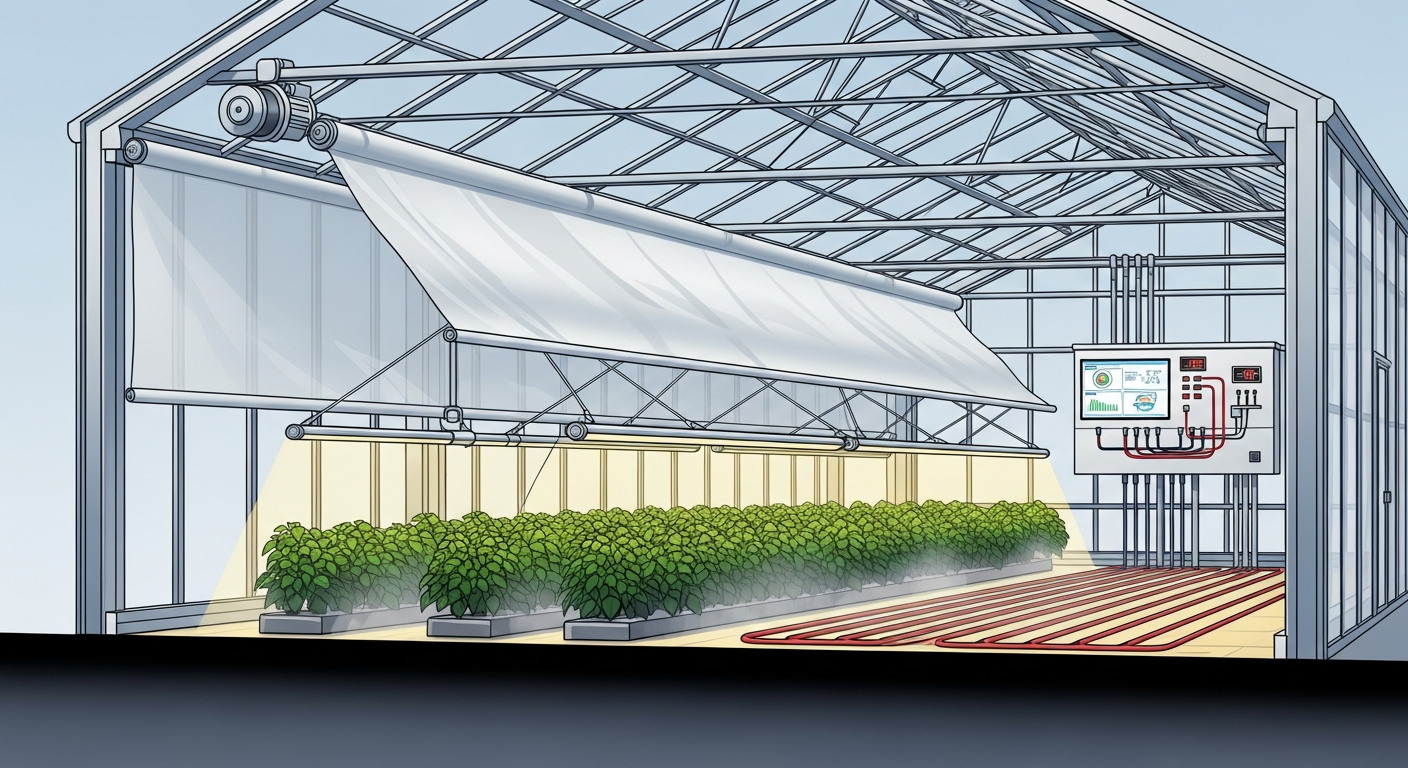
Thermal screens, often referred to as energy screens or climate screens, are indispensable tools in modern greenhouse management. These retractable fabrics are designed to create a dynamic climate barrier within the growing environment, offering a multitude of benefits beyond simple shading.
Types of Thermal Screens
- Energy-Saving Screens: These are typically made from woven or non-woven polyester or acrylic materials, often with aluminum strips to reflect infrared radiation. Their primary function is to trap heat inside the greenhouse during colder periods, drastically reducing heating costs.
- Shade Screens: Designed to reduce light intensity and temperature, these screens protect plants from excessive solar radiation, preventing scorching and promoting more uniform growth. They are crucial in hot climates or during peak summer months.
- Blackout Screens: Essential for crops requiring specific photoperiods (e.g., chrysanthemums, cannabis), blackout screens completely block natural light, allowing growers to manipulate day length precisely.
- Combination Screens: Many modern screens offer multiple functionalities, such as energy saving and shading, in a single fabric, providing versatility for various climate conditions.
Key Benefits of Thermal Screens
- Significant Energy Conservation: By creating an insulating layer, thermal screens can reduce heat loss by 30-70%, leading to substantial savings on heating fuel. This is arguably their most impactful benefit for operational costs.
- Temperature Regulation: Screens help stabilize internal temperatures, preventing drastic fluctuations that can stress plants. They keep heat in during the night and reflect excessive solar radiation during the day.
- Light Diffusion and Control: Shade screens evenly distribute natural light, minimizing hotspots and ensuring uniform light exposure across the canopy, which is vital for consistent crop quality.
- Reduced Condensation: By maintaining a more stable temperature and humidity beneath the screen, condensation drip onto plants can be minimized, reducing the risk of fungal diseases.
- Pest and Disease Management: While not their primary function, screens can offer a slight physical barrier against airborne pests when fully closed.
The strategic deployment of thermal screens is a cornerstone of efficient greenhouse climate management, setting the stage for even greater optimization when integrated with other automated systems.
Automated Lighting Systems for Optimal Growth
Light is the engine of photosynthesis, and in a greenhouse, natural light alone is often insufficient or inconsistent. Automated lighting systems provide the necessary supplemental illumination, ensuring plants receive the optimal light spectrum, intensity, and duration for robust growth, regardless of external conditions.
Evolution of Greenhouse Lighting
Traditional high-pressure sodium (HPS) lamps have long been a staple, but the industry is rapidly transitioning towards more energy-efficient and customizable solutions, primarily LED grow lights. Modern systems offer:
- Precise Spectrum Control: LEDs allow growers to fine-tune the light spectrum (e.g., red, blue, green, far-red) to specifically target various stages of plant growth, from vegetative to flowering.
- Adjustable Intensity: Dimmable LEDs provide granular control over light intensity, ensuring plants receive precisely the amount of photosynthetic photon flux density (PPFD) they need without waste.
- Programmable Photoperiods: Automated systems can precisely control the duration of light exposure, mimicking natural day lengths or creating specific long-day or short-day conditions crucial for certain crops.
Benefits of Automated Lighting
- Optimized Photosynthesis: Consistent, tailored light exposure maximizes photosynthetic efficiency, leading to faster growth and higher yields.
- Energy Efficiency: Modern LED systems, especially when automated, consume significantly less energy than older technologies, reducing electricity bills.
- Enhanced Crop Quality: Specific light recipes can influence plant morphology, nutrient content, color, and flavor profiles.
- Year-Round Production: Automated lighting overcomes seasonal light deficiencies, enabling continuous production cycles.
- Reduced Labor: Automated controls eliminate the need for manual switching, freeing up valuable staff time.
Integrating Lighting with Thermal Screens
The synergy between automated lighting and thermal screens is profound. For instance, when energy screens are closed at night to conserve heat, they also create a perfect “blackout” environment for precise photoperiod control. During the day, if natural light is too intense, shade screens can deploy while supplemental lights adjust their output to maintain optimal PPFD. Conversely, on cloudy days, screens might retract to allow maximum natural light, with supplemental lights automatically ramping up to fill any gaps. This dynamic interaction prevents light waste, manages energy consumption, and provides plants with a consistent, ideal light environment.
Intelligent Heating Systems for Stable Environments
Maintaining a stable and appropriate temperature is paramount for plant health and metabolic processes. Intelligent heating systems go beyond simple on/off functionality, offering sophisticated control that integrates seamlessly with other greenhouse technologies.
Advanced Heating Technologies
Greenhouse heating systems typically involve hot water boilers, forced-air heaters, or radiant heating. What makes them intelligent is their integration with sensors and control software:
- Precise Temperature Setpoints: Modern systems allow for exact temperature settings, often varying by crop zone or time of day, crucial for optimizing plant development.
- Zone Heating: Larger greenhouses can be divided into distinct heating zones, allowing different crops with varying temperature requirements to thrive under one roof.
- Predictive Control: Some advanced systems use weather forecasts and historical data to anticipate heating needs, pre-emptively adjusting output to maintain stability while minimizing energy consumption.
- Humidity Management: Heating systems can also play a role in managing humidity, as heating air allows it to hold more moisture before condensation occurs.
Benefits of Intelligent Heating
- Consistent Climate: Eliminates temperature spikes and dips, reducing plant stress and promoting uniform growth.
- Energy Savings: Optimized heat distribution, reduced heat loss, and predictive control significantly lower fuel consumption.
- Reduced Disease Risk: Stable temperatures and controlled humidity help mitigate conditions favorable for many plant pathogens.
- Improved Resource Allocation: Heating only when and where it’s needed reduces waste.
Integrating Heating with Thermal Screens and Lighting
Here, the integration shines. When thermal screens are deployed at night to retain heat, the intelligent heating system receives feedback from temperature sensors, recognizing that less energy is required to maintain the desired setpoint. This allows the boiler to operate at a lower capacity or for heating cycles to be shorter and less frequent, directly translating to fuel savings. During the day, if solar gain becomes excessive despite shade screens, a small amount of heat might be required to dry the air and prevent condensation, working in concert with ventilation systems. The heating system also coordinates with lighting; for instance, the heat emitted by LED lights can be factored into the overall heat balance, allowing the main heating system to compensate less.
Seamless Integration: The Synergy of Screens, Lighting, and Heating
The true power of modern greenhouse management emerges when thermal screens, automated lighting, and intelligent heating systems are not just present, but are
How Integrated Systems Work
At the heart of an integrated system are sophisticated sensors and a powerful central control unit.
- Sensor Network: A network of sensors continuously monitors critical environmental parameters:
- Temperature: Air temperature, crop temperature, root zone temperature.
- Humidity: Relative humidity (RH).
- Light: Photosynthetically Active Radiation (PAR) levels, natural light intensity.
- CO2 Levels: Carbon dioxide concentration.
- Wind Speed/Direction: External weather data.
- Central Control System: This “brain” receives real-time data from all sensors. Based on pre-programmed setpoints, crop recipes, and complex algorithms, it orchestrates the operation of all connected equipment. If the temperature drops below the setpoint and light levels are low (nighttime), it might trigger the thermal screens to close, then activate the heating system at a minimal level, and keep lights off. If light levels are too high, it might deploy shade screens and dim supplemental lights.
- Data Analysis: Integrated systems continuously log data, providing invaluable insights into environmental conditions, energy consumption, and plant responses. This data empowers growers to refine their strategies and optimize conditions further.
Practical Scenarios of Integration
- Nighttime Optimization: As dusk falls, light sensors detect decreasing natural light. The system automatically closes thermal screens to insulate the greenhouse. If the temperature begins to drop below the nighttime setpoint, the heating system engages efficiently, operating at a lower intensity thanks to the insulating screens. Supplemental lighting remains off, maintaining the desired photoperiod.
- Cloudy Day Management: On a dim, overcast day, PAR sensors detect low light levels. The system retracts the thermal/shade screens completely to maximize natural light penetration. Simultaneously, automated LED grow lights power on and adjust their intensity to provide the necessary PPFD for photosynthesis. The heating system might engage minimally to counter the chill and maintain optimal air temperature.
- Sunny Day Heat Management: As the sun climbs and PAR levels become excessive, shade screens automatically deploy to prevent scorching. Ventilation fans engage to expel excess heat, and the heating system remains off (or engages minimally for dehumidification). If the shade screens block too much light, supplemental lights can still provide targeted wavelengths.
Benefits of Seamless Integration
- Maximum Energy Savings: This is arguably the most significant benefit. By optimizing the interplay between all systems, energy consumption for heating, cooling, and lighting is dramatically reduced.
- Superior Plant Health and Yields: Plants consistently experience their ideal climate conditions, leading to faster growth, healthier development, and increased productivity.
- Reduced Operational Costs: Beyond energy, integrated systems reduce labor, minimize human error, and extend the lifespan of equipment due to more efficient operation.
- Data-Driven Decision Making: Extensive data logging provides growers with powerful insights to fine-tune their climate strategies, diagnose issues, and predict outcomes.
- Increased Sustainability: Lower energy consumption translates to a smaller carbon footprint, aligning with sustainable agricultural practices.
Practical Tips for Implementation
- Start with a Plan: Clearly define your crop requirements, budget, and long-term goals.
- Choose Compatible Systems: Select components (screens, lights, heaters, controllers) that are designed to work together or can be integrated via a common protocol.
- Professional Installation and Calibration: Ensure expert installation and precise calibration of all sensors and equipment for optimal performance.
- Strategic Sensor Placement: Position sensors accurately to gather representative data of the plant environment, not just ambient air.
- Monitor and Analyze Data: Regularly review data logs to identify trends, pinpoint inefficiencies, and make informed adjustments.
- Phased Implementation: If a full overhaul is daunting, consider integrating systems in stages, building upon a robust foundation.
- Staff Training: Ensure your team understands how to operate and troubleshoot the integrated system effectively.
The Future of Greenhouse Cultivation
The integration of thermal screens with automated lighting and heating systems represents a significant leap forward in greenhouse technology. It transforms a collection of individual tools into a unified, intelligent environmental control system. This synergy not only optimizes growing conditions for a wide range of crops but also delivers substantial returns on investment through reduced energy costs, increased yields, and improved crop quality.
As horticulture moves towards greater precision and sustainability, embracing these integrated solutions will become not just a competitive advantage but a necessity. Growers who invest in such smart greenhouse technologies are effectively future-proofing their operations, ready to meet the demands of an evolving agricultural landscape with efficiency, profitability, and environmental responsibility at the forefront.