
In an era increasingly focused on efficiency and sustainability, the way we manage artificial illumination is undergoing a transformative shift. Whether it’s optimizing plant growth in controlled environments or enhancing human comfort and productivity in commercial spaces, supplemental lighting plays a crucial role. However, relying on fixed schedules or manual adjustments often leads to wasted energy and suboptimal conditions. This is where the integration of photosensors emerges as a game-changer, offering an intelligent, dynamic approach to lighting management. By precisely measuring ambient light levels, photosensors empower lighting systems to respond in real-time, delivering only the necessary light, precisely when it’s needed. This article delves into how these smart devices are revolutionizing supplemental lighting, paving the way for unprecedented energy savings, enhanced performance, and a more sustainable future.
Understanding Photosensors and Their Role in Smart Lighting
At its core, a photosensor is a device designed to detect and measure light. These optical sensors convert light energy into an electrical signal, which can then be interpreted by a control system. While the term encompasses various technologies, for supplemental lighting applications, they primarily function to quantify the intensity of natural ambient light available in an environment.
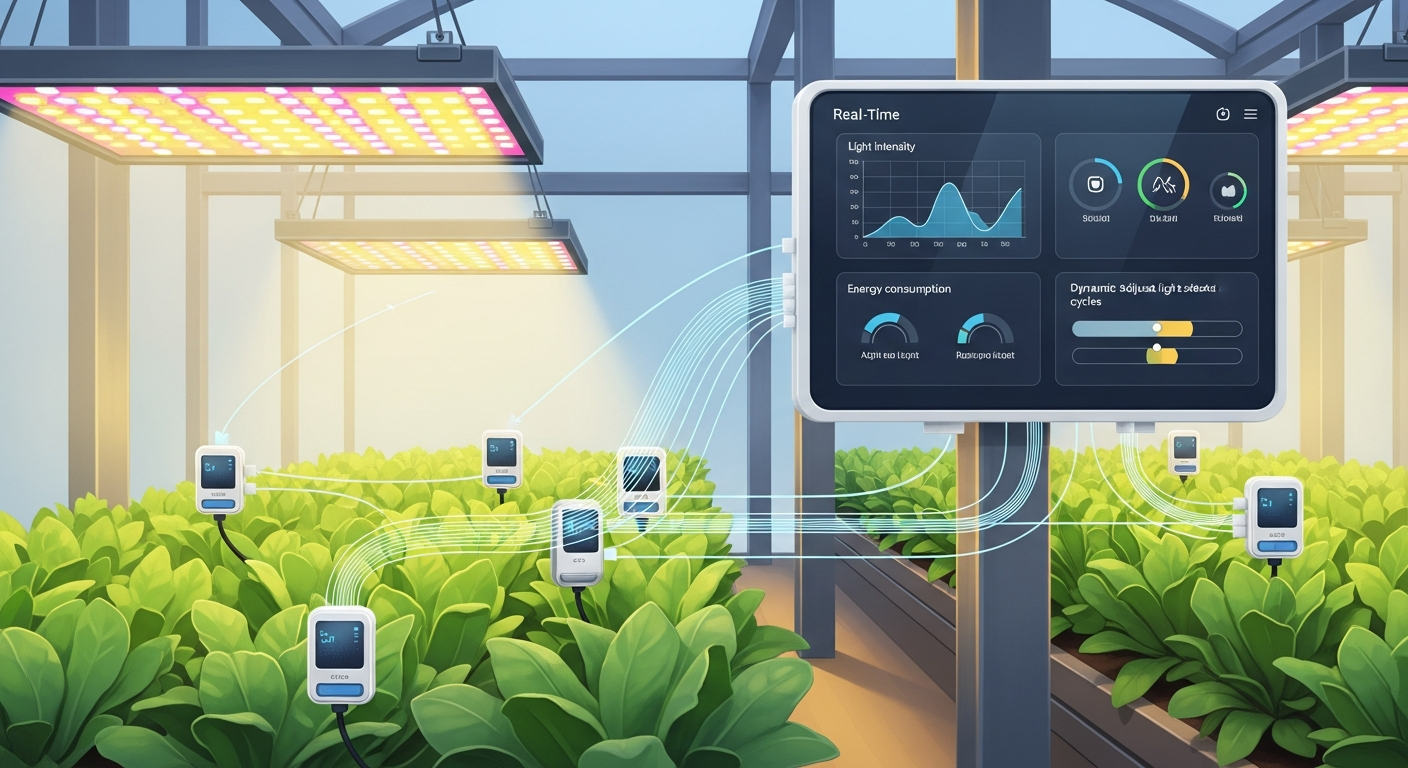
Types of Photosensors Relevant to Lighting Control:
- Photodiodes: Highly responsive and accurate, converting light into an electrical current. They are often used in precise measurement applications.
- Phototransistors: Similar to photodiodes but with internal amplification, making them more sensitive to lower light levels.
- Photoresistors (LDRs – Light Dependent Resistors): Simple and inexpensive, their resistance changes inversely with light intensity. While less precise than photodiodes, they are suitable for basic light detection.
- Integrated Light Sensors: Often combine a photosensor element with additional circuitry for signal processing, temperature compensation, and digital output, making them highly integrated and easy to use in complex systems.
The primary reason photosensors are becoming indispensable for supplemental lighting efficiency lies in their ability to facilitate dynamic light management. Traditional lighting systems operate on pre-set schedules or manual intervention. This approach fails to account for the constant fluctuations in natural light throughout the day, across seasons, or due to weather conditions. A sunny afternoon following a cloudy morning will inevitably lead to over-lighting if supplemental lights remain at full power. Conversely, a sudden dark cloudburst might leave an area under-lit if manual adjustments are slow or absent.
By providing real-time data on ambient light intensity, photosensors enable lighting controllers to make intelligent decisions. This translates directly into significant energy savings and optimization. Instead of simply being on or off, supplemental lights can now dim up or down, or even switch off entirely, based on the actual light needs of the space and the availability of natural light. This proactive response prevents unnecessary energy consumption while ensuring consistent lighting conditions for the target application, whether it’s maximizing horticultural yield or maintaining optimal visual comfort.
Principles of Photosensor-Driven Supplemental Lighting
The integration of photosensors into supplemental lighting systems hinges on a fundamental principle known as daylight harvesting. This strategy aims to maximize the use of natural daylight and only activate artificial lights when and where it is truly necessary to meet a predefined target light level.
The process generally follows a control loop:
- Measurement: A photosensor continuously measures the incoming ambient light (e.g., natural sunlight entering a greenhouse or window).
- Comparison: This measured value is sent to a smart lighting controller, which compares it against a pre-programmed “set point” – the desired total light level for the area (e.g., a specific Photosynthetically Active Radiation (PAR) level for plants, or a certain lux level for human environments).
- Adjustment: If the ambient light level falls below the set point, the controller signals the supplemental lighting fixtures to activate or increase their intensity (dim up). If the ambient light exceeds the set point, the controller dims down or switches off the supplemental lights.
- Feedback: This cycle is continuous, allowing the system to respond instantly to changes in natural light.
For horticultural applications, the set point is often defined in terms of Photosynthetically Active Radiation (PAR) or Daily Light Integral (DLI). PAR measures the amount of light available for photosynthesis, while DLI represents the total amount of PAR light received over a 24-hour period. Photosensors equipped to measure PAR are critical in these settings to ensure plants receive consistent and optimal light dosages, irrespective of external weather patterns. For human-centric lighting, the set point might be expressed in lux, ensuring consistent visual brightness and comfort.
Key Operational Considerations:
- Dimming Protocols: Modern supplemental lighting systems, especially LED-based ones, are often dimmable. Common protocols like 0-10V, DALI (Digital Addressable Lighting Interface), and even wireless smart home protocols (Zigbee, Z-Wave) allow controllers to precisely adjust the light output from 0% to 100%.
- Deadbands: To prevent rapid flickering or cycling of lights in conditions where ambient light hovers around the set point, controllers often incorporate a “deadband.” This is a small range above and below the set point within which no changes are made, providing stability.
- Zonal Control: Large areas can be divided into multiple lighting zones, each with its own photosensor and supplemental lights. This allows for even more granular control, as different parts of a facility might receive varying amounts of natural light.
By leveraging these principles, photosensor-driven systems provide a truly intelligent and adaptive lighting solution, moving beyond rudimentary on/off switches to sophisticated, demand-driven control.
Unlocking the Benefits: Efficiency, Optimization, and ROI
The integration of photosensors into supplemental lighting systems delivers a cascade of benefits that extend far beyond mere energy conservation. These advantages contribute to overall operational excellence, sustainability, and economic viability.
1. Significant Energy Savings and Cost Reduction
This is perhaps the most immediate and tangible benefit. By ensuring that supplemental lights are only active when natural light is insufficient, photosensors can drastically reduce electricity consumption. Studies and real-world implementations have shown potential energy savings ranging from 20% to 50%, depending on the application, geographic location, and existing lighting infrastructure. This directly translates into lower utility bills, making a compelling case for the initial investment.
2. Optimized Performance and Yield
- For Horticulture: Consistent and precise light delivery (PAR and DLI) leads to healthier plant growth, increased yields, and improved crop quality. Plants are never over-stressed by excessive light or underperforming due to insufficient light. This stability can lead to faster growth cycles and more predictable harvests.
- For Human Environments: Maintaining consistent light levels improves visual comfort, reduces eye strain, and can positively impact occupant productivity and well-being. Studies have linked appropriate lighting to better mood and reduced fatigue.
3. Extended Equipment Lifespan
When supplemental lights, especially LEDs, operate for fewer hours at full power, they experience less wear and tear. Dimming rather than constantly switching on/off also reduces stress on internal components and drivers. This extended operational life means fewer replacements, reduced maintenance costs, and a better return on the initial investment in lighting fixtures.
4. Reduced Labor and Enhanced Automation
Automated lighting control systems eliminate the need for manual adjustments based on changing light conditions. This frees up staff time, allowing them to focus on other critical tasks. The “set it and forget it” nature of photosensor-driven systems contributes significantly to operational efficiency.
5. Environmental Sustainability
Lower energy consumption directly translates to a reduced carbon footprint, contributing to environmental conservation efforts. By minimizing wasted energy, businesses and growers can bolster their sustainability credentials and meet environmental regulations more easily.
6. Favorable Return on Investment (ROI)
While there is an initial cost associated with photosensors, controllers, and potentially upgrading to dimmable fixtures, the long-term energy savings, combined with improved operational efficiency and increased yields (in horticulture), often result in a rapid and attractive return on investment. The payback period for such systems can often be as short as 1-3 years, making them a financially sound upgrade.
In essence, photosensor integration transforms supplemental lighting from a static utility into a dynamic, intelligent system that actively contributes to efficiency, productivity, and profitability.
Practical Considerations for Integrating Photosensors
Implementing a photosensor-driven supplemental lighting system effectively requires careful planning and attention to detail. Here are crucial practical considerations for successful integration:
1. Strategic Photosensor Placement
The location of photosensors is paramount to their accuracy and the system’s overall effectiveness. Improper placement can lead to inaccurate readings and suboptimal lighting control.
- Representative Measurement: Sensors should be placed where they receive a representative amount of ambient light, avoiding direct shadows from structures or plants, and equally important, avoiding direct illumination from the very supplemental lights they are controlling.
- Avoid Self-Shadowing: Ensure the sensor itself doesn’t cast a shadow over its own sensing element.
- Multiple Sensors for Large Areas: In expansive spaces or those with varying natural light ingress (e.g., a large greenhouse with north- and south-facing zones), multiple sensors linked to zonal lighting control will provide far greater accuracy and efficiency.
- Environmental Factors: Consider potential obstructions like dust, dirt, or condensation accumulating on the sensor’s surface, which can degrade accuracy over time. Regular cleaning is essential.
2. Choosing the Right Sensor Type and Calibration
The type of photosensor should align with the application:
- Horticulture: For plant growth, use PAR sensors (Photosynthetically Active Radiation) that measure light in the 400-700nm spectrum, directly relevant to photosynthesis. These are more specialized and provide more accurate data for plant-centric control than standard lux meters.
- Human Environments: For general lighting and visual comfort, standard lux sensors (measuring illuminance) are appropriate.
Regardless of type, proper calibration is critical. Sensors must be accurately calibrated to ensure their readings correspond correctly to actual light levels. This might involve comparing sensor output with a handheld reference meter during installation and performing periodic checks.
3. System Compatibility and Integration
Ensure that the photosensors, lighting controllers, and supplemental lighting fixtures are compatible. This involves:
- Dimming Protocols: Verify that the controller’s dimming output (e.g., 0-10V, DALI, PWM) matches the input requirements of your LED drivers or fixtures.
- Controller Capabilities: Choose a controller that can handle the desired number of zones, supports the chosen photosensor type, and allows for flexible programming of set points, deadbands, and schedules.
- Network Integration: For advanced systems, consider integration with broader building management systems (BMS) or greenhouse climate control systems via protocols like Modbus, BACnet, or even cloud-based IoT platforms.
4. Advanced Control Strategies
Beyond basic daylight harvesting, consider more sophisticated control strategies:
- Spectral Control: In horticulture, some advanced systems can not only dim but also adjust the light spectrum (e.g., changing the ratio of red to blue light) based on ambient light and plant growth stage, further optimizing plant development.
- Time-of-Day Scheduling: Combine photosensor input with time-based schedules. For instance, allowing lower set points during off-peak hours or ensuring lights are completely off at night, even if ambient light is low.
- Integration with Other Sensors: In greenhouses, integrating with temperature and CO2 sensors can create an even more holistic environmental control system. For example, if CO2 levels are high, plants can utilize more light, allowing for higher light set points.
5. Maintenance and Monitoring
Photosensors are robust, but their performance can degrade over time due to dirt accumulation, exposure to harsh elements, or component aging. Regular cleaning of the sensor surface and periodic validation of its readings against a known standard are good practices to maintain accuracy and efficiency. Data logging features in modern controllers allow for continuous monitoring of performance and identification of potential issues or areas for further optimization.
By meticulously addressing these practical considerations, businesses and growers can maximize the benefits of photosensor integration, ensuring a highly efficient, responsive, and reliable supplemental lighting system.
Conclusion
The integration of photosensors into supplemental lighting systems represents a pivotal advancement in achieving optimal efficiency and performance across various applications, from cutting-edge horticulture to intelligent commercial buildings. Moving beyond static, inefficient lighting schedules, photosensor-driven systems usher in an era of dynamic, demand-driven illumination. They enable real-time adaptation to fluctuating natural light levels, ensuring that artificial light is supplied only when and where it is truly needed.
The benefits are clear and compelling: substantial energy savings and reduced operational costs, optimized environmental conditions leading to enhanced plant growth and human well-being, extended equipment lifespan, and a significant contribution to environmental sustainability. By carefully considering sensor placement, type selection, system compatibility, and ongoing maintenance, users can unlock the full potential of this smart technology.
As the demand for sustainable practices and intelligent automation continues to grow, photosensors will remain an indispensable component of future-proof lighting strategies. Embracing this technology is not just about saving energy; it’s about fostering more productive, responsive, and environmentally conscious environments for everyone.