
In an increasingly connected world, the quest for optimal environmental control is driving innovation across various sectors, from smart homes to advanced agriculture. While individual sensors provide valuable insights, their true potential is unlocked when their data is combined and analyzed holistically. Imagine a system that doesn’t just react to a single parameter, but intelligently responds to a symphony of environmental conditions. This is the promise of integrating light sensors with external weather stations for precision control – a powerful synergy that elevates automation from reactive to truly proactive and optimized.
By fusing real-time data on light intensity, UV radiation, temperature, humidity, wind speed, and precipitation, we can create intelligent systems capable of making far more nuanced and effective decisions. This article explores the profound benefits, practical applications, and technical considerations of such integrated setups, guiding you towards building more responsive, efficient, and intelligent control mechanisms for a myriad of applications.
The Power of Environmental Data Fusion: Beyond Basic Automation
Traditional automation often relies on single-point triggers. A timer turns lights on and off, a thermostat maintains a set temperature, or a simple light sensor adjusts brightness. While effective to a degree, these isolated systems lack the contextual intelligence necessary for true optimization. The real power emerges when multiple environmental data streams are combined, providing a comprehensive picture that allows for more sophisticated and energy-efficient control.
Understanding the Contribution of Each Sensor
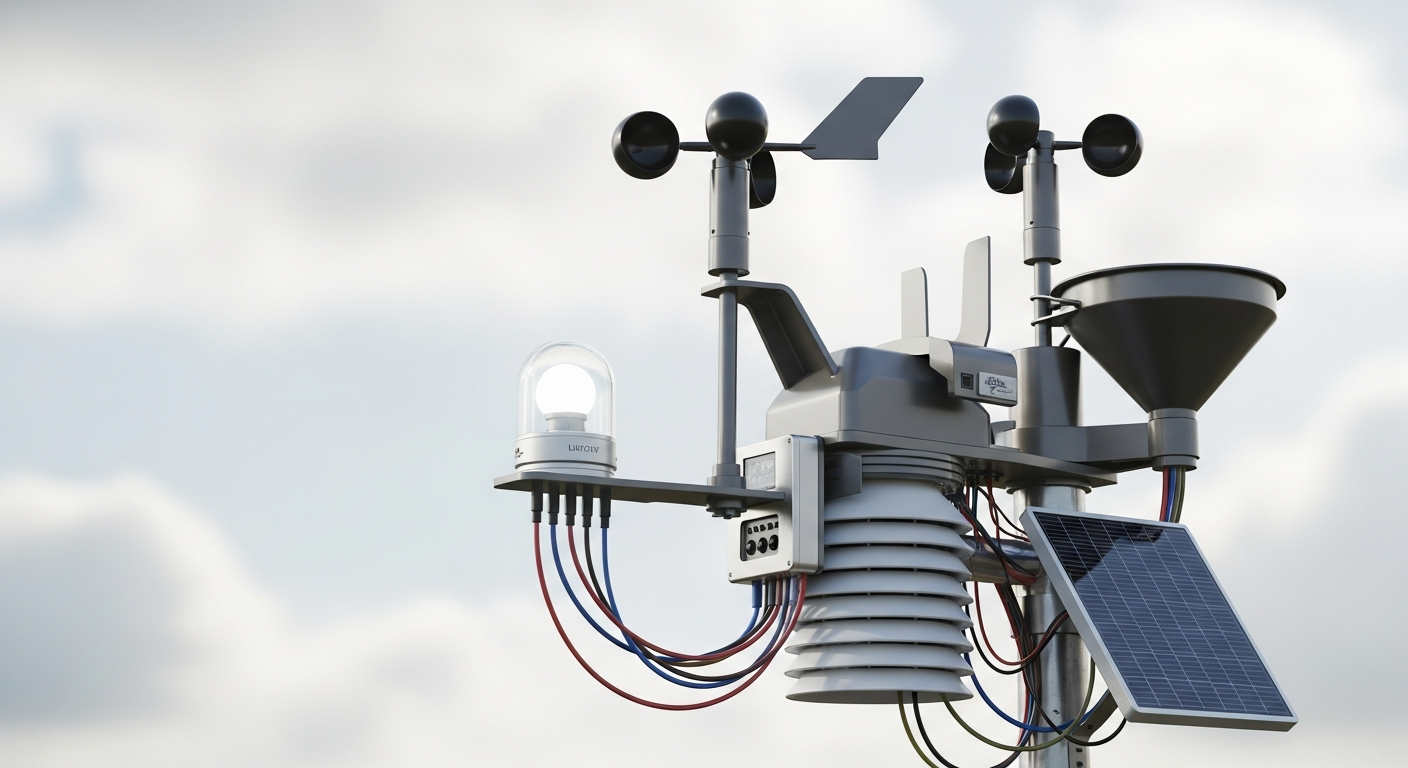
- Light Sensors: These are crucial for measuring ambient light levels (lux), UV intensity, or even specific spectral ranges. A lux sensor can tell you exactly how bright it is, enabling dynamic lighting adjustments. A UV sensor can inform about radiation levels, critical for plant growth or material degradation monitoring. Integrating these helps fine-tune lighting, shade, and exposure based on actual real-time conditions, not just a schedule.
- External Weather Stations: These provide a suite of vital meteorological data.
- Temperature: Essential for heating, cooling, and understanding thermal comfort.
- Humidity: Critical for air quality, plant health, and mitigating mold growth.
- Wind Speed & Direction: Important for structural integrity (e.g., automated awnings), ventilation, and understanding heat loss/gain.
- Rainfall: Key for irrigation management, preventing oversaturation, and triggering protective measures.
Consider a greenhouse scenario. A simple light sensor might trigger supplemental lighting when it gets dim. But what if it’s also extremely hot and humid outside with strong winds? An integrated system would know to open vents (controlled by temperature, humidity, and wind) *before* turning on lights (controlled by light intensity), optimizing ventilation and cooling first, potentially reducing the need for artificial lighting and saving energy. This synergistic approach, where data from different sensors informs a collective decision, represents a significant leap forward in environmental control.
The Benefits of Integrated Data
Fusing light sensor data with meteorological inputs brings numerous advantages:
- Enhanced Precision: Control actions are based on a richer, more accurate understanding of the environment.
- Optimal Resource Management: Reduce energy consumption (lighting, HVAC) and water usage (irrigation) by responding only when necessary.
- Improved Performance: Create ideal conditions for plants, enhance occupant comfort, or optimize industrial processes.
- Proactive Adjustments: Anticipate changes rather than merely reacting to them, thanks to comprehensive data.
- Cost Savings: Significant reductions in operational expenses due to efficiency gains.
- Data-Driven Insights: Collect valuable historical data to analyze trends and further refine control strategies over time.
Practical Tip: When selecting sensors, always consider the specific environmental parameters you need to monitor for your application. Don’t overspend on unnecessary sensors, but ensure you cover all critical data points for effective control.
Practical Applications of Integrated Systems
The convergence of light sensing and weather data opens up a world of possibilities across diverse fields. Here are some compelling applications:
Smart Agriculture and Greenhouses
Precision agriculture relies heavily on environmental control to maximize yield and minimize waste. An integrated system can:
- Dynamic Supplemental Lighting: Adjust LED grow lights based on natural sunlight intensity (lux sensor), time of day, and even cloud cover data from the weather station. This ensures plants receive optimal light spectrum and intensity without wasting energy on excessive artificial light.
- Automated Ventilation and Shading: Open/close greenhouse vents or deploy shade cloths based on internal temperature, humidity, external wind speed (to prevent damage), and solar radiation (UV sensor) to prevent overheating and sunburn while optimizing air circulation.
- Intelligent Irrigation: Water plants based on soil moisture, but also factoring in solar intensity (evaporation rates), temperature, humidity, and recent rainfall. This prevents overwatering during cloudy, cool periods and ensures adequate hydration during hot, sunny spells.
- Pest and Disease Control: Monitor specific light conditions and humidity levels that are conducive to certain pests or diseases, triggering preventative measures or alerts.
Smart Buildings and Homes
Integrating light and weather data can transform residential and commercial buildings into truly intelligent environments, significantly improving comfort and energy efficiency.
- Optimized HVAC Systems: Adjust heating and cooling based on outdoor temperature, solar gain (from light sensors detecting direct sunlight), and even wind chill. For instance, if strong sunlight is warming a room, the AC might preemptively activate or blinds might close to mitigate solar heat gain.
- Automated Blinds and Awnings: Deploy or retract based on sunlight intensity (to reduce glare or heat), wind speed (to prevent damage to awnings), and outdoor temperature. This enhances occupant comfort and saves energy by managing passive heating/cooling.
- Dynamic Interior Lighting: Dim or brighten indoor lights based on the amount of natural light entering a space, coupled with time of day and external weather conditions (e.g., brighter lights on a dark, rainy day).
- Energy Management: Tie into building management systems to intelligently manage energy consumption for lighting, HVAC, and even appliances based on real-time environmental conditions.
Solar Energy Management
For solar panel installations, data integration can lead to improved efficiency and longevity.
- Optimized Tracking: While often based on sun position, light sensors can confirm actual irradiance, especially useful in partially cloudy conditions.
- Predictive Maintenance: Monitor UV index and rainfall to schedule cleaning or anticipate potential material degradation over time.
- Performance Monitoring: Correlate energy output with light intensity and temperature to identify performance anomalies.
Practical Tip: Before embarking on an integration project, clearly define the “problem” you are trying to solve and how the combined data streams will lead to a better solution than individual sensor data alone. This focus will guide your sensor selection and control logic development.
Technical Considerations for Seamless Integration
Building an integrated system requires careful planning of hardware, software, and data management. While the concept is powerful, successful implementation hinges on robust technical foundations.
Hardware Components and Connectivity
- Microcontrollers/Single-Board Computers (SBCs): Platforms like Arduino, ESP32, or Raspberry Pi are popular choices. ESP32 is excellent for IoT applications due to built-in Wi-Fi and Bluetooth, while Raspberry Pi offers more processing power for complex data analysis.
- Light Sensors:
- Ambient Light (Lux) Sensors: Often I2C-based (e.g., BH1750, VEML7700) for high accuracy.
- UV Sensors: (e.g., VEML6075, ML8511) output UV index or raw UV intensity.
- Weather Stations: These can range from commercial all-in-one units (e.g., Ambient Weather, Netatmo) with APIs for data access, to DIY setups using individual sensors for temperature (DS18B20, BME280), humidity (DHT11/22, BME280), wind (anemometer, wind vane), and rain (tipping bucket rain gauge).
- Communication Protocols:
- Wired: I2C, SPI for local sensor connection. Ethernet for robust network connectivity.
- Wireless: Wi-Fi (for local network and cloud upload), Bluetooth (short-range), Zigbee or LoRa (for low-power, long-range applications, especially for distributed sensors).
- Actuators: Devices that perform the control actions, such as relays (for lights, fans), servo motors (for blinds, vents), or dimmers.
Software and Data Management
- Programming Languages: Python is popular for Raspberry Pi due to its extensive libraries, while C++ (Arduino IDE) is common for microcontrollers.
- Data Acquisition: Code running on your microcontroller or SBC will read data from sensors at regular intervals.
- Data Logging & Storage: Data can be stored locally (SD card) or, more commonly, uploaded to cloud platforms like AWS IoT, Google Cloud IoT, Adafruit IO, or dedicated IoT platforms such as ThingSpeak or OpenWeatherMap (for external weather data).
- APIs: Many commercial weather stations and online weather services provide APIs (Application Programming Interfaces) to access their data programmatically, which can be invaluable for incorporating regional weather forecasts into your system.
- Control Logic: This is the core of your system. It’s the code that processes the combined sensor data and determines the appropriate action for the actuators. This can range from simple IF-THEN rules to more complex algorithms.
Calibration and Placement
Accurate readings are paramount. Ensure your sensors are calibrated correctly according to manufacturer specifications. Proper placement is also critical: light sensors should have an unobstructed view of the light source, and weather station components need to be installed according to meteorological best practices (e.g., anemometer away from obstructions, rain gauge level).
Practical Tip: Start with a modular approach. Begin by getting individual sensors working and logging data reliably. Then, integrate them one by one, testing each step. This iterative process helps in debugging and understanding the system’s behavior.
Designing and Implementing Your Precision Control System
The journey from concept to a fully operational precision control system involves several key phases. By following a structured approach, you can ensure a robust and effective solution.
1. Define Clear Objectives and Use Cases
What problem are you trying to solve? What specific outcome do you desire? For example, “optimize greenhouse lighting to maximize plant growth while minimizing energy consumption” or “automate home blinds to reduce solar heat gain and enhance natural light during the day.” Clear objectives will inform all subsequent decisions.
2. Select Appropriate Sensors and Actuators
Based on your objectives, identify the exact environmental parameters you need to monitor.
- Light Sensors: Do you need overall brightness (lux), UV index, or spectral analysis?
- Weather Station: Which parameters are critical – temperature, humidity, wind, rain? Consider whether a commercial weather station with an API or a DIY sensor array is more suitable.
- Actuators: What physical actions need to be taken? (e.g., relays for lights, motors for vents/blinds, pumps for irrigation).
3. Choose Your Core Platform and Connectivity
Select a microcontroller or SBC that meets your processing, memory, and connectivity requirements. Will you use Wi-Fi, LoRa, or a wired connection for data transmission? Consider power requirements, especially for remote installations.
4. Develop Data Acquisition and Logging
Write code to read data from all your chosen sensors at defined intervals. Implement a robust data logging strategy – either local storage (SD card) or cloud integration. Cloud platforms offer advantages like remote access, data visualization, and scalability.
5. Craft the Control Logic
This is the “brain” of your system. Develop the algorithms that interpret the combined sensor data and trigger actions. This could involve simple threshold-based rules (e.g., “IF lux < 500 AND outdoor_temp < 20C THEN turn_on_lights”) or more complex logic incorporating time delays, historical data, and even predictive elements (e.g., using a weather forecast API).
Example Logic:
IF ambient_lux < 700 AND outdoor_temp > 25C AND outdoor_humidity < 60% (indicating high evaporation risk)
  THEN activate_irrigation_pump(duration_based_on_soil_moisture_and_sunlight_intensity)
ELSE IF outdoor_wind_speed > 30km/h AND direct_sunlight_detected
  THEN retract_awning_AND_close_blinds
6. Integrate Actuators and Test Thoroughly
Connect your actuators to the control platform and test each function independently, then as part of the integrated system. Debugging is a crucial part of this phase. Start with small, controlled tests and gradually expand.
7. Monitor, Analyze, and Optimize
Once deployed, continuously monitor the system’s performance. Analyze the logged data to identify trends, inefficiencies, or areas for improvement. Use this feedback to refine your control logic, adjust sensor thresholds, or even consider adding more sensors for finer control. This iterative optimization process is key to achieving true precision.
Practical Tip: Document everything! From wiring diagrams to code comments and control logic explanations, thorough documentation will be invaluable for future troubleshooting, modifications, and scaling your system.
The Future is Bright (and Precisely Controlled)
The integration of light sensors with external weather stations represents a significant leap forward in environmental control. By moving beyond siloed data points, we unlock a powerful synergy that enables systems to operate with unprecedented precision, efficiency, and intelligence. Whether you’re aiming to cultivate a thriving smart farm, create a truly responsive smart home, or optimize industrial processes, the fusion of these data streams provides the granular detail needed for informed decision-making and automated action.
As sensor technology continues to advance and IoT platforms become more accessible, the possibilities for integrating complex environmental data will only expand. We can anticipate even more sophisticated control systems leveraging machine learning and artificial intelligence to predict environmental changes and preemptively adjust, ushering in an era of truly autonomous and optimized environments. Embrace this integration, and step into a future where your environment is not just controlled, but perfectly harmonized.