
Maintaining optimal temperatures within a greenhouse is one of the most critical challenges growers face, especially as external temperatures rise. Excessive heat can stress plants, stunt growth, and even lead to crop failure. While various cooling methods exist, the wet wall system, often paired with exhaust fans, stands out as a highly effective and energy-efficient solution for professional greenhouse cooling. This evaporative cooling technique leverages the natural process of water evaporation to significantly drop internal temperatures, creating a more conducive environment for your valuable crops. Understanding the mechanics, design, and maintenance of these systems is key to unlocking their full potential and ensuring a thriving greenhouse climate.
Understanding Evaporative Cooling with Wet Walls
At its core, a wet wall system operates on the principle of evaporative cooling, a natural phenomenon where the evaporation of water consumes heat from the surrounding air. Think of how you feel cooler after stepping out of a shower – the water evaporating from your skin cools you down. A greenhouse wet wall system applies this same concept on a larger, more controlled scale.
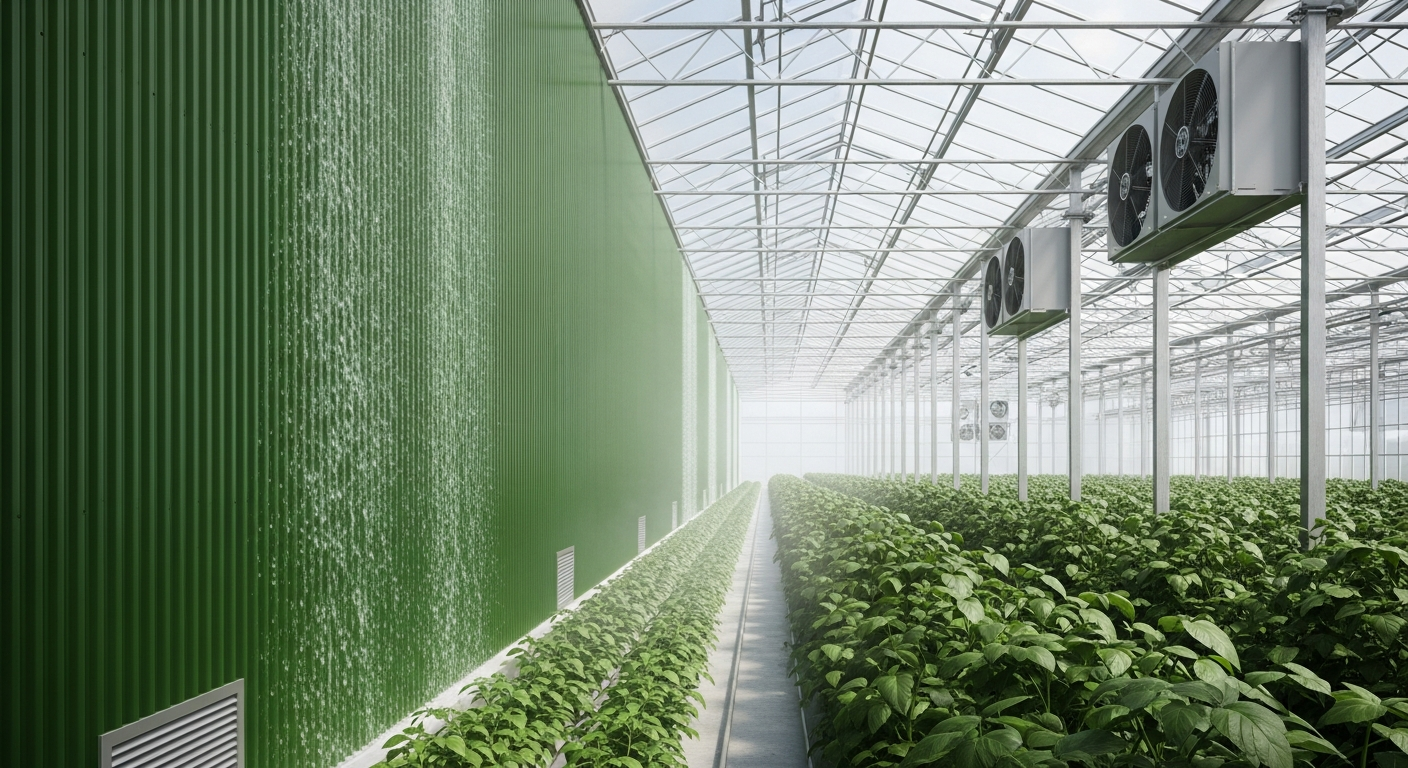
How the System Works
The typical wet wall setup involves several key components working in concert:
- Evaporative Pads: These are usually thick, fluted cellulose or corrugated cardboard pads designed to maximize surface area. Water is continuously supplied to the top of these pads.
- Water Distribution System: A header pipe with small openings or nozzles ensures an even distribution of water across the entire top edge of the pads, allowing it to trickle down through the flutes.
- Water Sump/Reservoir: Located at the base of the pads, this collects the excess water that has flowed through, preventing waste.
- Recirculation Pump: A pump draws water from the sump and sends it back up to the distribution system, creating a continuous cycle.
- Exhaust Fans: Crucially, these fans are located on the opposite side of the greenhouse. They pull hot, dry air from inside the greenhouse through the wet pads.
As the hot air passes through the water-soaked pads, water evaporates, absorbing heat from the air. The now cooler, humidified air is then drawn into the greenhouse, effectively lowering the overall temperature. Meanwhile, the exhaust fans simultaneously push the warmer air out, creating a continuous air exchange and cooling cycle. This process is particularly effective in arid or semi-arid climates where the outside air has a low relative humidity, allowing for maximum evaporative potential.
Design and Installation Considerations for Optimal Performance
Implementing a successful wet wall greenhouse cooling system requires careful planning and precise installation. Incorrect sizing or placement can significantly diminish its cooling efficiency and lead to uneven temperatures.
Sizing and Placement of Pads and Fans
- Pad Area Calculation: The total surface area of your evaporative pads is critical. It’s typically determined by the volume of your greenhouse and the desired air exchange rate. A common rule of thumb is to design for an air exchange rate of one complete air change per minute or less, depending on the crop and climate. Manufacturers often provide calculators or guidelines based on greenhouse dimensions.
- Pad Thickness: While 4-inch pads are common, 6-inch pads offer greater cooling potential due to increased surface area and longer air-water contact time, often justifying the slightly higher cost for professional applications.
- Placement: Wet walls are almost always installed on the prevailing wind side of the greenhouse to take advantage of natural airflow, minimizing the work for the exhaust fans. Fans are then placed on the opposite side, ensuring a uniform pull of air across the entire growing area.
- Fan Sizing and Spacing: The total Cubic Feet per Minute (CFM) output of your exhaust fans must match the required airflow through your pads. Fans should be strategically spaced along the wall opposite the pads to ensure even airflow distribution, preventing hot spots and dead air zones. Variable speed fans are an excellent investment, allowing for fine-tuned control over the cooling process based on real-time temperature demands.
Water Management and Pad Quality
- Water Quality: Hard water, rich in minerals like calcium and magnesium, can lead to significant mineral buildup (scale) on the pads over time. This reduces evaporative efficiency and shortens pad lifespan. Consider water softening or regular treatment to mitigate this. A “bleed-off” rate, where a small amount of water is constantly drained and replaced with fresh water, helps to prevent mineral concentration.
- Algae Prevention: Stagnant water and sunlight can encourage algae growth on pads, which also reduces efficiency and can emit odors. Regular cleaning, the use of algaecides specifically designed for greenhouse systems, or UV sterilization for the sump water can help. Ensure the pads dry out periodically if possible, especially during off-peak cooling hours.
- Pad Material: High-quality cellulose pads are durable and efficient. Inspect them regularly for tears, sagging, or excessive mineral buildup, which can indicate it’s time for replacement.
Operational Best Practices and Maintenance for Longevity
Even the best-designed wet wall system won’t perform optimally without proper operation and diligent maintenance. These practices are essential for maximizing cooling efficiency, extending equipment lifespan, and ensuring a consistent climate for your plants.
Daily and Seasonal Operations
- Automated Control: Integrate your wet wall and fan system with a reliable greenhouse climate control computer. This allows for precise temperature and humidity set points, automatically engaging the cooling system as needed, saving energy and labor.
- Temperature and Humidity Monitoring: Continuously monitor internal temperature and relative humidity. While wet walls cool effectively, they also increase humidity, which can be detrimental to some crops or encourage fungal diseases if not managed. Ensure adequate ventilation to balance these factors.
- System Cycling: For optimal cooling and pad longevity, it’s often beneficial to cycle the water pump. Allowing the pads to dry out periodically helps prevent algae and mineral buildup. Modern controllers can manage this automatically.
Maintenance Schedule
- Regular Inspection (Weekly/Bi-weekly):
- Check for even water distribution across all pads. Clogged holes in the header pipe can cause dry spots.
- Inspect pads for algae growth, mineral buildup, or physical damage.
- Verify the pump is operating correctly and check for any leaks in the system.
- Clean out the sump to remove any debris or sediment.
- Seasonal Cleanup (End of Cooling Season):
- Drain the entire water system (sump, pipes).
- Thoroughly clean the pads, sump, and distribution pipes. Consider a mild acid wash for pads if mineral scale is severe (following manufacturer guidelines).
- Disconnect and clean the pump, storing it in a dry place if not used during winter.
- Inspect exhaust fan motors and blades for wear and tear.
- Ensure all components are dry before winter storage to prevent freezing damage and microbial growth.
Troubleshooting Common Issues
- Uneven Wetting: Often caused by clogged distribution holes or a faulty pump. Clean the header pipe and check pump performance.
- Reduced Cooling: Could be due to dry spots on pads, excessive algae/mineral buildup, insufficient fan power, or high external humidity. Address each potential cause systematically.
- Excessive Humidity: Ensure fans are adequately sized and operational, and consider integrating a dehumidification strategy or increasing ventilation if possible.
Benefits and Limitations of Wet Wall Cooling
While an incredibly effective tool for greenhouse climate control, wet wall systems, like any technology, come with their own set of advantages and considerations.
Key Benefits
- Highly Effective Cooling: In dry climates, wet walls can reduce indoor temperatures by 10-20°F (5-11°C) below outdoor ambient temperatures, creating a significantly cooler growing environment.
- Energy Efficiency: Compared to refrigerated cooling systems (air conditioning), evaporative coolers consume significantly less electricity, making them a more sustainable and cost-effective solution for large spaces.
- Improved Air Quality: The continuous influx of fresh, cooled air provides better ventilation than recirculating air systems, promoting healthier plant growth and reducing airborne pathogens.
- Relatively Low Operating Costs: Beyond the initial installation, the main operating costs are electricity for the pump and fans, and water consumption.
Important Limitations
- Humidity Increase: As water evaporates, it adds moisture to the air. While beneficial for some tropical plants, this increased humidity can be problematic for crops requiring drier conditions or can exacerbate fungal issues if not managed.
- Effectiveness in Humid Climates: Wet wall systems are less effective in regions with high ambient humidity. When the air is already saturated with moisture, less water can evaporate, drastically reducing the cooling potential.
- Water Usage: While energy-efficient, these systems do consume water through evaporation and bleed-off. This can be a significant consideration in drought-prone areas or where water costs are high.
- Maintenance Requirements: Regular cleaning and monitoring are necessary to prevent algae, mineral buildup, and ensure optimal performance. Neglecting maintenance can lead to costly repairs and reduced efficiency.
Conclusion
For professional growers seeking an efficient, effective, and environmentally conscious approach to greenhouse cooling, the wet wall evaporative system is an indispensable tool. By understanding the principles of evaporative cooling, meticulously planning the design and installation, and committing to a consistent maintenance schedule, you can harness the power of water to create an ideal microclimate for your plants. While considering its limitations, particularly in humid regions, the benefits of enhanced plant health, significant energy savings, and superior climate control make wet walls a cornerstone of modern greenhouse management. Invest wisely in your cooling infrastructure, and your crops will thank you with robust growth and abundant yields.