
Ever wished you could fine-tune your greenhouse climate with the precision of a master chef adjusting a delicate sauce? For many greenhouse enthusiasts, maintaining optimal growing conditions is a constant balancing act, especially when it comes to temperature. Traditional on/off fans often create abrupt temperature swings, leading to stressed plants and wasted energy. But what if there was a smarter, more nuanced way to cool your greenhouse? Enter variable speed fans, a revolutionary technology that offers unparalleled control over your growing environment. These intelligent systems allow you to precisely regulate airflow, ensuring your plants receive the exact cooling they need, when they need it, fostering healthier growth and more robust yields. Let’s delve into how these remarkable tools can transform your greenhouse climate control strategy.
Beyond On/Off: Why Variable Speed is a Game Changer
For decades, standard single-speed fans have been the workhorse of greenhouse ventilation. While effective at moving air, their “all or nothing” operation comes with inherent drawbacks. Imagine trying to drive a car with only two speeds: off and full throttle. That’s essentially what single-speed fans offer your greenhouse. When temperatures rise, they kick on at maximum power, often causing a sudden drop in temperature that can shock plants. Once the target temperature is reached, they shut off completely, allowing heat to build up again before the cycle repeats. This constant fluctuation creates an unstable environment, consumes more energy than necessary, and can contribute to humidity issues.
What Makes Variable Speed Fans Different?
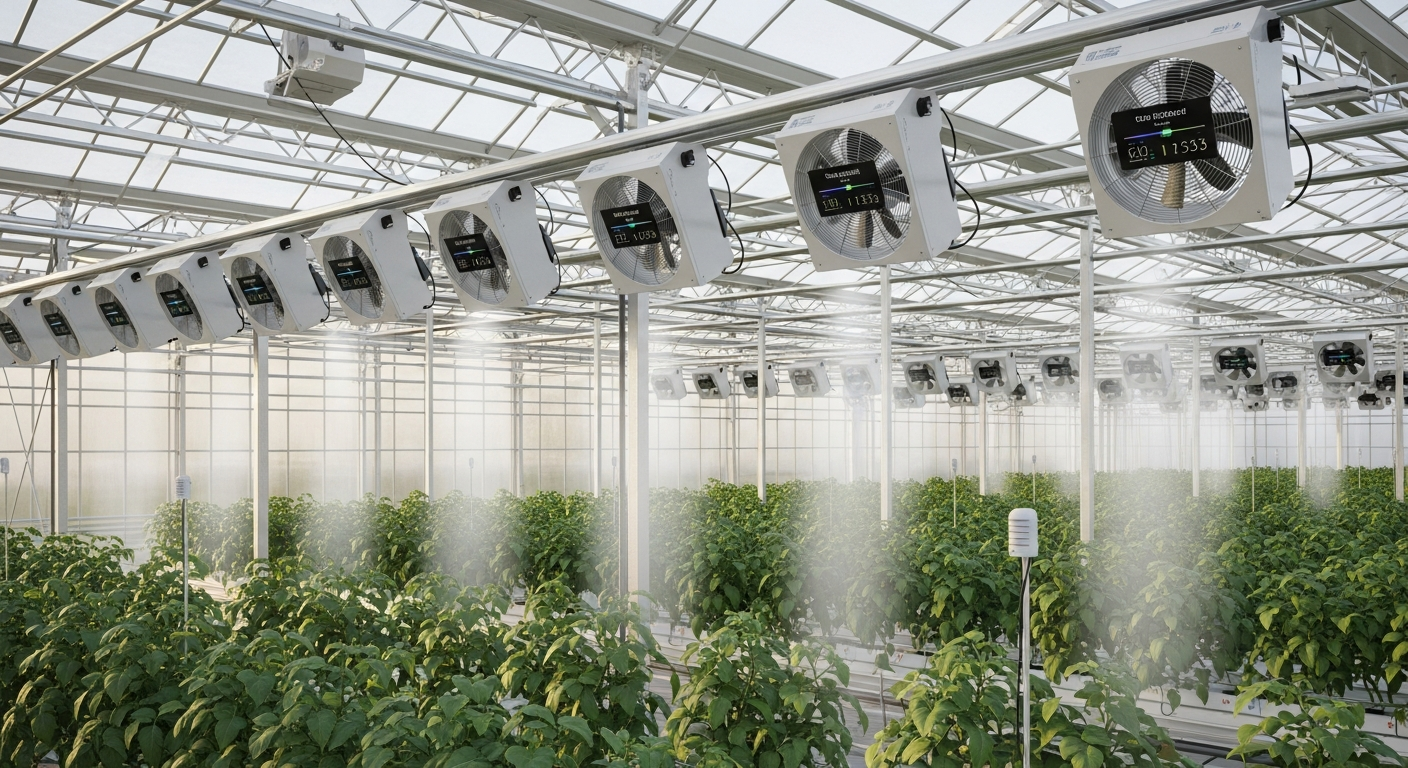
Variable speed fans fundamentally change this paradigm. Instead of just two modes, they can operate at any speed between a minimum and maximum, continuously adjusting airflow based on real-time environmental data. This seamless operation is typically achieved through:
- Advanced Motor Technology: Many modern variable speed fans utilize Electronically Commutated (EC) motors, which are highly efficient and designed for precise speed control. Traditional AC motors can also be converted to variable speed using Variable Frequency Drives (VFDs).
- Intelligent Controllers: These fans don’t just run on their own. They are integrated with sophisticated environmental controllers, thermostats, and humidistats that constantly monitor conditions. When the temperature begins to creep up, the controller signals the fan to increase its speed gradually. As conditions stabilize, the fan slows down, maintaining the desired set point with incredible accuracy.
- Smooth, Continuous Operation: This continuous adjustment prevents the sudden temperature drops and spikes associated with on/off systems. Instead, you get a gentle, consistent flow of air that maintains equilibrium without stressing your plants.
The ability to precisely match fan output to cooling demand is the core advantage, moving beyond simple ventilation to true climate regulation.
Mastering Your Microclimate: How Variable Speed Fans Deliver Precision
The true power of variable speed fans lies in their capacity to create and maintain a remarkably stable and precise microclimate within your greenhouse. This isn’t just about keeping the temperature within a broad range; it’s about fine-tuning conditions for optimal plant health and productivity.
Integrated Control Systems are Key
At the heart of precise cooling with variable speed fans is a smart environmental control system. This system acts as the brain, gathering data from sensors and orchestrating fan operation:
- Temperature Regulation with Finesse: Instead of reacting to a temperature threshold by blasting air, a variable speed system ramps up or down incrementally. If the temperature rises by half a degree, the fans might increase speed by a small percentage, just enough to bring it back down slowly. This prevents thermal shock to plants and eliminates cold spots caused by aggressive, intermittent airflow.
- Humidity Management: Precision cooling extends beyond temperature. Variable speed fans can be programmed to increase airflow slightly to mitigate humidity spikes, even when temperatures are within range. By maintaining a gentle, consistent air movement, they help prevent stagnant air pockets where fungal diseases thrive, without over-drying the environment which could harm sensitive plants.
- Optimized Air Circulation and CO2 Distribution: A constant, gentle breeze from variable speed fans ensures uniform air distribution throughout the greenhouse. This prevents pockets of stale air, ensures that CO2 is evenly dispersed for photosynthesis, and strengthens plant stems as they gently sway, leading to more robust growth.
- Zoning Capabilities: In larger or multi-zone greenhouses, variable speed fans can be integrated into a zoned system, allowing different areas to have distinct climate settings. This provides unparalleled customization for growers cultivating diverse plant species with varying needs.
Practical Tip: Proper sensor placement is critical. Ensure your temperature and humidity sensors are located at plant canopy level, away from direct sunlight or fan exhaust, to get the most accurate readings for your control system.
The Ripple Effect: Benefits of Variable Speed Fans
While precise cooling is the primary function, the advantages of variable speed fans extend far beyond simply maintaining temperature. They create a cascade of benefits that impact everything from your energy bill to the health and yield of your crops.
- Significant Energy Efficiency: This is often the most compelling benefit. Fan power consumption isn’t linear; it follows the “fan law,” meaning a small reduction in speed results in a disproportionately large reduction in power usage. For example, running a fan at 80% speed might only use about half the electricity of running it at 100%. By constantly adjusting to demand, variable speed fans drastically cut down on wasted energy compared to their on/off counterparts.
- Improved Plant Health and Increased Yields: A stable, consistent environment reduces plant stress, leading to stronger, healthier plants. Fewer temperature swings, better humidity control, and continuous fresh air promote optimal photosynthesis, nutrient uptake, and overall physiological function, which directly translates to higher quality and quantity of yields.
- Reduced Noise Levels: When operating at lower speeds, variable speed fans are significantly quieter than fans running at full throttle. This creates a more pleasant working environment for you and your staff, and less disturbance for nearby residents.
- Extended Fan Lifespan: The motors in variable speed fans experience less wear and tear. They benefit from soft starts and stops, avoiding the sudden electrical surges and mechanical stresses associated with constant on/off cycling, thus prolonging their operational life.
- Enhanced Pest and Disease Prevention: Consistent airflow helps to dry leaf surfaces and prevents the build-up of stagnant, humid air – conditions where many fungal diseases (like powdery mildew) and pests thrive. A well-ventilated greenhouse is a less inviting environment for these unwanted guests.
- Better Comfort for Growers: A stable and comfortable greenhouse climate makes working inside much more enjoyable and productive, reducing the physical strain associated with extreme temperature fluctuations.
Implementing and Optimizing Your Variable Speed Fan System
Transitioning to or setting up a variable speed fan system requires thoughtful planning, but the investment in time and resources pays dividends.
Choosing the Right Fans and Controllers
- Fan Sizing: Calculate your greenhouse’s Cubic Feet per Minute (CFM) requirements to ensure you have adequate airflow for your specific climate zone and crop needs. It’s often better to have slightly oversized fans running at lower speeds than undersized fans constantly struggling at maximum capacity.
- Fan Type and Placement: Determine whether you need exhaust fans, circulation fans, intake fans, or a combination. Proper placement ensures even air distribution and effective cooling. Exhaust fans are typically placed high on one side, with intake vents or fans on the opposite side. Circulation fans help break up stagnant air within the canopy.
- Controller Features: Look for controllers that offer programmable set points, multiple sensor inputs (temperature, humidity, CO2), remote monitoring capabilities, and a user-friendly interface. Advanced systems might even offer historical data logging to help you fine-tune your settings over time.
Installation and Calibration Tips
- Strategic Placement: Ensure fans are positioned for optimal airflow patterns, considering the layout of your plants and benches. Avoid placing sensors directly in the path of intake or exhaust air, or in direct sunlight, as this will skew readings.
- Sensor Calibration: Regularly calibrate your temperature and humidity sensors against reliable external devices to ensure accuracy. Even a slight drift can lead to inefficient cooling or heating.
- Programming Fan Curves: Most advanced controllers allow you to define a “fan curve” or “proportional band.” This tells the fan how much to increase or decrease speed for a given change in temperature or humidity. Start with conservative settings and gradually adjust as you observe your greenhouse’s response.
- Monitor and Adjust: The initial setup is just the beginning. Continuously monitor your greenhouse’s climate and your plants’ health. Seasons change, and your plants grow, altering their needs. Be prepared to fine-tune your settings as required to maintain peak efficiency and environmental stability.
- Regular Maintenance: Keep your fans clean! Dust and debris can reduce efficiency and put a strain on motors. Also, regularly check sensors for dirt or blockages that could affect readings.
Practical Tip: When initially setting up your variable speed fan system, aim for slightly higher set points and wider proportional bands, then gradually narrow them down. This iterative approach allows you to observe your greenhouse’s unique response and avoid over-cooling or over-compensating.
Investing in variable speed fans isn’t just about cooling; it’s about investing in the future of your greenhouse, your plants, and your peace of mind. By providing a stable, precise, and energy-efficient climate, these systems empower you to grow healthier, more robust plants with fewer headaches. Say goodbye to the unpredictable nature of on/off ventilation and embrace the intelligent control that variable speed fans bring to your greenhouse environment. Your plants will thank you, and so will your energy bill.