
Summer can be a season of both bounty and challenge for greenhouse growers. While the abundant sunshine fuels lush growth, it can also quickly transform your beloved greenhouse into an oven, stressing plants and potentially leading to irreversible damage. Maintaining optimal temperatures without incurring exorbitant energy bills for active cooling systems is a common struggle. But what if there was a natural, passive way to smooth out those extreme temperature swings? Enter thermal mass – a powerful, often underestimated tool that can dramatically improve your greenhouse’s summer performance and create a more stable, resilient environment for your plants.
Understanding Thermal Mass: Nature’s HVAC System for Your Greenhouse
At its core, thermal mass refers to a material’s ability to absorb, store, and then slowly release heat. Think of a large rock heating up under the sun all day and radiating warmth long after sunset. This isn’t just a fascinating natural phenomenon; it’s a principle you can harness to create a much more stable climate within your greenhouse, especially during the scorching summer months.
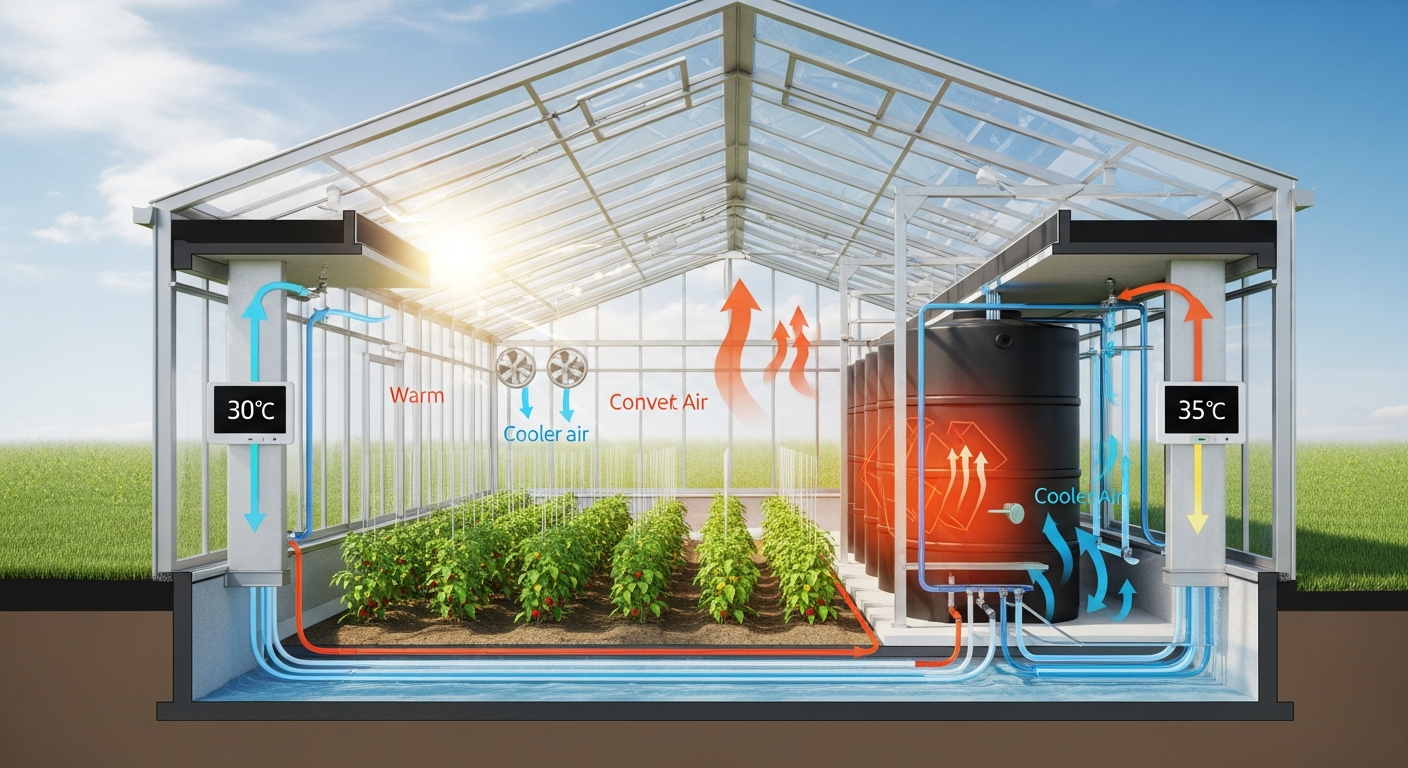
In a summer greenhouse, the sun’s energy pours in, rapidly increasing air temperature. Without effective management, this can lead to dangerous overheating. Thermal mass works by acting like a heat sponge. During the day, as your greenhouse heats up, materials with high thermal mass absorb a significant portion of that excess heat. This prevents the air temperature from soaring to destructive levels. As evening falls and the outside temperature drops, the stored heat is slowly released back into the greenhouse air. While this release is more critical in winter to prevent freezing, in summer, the primary benefit is the daytime heat absorption, which significantly reduces peak temperatures and lowers the overall cooling load.
The benefits are clear: a more consistent growing environment, reduced stress on your plants, and potentially lower reliance on energy-intensive cooling systems like exhaust fans and evaporative coolers. It’s a sustainable, passive approach to greenhouse climate control that leverages the laws of physics to your advantage.
Popular Thermal Mass Materials and How to Use Them
Incorporating thermal mass into your greenhouse doesn’t have to be complicated or expensive. Several readily available materials possess excellent heat-storing capabilities. The key is understanding their properties and how to best integrate them into your greenhouse design.
Water: The Champion of Thermal Storage
Water has an exceptionally high specific heat capacity, meaning it can absorb and store a large amount of heat energy for its volume. This makes it an ideal thermal mass material for greenhouses.
- Black Barrels or Drums: One of the most common and effective methods. Fill 55-gallon drums with water and paint them black to maximize heat absorption. Place them along the north wall or in areas that receive direct sunlight. The black surface will absorb radiant heat efficiently during the day.
- IBC Totes: For larger greenhouses, Intermediate Bulk Containers (IBCs) can hold hundreds of gallons and offer significant thermal mass. Their rectangular shape can also be easier to integrate into structural elements or shelving.
- Water Walls: Some advanced designs incorporate transparent or translucent containers filled with water as structural elements or partitioning walls, allowing light to pass through while absorbing heat.
- Placement Tips: Ensure water containers are stable and won’t tip over. Position them where they receive maximum direct sunlight exposure. Periodically check water levels and algae growth, though painting them black can help mitigate algae by blocking light.
Concrete and Masonry: Dense and Durable Options
Concrete, bricks, and stones are dense materials that can store a considerable amount of heat. While their specific heat capacity isn’t as high as water, their sheer mass makes them very effective.
- Greenhouse Foundation and Floor: A concrete foundation or slab floor can provide substantial thermal mass. If laying a new floor, consider pouring a thick concrete slab.
- Raised Beds: Constructing raised beds from concrete blocks, bricks, or even large stones not only provides planting space but also adds significant thermal mass to your greenhouse interior.
- Retaining Walls: If your greenhouse design includes retaining walls, using concrete or stone for these structures will contribute to heat absorption.
- Placement Tips: Allow concrete and masonry surfaces to be exposed to direct sunlight. Darker colored concrete or materials will absorb heat more efficiently. For floors, consider painting them a dark color or choosing dark aggregate.
Rocks, Gravel, and Earth: Natural and Accessible
Don’t underestimate the power of natural earth and rock materials, which are often readily available and affordable.
- Rock Beds: A thick layer of gravel or river rocks underneath benches or along pathways can act as thermal mass. Ensure good drainage if using a rock bed as a floor.
- Earth Floors: An unsealed, compacted earth floor can also contribute to thermal mass, especially if it’s dense clay soil.
- Underground Heat Exchangers (EAHX): While more complex, an Earth-to-Air Heat Exchanger system uses the stable temperature of the earth as a massive thermal battery. Air is circulated through buried pipes, warming up in winter and cooling down in summer, using the surrounding soil as thermal mass.
- Tips: Ensure rocks are clean before introducing them to prevent pests or diseases. For earth floors, good compaction is key to maximize density and thermal performance.
Phase Change Materials (PCMs): The Advanced Solution
Phase Change Materials are a more sophisticated option. These substances absorb and release heat during a phase transition (e.g., melting and freezing) at a specific temperature. They can store significantly more energy per unit volume than traditional thermal mass materials.
- How They Work: A PCM might be designed to melt at 75°F (24°C). As the greenhouse temperature rises above this point, the PCM melts, absorbing a large amount of heat without increasing its own temperature. When the greenhouse cools below 75°F, the PCM solidifies, releasing that stored heat.
- Applications: PCMs typically come in panels, sachets, or encapsulated forms that can be integrated into walls, ceilings, or placed strategically within the greenhouse.
- Pros & Cons: PCMs offer precise temperature regulation and are very compact, but they are significantly more expensive and complex to implement than water or masonry. They are often considered for high-performance or commercial greenhouses seeking very stable environments.
Strategic Placement and Design Considerations
Simply adding thermal mass isn’t enough; strategic placement and integration are crucial for maximizing its effectiveness in regulating summer greenhouse heat.
Maximizing Heat Absorption and Release
- Direct Sunlight Exposure: For summer cooling, position thermal mass where it will receive direct sunlight for the longest duration during the hottest part of the day. This allows it to absorb maximum heat when it’s most needed.
- Surface Area: The more surface area of the thermal mass exposed to the sun and air, the more effectively it can absorb and release heat. Distribute smaller units rather than one massive block if possible.
- Dark Colors: Painting water barrels or concrete floors a dark color (like black or dark green) significantly increases their ability to absorb radiant heat.
- Proximity to Plants: While direct sun exposure is good for the thermal mass itself, ensure it doesn’t create localized hot spots that scorch nearby plants.
Integration with Other Cooling Strategies
Thermal mass is a passive cooling strategy, but it works best when integrated with other greenhouse climate control methods, especially during intense summer heat.
- Ventilation: Excellent ventilation (both passive and active) is essential. Thermal mass absorbs heat, but fans and vents remove superheated air. Use roof vents, side vents, and exhaust fans to cycle air and prevent heat buildup. Open vents will allow stored heat to dissipate more readily at night, preparing the thermal mass for the next day’s absorption.
- Shade Cloth: During peak summer, a shade cloth can significantly reduce the overall heat load on your greenhouse. This helps the thermal mass from becoming overwhelmed and unable to absorb additional heat.
- Evaporative Cooling: For regions with dry climates, evaporative coolers (swamp coolers) work synergistically, providing additional cooling that complements the temperature-stabilizing effect of thermal mass.
Structural Integrity and Aesthetics
Consider the weight of your chosen thermal mass materials, especially water, which is very heavy (approximately 8.3 lbs per gallon). Ensure your greenhouse structure and foundation can safely support the added load. Integrate thermal mass aesthetically into your greenhouse design. Water barrels can be disguised with decorative covers or integrated into shelving. Raised beds and floors made of masonry can enhance the look and feel of your growing space.
Beyond Summer: Year-Round Benefits of Thermal Mass
While this article focuses on summer heat regulation, it’s worth noting that thermal mass is a true year-round asset for your greenhouse. In winter, the same principle works in reverse: the thermal mass absorbs heat during sunny days and slowly releases it at night, helping to buffer against freezing temperatures and reduce heating costs. This creates a more consistent diurnal cycle, which is hugely beneficial for plant health and productivity throughout the year. It contributes to a more sustainable, energy-efficient, and resilient greenhouse environment, helping you cultivate thriving plants regardless of the season’s extremes.
Conclusion
Regulating summer greenhouse heat can be a constant battle, but by intelligently incorporating thermal mass, you can turn a significant challenge into a manageable aspect of your climate control strategy. From simple water barrels to sophisticated phase change materials, the options for leveraging the heat-storing capacity of various materials are diverse and adaptable to almost any greenhouse setup. By understanding how thermal mass works and applying strategic placement, you can significantly reduce peak daytime temperatures, minimize stress on your plants, and cultivate a more stable, energy-efficient growing environment. Embrace this passive, powerful solution to keep your greenhouse thriving, even when the summer sun is at its fiercest.