
Maintaining the perfect growing environment is the perennial quest for every greenhouse enthusiast. From the delicate seedlings to the mature fruit-bearing plants, each stage demands specific temperature ranges to thrive. Traditionally, this has involved a delicate dance of opening vents, running fans, activating heaters, and adjusting shade cloths – often a manual, energy-intensive, and sometimes reactive process. But what if your greenhouse could think for itself, intelligently coordinating its heating and cooling systems to maintain optimal conditions with minimal intervention and maximum efficiency? This is where the power of a smart thermostat greenhouse system truly shines, transforming your climate control from a chore into a seamless, automated symphony.
The Imperative of Precise Greenhouse Climate Control
For any plant to reach its full potential, temperature stability is non-negotiable. Extreme fluctuations, whether too hot or too cold, can stress plants, stunt growth, reduce yields, and even invite pests and diseases. A consistent and appropriate temperature range ensures optimal photosynthesis, respiration, and nutrient uptake, leading to healthier, more robust plants. The challenge lies in the dynamic nature of a greenhouse environment – external weather changes, solar radiation, and the metabolic heat from the plants themselves constantly influence internal temperatures.
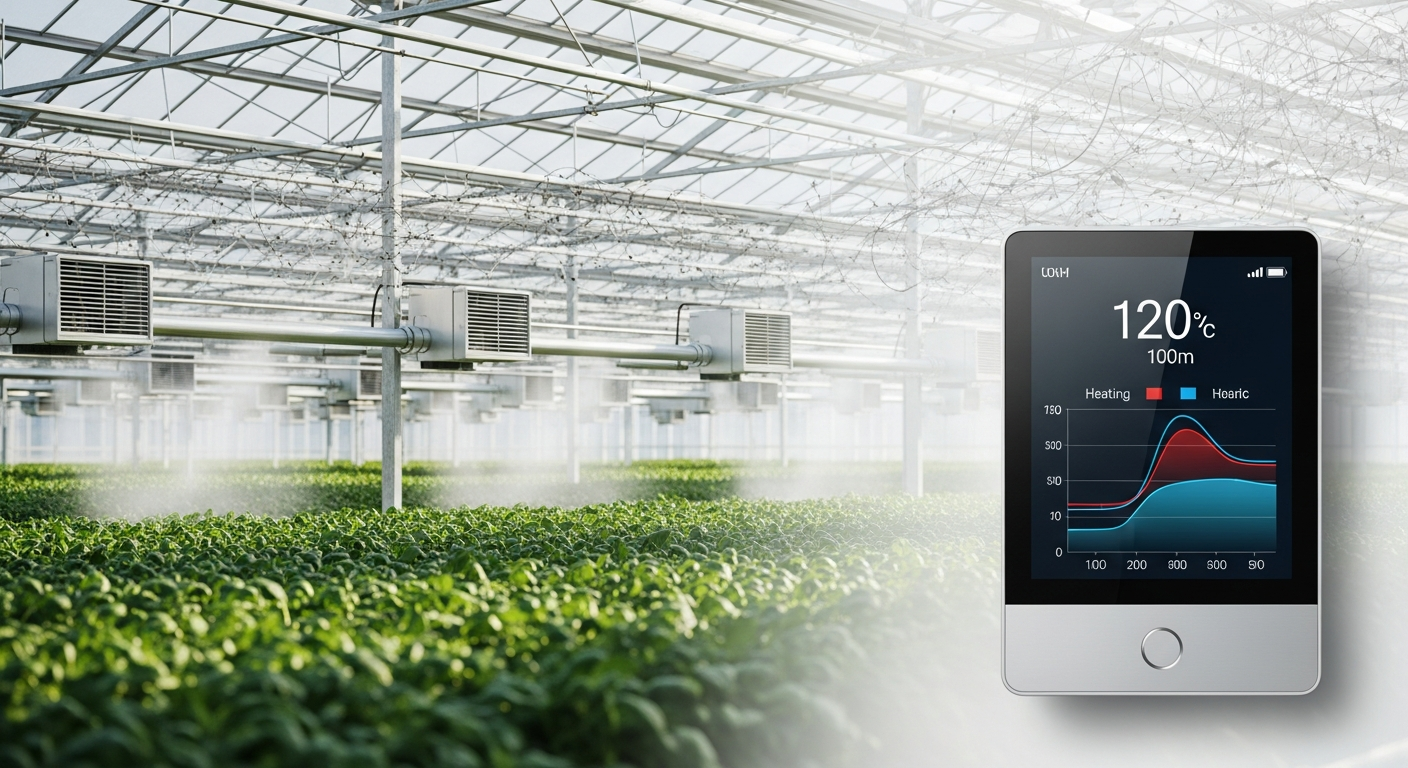
Manually managing these variables often leads to inefficiency. Imagine a sunny winter day when the greenhouse quickly overheats, prompting you to open vents, only for the sun to disappear behind clouds, causing temperatures to plummet and requiring the heater to kick in immediately. This constant back-and-forth, known as “fighting itself,” wastes enormous amounts of energy and creates an inconsistent environment for your plants. The goal of sophisticated greenhouse climate control is to eliminate this battle, ensuring that heating and cooling systems work together harmoniously, not against each other.
Unlocking Harmony: How Smart Thermostats Coordinate Systems
A smart thermostat for your greenhouse is far more than a simple on/off switch. It’s the central brain of your climate control system, capable of learning, adapting, and executing complex strategies to maintain your desired temperature. Unlike traditional thermostats that simply react to a single setpoint, smart versions offer a multitude of features designed specifically for the unique demands of a growing environment:
- Multiple Sensor Integration: Instead of relying on a single temperature reading, smart systems can incorporate data from several strategically placed sensors, providing a more accurate average and identifying localized hot or cold spots.
- Programmable Schedules: Set different temperature setpoints for day and night, or even for specific growth stages, mimicking natural diurnal cycles and plant requirements.
- Adaptive Algorithms: Many smart thermostats learn your greenhouse’s thermal characteristics over time, anticipating temperature swings and optimizing equipment activation to prevent rather than react to problems.
- Integration with Diverse Equipment: Beyond just heaters and coolers, a true automated heating cooling smart system can manage ventilation fans, intake/exhaust vents, circulation fans, evaporative coolers, foggers, and even motorized shade cloths, all from a single interface.
- Remote Monitoring & Control: Access your greenhouse’s climate data and make adjustments from anywhere in the world via a smartphone app or web portal. Receive alerts for critical temperature deviations.
The true magic lies in its ability to coordinate cooling and heating. A well-configured smart thermostat establishes a “deadband” – a temperature range where neither heating nor cooling is active. For example, if your ideal temperature is 75°F (24°C), you might set your heating to activate at 70°F (21°C) and your cooling (fans/vents) to activate at 80°F (27°C). This 10-degree deadband prevents systems from overlapping, conserving energy and reducing wear and tear on your equipment. When temperatures rise above 80°F, cooling systems engage; when they drop below 70°F, heating systems take over. Within the 70-80°F range, no energy is expended on active climate control, allowing the greenhouse to coast naturally.
Implementing Your Smart Greenhouse Climate System
Adopting a smart thermostat for your greenhouse involves more than just plugging it in. Here are some practical steps for successful implementation and optimizing greenhouse temperature:
1. Choosing the Right Smart Thermostat
- Greenhouse-Specific vs. Residential: While some robust residential smart thermostats can work for smaller hobby greenhouses, dedicated commercial greenhouse climate controllers offer more inputs, outputs, and sophisticated programming tailored for agricultural environments. Research systems that can handle multiple zones and integrate with various equipment types.
- Connectivity: Ensure the system offers reliable Wi-Fi, Ethernet, or cellular connectivity for remote access and data logging.
- Scalability: Consider if you might expand your greenhouse in the future and choose a system that can grow with you.
2. Strategic Sensor Placement
Accurate readings are paramount. Place temperature sensors at plant canopy level, away from direct sunlight, vents, or heaters that could skew readings. Use multiple sensors in larger greenhouses to get a representative average. Consider sensors that also measure humidity, CO2, and light for a more holistic approach to grow environment optimization.
3. Defining Your Temperature Setpoints and Deadband
This is the core of coordinated control.
- Heating Setpoint: The lowest temperature you want your greenhouse to reach before heaters turn on.
- Cooling Setpoint: The highest temperature you want your greenhouse to reach before fans, vents, or coolers activate.
- Deadband: The difference between your heating and cooling setpoints. A wider deadband saves energy by allowing temperatures to drift within an acceptable range, while a narrower one provides tighter control but may use more energy. Experiment to find the balance that suits your plants and energy budget.
4. Integrating with Your Equipment
Ensure your chosen smart thermostat is compatible with your existing heating (gas heaters, electric heaters, hydronic systems) and cooling (exhaust fans, intake shutters, evaporative coolers) equipment. Most systems offer relays for switching equipment on and off. You might need an electrician for proper wiring and setup, especially for high-voltage equipment.
5. Scheduling and Automation
Utilize the scheduling features to implement different day/night temperature setpoints. For example, many plants benefit from slightly cooler night temperatures. You can also program seasonal adjustments, like allowing higher temperatures in summer or lower ones in winter for dormant plants.
Advanced Strategies for Enhanced Efficiency and Plant Health
Once your basic system is up and running, you can leverage advanced features for even greater efficiency and better plant outcomes:
- Predictive Control: Some advanced systems can integrate with local weather forecasts. For instance, if a sharp temperature drop is predicted, the system might pre-emptively activate heating to avoid a sudden cold shock.
- Humidity Management: Many smart thermostats integrate with humidistats. By coordinating temperature and humidity, you can prevent fungal diseases (too high humidity) or transpiration issues (too low humidity), providing a truly stable environment.
- Data Logging and Analysis: Most smart systems log temperature and humidity data over time. Reviewing this data can help you identify trends, optimize setpoints, troubleshoot issues, and gain valuable insights into your greenhouse’s microclimate. This is crucial for achieving peak energy efficiency greenhouse operations.
- Remote Alerts: Set up notifications for critical events, such as temperatures falling outside your acceptable range or equipment malfunctions. This allows for proactive intervention, protecting your valuable crops.
- Ventilation Optimization: Coordinate heating/cooling with ventilation based on CO2 levels. If CO2 drops too low during the day, the system can momentarily activate vents to bring in fresh air, balancing CO2 enrichment with temperature control.
Conclusion
The journey to a truly optimized greenhouse environment is greatly facilitated by the adoption of smart thermostat technology. By enabling intelligent, coordinated climate control between heating and cooling systems, these devices not only significantly reduce energy waste and operational costs but also provide a more stable, consistent, and ideal growing environment for your plants. From preventing system conflicts to offering remote management and detailed data analysis, a smart thermostat empowers you to take complete control of your greenhouse’s climate, ensuring healthier plants and more bountiful harvests. Investing in a smart system is investing in the future of your greenhouse, transforming it into a high-performance, automated growing sanctuary.