
The dream of a thriving greenhouse often comes with a hidden challenge: managing the relentless buildup of heat. Even on moderately sunny days, the enclosed environment of a greenhouse can quickly trap solar radiation, turning a nurturing space into a scorching oven. High temperatures don’t just stress plants; they can stunt growth, reduce yields, and create a breeding ground for pests and diseases. While active cooling systems like fans and evaporative coolers are effective, they come with significant energy costs and noise. This is where the elegant, energy-efficient solution of passive ventilation steps in, offering a natural and sustainable way to maintain optimal greenhouse temperatures. Understanding and implementing passive vents is fundamental to achieving a healthy, productive growing environment without breaking the bank.
Understanding Passive Ventilation: The Natural Art of Greenhouse Cooling
At its core, passive ventilation harnesses the fundamental principles of physics to move air without mechanical assistance. The primary mechanism at play is the stack effect, sometimes called the chimney effect, which relies on the natural tendency of hot air to rise and cool air to sink. Inside a greenhouse, sunlight warms the air, making it less dense. This lighter, warmer air rises towards the roof. If there are openings at the highest point of the structure, this hot air will naturally escape.
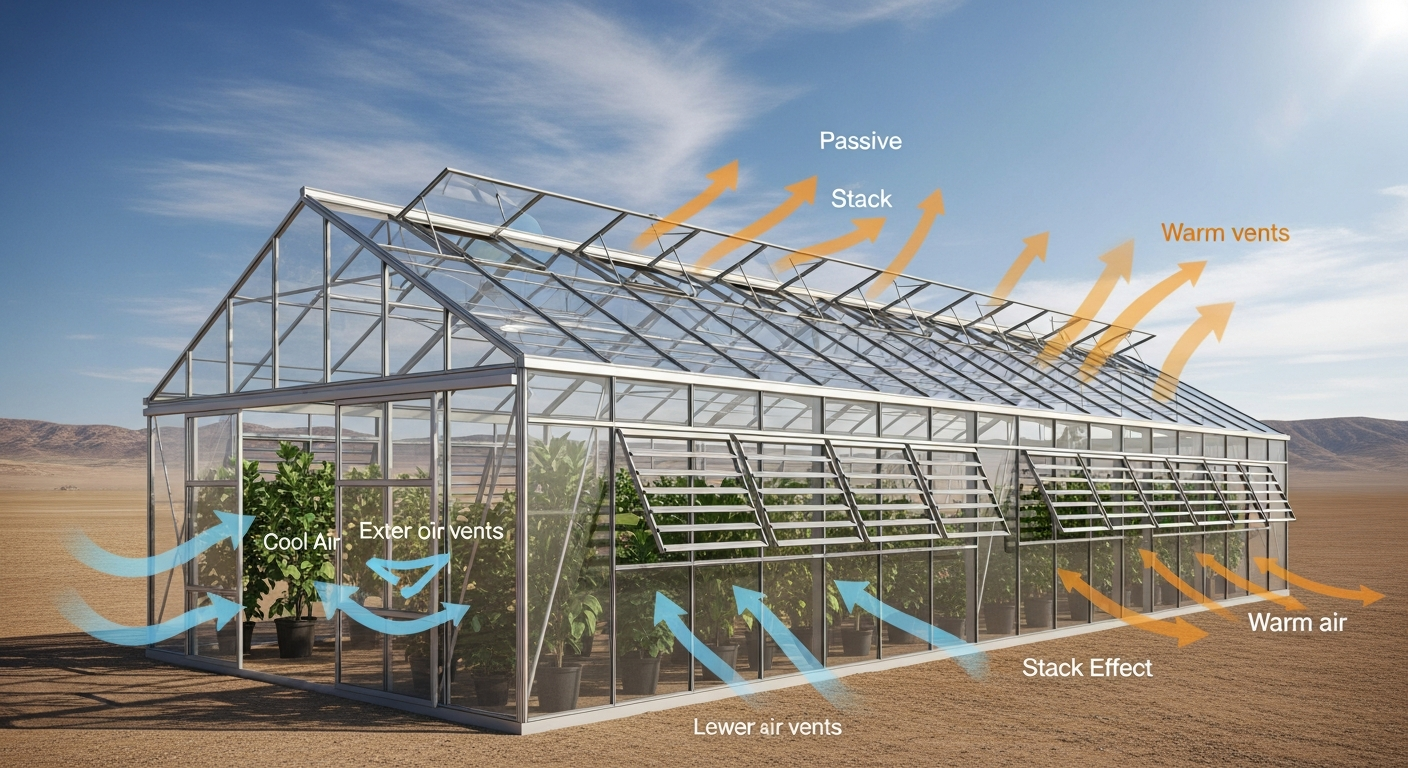
As the warm, buoyant air exits through these high vents, it creates a slight negative pressure, drawing in cooler, denser air from lower openings in the greenhouse structure. This continuous cycle of hot air escaping and cool air entering establishes a natural convection current, effectively flushing out excess heat and bringing down the overall greenhouse temperature. This method of natural ventilation is not only incredibly efficient but also silent, energy-free, and remarkably effective when properly designed and implemented. It’s a cornerstone of sustainable gardening and smart greenhouse temperature control.
Beyond the stack effect, cross-ventilation also plays a role, especially in longer greenhouses. This occurs when prevailing winds enter through one side vent and exit through another, creating a horizontal flow of air that helps move stagnant air and equalize temperatures across the structure. Combining both vertical (stack effect) and horizontal (cross-ventilation) airflow is key to maximizing the cooling potential of a passive system.
Key Players: Types of Passive Vents and Their Strategic Placement
To create an effective passive ventilation system, you need the right types of vents positioned strategically. It’s not just about having openings; it’s about guiding airflow efficiently. The two primary types of vents work in tandem to achieve optimal greenhouse cooling:
Ridge Vents (High Vents)
- Function: These are the exhaust vents, typically located along the peak or ridge of the greenhouse roof. Their primary job is to allow the superheated air that has risen to the highest point to escape.
- Placement Strategy: For maximum effectiveness, ridge vents should run the entire length of the greenhouse or at least cover a significant portion. Wider openings allow for greater air exchange. They are crucial for facilitating the stack effect.
- Design Considerations: Ridge vents can be continuous or segmented. Ensure they open wide enough to create a substantial exhaust port.
Side Vents (Base or Low Vents)
- Function: These act as intake vents, positioned along the lower sections of the greenhouse walls, typically near the foundation. They draw in cooler, fresh air from the outside to replace the hot air escaping through the ridge vents.
- Placement Strategy: Side vents should ideally be positioned on opposing sides of the greenhouse to encourage cross-ventilation. Placing them low ensures that the cooler, denser air can effectively enter and push the warmer air upwards.
- Types: These can range from simple hinged panels to specialized louvered vents that offer adjustable airflow control.
End Wall Vents and Louvers
In addition to side and ridge vents, end wall vents, often in the form of adjustable louvers, can supplement airflow, particularly in shorter greenhouses or as additional intake/exhaust points. Louvers are great because their blades can be angled to direct airflow or closed entirely when not needed, providing flexibility in air circulation.
The synergy between these vent types is critical. Without sufficient low-level intake (side vents), the high-level exhaust (ridge vents) won’t be as effective because there’s no continuous flow of replacement air. Conversely, without an escape route at the top, the greenhouse will simply get hotter, regardless of how much cool air you bring in at the bottom.
Designing Your Passive Ventilation System for Maximum Efficiency
Effective greenhouse ventilation isn’t just about installing vents; it’s about designing a system that works in harmony with your greenhouse’s specific structure, size, and local climate. Here’s how to ensure your passive system performs optimally:
Sizing Your Vents Appropriately
One of the most common mistakes is undersizing the ventilation area. A good rule of thumb for effective passive cooling is that your combined vent area (ridge + side vents) should be at least 15-20% of your greenhouse’s floor area. For warmer climates or greenhouses housing heat-sensitive plants, aiming for 20-30% or even higher can be beneficial. For example, a 100 sq ft greenhouse would ideally need 15-20 sq ft of total vent opening.
- Ridge Vent Area: Should generally be equal to or slightly larger than the side vent area to ensure efficient hot air escape.
- Side Vent Area: Crucial for cool air intake, distribute them evenly along the sides for consistent airflow.
Strategic Positioning for Enhanced Airflow
- Maximize Stack Effect: Ensure ridge vents are at the absolute highest point. For side vents, place them as low as possible to maximize the height difference between intake and exhaust, which boosts the stack effect.
- Consider Prevailing Winds: If possible, orient your greenhouse and vents to take advantage of prevailing winds for natural cross-ventilation. Place intake vents on the windward side and exhaust vents on the leeward side.
- Avoid Obstructions: Both inside and outside the greenhouse, ensure there are no physical barriers blocking the path of airflow. Tall plants, shelving, or even external structures like fences or trees can impede vent performance. Keep vent openings clear.
Greenhouse Structure and Materials
The type of greenhouse structure also plays a role. Gutter-connected commercial greenhouses may have specialized continuous ridge vents, while hobby greenhouses often rely on individual roof vents. Material choice (polycarbonate, glass, film) affects insulation properties, which in turn influences how quickly heat builds up and how effective passive ventilation needs to be. For instance, a single-pane glass greenhouse will heat up and cool down faster than a double-wall polycarbonate structure.
Optimizing Passive Vent Performance: Beyond Basic Placement
While proper placement and sizing are foundational, several additional strategies and tools can significantly enhance the effectiveness of your passive ventilation system, ensuring consistent greenhouse temperature control and promoting robust plant health.
Automatic Vent Openers: Your Hands-Off Solution
Manual vent operation is reactive and requires constant attention. This is where automatic vent openers shine. These clever devices use a non-electric, thermally activated mechanism to open and close vents based on temperature changes. Most work with a cylinder containing a wax or liquid that expands when heated, pushing a piston to open the vent. As the temperature drops, the wax contracts, and a spring closes the vent.
Benefits of Automatic Vent Openers:
- Consistent Temperature: They respond immediately to temperature fluctuations, preventing overheating even when you’re not around. This ensures more stable optimal growing conditions.
- Energy Efficiency: No electricity required, maintaining the inherent advantage of passive ventilation.
- Convenience: Frees you from constant monitoring and manual adjustments.
- Humidity Control: By maintaining consistent airflow, they also contribute to better humidity control, reducing the risk of fungal diseases.
Install these on both ridge and side vents for comprehensive automation. Ensure they are properly calibrated for your desired temperature range.
Incorporating Vent Screens
While vents are crucial for air, they can also be an inviting entryway for pests. Installing fine mesh screens over your vent openings is a simple yet effective way to maintain airflow while keeping out unwanted insects and larger debris. Choose a screen material that doesn’t significantly impede airflow, such as greenhouse-grade insect netting.
Regular Maintenance is Key
For your passive ventilation system to continue working efficiently, regular maintenance is essential:
- Clean Vents: Clear any accumulated dust, dirt, leaves, or other debris from vent openings and screens. Blocked vents reduce airflow.
- Check Hinges and Mechanisms: Lubricate hinges and ensure that manual or automatic vent openers are moving freely and not sticking.
- Inspect Seals: Ensure that when vents are closed, they seal tightly to prevent heat loss during colder periods.
Integrating with Other Passive Cooling Strategies
Passive ventilation is most powerful when combined with other passive cooling methods:
- Shade Cloth: Applying external shade cloth during intense summer months can significantly reduce the amount of solar radiation entering the greenhouse, lessening the load on your ventilation system.
- Whitewash: A temporary paint applied to the exterior of the roof during summer reflects sunlight, achieving a similar effect to shade cloth.
- Thermal Mass: Placing water barrels or large rocks inside the greenhouse can absorb heat during the day and release it slowly at night, moderating temperature swings.
While passive ventilation is a powerhouse for most hobby and small commercial greenhouses, it’s important to recognize its limitations. In extremely hot and humid climates, or for specific crops with very narrow temperature tolerances, supplemental active cooling (like exhaust fans with intake shutters) might be necessary to achieve precise control during peak heat.
Conclusion
Mastering the use of passive vents is a fundamental skill for any greenhouse enthusiast looking to create a thriving and sustainable growing environment. By understanding the principles of natural air movement – the stack effect and cross-ventilation – and strategically implementing ridge and side vents, you can effectively combat heat buildup and maintain optimal greenhouse temperatures. The addition of automatic vent openers further enhances efficiency and convenience, ensuring your plants receive consistent care even when you’re away.
Embracing passive ventilation is a step towards energy-efficient, environmentally friendly gardening. It reduces reliance on electricity, minimizes operational costs, and provides a quieter, more natural atmosphere for your plants. A well-designed passive system contributes significantly to plant health, better yields, and overall greenhouse success. Start evaluating your greenhouse’s ventilation needs today and unlock the full potential of natural cooling.