
Greenhouse growers constantly battle the elements, striving to maintain the perfect internal climate for their plants. One of the most persistent challenges, especially during warmer months, is managing the influx of hot air and preventing heat stress, particularly around ventilation points. Vents are essential for air exchange, but they can also be gateways for unwelcome heat. Imagine a simple, elegant solution that not only cools the air entering your greenhouse but also creates a protective, humid microclimate right where it’s needed most. This isn’t a futuristic fantasy; it’s the ingenious application of misting lines to form a cool barrier at your greenhouse vents. By strategically deploying a fine mist, you can significantly enhance your greenhouse’s cooling efficiency and provide your plants with a much-needed reprieve from high temperatures.
Understanding the “Cool Barrier” Concept for Greenhouse Vents
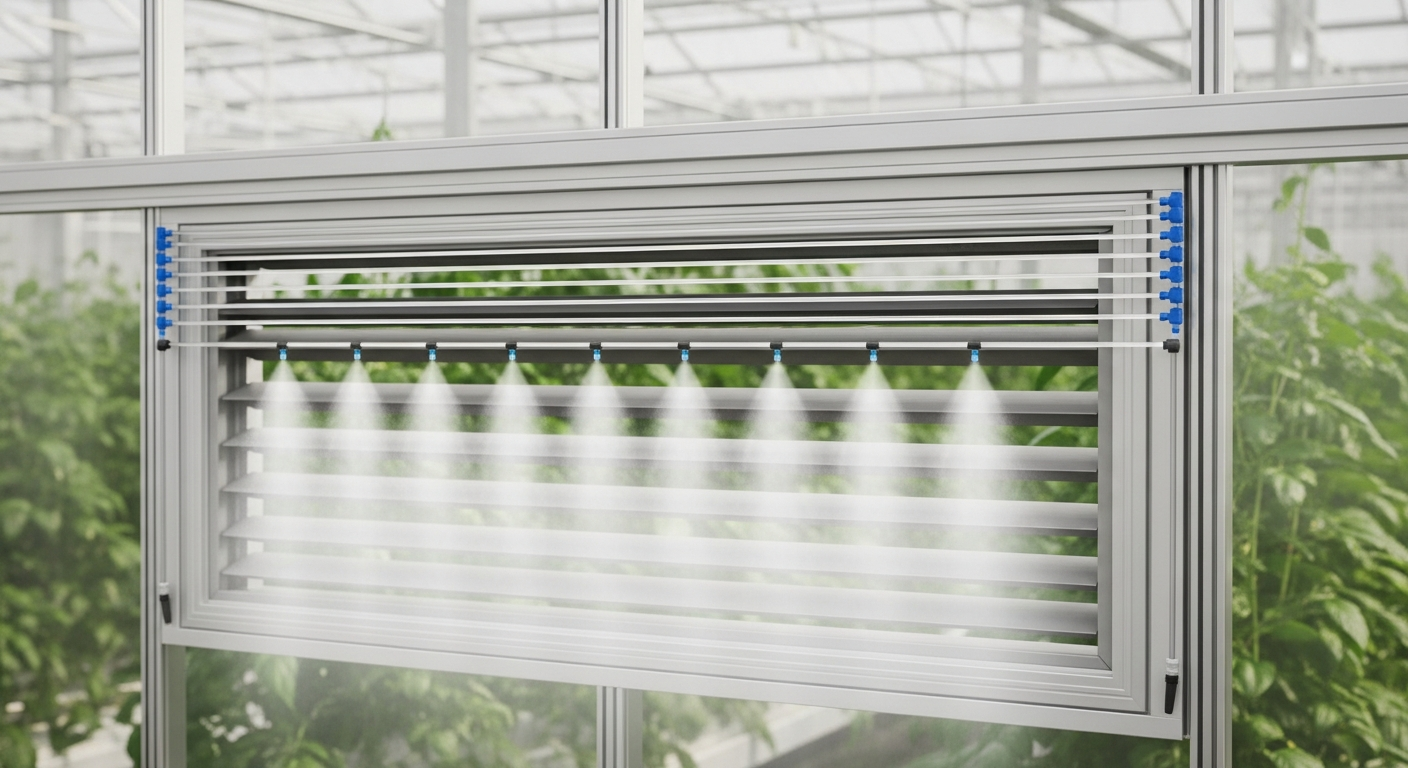
The concept of a “cool barrier” at greenhouse vents harnesses the power of evaporative cooling, a natural process that has been used for centuries to lower ambient temperatures. When water evaporates, it absorbs heat energy from its surroundings, leading to a cooling effect. By installing misting lines directly at or near your greenhouse vents, you create a zone where fine water droplets are introduced into the air. As fresh, often warmer, air enters through the vents, it passes through this mist. The tiny water particles quickly evaporate, absorbing heat from the incoming air before it even fully penetrates your growing space. This process effectively pre-cools the air, creating a buffer zone that significantly reduces the thermal load on your greenhouse.
The Science Behind Evaporative Cooling
Evaporative cooling is a thermodynamic process where the evaporation of a liquid, typically water, into the surrounding air cools an object or a fluid. This happens because the most energetic water molecules escape as vapor, leaving behind lower-energy molecules and thus reducing the temperature of the remaining water and its immediate environment. In a greenhouse setting, misting nozzles produce extremely fine droplets with a large surface area-to-volume ratio, facilitating rapid evaporation. This rapid phase change efficiently draws heat out of the incoming air, lowering its dry-bulb temperature and increasing its humidity – both beneficial for many greenhouse crops.
Why Vents Are Critical Hotspots
Greenhouse vents, whether roof vents or side vents, are essential for regulating temperature and humidity by allowing hot, stale air to escape and cooler, fresh air to enter. However, during peak daylight hours, especially in summer, the “cooler, fresh air” entering through these vents can still be considerably warmer than ideal for your plants. Without a mechanism to temper this incoming air, pockets of heat can form near the vents, leading to localized plant stress, uneven growth, and increased transpiration rates. A cool barrier specifically targets these critical entry points, ensuring that the air integrated into your greenhouse climate is already optimized for plant health, preventing initial heat spikes and contributing to a more stable overall internal environment.
Designing and Installing Your Misting Line System
Implementing an effective misting line system for vent cooling requires careful planning and the right components. A well-designed system will integrate seamlessly with your existing greenhouse structure and climate control strategies.
Choosing the Right Misting Components
- Misting Nozzles: The heart of your system. Opt for nozzles that produce a very fine mist (fogging nozzles are ideal) rather than a coarse spray. Droplet size is crucial for efficient evaporation. Stainless steel or ceramic orifices offer better durability and resistance to clogging. Nozzle flow rates should be chosen based on the volume of air entering your vents and the desired cooling effect.
- High-Pressure Pump (Optional but Recommended): While low-pressure systems exist, high-pressure pumps (typically 800-1000 PSI) produce much finer droplets, leading to more efficient evaporation and less wetting of surrounding surfaces. This is vital for maximizing the cooling effect without unnecessarily increasing humidity to detrimental levels.
- Tubing: High-pressure nylon or stainless steel tubing is required for high-pressure systems. Ensure the tubing is UV-resistant if exposed to sunlight.
- Filtration System: Absolutely critical. Fine misting nozzles clog easily. A multi-stage filtration system, including sediment filters and potentially a reverse osmosis (RO) system if your water is hard, will prolong the life of your nozzles and maintain system efficiency.
- Connectors and Fittings: Use high-quality, leak-proof connectors compatible with your chosen tubing and pressure.
Strategic Placement at Vents
The effectiveness of your cool barrier hinges on intelligent placement. The goal is to create a curtain of mist that the incoming air must pass through. Consider the following:
- Above or Just Inside Vents: For hinged roof vents, position misting lines slightly above or along the inner edge of the vent opening. For side vents, run lines horizontally along the top of the vent opening. The mist should drift downwards and outwards, intercepting the incoming air stream.
- Coverage Area: Ensure comprehensive coverage across the entire width of the vent opening. Spacing of nozzles will depend on their spray pattern and flow rate.
- Distance from Plants: While the goal is to cool incoming air, avoid direct impingement of mist on delicate plants if using a system that produces larger droplets or if your fans are pulling air too aggressively through the mist, as this could lead to excessive leaf wetness and potential fungal issues. High-pressure fogging systems minimize this risk due to ultrafine droplets.
Automation and Controls
A manual misting system is inefficient and time-consuming. Automating your cool barrier is key to optimal performance and energy efficiency. Integrate your misting system with your greenhouse climate control system:
- Thermostats: Program the system to activate when the greenhouse temperature exceeds a set threshold, or when external air entering the vents reaches a certain temperature.
- Humidistats: Crucial for preventing over-humidification, especially in already humid climates. The system should deactivate or pulse if humidity levels become too high.
- Timers: Use timers to pulse the misting system rather than running it continuously. Short bursts of mist allow for efficient evaporation without saturating the air.
- Vent Actuators: Sync your misting lines to activate only when vents are open, ensuring water isn’t wasted and preventing unnecessary humidity buildup when vents are closed.
Optimizing Your Cool Barrier for Maximum Effectiveness
Installation is just the first step. Ongoing optimization and maintenance are crucial for ensuring your misting lines consistently provide an efficient cool barrier.
Balancing Temperature and Humidity
The primary goal is cooling, but misting inherently adds humidity. Monitor both temperature and relative humidity (RH) closely. Your control system should be programmed to maintain the desired balance for your specific crops. For instance, if RH becomes too high, the system might pulse less frequently or for shorter durations, prioritizing evaporation over just adding moisture. High-pressure systems are generally better at cooling with less humidity increase due to finer droplet sizes.
Water Quality and Maintenance
Poor water quality is the nemesis of misting systems. Hard water minerals or sediment can quickly clog fine nozzles, reducing efficiency or rendering the system useless. Regularly inspect and clean or replace your filtration cartridges. Periodically check nozzles for blockages and clean them using appropriate tools or solutions as recommended by the manufacturer. Consider flushing your lines regularly to prevent biofilm buildup.
Troubleshooting Common Issues
- Clogged Nozzles: The most common issue. Ensure proper filtration. Clean nozzles regularly with specialized cleaning solutions or by soaking them in vinegar (for mineral deposits).
- Uneven Mist: Can indicate a partially clogged nozzle or uneven pressure. Check pump pressure and inspect all nozzles.
- Leaking Fittings: Typically due to improper installation or worn seals. Tighten connections or replace O-rings/fittings as needed.
- Insufficient Cooling: Check nozzle output, ensure the pump is operating at the correct pressure (for high-pressure systems), and verify that the system is activating appropriately based on temperature readings. Adjust pulse durations or frequency.
Benefits Beyond Cooling
While the primary benefit of a cool barrier at your vents is temperature regulation, this system offers several other advantages for your greenhouse environment and plant health.
Improved Plant Health and Growth
By preventing hot air from directly entering and stressing plants near vents, you create a more uniform and stable growing environment. Reduced heat stress leads to healthier, more vigorous plants, better flowering, and higher yields. The slightly increased ambient humidity can also reduce transpiration rates, helping plants conserve water and nutrients, especially important for humidity-loving crops or during periods of intense sunlight.
Energy Efficiency
A cool barrier system can significantly reduce the workload on your primary cooling systems, such as exhaust fans or evaporative pad systems. By pre-cooling the incoming air, you decrease the amount of heat these systems need to remove from the greenhouse, potentially leading to lower electricity consumption and reduced operational costs. It’s a proactive approach to cooling that complements other climate control strategies, making your entire system more efficient.
Enhanced Climate Control Precision
Integrating misting lines at vents provides another layer of precision to your greenhouse climate control strategy. It allows you to fine-tune the temperature and humidity specifically at the points of air entry, creating micro-climates that are more favorable for plant establishment and growth. This targeted cooling ensures that even the most vulnerable areas of your greenhouse, those closest to fresh air intake, remain within optimal parameters, contributing to overall consistency and plant uniformity.
Conclusion
Implementing misting lines to create a cool barrier at your greenhouse vents is an intelligent, energy-efficient strategy for advanced climate control. It’s a proactive measure that pre-cools incoming air, mitigates heat stress, and enhances the overall growing environment for your plants. From preventing localized hotspots to improving plant health and contributing to energy savings, the benefits are substantial. By carefully designing, installing, and maintaining your system with attention to water quality and automation, you can transform a potential vulnerability—your vents—into a powerful asset for maintaining ideal greenhouse climates. Embrace this innovative approach to cooling and watch your greenhouse thrive, even in the hottest conditions.