
The gentle hum of a well-regulated greenhouse is a gardener’s symphony, and central to that harmony is often the humble shade cloth. It’s an indispensable tool, shielding precious plants from scorching sun, excessive heat, and harmful UV rays, creating a microclimate where delicate seedlings thrive and mature plants flourish. However, there’s an invisible adversary that can turn this protector into a potential hazard: high winds. A gusty day can transform your carefully installed shade cloth into a massive sail, threatening to rip it to shreds, damage your greenhouse structure, and expose your vulnerable plants to the very elements you sought to protect them from. Securing your shade cloth effectively isn’t just about preserving your investment; it’s about safeguarding the health of your plants and the integrity of your entire greenhouse operation. This article will guide you through comprehensive strategies to ensure your shade cloth stands strong, even when the wind howls.
The Unseen Force: Why Wind Is a Shade Cloth’s Nemesis
Before diving into solutions, it’s crucial to understand the challenges posed by wind. When wind encounters a large, flat surface like a shade cloth, it creates a powerful “sail effect.” This isn’t just about lateral pressure; wind can generate significant uplift, trying to pull the cloth upwards and away from its moorings. Furthermore, constant flapping and rubbing against the greenhouse frame can lead to abrasion, weakening the fabric and attachment points over time. The consequences of inadequate greenhouse protection can be severe: ripped or torn shade nets, bent or broken structural components, and ultimately, damaged or stressed plants due to sudden overexposure.
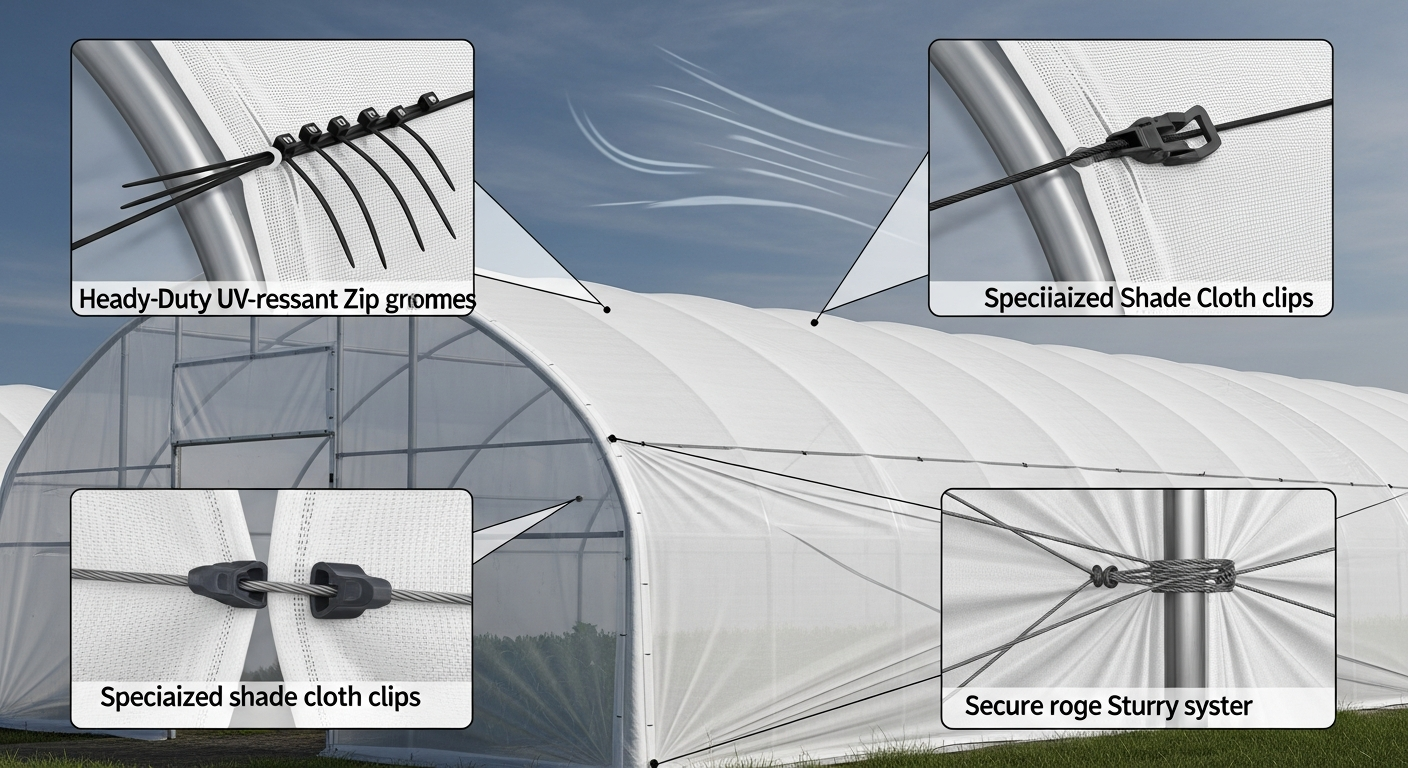
The key to effective shade cloth protection lies in minimizing flapping, distributing tension evenly, and utilizing robust attachment methods that can withstand both constant buffeting and sudden, powerful gusts. It’s a battle against dynamic forces, requiring thoughtful planning and durable materials.
Foundation First: Selecting the Right Shade Cloth and Support Hardware
The battle against high winds begins long before installation, with the choices you make in materials and hardware. Investing in quality from the outset will save you headaches and expenses down the line.
Choosing the Right Shade Cloth
- Knitted vs. Woven: While both provide shade, knitted shade cloth is generally more wind-resistant than woven. Its interlocking knit construction means that if a small tear occurs, it’s less likely to unravel extensively, making it more durable in windy conditions. Look for a high GSM (grams per square meter) which often indicates a denser, stronger fabric.
- UV Stabilization: Regardless of type, ensure your shade cloth is UV-stabilized. Constant exposure to sunlight weakens materials, making them more susceptible to tearing and degradation from wind.
- Appropriate Shade Percentage: While not directly related to wind resistance, choosing the correct shade percentage (e.g., 30-50% for most vegetables, 60-80% for sensitive plants) ensures your plants get the right amount of light without unnecessarily dense fabric that could catch more wind than needed.
Essential Support Hardware for Wind Resistance
The strength of your attachments is only as good as the hardware you use. Skimping here is a false economy:
- Grommets: If your shade cloth comes with grommets, inspect their quality. They should be reinforced, rust-resistant (brass or galvanized steel), and securely crimped. For DIY installations, invest in a grommet kit and place them strategically every 1-2 feet along the perimeter.
- Shade Cloth Clips/Grippers: These are invaluable for adding attachment points without damaging the fabric. High-quality clips are UV-resistant, designed to grip the fabric securely without tearing it, and are reusable. They are excellent for mid-panel support or adding extra fasteners.
- Fasteners:
- UV-Resistant Zip Ties/Cable Ties: Opt for industrial-grade, UV-resistant black ties. These are simple to use and very effective for securing shade nets to frames or wires.
- Bungee Cords/Straps: While they offer some flexibility and shock absorption, use them judiciously. Ensure they are heavy-duty and UV-resistant. Over-reliance on bungees can lead to too much movement, increasing abrasion.
- Rope/Cord: Choose durable, UV-resistant options like nylon, polypropylene, or braided polyester. Thicker ropes are generally stronger.
- Spring Clips/Snap Clips: Useful for quick attachment and removal, particularly on guide wires or small poles. Ensure they have sufficient gripping strength.
- Support Structure: Your greenhouse frame itself needs to be robust enough to handle the additional stress transferred by the securely attached shade cloth. Reinforce weaker sections if necessary.
Mastering the Art of Secure Attachment Methods
Proper installation is paramount to ensure your shade cloth remains secure against high winds. The goal is to create a taut, uniformly tensioned barrier that offers minimal opportunity for wind to get underneath and lift it.
Perimeter Attachment: The First Line of Defense
The edges of your shade cloth are the most vulnerable. Secure them rigorously:
- Lashing with Rope or Cord: This is one of the most reliable methods. Thread a strong, UV-resistant rope through each grommet along the perimeter. Then, lash it tightly around your greenhouse frame, purlins, or dedicated guide wires. Use knots that hold securely but can be undone if needed. For extra security, consider cross-lacing patterns.
- Heavy-Duty Zip Ties/Cable Ties: Attach the shade cloth to the frame or guide wires using UV-resistant zip ties. Space them closely, every 12-18 inches, to prevent gaps where wind can penetrate. Make sure they are pulled tight.
- Bungee Balls/Cords (with Caution): While offering flexibility, use bungees primarily for situations where slight give is beneficial (e.g., temporary installations, or where the frame might shift slightly). Attach them through grommets and around the frame. Do not rely solely on bungees for extreme wind resistance, as too much stretch can lead to excessive flapping.
- Rebar Hooks or Ground Stakes (for external shade structures): If your shade cloth extends beyond the greenhouse or covers a hoop house, anchor the bottom edge securely to the ground. Use heavy-duty rebar hooks driven deep into the soil, or robust ground stakes, and attach the cloth via grommets and strong rope or bungee.
Mid-Panel Support: Preventing the Sail Effect
For larger shade cloths, securing only the perimeter is insufficient. The large expanse of fabric in the middle can still billow and flap, creating damaging forces. Mid-panel support is critical:
- Support Wires/Cables: Stretch strong, galvanized steel wires or heavy-gauge monofilament lines across the greenhouse structure, running parallel to each other underneath where the shade cloth will lay. Space these wires 3-5 feet apart.
- Attaching to Support Wires: Once the shade cloth is in place, use shade cloth clips or small zip ties to attach the fabric to these underlying support wires. This creates additional anchoring points across the entire surface, preventing the fabric from lifting excessively and distributing wind pressure more evenly.
- Creating a Ridge: If possible, install the shade cloth with a slight peak or incline, especially on larger structures. This sheds both wind and rain more effectively, reducing the surface area directly exposed to uplift.
Retractable and Temporary Systems
If you need to deploy or retract your shade cloth frequently, ensure the system is designed for wind. Use sturdy pull ropes, guide wires, and reliable locking mechanisms. When fully deployed, the cloth should be as taut and securely fastened as a permanent installation. When retracted, ensure it is bundled tightly and securely tied down to prevent it from catching wind or coming loose.
Reinforcement and Ongoing Maintenance for Longevity
Even the best initial installation can succumb to wear and tear. Regular vigilance and preventative reinforcement are key to long-term wind resistance.
- Reinforce Edges: If your shade cloth lacks robust edges, consider adding reinforced tape or webbing to the perimeter, especially around grommets, to prevent tearing. You can also double up on grommets in particularly high-stress areas.
- Prevent Abrasion: Inspect your greenhouse frame for any sharp edges, bolts, or rough spots where the shade cloth might rub. Pad these areas with foam, rubber, or duct tape to prevent abrasion and premature wear of the fabric.
- Regular Inspections: Make it a habit to regularly inspect all attachment points. Check grommets for signs of tearing, zip ties for brittleness, bungees for fraying, and ropes for wear. Tighten any loose connections. Small tears in the fabric should be patched immediately with specialized shade cloth repair tape or clips before they escalate into larger rips.
- Check Frame Integrity: Periodically assess your greenhouse frame itself. Ensure all connections are secure and that the structure isn’t showing signs of fatigue or stress from constant wind loading.
- Seasonal Removal: If you experience prolonged periods of severe weather or do not require shade during certain seasons, consider removing and storing your shade cloth. This extends its lifespan and eliminates the risk of wind damage during extreme conditions.
Proactive Measures and Wind Storm Preparedness
Anticipation is your best defense against unexpected gales. Being prepared can save your shade cloth and your plants.
- Assess Your Location: Understand the prevailing wind directions and potential wind tunnels around your greenhouse. This knowledge can inform where you need extra reinforcement. Consider planting natural windbreaks like hedges or installing a dedicated fence or specialized windbreak netting on the windward side of your greenhouse.
- Emergency Kit: Keep an emergency kit handy with extra shade cloth clips, heavy-duty zip ties, repair tape, and a length of strong rope. This allows for quick repairs if a small issue arises during a windy spell.
- Weather Monitoring: Stay informed about local weather forecasts, especially during seasons prone to high winds or severe storms.
- Pre-Storm Checklist: If strong winds are forecast:
- Go around your greenhouse and visually inspect every attachment point.
- Tighten any loose ties or ropes.
- Add extra clips or zip ties in vulnerable areas, particularly the windward side.
- If extreme winds are predicted (e.g., hurricane or tornado warnings), seriously consider temporarily removing the shade cloth entirely. It’s often easier and safer to reinstall it later than to repair significant damage.
Conclusion
Securing your shade cloth against high winds is a critical aspect of effective greenhouse climate control and plant protection. It’s a multi-faceted endeavor that combines choosing quality materials, employing robust attachment methods, conducting regular maintenance, and adopting a proactive approach to weather preparedness. By meticulously implementing these strategies, you can transform your shade cloth from a potential liability into a steadfast shield, ensuring your greenhouse remains a calm, productive haven for your plants, no matter how fiercely the wind blows outside. Your plants, and your peace of mind, will thank you for the effort.