
The joy of harvesting crisp, vibrant leafy greens from your greenhouse is unparalleled. However, as temperatures rise, particularly during summer months or unexpected heatwaves, a silent but formidable enemy emerges: heat stress. For sensitive crops like lettuce, spinach, kale, and other popular leafy greens, soaring temperatures can quickly turn a lush crop into a wilting, bolting, or bitter disappointment. Understanding and actively preventing heat stress is not just about protecting your yield; it’s about ensuring the quality, flavor, and overall success of your greenhouse operation.
At Greenhouse Climates, we know that maintaining optimal conditions is key to thriving plants. This comprehensive guide will equip you with the knowledge and practical strategies to combat heat stress, safeguarding your leafy greens and ensuring they remain healthy, productive, and delicious, even when the mercury climbs.
Understanding Heat Stress: The Silent Threat to Leafy Greens
Heat stress occurs when ambient temperatures in the greenhouse exceed the plant’s optimal growing range, placing immense strain on its physiological processes. For most leafy greens, ideal temperatures typically hover between 60-75°F (15-24°C). When temperatures consistently climb above this, plants begin to struggle, leading to a cascade of negative effects:
- Increased Respiration, Reduced Photosynthesis: While photosynthesis (producing energy) slows down in high heat, respiration (burning energy) speeds up. This imbalance depletes the plant’s energy reserves, hindering growth.
- Excessive Transpiration: Plants try to cool themselves by releasing water vapor through their leaves (transpiration). In high heat, this can lead to rapid water loss, even if the roots have access to water, resulting in wilting.
- Enzyme Denaturation: Critical enzymes required for plant metabolic processes can be damaged by extreme heat, impairing overall function.
- Nutrient Uptake Issues: High temperatures can reduce the plant’s ability to absorb essential nutrients from the soil or nutrient solution.
Visible Symptoms of Heat Stress in Leafy Greens:
- Wilting and Drooping: Often the first sign, as plants lose turgor.
- Yellowing or Blanching: Leaves may turn pale or yellow, indicating chlorophyll breakdown.
- Tip Burn: A common issue in lettuce, where the edges of young, inner leaves turn brown or black, often exacerbated by humidity fluctuations and calcium uptake issues in high heat.
- Bolting (Premature Flowering): Leafy greens are typically grown for their vegetative growth. Heat stress can trick the plant into thinking its life cycle is ending, causing it to prematurely send up a flower stalk, making the leaves bitter and unmarketable.
- Stunted Growth and Reduced Leaf Size: Overall plant development is severely hindered.
- Bitter Taste: Compounds that make leaves taste bitter, like lactucarium in lettuce, increase significantly under stress.
Mastering Your Greenhouse Environment: Core Climate Control Strategies
Effective climate control is the cornerstone of preventing heat stress. By actively managing the greenhouse environment, you can keep temperatures within optimal ranges and minimize plant stress.
1. Ventilation: Airflow is King
Proper ventilation is paramount for removing hot, stale, humid air and introducing cooler, fresher air. It also helps prevent air stratification and ensures uniform temperatures throughout the growing space.
- Natural Ventilation: For smaller greenhouses, strategically placed ridge vents and side vents can allow hot air to escape from the top and cooler air to enter from the bottom. Ensure vents are large enough for effective air exchange.
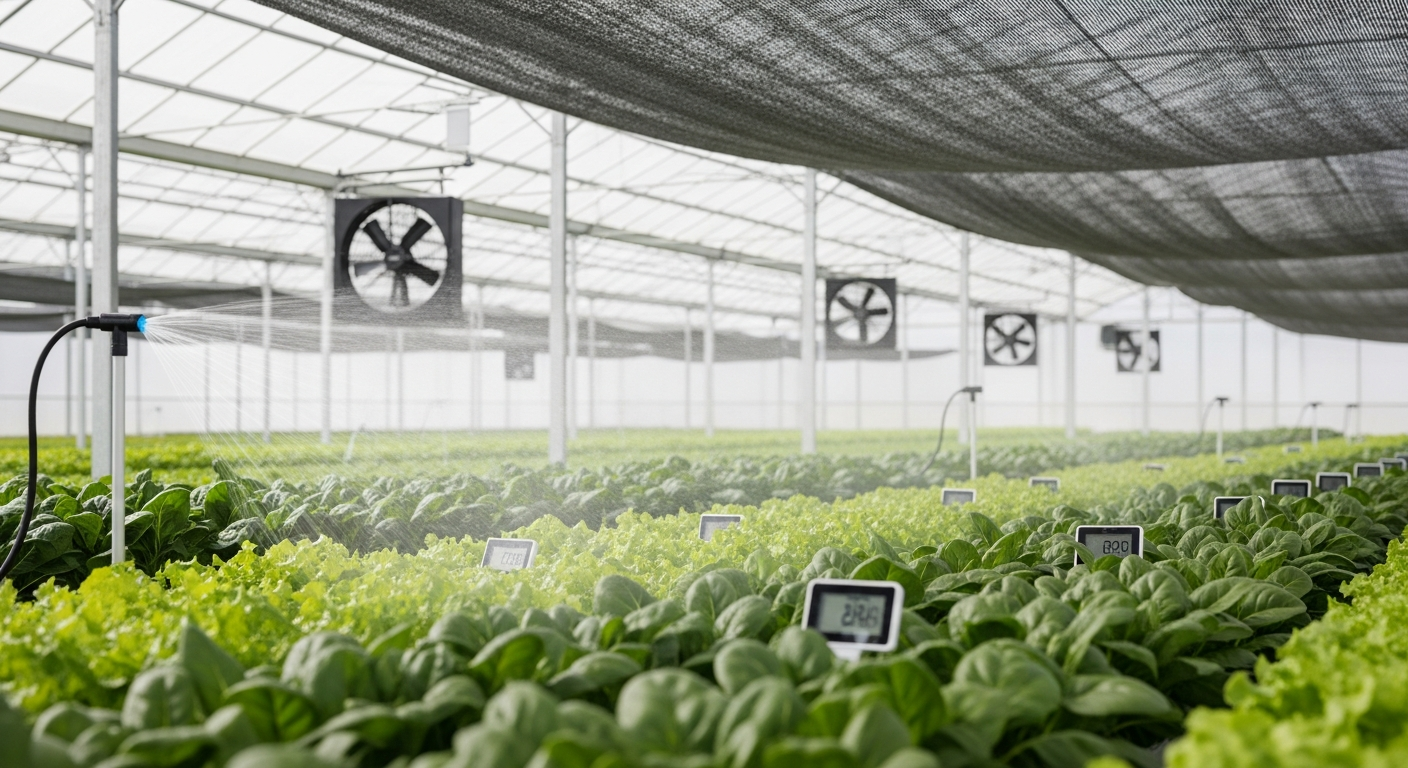
- Forced Ventilation with Exhaust Fans: In larger or more sealed greenhouses, exhaust fans are crucial. They pull hot air out, creating negative pressure that draws in cooler outside air through intake vents (often with louvers). Sizing your fans correctly for your greenhouse volume is critical for efficient air changes per minute.
- Horizontal Airflow (HAF) Fans: These circulate air internally, ensuring even temperatures and preventing pockets of hot, humid air around plants. They are essential for breaking up thermal layers and enhancing evaporative cooling from plant surfaces.
2. Shading: Blocking the Sun’s Intensity
Direct, intense sunlight can rapidly raise greenhouse temperatures and cause leaf scorching. Shading is a simple yet highly effective solution.
- Shade Cloths: Available in various densities (e.g., 30%, 40%, 50% blockage), shade cloths reduce the amount of solar radiation entering the greenhouse. For most leafy greens, a 30-50% shade cloth is appropriate during peak summer heat. Install them on the exterior of the greenhouse to prevent heat from building up within the structure itself.
- Whitewash or Shade Paint: A temporary solution for glass or polycarbonate greenhouses, special paints can be applied to the exterior to reflect sunlight. They wear off naturally or can be removed, making them seasonal.
- Automated Shade Systems: For advanced setups, automated internal or external shade screens can deploy based on light intensity or temperature thresholds, offering precise control.
3. Cooling Systems: Active Temperature Reduction
When ventilation and shading aren’t enough, active cooling systems become necessary.
- Evaporative Cooling (Pad & Fan Systems): Highly effective, especially in drier climates. This system draws hot, dry air through a wet cellulose pad. As water evaporates from the pad, it absorbs heat from the air, cooling it significantly before it enters the greenhouse.
- Fogging and Misting Systems: High-pressure foggers or misters release incredibly fine water droplets into the air. As these droplets evaporate, they absorb heat, cooling the greenhouse. These systems also increase humidity, which can be beneficial in very dry conditions but needs careful monitoring to avoid fungal issues.
- Bench Misting: Directed misting systems can provide localized cooling for plants, especially useful in hydroponic setups or propagation areas.
Cultivation Practices for Enhanced Heat Resilience
Beyond environmental controls, specific cultural practices can significantly improve your leafy greens’ ability to withstand heat and maintain quality.
1. Irrigation and Nutrient Solution Management
Water is critical for plant cooling and nutrient transport. Heat increases water demand.
- Timely and Adequate Watering: Water early in the morning before temperatures peak. This allows plants to absorb water and hydrate throughout the day. In hot weather, you may need to increase watering frequency. Ensure deep, thorough watering rather than shallow surface sprinkles.
- Hydroponics – Chilling Nutrient Solution: For hydroponic leafy greens, the temperature of the nutrient solution is as important as air temperature. A warm solution holds less dissolved oxygen, stressing roots and making them susceptible to disease. Using a nutrient solution chiller is a highly effective way to keep the root zone cool (aim for 65-70°F or 18-21°C).
- Monitor EC and pH: High temperatures can affect nutrient uptake, so regular monitoring of electrical conductivity (EC) and pH in your nutrient solution or soil is vital.
2. Crop Selection and Spacing
- Choose Heat-Tolerant Varieties: Some leafy greens and specific varieties are naturally more resistant to bolting and bitterness in heat. For lettuce, consider varieties like ‘Romaine’, certain ‘Butterhead’ types, and many ‘Leaf’ lettuces (e.g., ‘Black Seeded Simpson’). Consult seed catalogs for heat-tolerant designations.
- Optimize Plant Spacing: Give plants enough room. Denser plantings restrict airflow around individual plants, leading to localized hot, humid pockets and increased competition for water and nutrients. Proper spacing improves ventilation and reduces stress.
3. Strategic Fertilization
While nutrients are essential, adjust your feeding strategy during heat waves.
- Balanced Nutrients: Ensure plants receive a balanced diet. Avoid excessive nitrogen during periods of high heat, as it can promote lush, tender growth that is more susceptible to wilting and tip burn. Focus on adequate potassium, which plays a role in plant stress tolerance and water regulation.
4. CO2 Enrichment (with Caution)
CO2 enrichment can boost photosynthesis, but its effectiveness diminishes rapidly in high heat. If ventilation is inadequate to keep temperatures down, adding CO2 can be counterproductive as plants will be too stressed to utilize it efficiently. Only enrich CO2 when temperatures are within the optimal range and light levels are sufficient.
Monitoring and Proactive Measures
The best defense against heat stress is a robust offense. Constant vigilance and proactive adjustments are key.
1. Continuous Environmental Monitoring
- Sensors and Data Logging: Invest in reliable environmental sensors to continuously monitor air temperature, humidity (RH), light intensity, and CO2 levels. Data logging allows you to track trends, identify problem areas, and optimize your control strategies over time.
- Remote Monitoring and Alerts: Many modern greenhouse climate control systems offer remote monitoring capabilities and can send alerts to your phone or email if critical thresholds are exceeded, allowing for immediate intervention.
- Multiple Monitoring Points: Don’t just rely on one sensor. Place sensors at different heights and locations within the greenhouse to identify any temperature gradients.
2. Routine Plant Inspection
Nothing replaces the human eye. Regular walk-throughs and close inspection of your plants will allow you to catch early signs of heat stress before significant damage occurs. Look for subtle wilting, changes in leaf color, or the very first signs of tip burn or bolting.
3. Automation and Integration
For larger or more sophisticated greenhouses, integrating your climate control systems with automation can dramatically improve your ability to prevent heat stress. Automated systems can:
- Open/close vents and deploy shade screens based on temperature and light readings.
- Turn on/off fans and cooling systems as needed.
- Adjust irrigation schedules based on environmental conditions and plant demand.
This reduces manual labor and ensures consistent, precise environmental management.
Conclusion
Preventing heat stress in greenhouse leafy greens is a multifaceted endeavor that requires a proactive and integrated approach. By understanding the physiological impacts of high temperatures and implementing a combination of effective climate control strategies, thoughtful cultivation practices, and diligent monitoring, you can create a resilient environment for your crops.
Investing in proper ventilation, shading, and cooling systems, coupled with attentive watering, smart variety selection, and continuous monitoring, will protect your precious leafy greens from the ravages of heat. Embrace these strategies, and you’ll be rewarded with a bountiful harvest of healthy, delicious, and market-ready produce, even when the heat is on outside your greenhouse.