
As the summer sun blazes overhead, a greenhouse can quickly transform from a nurturing haven into a sweltering oven, posing a serious threat to even the most resilient plants. High summer heat can cause irreversible damage, from wilting and stunted growth to complete crop failure. For any greenhouse enthusiast, mastering the art of temperature regulation is not just a skill—it’s an absolute necessity. But fear not! Combatting intense heat is entirely achievable with the right strategies and a bit of planning. This comprehensive guide from Greenhouse Climates will walk you through a range of effective methods to keep your greenhouse cool and your plants thriving, even when temperatures soar.
The Cornerstone of Cooling: Ventilation and Airflow
Effective greenhouse ventilation is the first and most critical line of defense against excessive heat. Stagnant, hot air traps solar energy, rapidly increasing internal temperatures. By ensuring continuous airflow, you allow this superheated air to escape and introduce cooler, ambient air.
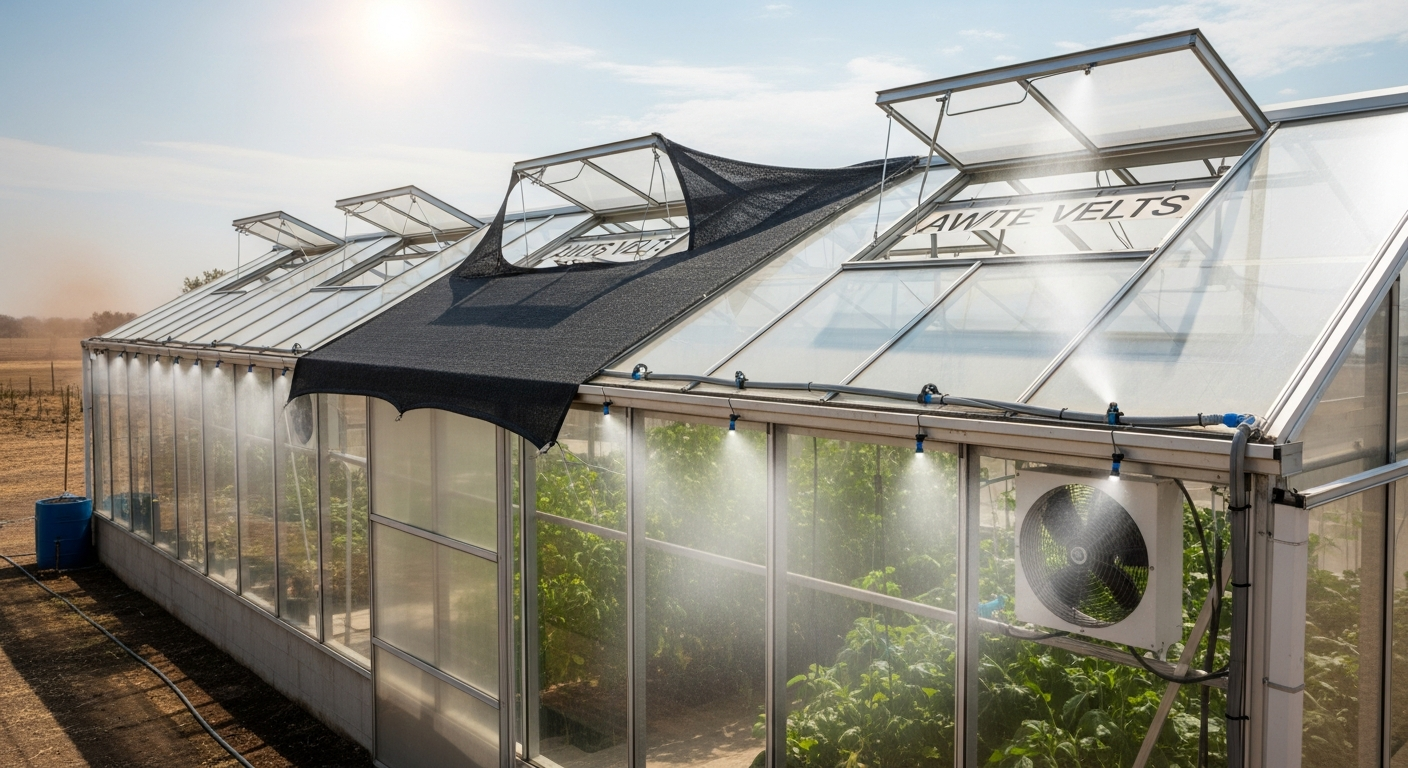
Passive Ventilation: Harnessing Natural Air Currents
- Roof Vents: Heat rises, so strategically placed roof vents are incredibly effective. For optimal performance, consider automatic vent openers that respond to temperature changes, opening as it gets hotter and closing as it cools down. This provides hands-free greenhouse temperature control.
- Side Vents and Louvers: Positioned at the base or sides of your greenhouse, these allow cooler air to enter. When used in conjunction with roof vents, they create a “chimney effect” where cooler air pushes hot air up and out. Cross-ventilation is key here.
- Doors and Windows: Simply opening doors and windows can provide significant airflow, especially in smaller or less elaborate structures. Maximizing these openings during the hottest parts of the day is a straightforward way to reduce heat.
Active Ventilation: Fans for Forced Air Movement
For larger greenhouses or those in consistently hot climates, passive ventilation alone might not be enough. This is where active ventilation systems come into play.
- Exhaust Fans: These powerful fans are installed at one end of the greenhouse (typically high up to remove hot air) and pull hot air out, creating a negative pressure that draws in cooler air through vents or louvers at the opposite end. Proper sizing is crucial; ensure your fans can exchange the air in your greenhouse several times per minute.
- Circulation Fans (Horizontal Airflow Fans – HAF): Unlike exhaust fans, HAF fans don’t move air in or out of the greenhouse. Instead, they create a continuous, gentle air current within the structure, breaking up pockets of stagnant hot air and ensuring uniform temperatures and humidity. This constant air circulation also helps strengthen plant stems and deters certain pests and diseases.
- Automated Controls: Integrating thermostats with your fan systems allows for automatic operation. Set your desired maximum temperature, and the fans will kick on when needed, ensuring consistent greenhouse cooling without constant manual intervention.
Shading Strategies: Blocking the Sun’s Intensity
While sunlight is essential for plant growth, too much direct sun in summer leads to excessive solar gain, superheating your greenhouse. Shading is a simple yet incredibly effective method to mitigate this.
Shade Cloth: Your First Line of Defense
Shade cloth for greenhouses is available in various densities (measured in percentages, e.g., 30%, 50%, 70%) and materials. The percentage indicates how much sunlight it blocks.
- External Application: Placing shade cloth over the exterior of your greenhouse is generally more effective as it blocks the sun’s rays before they even enter the structure, preventing heat buildup on the glazing.
- Internal Application: While less effective than external shading, internal shade cloth can still help diffuse light and reduce heat. It’s often easier to install and remove.
- Choosing the Right Percentage: Most plants thrive under 30-50% shade in peak summer. Too much shade can hinder growth, so choose based on your specific plants’ needs and your local climate’s intensity. Heat-sensitive plants like lettuce or delicate seedlings might benefit from higher percentages, while sun-lovers like tomatoes might prefer less.
Shading Paints and Coatings
Specialized paints or liquid shading compounds can be applied directly to the exterior of your greenhouse glazing. These reflective coatings reduce light transmission and heat buildup. They are designed to wear off naturally over time or can be scrubbed off when summer ends, allowing full light during cooler months. This is an excellent option for long-term, seasonal shading.
Strategic Planting of Deciduous Trees
If you’re planning a new greenhouse or have space around an existing one, planting deciduous trees on the south or west side can provide natural summer shade while allowing full winter sun after they drop their leaves. This is a passive, aesthetic, and long-term shading solution.
Advanced Cooling Systems: Taking Control in Extreme Heat
When ventilation and shading aren’t quite enough to beat relentless summer heat, particularly in arid climates, advanced cooling systems offer powerful solutions.
Evaporative Cooling (Swamp Coolers)
These systems work on the principle of evaporative cooling: as water evaporates, it draws heat from the air, thereby lowering the temperature. They are highly effective in dry climates where the relative humidity is low.
- Pad and Fan Systems (Wet Walls): This is a common and very efficient system for larger greenhouses. An exhaust fan pulls air across a wet cellulose or aspen fiber pad installed on the opposite wall. As the air passes through the wet pad, water evaporates, cooling the air before it enters the greenhouse.
- Portable Evaporative Coolers: Smaller, self-contained units can be used in smaller greenhouses or to supplement larger systems.
Important Note: Evaporative cooling adds humidity to the air. While beneficial in dry climates, it can lead to excessive humidity and potential fungal issues in already humid environments. Monitor your greenhouse humidity carefully.
Misting and Fogging Systems
Misting and fogging systems release ultra-fine water droplets into the air. These tiny droplets quickly evaporate, cooling the air without significantly increasing relative humidity (if the droplets are fine enough). They can also be used to raise humidity levels for specific plant needs.
- High-Pressure Foggers: These produce extremely fine mist that cools effectively and evaporates quickly, minimizing wetness on plants.
- Low-Pressure Misters: While easier to install, they produce larger droplets that can make plants wet, potentially leading to fungal diseases if ventilation is poor.
Both misting and fogging systems can be automated with timers and humidistats to activate when temperatures rise or humidity drops below desired levels.
Water Management and Plant Health: Hydration as a Cooling Strategy
The health of your plants plays a role in regulating the internal climate of your greenhouse. Healthy, well-watered plants contribute to cooling through transpiration.
- Deep and Consistent Watering: Ensure your plants receive adequate water, especially during hot spells. Deep watering encourages robust root systems, making plants more resilient to heat stress. Water early in the morning to allow plants to absorb moisture before the peak heat of the day. Avoid watering in the evening during high humidity, as damp conditions overnight can encourage fungal growth.
- Transpiration: Nature’s Air Conditioner: Plants release water vapor through their leaves (transpiration), which has a cooling effect, much like human perspiration. A healthy, well-hydrated plant canopy can significantly contribute to lowering the surrounding air temperature.
- Mulching: Apply a layer of organic mulch around your plants. This helps retain soil moisture, keeps root zones cooler, and reduces evaporation from the soil surface, meaning less frequent watering is needed.
Strategic Planning and Automation: Working Smarter, Not Harder
Integrating smart technology and making informed decisions can dramatically reduce the effort required to maintain ideal greenhouse conditions.
- Greenhouse Orientation: If you’re building a new greenhouse, consider its orientation. A north-south orientation often allows for more uniform light distribution throughout the day, while an east-west orientation can lead to intense direct sun exposure on the south side.
- Plant Selection: Choose plants that are well-suited to your climate and greenhouse conditions. Opt for heat-tolerant plants if you consistently struggle with high temperatures. There are many varieties of vegetables, herbs, and ornamentals that can withstand significant heat.
- Automated Environmental Controls: Invest in thermostats, hygrometers, and smart controllers. These devices can automatically trigger fans, vents, misters, and shade cloth based on preset temperature and humidity thresholds. This level of greenhouse automation provides peace of mind and ensures optimal conditions even when you’re not around.
- Temperature Monitoring: Always have reliable thermometers (maximum/minimum thermometers are very useful) and hygrometers inside your greenhouse to accurately track conditions. Knowing the exact temperature and humidity helps you fine-tune your cooling strategies.
Keeping your greenhouse cool during the sweltering summer months requires a multi-faceted approach. By combining effective ventilation, strategic shading, efficient watering, and, if necessary, advanced cooling systems, you can create a comfortable and productive environment for your plants. Proactive planning and the intelligent use of automation will save you time and effort, ensuring your green oasis thrives even when the summer sun is at its fiercest. Embrace these strategies, and enjoy a vibrant, healthy greenhouse all season long!