
One of the most persistent challenges for any greenhouse grower is protecting crops from invasive insect pests. While chemical treatments offer a solution, a more sustainable and often more effective first line of defense comes in the form of physical barriers: insect screens. These specialized screens, installed over vents, doors, and other openings, are critical for maintaining a healthy, pest-free growing environment. However, simply installing any screen isn’t enough. The effectiveness of your insect exclusion strategy hinges almost entirely on one crucial factor: choosing the right mesh size. It’s a decision that balances robust pest protection with essential ventilation, directly impacting your plants’ health and your greenhouse’s overall climate control.
Why Mesh Size is More Than Just a Bug Blocker
At first glance, the purpose of an insect screen seems straightforward: keep bugs out. But the selection of mesh size involves a delicate equilibrium that extends far beyond simple exclusion. It’s a critical component of your greenhouse’s climate control and integrated pest management (IPM) strategy.
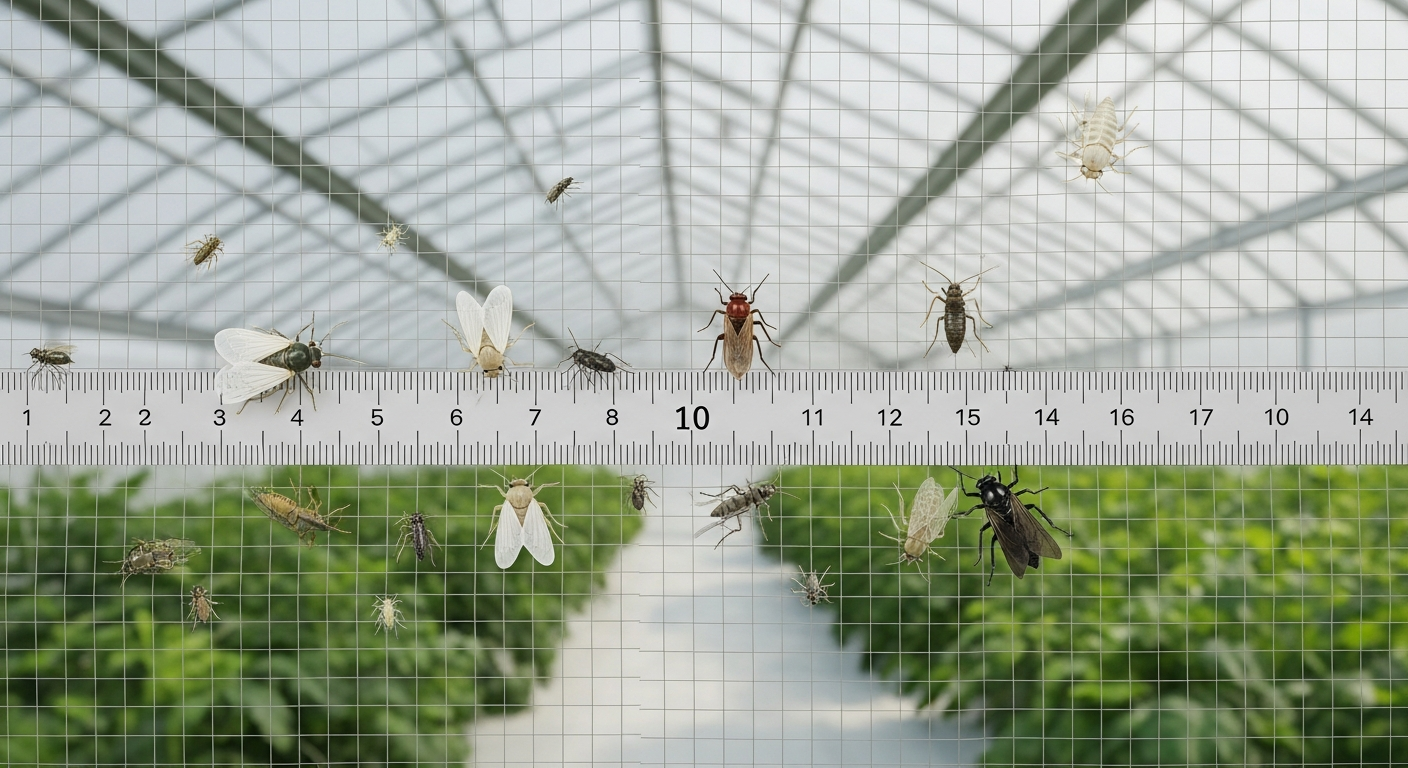
The Dual Role: Protection and Permeability
- Pest Exclusion: The primary function, of course, is to prevent tiny insect invaders from entering your controlled environment. A mesh size too large will simply act as a welcome mat for pests like thrips, whiteflies, and aphids, jeopardizing your crops.
- Airflow and Ventilation: Equally important, especially in naturally ventilated greenhouses, is allowing sufficient air exchange. Plants require fresh air for photosynthesis, CO2 replenishment, and to prevent the build-up of humidity that can foster fungal diseases. A mesh that’s too fine, while excellent at stopping pests, can severely restrict airflow, leading to overheating, stagnant air, and other detrimental climate issues. This compromise between pest exclusion and air permeability is often referred to as the “openness factor” – the percentage of the screen’s surface that is open for air passage.
Understanding this fundamental trade-off is the first step towards making an informed decision. You’re not just choosing a screen; you’re fine-tuning a critical aspect of your greenhouse’s respiratory system.
Identify Your Adversaries: Knowing Your Pests and Their Sizes
To effectively screen out pests, you first need to know who you’re fighting. Different insect species have vastly different sizes, and a “one-size-fits-all” approach to mesh can leave your greenhouse vulnerable. Researching common pests in your region and those specifically known to attack your chosen crops is paramount.
Common Greenhouse Pests and Their Approximate Sizes:
- Aphids (e.g., green peach aphid): Typically 1.5 – 3 mm long. Relatively easy to screen out with moderately fine mesh.
- Whiteflies (e.g., greenhouse whitefly): Very small, around 1 – 2 mm long. Often require finer mesh than aphids.
- Thrips (e.g., western flower thrips): Extremely small, often 0.5 – 1.5 mm long. These are among the most challenging pests to screen due to their slender bodies and ability to squeeze through tiny openings.
- Fungus Gnats: Adult gnats are small flies, about 2 – 3 mm long. The larvae cause damage in the soil, but adults are the target for screening.
- Leafminers (adult flies): Generally 1.5 – 3 mm long. Similar screening requirements to aphids or small flies.
- Spider Mites: Too small (less than 1 mm) to be effectively screened out by conventional insect netting without completely sacrificing airflow. Other IPM strategies are typically employed for mites.
The golden rule for pest exclusion is to select a mesh size fine enough to exclude your smallest target pest. If thrips are a concern, your screen needs to be thrips-proof, even if aphids are your most common problem.
Key Factors Guiding Your Mesh Size Decision
Selecting the optimal mesh size for your greenhouse insect screens involves balancing several crucial factors. A holistic approach ensures effective pest control without compromising crop health or operational efficiency.
1. Your Target Pests
As discussed, this is the primary driver. If you’re growing high-value crops extremely susceptible to thrips, you’ll need a much finer mesh than if you’re only concerned with larger pests like moths or bees. Documenting your specific pest threats will narrow down your options considerably.
2. Greenhouse Design and Ventilation Strategy
- Natural Ventilation: If your greenhouse relies heavily on natural air currents through side and roof vents, restricted airflow from a very fine mesh can be a major problem. You’ll need to carefully balance pest control with maximum possible openness. This might mean larger vent areas or even supplemental fan power to compensate.
- Forced Air Ventilation: Greenhouses using exhaust fans and intake shutters have more control. While airflow can still be impacted, forced air systems can often overcome some of the resistance from finer screens, allowing you to prioritize smaller mesh sizes for superior pest protection. However, increased static pressure can lead to higher energy costs for fans.
3. Crop Type and Susceptibility
Some crops are more delicate or valuable and thus warrant higher levels of protection. For instance, propagation houses or those growing highly sensitive ornamentals might justify finer mesh and potentially accept slightly reduced airflow. Food crops may also have strict pest-free requirements.
4. Geographic Location and Climate
- Wind: Areas with high winds can experience greater pressure drop across fine screens, further reducing effective airflow.
- Humidity and Temperature: Hot, humid climates demand excellent ventilation to prevent heat stress and fungal issues. Overly restrictive screens in such environments can quickly lead to problems. Colder climates might allow for slightly less airflow if heating is the primary concern.
5. Maintenance and Longevity
Finer mesh screens are more prone to clogging with dust, pollen, and debris, especially in dusty environments. This blockage further reduces airflow and requires more frequent cleaning, adding to labor costs. Consider the durability of the screen material, its UV resistance, and ease of cleaning.
Practical Guide to Selecting Mesh Sizes
Mesh size is typically measured in “holes per inch” (e.g., 50×25 means 50 strands in one direction, 25 in the other per inch) or, more precisely, by the actual opening size in microns (µm). A micron is one-thousandth of a millimeter. For very tiny pests, the micron measurement is far more accurate for comparison.
General Recommendations for Mesh Sizes:
- For larger insects (bees, moths, larger flies):
- Mesh: 17×17 to 20×20 holes per inch
- Opening: ~1000-1200 microns (1.0-1.2 mm)
- Use: General exclusion where very fine pests are not a significant threat. Good airflow.
- For Aphids, Whiteflies, Fungus Gnats, and Leafminers:
- Mesh: 40×25 to 50×25 holes per inch
- Opening: ~600-800 microns (0.6-0.8 mm)
- Use: A good all-around choice for many common pests. Offers a balance of protection and airflow. Note the asymmetric weave (e.g., 50×25) which can be effective against specific pest shapes while maintaining airflow.
- For Thrips and Smaller Whiteflies:
- Mesh: 50×50 to 80×50 holes per inch
- Opening: ~200-300 microns (0.2-0.3 mm)
- Use: Essential for crops highly susceptible to thrips. This level of fineness significantly reduces airflow, so careful climate monitoring and potentially forced ventilation are crucial. An 80×50 mesh, with its tighter weave in one direction, is often preferred for thrips.
- For Extreme Pest Protection (e.g., research, high-value propagation):
- Mesh: 100×50 to 120×50 holes per inch
- Opening: ~150-200 microns (0.15-0.2 mm)
- Use: Offers near-absolute protection against even the smallest flying insects. However, airflow will be severely restricted, often requiring powerful forced ventilation and close climate monitoring. These screens clog easily.
Practical Tips for Selection:
- Check Micron Size: Always look for the actual opening size in microns on product specifications. This is a more reliable indicator than just “holes per inch.”
- Consider Openness Factor: Compare the percentage of open area. A higher percentage means better airflow for a given mesh size.
- Asymmetric Mesh (e.g., 50×25, 80×50): These weaves can be highly effective. The tighter weave is often oriented against the direction of the smallest dimension of the target pest (e.g., vertical for slender thrips) while the looser weave allows more airflow.
- Test a Small Area: If you’re uncertain, consider purchasing a small section of a few different mesh sizes and testing their impact on your greenhouse climate and their effectiveness against pests.
- Factor in Future Expansion: If you plan to diversify crops or face new pest challenges, choose a screen that offers some flexibility.
Conclusion
Choosing the right mesh size for your greenhouse insect screens is a critical decision that directly impacts your crop health, climate control, and overall operational efficiency. It’s not just about keeping bugs out; it’s about achieving a harmonious balance between robust pest exclusion and sufficient airflow for your plants to thrive. By carefully identifying your primary pest threats, understanding their sizes, and considering your greenhouse design, local climate, and specific crop requirements, you can make an informed choice. Investing in the appropriate greenhouse insect screens is a proactive step towards a more sustainable and productive growing future, minimizing the need for chemical interventions and fostering a healthier environment for your valuable crops.