
In the controlled environment of a greenhouse, every element plays a crucial role in shaping the conditions for plant growth. Among these, plant density stands out as a fundamental factor, often underestimated in its profound impact on the immediate surroundings of your crops. While we often think of the overall greenhouse climate, it’s the subtle, localized variations—known as microclimates—that truly dictate the health and productivity of individual plants. Understanding how the spacing and arrangement of your plants influence these intricate microclimates, particularly the localized humidity around foliage, is key to cultivating a thriving, disease-free greenhouse. This article will delve into the science behind plant density’s role, offering practical insights to help you fine-tune your growing environment for optimal results.
The Science Behind Plant-Generated Humidity
At the heart of a plant’s interaction with its environment is a process called transpiration. This is how plants release water vapor into the atmosphere, primarily through tiny pores on their leaves called stomata. It’s an essential mechanism for nutrient uptake and cooling. As water evaporates from the leaf surface, it creates a localized increase in water vapor directly surrounding the plant. In a natural outdoor setting, this moisture often dissipates quickly due to air movement. However, inside a greenhouse, especially with a high concentration of plants, this dynamic changes dramatically.
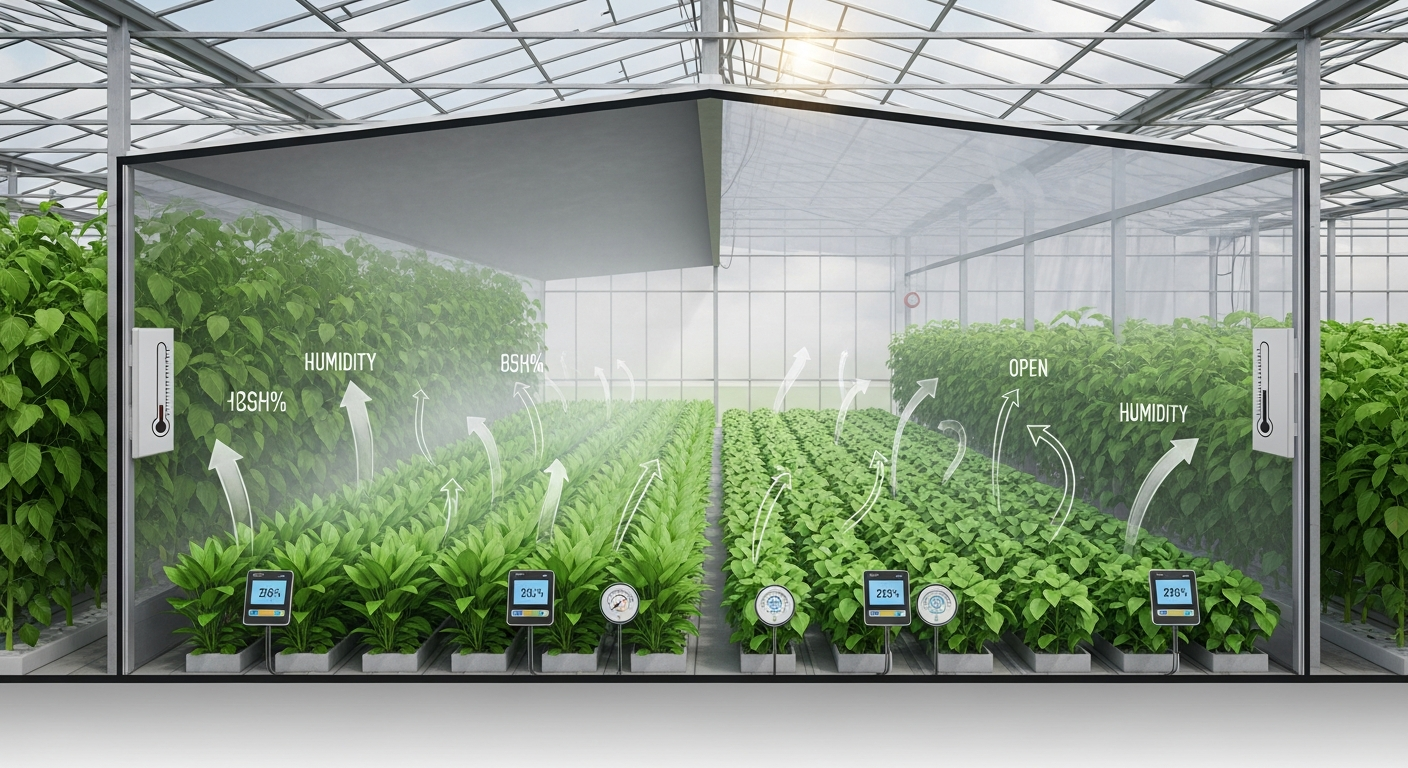
Every single plant contributes to the overall relative humidity (RH) of its immediate vicinity. When many plants are grouped closely together, their collective transpiration efforts can significantly alter the moisture content of the air in that specific area. This leads to the formation of a distinct microclimate, characterized by higher localized humidity than the general greenhouse environment. This phenomenon is a natural consequence of biological activity combined with reduced air exchange, making it a critical consideration for any greenhouse grower aiming for precision climate control.
How Plant Density Shapes Greenhouse Microclimates
The physical presence of numerous plants in a confined space doesn’t just add moisture; it fundamentally alters the airflow and energy dynamics within the greenhouse, directly influencing the formation and characteristics of microclimates.
Restricted Airflow and Trapped Moisture
One of the most immediate effects of high plant density is the physical impedance of air movement. A dense canopy of leaves and stems acts as a barrier, slowing down or even completely blocking the natural air currents that would otherwise circulate through the greenhouse. This restricted airflow means that the water vapor released through transpiration becomes trapped within the plant canopy. Instead of being carried away by ventilation, this moist air lingers, causing a significant elevation in localized humidity. The denser the planting, the more stagnant the air becomes, leading to pockets of exceptionally high RH right where the plants need a more balanced environment.
Canopy Architecture and Evapotranspiration
The structure of the plant canopy itself also plays a vital role. A high leaf area index (LAI)—the total leaf area per unit of ground area—indicates a dense planting with many leaves packed closely together. Each of these leaves is actively transpiring. The combined effect of thousands of transpiring leaves within a confined space leads to a massive amount of water vapor being released. This collective “evapotranspiration” creates a humid blanket over and within the plant bed, further exacerbating the localized humidity conditions. Plants exchange gases and water vapor through their stomata, and when the air immediately surrounding the leaf is already saturated, the driving force for transpiration diminishes, which can have both positive and negative implications for plant health.
Impact on Temperature and VPD
Localized humidity doesn’t just affect moisture levels; it also has a profound impact on temperature and Vapor Pressure Deficit (VPD). Higher localized humidity reduces the rate of evaporative cooling from the leaves, potentially leading to slightly warmer leaf temperatures within the dense canopy compared to ambient air. More significantly, a higher RH means a lower VPD. VPD is the difference between the amount of moisture in the air and how much moisture the air can hold when saturated. A low VPD indicates a high relative humidity, which can reduce a plant’s ability to transpire effectively. While a slightly lower VPD can be beneficial for reducing water stress, excessively low VPD due to high localized humidity can hinder nutrient uptake and even create conditions ripe for condensation on leaves, a precursor to many plant diseases.
The Double-Edged Sword: Benefits and Risks of High Localized Humidity
Understanding the interplay between plant density and localized humidity reveals a complex scenario with both advantages and significant drawbacks for crop health and productivity.
Advantages for Plant Growth
- Reduced Water Stress: In environments with slightly higher localized humidity, plants lose less water through transpiration, meaning they require less water from their roots. This can be particularly beneficial for young seedlings, cuttings, or plants under temporary water stress, as it helps them conserve moisture.
- Enhanced Nutrient Uptake (Conditional): While excessive humidity can hinder transpiration, a moderate level of localized humidity can sometimes support consistent water flow through the plant, indirectly aiding in the transport of nutrients from the roots to the foliage. However, this is a delicate balance.
Disadvantages and Potential Problems
- Increased Risk of Fungal Diseases: This is arguably the most critical drawback. Many common greenhouse pathogens, such as powdery mildew, botrytis (gray mold), and downy mildew, thrive in high-humidity, stagnant conditions. When water vapor condenses on leaf surfaces due to high localized RH and temperature fluctuations, it creates the perfect breeding ground for these fungal spores to germinate and spread, leading to devastating crop losses.
- Pest Attraction and Proliferation: While some pests prefer drier conditions, others, like fungus gnats, thrive in the moist environments associated with high humidity and stagnant air. Furthermore, the reduced plant vigor caused by disease can make plants more susceptible to pest infestations overall.
- Reduced Transpiration and Nutrient Transport: As mentioned, excessively high localized humidity leads to a very low VPD, which significantly slows down transpiration. This slowdown can hinder the plant’s ability to draw water and essential nutrients from the soil, potentially leading to nutrient deficiencies and reduced growth rates.
- Poor Fruit and Flower Development: For fruiting or flowering plants, persistent high localized humidity can negatively impact pollination and fruit set. Pollen can become sticky, and the overall stress on the plant can divert energy away from reproductive efforts, resulting in smaller yields or lower quality produce.
Optimizing Plant Density for a Balanced Greenhouse Climate
Managing plant density is a powerful tool in your greenhouse climate control arsenal. By strategically adjusting how closely plants are grown, you can actively influence localized humidity and promote a healthier growing environment.
Strategic Plant Spacing
The most straightforward way to manage localized humidity is through proper plant spacing. It’s crucial to consider the mature size of your plants, not just their size at planting. Overcrowding can quickly lead to the problems discussed. Always refer to spacing recommendations for your specific crop. Wider spacing allows for better airflow around individual plants, helping to disperse the water vapor released through transpiration and preventing pockets of high localized humidity. While it might seem counterintuitive to plant fewer plants in a given area, the improved health and yield of adequately spaced plants often outweigh the benefits of cramming more in.
Canopy Management Techniques
Even with optimal initial spacing, plants grow and develop dense canopies. Active canopy management is therefore essential:
- Pruning: Regularly remove lower leaves, dead or yellowing foliage, and any leaves that are touching the soil. This improves air circulation within the plant’s canopy and reduces the number of transpiring surfaces contributing to localized humidity.
- Trellising and Training: For vining crops like tomatoes, cucumbers, or peppers, trellising or training them vertically helps open up the canopy, preventing a dense, sprawling mass of leaves that restricts airflow.
- Defoliation: In some cases, targeted defoliation (removing specific healthy leaves) can be used to further open up the canopy and improve light penetration and airflow, particularly in the lower parts of the plant.
Integrating Environmental Controls
While plant density management is crucial, it works best in conjunction with your greenhouse’s environmental control systems:
- Ventilation Systems: Ensure your greenhouse has adequate ventilation, including fans and vents, to actively exchange the moist air inside with drier outside air (when conditions permit). Horizontal airflow fans (HAF) are excellent for moving air directly through the plant canopy, breaking up stagnant, humid pockets.
- Dehumidifiers: For periods when external ventilation isn’t sufficient or advisable (e.g., during cold, humid nights), commercial dehumidifiers can actively remove excess moisture from the air, maintaining ideal RH levels throughout the greenhouse, including within dense canopies.
- Heating Strategies: Using a combination of heating and ventilation (sometimes called “venting for humidity” or “DIF”) can effectively lower humidity. By slightly raising the temperature with heaters and then venting, you reduce the relative humidity of the air, making it capable of holding more moisture from plant transpiration before it becomes saturated.
- Monitoring Tools: Utilize hygrometers and temperature sensors placed strategically within the plant canopy to monitor actual localized conditions. This data is invaluable for making informed decisions about adjustments to spacing, pruning, and environmental controls. Advanced growers might even use thermal cameras to detect areas of high leaf surface humidity or cooler temperatures indicative of stagnant, moist air.
Conclusion: Mastering Your Greenhouse Microclimates
The seemingly simple act of planting crops in a greenhouse sets off a cascade of complex environmental interactions. Among the most impactful is the relationship between plant density and the creation of specific microclimates, particularly in terms of localized humidity. By understanding how plant transpiration, restricted airflow, and canopy architecture collectively shape these conditions, you gain a powerful advantage in preventing disease, deterring pests, and ensuring robust growth.
Mastering this aspect of greenhouse cultivation isn’t about eliminating humidity entirely but about achieving a precise balance. Through strategic plant spacing, diligent canopy management via pruning and training, and the smart integration of environmental controls like ventilation and dehumidification, you can actively sculpt the perfect microclimates for your plants. Pay attention to the subtle cues your plants give you, continuously monitor your environment, and adapt your strategies. Ultimately, a keen eye for plant density and its influence on localized humidity is a hallmark of an expert grower, leading to healthier plants, higher yields, and a more sustainable greenhouse operation.