
Managing the internal climate of a greenhouse is a delicate dance, essential for healthy plant growth and maximum yield. Among the various tools available to growers, misting systems stand out as highly effective for cooling and humidity control, especially in hotter climates or during peak summer months. But not all misting systems are created equal. When it comes to delivering a refreshing cloud of moisture, the primary distinction lies between high-pressure and low-pressure systems. Understanding the nuances of each can make all the difference in selecting the right solution for your specific greenhouse environment.
Understanding Misting for Greenhouse Climate Control
The core principle behind misting for greenhouse cooling is evaporative cooling. When water is atomized into tiny droplets and introduced into the air, these droplets absorb heat from their surroundings as they evaporate, effectively lowering the ambient air temperature. This process also naturally increases the relative humidity, which can be beneficial for many types of plants, especially those from tropical or subtropical regions. The effectiveness of this process largely depends on the size of the water droplets: smaller droplets evaporate more quickly and completely, leading to more efficient cooling and less potential for wetting plant surfaces.
Beyond simple cooling, misting systems play a crucial role in maintaining consistent humidity levels. For propagation, seedlings, or delicate flowering plants, stable humidity is paramount for preventing stress, wilting, and promoting vigorous growth. By strategically introducing mist, growers can create an ideal microclimate, mitigating the risks associated with dry air and high temperatures that can stunt growth or even lead to plant death.
Low-Pressure Misting Systems: The Accessible Option
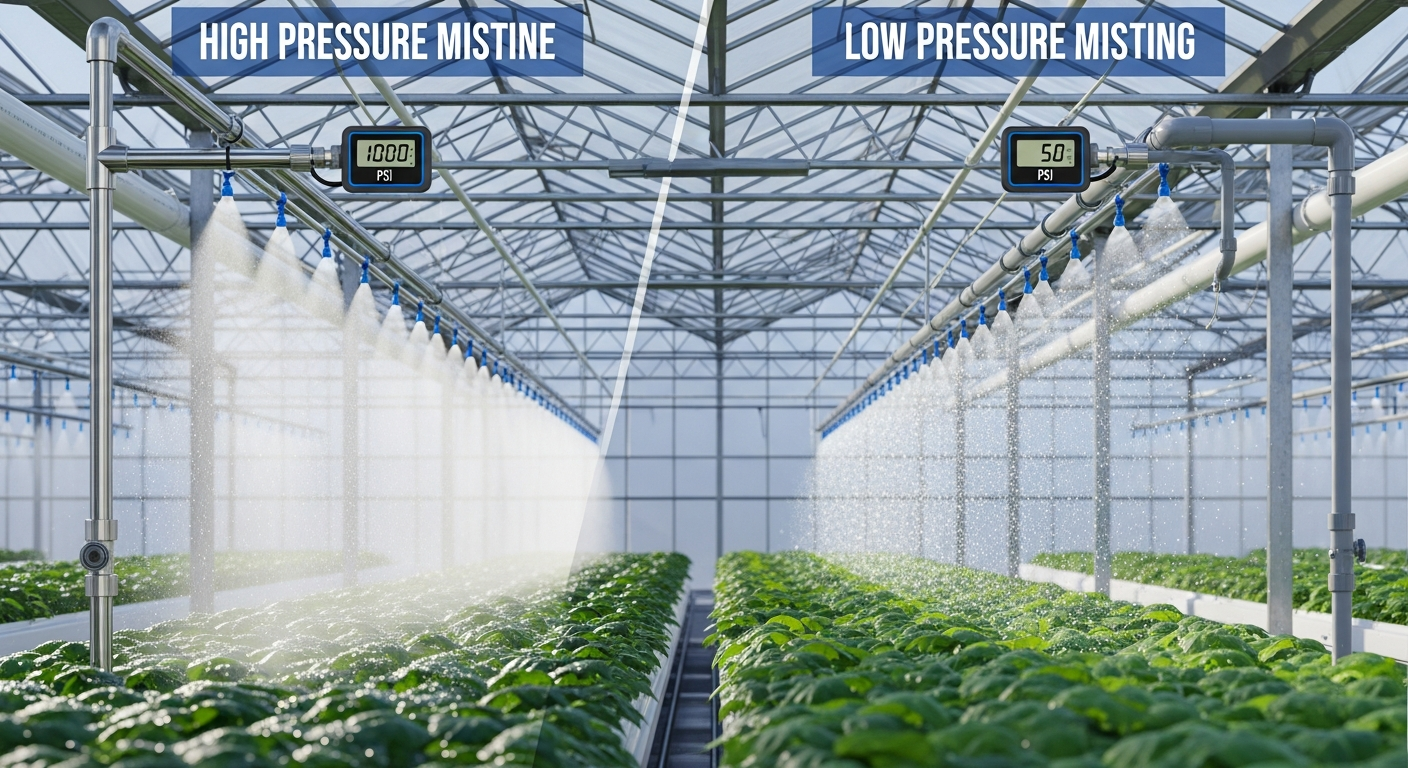
Low-pressure misting systems are often the entry point for many greenhouse enthusiasts due to their simplicity and affordability. These systems typically operate at pressures ranging from 40 to 100 PSI (pounds per square inch), similar to standard household water pressure. They usually connect directly to a garden hose or a low-pressure water line.
Characteristics and Benefits:
- Simple Installation: Most low-pressure systems are DIY-friendly, requiring basic tools and minimal plumbing knowledge. Kits often come with snap-together fittings and flexible tubing.
- Cost-Effective: The initial investment for low-pressure systems is significantly lower than their high-pressure counterparts, making them ideal for hobby greenhouses or growers on a tight budget.
- Adequate Cooling for Smaller Spaces: While not as efficient as high-pressure systems, low-pressure misting can still provide noticeable cooling in smaller greenhouses, shade houses, or localized areas.
- Increased Humidity: They are excellent for boosting humidity, which is beneficial for plants that thrive in moist environments.
Drawbacks and Considerations:
- Larger Droplet Size: Due to the lower pressure, the nozzles produce larger water droplets. These droplets take longer to evaporate and are more prone to settling on plant leaves and surfaces, potentially leading to fungal issues or water spots.
- Less Efficient Cooling: The slower evaporation rate means less efficient heat absorption, resulting in a less significant temperature drop compared to high-pressure systems.
- Wetting Potential: The primary concern with low-pressure systems is the risk of over-wetting. If not managed carefully, this can create an overly saturated environment, which can be detrimental to plant health and encourage disease.
- Limited Control: Precision control over cooling and humidity is generally lower.
Low-pressure systems are best suited for smaller backyard greenhouses, temporary cooling solutions, or for plants that can tolerate some leaf wetness. They are a practical choice for growers who need a humidity boost and moderate cooling without a significant investment.
High-Pressure Misting Systems: Precision and Power
High-pressure misting systems represent the pinnacle of evaporative cooling technology for greenhouses. These robust systems operate at pressures typically ranging from 800 to 1500 PSI or even higher, requiring a dedicated high-pressure pump to achieve these levels. The extreme pressure forces water through ultra-fine nozzles, producing a micro-fine mist that seems to vanish into thin air.
Characteristics and Benefits:
- Superior Cooling Efficiency: The minute droplets produced by high-pressure systems evaporate almost instantly (known as “flash evaporation”). This rapid evaporation maximizes heat absorption, leading to a much more significant and immediate temperature drop.
- Minimal Wetting: Because the droplets are so small and evaporate so quickly, high-pressure systems virtually eliminate surface wetting of plants, floors, and equipment. This is crucial for preventing disease and protecting sensitive crops.
- Precise Humidity Control: The rapid evaporation allows for highly precise control over humidity levels, making these systems ideal for propagation houses, orchid nurseries, or any environment requiring strict climatic conditions.
- Improved Air Quality: The fine mist can also help suppress dust and pollen, contributing to a cleaner growing environment.
- Energy Efficiency: By providing highly effective cooling, these systems can reduce the reliance on traditional air conditioning, leading to energy savings in the long run.
Drawbacks and Considerations:
- Higher Initial Investment: The specialized pumps, high-pressure tubing, and precision nozzles make high-pressure systems significantly more expensive to purchase and install.
- More Complex Installation: Installation often requires professional expertise due to the high pressures involved and the need for specialized fittings and plumbing.
- Water Quality is Crucial: The ultra-fine nozzles are highly susceptible to clogging from impurities. High-pressure systems absolutely require excellent water filtration, often including sediment filters, carbon filters, and sometimes even reverse osmosis (RO) systems, adding to the operational cost.
- Maintenance Requirements: Regular maintenance, including nozzle cleaning and pump checks, is essential to ensure longevity and optimal performance.
High-pressure systems are the preferred choice for commercial greenhouses, large-scale operations, specialty crop cultivation, or any grower prioritizing precise climate control and superior cooling performance.
Key Differences and Practical Considerations for Choosing
The choice between high-pressure and low-pressure misting systems boils down to several critical factors:
| Feature | Low-Pressure System | High-Pressure System |
|---|---|---|
| Operating Pressure | 40-100 PSI | 800-1500+ PSI |
| Droplet Size | Larger | Micro-fine (Flash Evaporation) |
| Cooling Efficiency | Moderate | Superior, Rapid |
| Wetting Potential | Higher (potential for leaf wetness) | Minimal to none |
| Humidity Control | General increase | Precise and controllable |
| Initial Cost | Lower | Significantly Higher |
| Installation | Simple (DIY-friendly) | Complex (often professional) |
| Water Quality Needs | Standard filtration often sufficient | Excellent filtration (RO often recommended) |
| Ideal Use | Hobby greenhouses, smaller spaces, budget-conscious, supplementary cooling | Commercial operations, large greenhouses, sensitive crops, propagation, precise control |
Ask Yourself These Questions:
- What is your budget? This is often the first deciding factor.
- How large is your greenhouse? Small hobby spaces rarely justify high-pressure systems.
- What crops are you growing? Delicate or high-value crops with specific humidity needs will benefit immensely from high-pressure systems.
- What is your climate like? Extremely hot and dry climates might push even smaller growers towards high-pressure for effective cooling.
- How much control do you need? If precision is paramount, high-pressure is the clear winner.
- What is your water source’s quality? If you have hard water, factor in advanced filtration costs for high-pressure systems.
Installation, Maintenance, and Maximizing Efficiency
Regardless of the system you choose, proper installation and diligent maintenance are key to longevity and optimal performance.
Installation Tips:
- Nozzle Placement: Position nozzles strategically to ensure even coverage without creating overly saturated zones. Consider the height of your plants and the overall air circulation.
- Drainage: For low-pressure systems, ensure good drainage to prevent standing water. For both, consider automatic drain valves to prevent mineral buildup and bacterial growth in lines when the system is off.
- Pump Location (High-Pressure): Install the pump in a clean, dry, well-ventilated area, protected from the elements. Keep it easily accessible for maintenance.
- Hygrostats and Thermostats: Integrate environmental controllers. These devices can automatically turn your misting system on and off based on pre-set temperature and humidity thresholds, saving water and preventing over-misting.
Maintenance Essentials:
- Water Filtration: This cannot be stressed enough, especially for high-pressure systems. Regularly check and replace filter cartridges according to manufacturer recommendations to prevent nozzle clogging.
- Nozzle Cleaning: Even with filtration, nozzles can eventually clog. Periodically inspect and clean them. Many high-pressure nozzles can be soaked in a deliming solution.
- Leak Detection: Regularly check all fittings and tubing for leaks. Even small leaks can waste water and reduce system efficiency.
- Pump Maintenance (High-Pressure): Follow the manufacturer’s guidelines for pump oil changes, pressure checks, and general servicing.
- Winterization: In colder climates, drain and winterize your system to prevent freezing and damage to pumps, lines, and nozzles.
Maximizing Efficiency:
- Combine with Ventilation: Misting works best when paired with good air circulation. Exhaust fans and circulation fans help distribute the mist evenly and facilitate faster evaporation, enhancing cooling.
- Timers and Sensors: Utilize precise timers, humidistats, and thermostats to run your system only when needed. Short, frequent bursts are often more effective than continuous operation, particularly with high-pressure systems.
- Zoning: In larger greenhouses with different environmental needs, consider creating multiple misting zones that can be controlled independently.
Conclusion
Both high-pressure and low-pressure misting systems offer valuable solutions for greenhouse cooling and humidity control, each with distinct advantages and ideal applications. Low-pressure systems provide an accessible, cost-effective way for hobby growers to enhance their climate, offering moderate cooling and a significant humidity boost. High-pressure systems, while a greater investment, deliver unparalleled cooling efficiency, precise humidity control, and virtually eliminate wetting, making them indispensable for commercial operations and sensitive crops. By carefully assessing your greenhouse size, crop requirements, budget, and desired level of control, you can choose the misting system that will best support a thriving, productive greenhouse environment for years to come.