
As the sun dips below the horizon and temperatures cool, many buildings begin to relinquish the warmth accumulated during the day, often at a significant energy cost. The culprit? Inefficient windows. Glazing, while essential for natural light and views, can be a major weak point in a building’s thermal envelope, particularly when it comes to retaining heat during the long nighttime hours. For anyone seeking to enhance energy efficiency, reduce heating bills, and improve indoor comfort without relying on active heating systems, understanding and implementing passive strategies for glazing optimization is paramount. This comprehensive guide will explore how smart design choices and advanced technologies can transform your windows from energy liabilities into powerful allies in nighttime heat retention.
Understanding Nighttime Heat Loss Through Glazing
Windows, by their very nature, present a challenge to maintaining a consistent indoor temperature. Unlike solid walls, which offer substantial insulation, glass is a relatively poor insulator. During the day, this can be an advantage, allowing solar heat gain. However, at night, when outdoor temperatures drop, windows become conduits for heat to escape the building, leading to discomfort and increased energy consumption for heating.
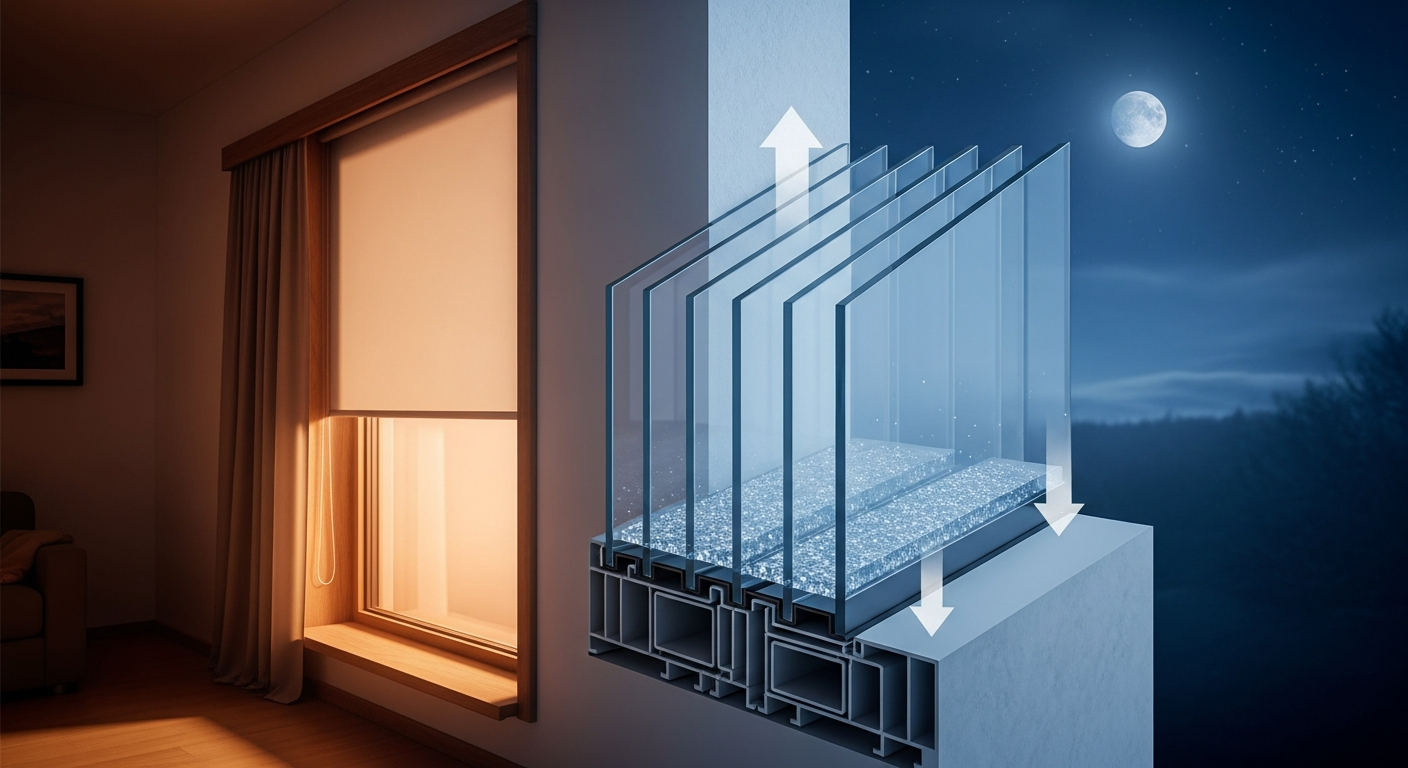
The primary measure of a window’s ability to resist heat flow is its U-value. A lower U-value indicates better insulation and less heat loss. Understanding how heat transfers through glazing is crucial:
- Conduction: Heat moves directly through the glass panes themselves, from the warmer interior side to the colder exterior side.
- Convection: Air between multiple panes of glass can circulate, transferring heat from the warmer pane to the colder pane. Similarly, air currents near the window surface can carry heat away.
- Radiation: Warm objects inside a room (like furniture, walls, or even people) emit infrared radiation. Glass, especially standard glass, readily allows this radiant heat to pass through it and escape to the colder outdoors.
Each of these mechanisms contributes to the overall heat loss, making glazing a critical area for improvement in any passive heat retention strategy.
Advanced Glazing Technologies for Superior Heat Retention
Modern window technology has made significant strides in mitigating heat loss, offering a range of passive solutions that dramatically improve thermal performance. These innovations directly address the mechanisms of heat transfer, bolstering your building’s ability to retain warmth during the night.
Double and Triple Glazing
The most fundamental upgrade from single-pane windows is the introduction of multiple panes. Double glazing consists of two panes of glass separated by a sealed space, while triple glazing uses three panes. This air gap, or more effectively, gas-filled gap, acts as an insulating barrier, significantly reducing heat transfer by conduction and convection compared to a single pane. The thicker the gap, up to a certain point, the better the insulation, making these options foundational for enhanced thermal insulation.
Low-Emissivity (Low-E) Coatings
One of the most impactful advancements in glazing technology is the Low-E coating. These microscopically thin, transparent metallic layers are applied to one or more surfaces of the glass panes. Their primary function is to reflect radiant heat. During the winter, a Low-E coating applied to an interior surface reflects indoor heat back into the room, preventing its escape to the colder outdoors. This significantly reduces heat loss through radiation without sacrificing natural light. Different types of Low-E coatings are optimized for various climates, some designed for maximum heat retention (high solar gain), others for reducing solar heat gain in warmer climates (low solar gain).
Inert Gas Fills (Argon, Krypton)
To further enhance the insulating properties of double or triple glazed units, the space between the glass panes is often filled with inert gases like argon or krypton instead of air. These gases are denser and less conductive than air, which means they are much more effective at reducing heat transfer by convection and conduction. Krypton offers even better performance than argon but is more expensive, often used in narrower gaps where argon wouldn’t be as effective. These gas fills are a powerful passive strategy for lowering the U-value of windows.
Warm-Edge Spacers
In a multi-pane window, the glass panes are held apart by a spacer around the perimeter. Traditionally, these spacers were made of aluminum, a highly conductive material. This created a “thermal bridge” at the edge of the glass unit, leading to heat loss and potential condensation. Warm-edge spacers are made from less conductive materials like structural foam, plastic, or composite materials. By significantly reducing heat transfer at the edges, they improve the overall U-value of the window, contributing to better heat retention and reducing the risk of edge condensation.
Beyond the Glass: Complementary Passive Strategies
While advanced glazing technologies are central to optimizing windows for nighttime heat retention, a holistic approach incorporates additional passive strategies that work in tandem with the glass itself to maximize energy efficiency and thermal comfort.
Heavy Curtains and Insulated Blinds
One of the simplest and most cost-effective passive measures is the strategic use of window coverings. Heavy, insulated curtains or blinds can provide an additional layer of thermal resistance once drawn at night. They trap a layer of air between the fabric and the window, reducing both convective and radiant heat loss. Look for curtains with a thermal lining or cellular blinds that create air pockets for superior insulation. Ensure they cover the entire window frame and ideally extend slightly beyond to minimize gaps where heat can escape.
Insulated Shutters and Storm Panels
For even greater nighttime heat retention, consider internal or external insulated shutters or removable storm panels. These systems provide a robust barrier against heat loss. External shutters, when closed, create a substantial dead air space, dramatically improving the window’s U-value. Internal shutters, often made of wood or composite materials, offer aesthetic appeal while blocking drafts and adding an insulating layer. Removable storm panels, typically polycarbonate or acrylic sheets, can be installed over existing windows in colder months for a significant boost in insulation.
Draft Proofing and Air Sealing
Even the most technologically advanced window will underperform if it’s surrounded by air leaks. Draft proofing is a fundamental passive strategy. Inspect your window frames and sills for cracks, gaps, or deteriorating caulk and weatherstripping. Sealing these leaks with high-quality caulk, expanding foam, or new weatherstripping can prevent significant heat loss due to uncontrolled air infiltration. This is often one of the cheapest and most impactful steps you can take to improve your building’s overall energy efficiency and ensure warm air stays where it belongs – inside.
Strategic Landscaping
While not directly related to the window unit itself, strategic landscaping plays a passive role in moderating the external conditions around your windows. Deciduous trees planted on the windward side of your building can act as a natural windbreak during winter, reducing the chilling effect of cold winds on your window surfaces. This lessens the temperature differential across the glass, thereby reducing heat loss. Evergreen shrubs planted close to the foundation can also help minimize cold air pooling near windows.
Thermal Mass Integration
While thermal mass doesn’t directly optimize glazing, it works symbiotically with well-insulated windows. High-mass materials like concrete, brick, or stone within the building’s interior can absorb solar heat during the day (if your windows allow adequate solar gain) and slowly release it throughout the night. By reducing the overall demand for heating, thermal mass complements glazing optimization, ensuring that the heat you work so hard to retain stays comfortably within the conditioned space.
Implementing Glazing Optimization: Practical Considerations
Embarking on a glazing optimization project requires careful planning and consideration to ensure you achieve the best possible outcomes for your specific situation. Here are some practical steps and tips:
Assessing Your Current Glazing
Before making any investments, conduct an audit of your existing windows. Identify:
- The type of glazing (single, double, etc.).
- The age and condition of frames and seals.
- Obvious drafts or signs of condensation.
- The U-value (if known) or estimate based on age and type.
A simple energy audit can pinpoint your most significant areas of heat loss. Consider using an infrared camera to visualize heat escaping from your windows, which can be particularly enlightening.
Prioritizing Upgrades
Not all windows contribute equally to heat loss. Prioritize upgrades for windows facing prevailing winter winds, those in frequently used rooms, or the largest window expanses. Sometimes, a combination of strategies is best; for instance, upgrading to high-performance double glazing in critical areas, and adding insulated curtains or draft sealing to others.
Professional Consultation
For significant window replacements or large-scale projects, consulting with an experienced architect, energy auditor, or window specialist is highly recommended. They can provide expert advice on the best glazing options for your specific climate, building type, and budget, ensuring you select products with optimal U-values and Low-E coatings tailored for nighttime heat retention.
Balancing Cost and Performance
High-performance windows can be a significant investment, but they offer substantial long-term savings on energy bills and improved comfort. Compare the U-values and features of different products, and consider the payback period. Sometimes, a slightly higher initial cost for a truly superior product pays dividends quickly through enhanced energy efficiency.
Considering Climate Zones
The optimal glazing strategy can vary significantly depending on your climate zone. In very cold climates, triple glazing with multiple Low-E coatings and inert gas fills might be essential. In milder climates, good quality double glazing with a well-placed Low-E coating might suffice. Always choose windows rated for your specific region to maximize their effectiveness in maintaining thermal comfort and reducing heating loads.
Implementing passive strategies for glazing optimization is a powerful step towards creating a more energy-efficient, comfortable, and sustainable living or working environment. By understanding the principles of heat transfer and leveraging modern glazing technologies and complementary design choices, you can transform your building’s relationship with the nighttime cold, significantly reducing energy waste and enhancing indoor thermal comfort.