
In the intricate world of controlled environment agriculture, aquaponics, terrariums, or even sophisticated home automation, the precise regulation of light cycles is not merely a convenience—it is a foundational pillar for success. Whether nurturing delicate seedlings, guiding the flowering phase of plants, or maintaining the circadian rhythm of animals, the consistent delivery of light ensures optimal health, growth, and productivity. Modern smart lighting systems offer unparalleled control and automation, promising seamless operation. However, what happens when these sophisticated systems lose their signal, experience a power outage, or encounter an internet connectivity issue? The potential for disruption is significant, threatening everything from crop yields to the well-being of sensitive organisms.
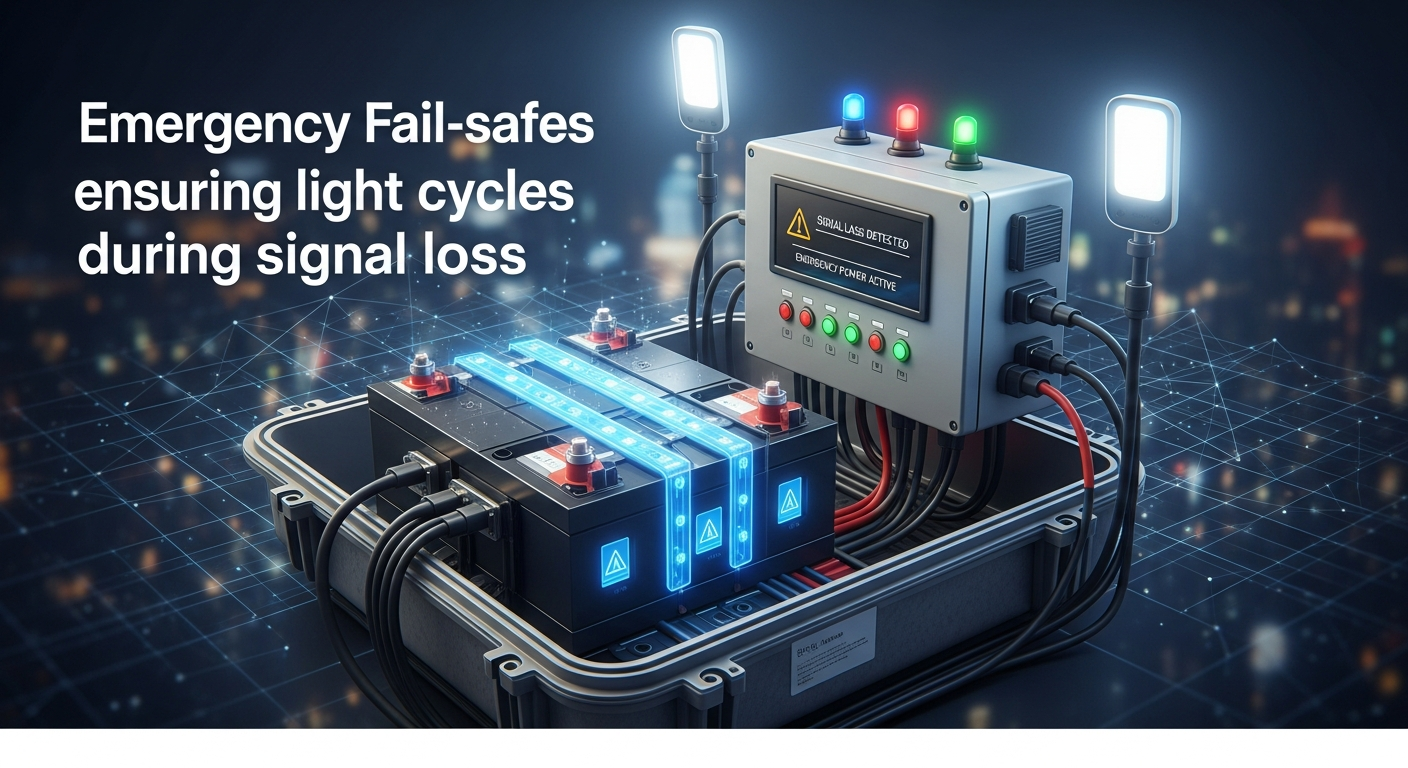
This article delves into the critical importance of implementing robust emergency fail-safes to ensure that your carefully calibrated light cycles continue uninterrupted, even in the face of signal loss or system failure. We’ll explore common causes of disruption, discuss various fail-safe technologies, and guide you through creating a comprehensive contingency plan to protect your investment and maintain operational continuity.
The Undeniable Importance of Consistent Light Cycles
For many biological systems, light is more than just illumination; it’s a vital environmental cue that dictates fundamental processes. Understanding its role underscores why uninterrupted light cycles are non-negotiable.
Photosynthesis and Energy Production
At its most basic, light provides the energy for photosynthesis—the process by which plants convert light energy into chemical energy to fuel their growth. Any significant interruption during a plant’s designated “on” cycle can directly reduce energy production, leading to slower growth and decreased vitality. A prolonged dark period when light is expected can deplete energy reserves, stressing the plant and hindering its ability to thrive.
Photoperiodism and Developmental Stages
Many plants exhibit photoperiodism, a physiological response to the relative lengths of light and dark periods. This mechanism controls crucial developmental stages, such as flowering, dormancy, and tuber formation. Disrupting these precise light-dark ratios, even for a short duration, can confuse a plant’s internal clock, leading to:
- Premature or delayed flowering: impacting harvest times and yields.
- Stress and stunted growth: diverting energy from growth to recovery.
- Reduced quality: affecting taste, potency, or overall aesthetic.
- Increased susceptibility to pests and diseases: a stressed plant is a vulnerable plant.
For animals, especially those in controlled habitats, consistent light cycles are essential for maintaining healthy circadian rhythms, influencing sleep patterns, feeding behavior, and overall stress levels.
Yield Optimization and Commercial Viability
In commercial agriculture, every hour of optimal light contributes to profitability. A single, unscheduled dark period can set back a crop by days, or even weeks, leading to significant financial losses. Maintaining unwavering control over environmental factors, including light, is key to achieving consistent, high-quality yields and ensuring the commercial viability of a growing operation.
Deconstructing Signal Loss: Common Failure Scenarios
Before we can build resilient systems, we must understand the threats. Signal loss or system failure in automated lighting setups can stem from various sources, each requiring a tailored mitigation strategy.
Power Outages
Perhaps the most common and disruptive culprit, power outages can range from momentary flickers to prolonged blackouts. These can be grid-wide failures, localized transformer issues, or even a tripped breaker on your premises. When the power goes out, any device relying on it, including smart controllers and the lights themselves, ceases to function. The duration of the outage dictates the severity of the impact, but even short interruptions can reset timers or disrupt ongoing cycles.
Internet and Wi-Fi Connectivity Issues
Many modern smart lighting systems rely on an internet connection (often via Wi-Fi) for remote control, scheduling updates, and data logging. If your internet service provider (ISP) experiences an outage, your router fails, or your Wi-Fi signal drops due to interference or distance, your centralized control system can become unresponsive. While the lights themselves may still have power, they might not receive new commands or maintain their scheduled programming without a connection to the ‘brain’ of the system.
Controller Malfunctions
Even the most advanced controllers can experience glitches. This could be a software bug that causes a schedule to freeze or reset, a hardware failure in the controller unit itself, or an issue with its internal clock. A malfunctioning controller can send incorrect signals, fail to send any signals, or become unresponsive to user input, leaving your lights in an undesirable state.
Wiring and Hardware Issues
Physical connections are crucial. Loose wires, damaged cables, faulty sensors, or even a failed power supply unit within a light fixture can interrupt the flow of power or data. While less common, these hardware failures can be particularly insidious to diagnose and can lead to isolated light failures or complete system shutdowns.
Human Error
Sometimes, the simplest failures are the hardest to prevent. Accidental unplugging of equipment, incorrect programming of schedules, or forgetting to reactivate a system after maintenance can all lead to unintended light cycle disruptions. While not strictly “signal loss,” the outcome is the same.
Implementing Robust Emergency Fail-Safe Solutions
The key to enduring signal loss is a layered approach, combining multiple fail-safe mechanisms to create a truly resilient system. Here are several practical solutions:
Uninterruptible Power Supplies (UPS) and Battery Backups
For mitigating power outages, a Uninterruptible Power Supply (UPS) is indispensable. A UPS contains a battery that kicks in instantly when the main power source fails, providing continuous electricity to connected devices. This allows your lights and controllers to continue operating during short-term outages, or provides enough time for a graceful shutdown or manual intervention during longer ones.
- Sizing: Choose a UPS with sufficient capacity (measured in VA or Watts) to power your lighting system and controller for the desired duration.
- Type: For critical applications, consider “online” UPS units that provide pure sine wave output and constant power conditioning, protecting sensitive electronics.
- Testing: Regularly test your UPS to ensure its battery is healthy and functional.
Local Control and Offline Modes
Many smart controllers offer a “local control” or “offline mode” capability. This means that once a schedule is programmed, the controller stores it internally and can execute it autonomously, even if the internet or Wi-Fi connection is lost. The system might lose its remote access capabilities, but the essential light cycles will continue as planned.
- Prioritize: When selecting a smart lighting system, look for this feature. It’s a critical safeguard against internet-related disruptions.
- Internal Clocks: Ensure the controller has a reliable internal clock (and ideally a small backup battery for it) so it doesn’t lose time during power cycling.
- Manual Overrides: A physical button or switch for manual override on the controller itself can be invaluable if the software becomes unresponsive.
Redundant Systems and Backup Timers
True redundancy means having a secondary system ready to take over if the primary fails. While potentially more expensive, for mission-critical applications, it provides the ultimate peace of mind.
- Mechanical Timers: For sheer simplicity and reliability, old-fashioned mechanical timers are excellent as a last-resort backup. If your smart system goes down, these simple timers can ensure basic on/off cycles continue. Connect lights to these timers in parallel or have a quick way to switch them over.
- Dual Controllers: In large-scale operations, consider having a backup smart controller pre-programmed and ready to be swapped in.
- Separate Circuits: Where feasible, power critical lights from different electrical circuits to reduce the risk of a single circuit breaker tripping taking down your entire system.
Smart Plugs with Programmable Schedules
While often seen as a primary automation tool, smart plugs with integrated scheduling capabilities can also serve as a simple fail-safe. Many modern smart plugs allow you to set schedules that run locally on the device itself, independent of an active internet connection after initial setup. They can be a low-cost way to add a layer of automated redundancy to individual lights or smaller setups.
- Choose Wisely: Select smart plugs from reputable brands known for local scheduling and reliability.
- Integrate: Ensure they can integrate with your broader smart home ecosystem for easy management, but can also function standalone.
Monitoring and Alert Systems
A fail-safe isn’t just about automatically recovering; it’s also about knowing when a problem occurs so you can intervene. Monitoring and alert systems are crucial for proactive problem-solving.
- Power Sensors: Integrate sensors that detect power outages on specific circuits and send you notifications.
- Connectivity Checks: Configure your smart hub or router to send alerts if its internet connection drops.
- System Dashboards: Use platforms that provide real-time status updates of your lighting system, allowing you to quickly identify any anomalies.
- Notifications: Set up email, SMS, or app notifications for system failures, power loss, or unexpected light status changes.
Developing Your Comprehensive Contingency Plan
Implementing individual fail-safes is a great start, but a holistic contingency plan ties everything together, ensuring you’re prepared for any eventuality.
1. Assess Your Risks and Criticality
Begin by identifying the most likely points of failure in your specific setup. Are power outages common in your area? Is your internet connection prone to drops? How critical is uninterrupted light for your specific application? (e.g., a commercial grow operation vs. a hobby terrarium will have different risk tolerances).
2. Map Your Current System
Document every component of your lighting system: controllers, lights, power supplies, network infrastructure, and their interdependencies. Understand how each part communicates and relies on others. This “system map” will highlight potential single points of failure.
3. Implement Layered Defenses
Don’t rely on a single fail-safe. Combine multiple strategies. For example: a UPS protects against power loss, a local control mode protects against internet failure, and a mechanical backup timer ensures lights switch on/off even if the smart controller completely fails. This layered approach creates true system resilience.
4. Regular Testing and Maintenance
A fail-safe is only effective if it works when needed. Periodically test your backup systems:
- Unplug your main power to test the UPS.
- Disconnect your Wi-Fi to confirm local control functionality.
- Manually trigger your backup timers.
- Check battery health on all backup devices.
Routine maintenance, such as checking wiring, updating firmware, and cleaning equipment, also reduces the likelihood of failures.
5. Documentation and Training
Create clear, step-by-step emergency protocols. What actions should be taken if a power outage occurs? Who is responsible for switching to backup systems? If multiple people manage the system, ensure everyone is trained on these procedures. Keep critical information, like emergency contact numbers (ISP, electrician, system supplier), readily accessible.
6. Plan for Manual Intervention
No system is foolproof. Always have a plan for manual intervention. This might mean having spare light fixtures, extra timers, or simply knowing how to quickly disconnect a smart system and plug lights directly into a wall outlet if absolutely necessary. The ability to revert to basic functionality is a powerful fail-safe in itself.
Conclusion
The allure of automated lighting systems lies in their precision, efficiency, and convenience. However, true reliability in controlled environments hinges on anticipating and mitigating potential disruptions. By understanding the causes of signal loss and proactively implementing a combination of emergency fail-safes—from UPS units and local control capabilities to redundant timers and comprehensive monitoring—you can safeguard your critical light cycles. Investing in these protective measures isn’t just about preventing momentary inconvenience; it’s about protecting your delicate ecosystems, ensuring consistent growth, optimizing yields, and ultimately, securing your peace of mind and the continued success of your operations. Don’t wait for a disruption to reveal vulnerabilities; build resilience into your system today.