
Excess moisture is a silent saboteur in many greenhouses, often overlooked until its damaging effects become undeniable. While water is essential for plant life, too much humidity creates a breeding ground for a host of problems, from devastating fungal diseases to stunted plant growth and reduced yields. For any greenhouse enthusiast, mastering environmental control, particularly humidity management, is paramount for cultivating a thriving oasis. And at the heart of effective humidity control lies a well-executed ventilation strategy.
This article will delve into the critical role of ventilation in maintaining optimal greenhouse humidity levels. We’ll explore various strategies, from simple natural airflow to sophisticated mechanical systems, equipping you with the knowledge to reduce excess greenhouse moisture and foster a healthier, more productive growing environment.
Understanding the Perils of Excess Greenhouse Moisture
Before we dive into solutions, it’s crucial to understand why managing greenhouse moisture is so important. High humidity isn’t just uncomfortable; it’s a significant threat to plant health and productivity. When the air inside your greenhouse becomes saturated with water vapor, several adverse conditions arise:
- Fungal and Bacterial Diseases: This is arguably the most immediate and severe threat. Many common plant pathogens, such as powdery mildew, Botrytis blight (gray mold), downy mildew, and various bacterial leaf spots, thrive in warm, humid conditions. Condensation on leaves provides the perfect moisture film for spores to germinate and infect plant tissues.
- Reduced Transpiration: Plants transpire (release water vapor) through their leaves. This process is essential for nutrient uptake and cooling. In highly humid environments, the air is already saturated, reducing the plant’s ability to transpire effectively. This can lead to nutrient deficiencies, especially calcium, and can stress the plant.
- Weak, Leggy Growth: Plants grown in consistently high humidity tend to develop weaker cell walls and larger, thinner leaves, making them more susceptible to physical damage and pests. They often become “leggy” as they stretch for light in an attempt to escape the stagnant, humid air.
- Poor Pollination: High humidity can affect the viability of pollen, making it sticky and less likely to spread effectively, which can significantly reduce fruit set in crops requiring pollination.
- Condensation Damage: Water dripping from the greenhouse ceiling onto plants can spread diseases and cause unsightly spots or even sunburn if droplets act as magnifying lenses.
By actively managing greenhouse moisture, you protect your plants from these myriad threats, ensuring they receive the ideal conditions for robust growth and optimal yield.
The Core Principles of Greenhouse Ventilation for Humidity Control
Ventilation, at its simplest, is the process of exchanging air. In a greenhouse, this means removing stale, humid air and replacing it with fresh, drier air from outside. This constant exchange is vital for several reasons beyond just humidity control:
- Moisture Removal: The primary goal. Ventilating removes the water vapor released by plants (transpiration) and from evaporated irrigation, preventing it from accumulating.
- Temperature Regulation: Ventilation helps expel excess heat, preventing temperatures from soaring to dangerous levels on sunny days.
- CO2 Replenishment: Plants consume carbon dioxide during photosynthesis. Good ventilation ensures a continuous supply of fresh CO2, which is often depleted in sealed greenhouses, especially during peak growth periods.
- Air Movement: Gentle air circulation around plants strengthens stems and can help deter some pests.
The effectiveness of your ventilation system hinges on understanding these principles and implementing strategies that facilitate efficient air exchange. Whether you’re relying on natural forces or mechanical assistance, the goal is always the same: to create a dynamic, healthy air environment.
Key Ventilation Strategies to Reduce Excess Moisture
There are two primary categories of greenhouse ventilation: natural and mechanical. Often, the most effective solution involves a thoughtful combination of both.
Natural Ventilation: Harnessing Airflow
Natural ventilation relies on natural forces like wind and the “stack effect” (hot air rising) to move air through the greenhouse. It’s often the most energy-efficient and cost-effective method for humidity control, especially for smaller or hobby greenhouses.
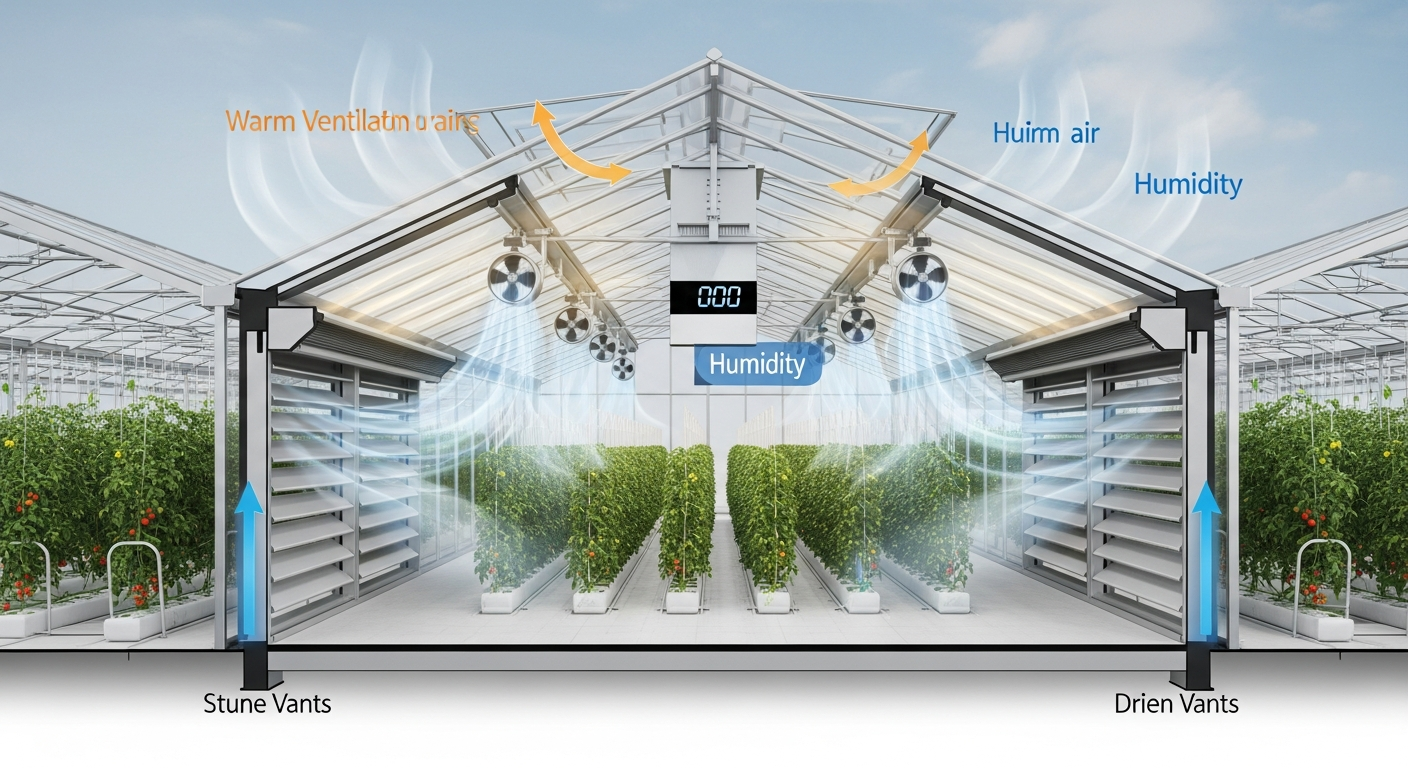
- Roof Vents (Ridge Vents): These are crucial for leveraging the stack effect. As warm, humid air inside the greenhouse rises, it escapes through open roof vents. This creates a negative pressure, drawing cooler, drier air in through lower vents or side walls. For maximum effectiveness, ensure your roof vents can open wide.
- Side Vents (Louvers, Roll-up Sides): These allow for cross-ventilation, where wind blows through one side of the greenhouse and exits through the other, carrying humid air with it. In conjunction with roof vents, side vents create a powerful airflow pattern.
- Door Vents: Simply opening greenhouse doors can provide significant airflow, especially if positioned opposite each other. However, this method can be less controllable and may expose plants to drafts.
Tips for Optimizing Natural Ventilation:
- Strategic Placement: Place vents on opposing sides and at different heights to maximize cross-ventilation and the stack effect.
- Adequate Opening Size: Ensure the total vent area is at least 15-20% of the greenhouse floor area for effective ventilation.
- Automation: Consider automatic vent openers (wax cylinder or electric) that react to temperature changes, ensuring vents open and close even when you’re not around.
Mechanical Ventilation: Controlled Air Exchange
Mechanical ventilation uses fans to actively move air. This method offers precise control over airflow and is essential for larger greenhouses or those in areas with limited natural wind. It’s particularly effective for targeted humidity reduction.
- Exhaust Fans: These powerful fans are mounted high on one end wall of the greenhouse. They pull humid air out, creating negative pressure that draws fresh air in through motorized intake shutters or vents on the opposite wall. The size and number of exhaust fans depend on the greenhouse volume and the desired air exchange rate (typically one air change per minute during peak heat/humidity).
- Intake Shutters/Louvers: Paired with exhaust fans, these automatically open when fans are active, allowing fresh air to enter. They should be sized appropriately to avoid restricting airflow.
- Horizontal Airflow (HAF) Fans: These smaller, strategically placed fans circulate air within the greenhouse, creating a gentle, uniform air current. HAF fans don’t exchange air with the outside but are crucial for preventing stagnant pockets of humid air around plants. They help break up boundary layers of humid air around leaves, promoting transpiration and reducing the risk of fungal growth. Think of them as internal mixers for your greenhouse air.
- Pad and Fan Systems: While primarily for cooling, these systems also provide excellent ventilation. Exhaust fans pull air through wet evaporative cooling pads, simultaneously cooling and exchanging air. They are very effective at reducing both temperature and humidity (though adding moisture via the pads needs careful management).
Tips for Optimizing Mechanical Ventilation:
- Proper Sizing: Calculate the cubic feet per minute (CFM) needed for your greenhouse to achieve sufficient air changes per minute. Manufacturers provide guidelines.
- Thermostats and Humidistats: Integrate your fans with environmental controllers. Thermostats turn fans on when temperatures exceed a set point, while humidistats activate them when humidity levels climb too high.
- Strategic Placement: Position exhaust fans at one end and intake shutters at the opposite end to ensure a complete sweep of air through the entire greenhouse length. HAF fans should be arranged to create a continuous loop of air movement.
Advanced Strategies and Integrated Climate Control
For optimal greenhouse climate control, especially when tackling persistent humidity issues, integrating various systems and employing advanced strategies can make a significant difference.
Combining Heating with Ventilation
This might seem counterintuitive – running a heater to reduce humidity – but it’s an incredibly effective strategy, particularly at night or during cool, damp periods. When you raise the air temperature slightly (e.g., using a small electric heater or propane heater), the air’s capacity to hold moisture increases. Then, by ventilating simultaneously (even just a crack of a vent or a short fan cycle), you expel that newly “warmed-up” humid air and replace it with drier, cooler air. This process effectively “dries out” the greenhouse environment without dramatically lowering the temperature, preventing condensation and disease.
Automated Environmental Controls
Modern greenhouse growing often leverages automation. Integrating your ventilation fans, roof vents, and even heaters with a central environmental controller allows for sophisticated management of temperature, humidity, and CO2. These systems can monitor conditions constantly and make precise adjustments, ensuring optimal conditions around the clock, even when you’re away.
Supplemental Dehumidifiers
In highly insulated or sealed greenhouses, or during periods of extreme outside humidity where ventilation alone isn’t sufficient (e.g., during prolonged rainy spells), dedicated dehumidifiers can be a valuable addition. These units actively remove moisture from the air, providing targeted humidity reduction without affecting temperature significantly. They are often used in conjunction with ventilation to fine-tune the environment.
Practical Tips for Effective Greenhouse Moisture Reduction
- Monitor Regularly: Invest in a good quality hygrometer (humidity meter) and thermometer. Understanding your current conditions is the first step to managing them. Smart devices with data logging can provide invaluable insights.
- Water Smartly: Water your plants in the morning so excess moisture can evaporate throughout the day with the aid of ventilation. Avoid overhead watering in the evening.
- Good Spacing: Don’t overcrowd your plants. Adequate spacing allows for better air circulation around individual plants, reducing localized humidity pockets.
- Cleanliness: Remove dead leaves, fallen plant debris, and weeds. These can harbor moisture and disease pathogens.
- Circulate Air Constantly: Run your HAF fans continuously, or for extended periods, even when exhaust fans aren’t needed. Gentle air movement is a powerful preventive measure against stagnant air and disease.
- Consider Ground Cover: A permeable ground cover can help reduce evaporation from the soil surface, contributing less moisture to the air.
- Seasonal Adjustments: Your ventilation strategy will need to change with the seasons. You’ll likely need more aggressive ventilation in summer and more careful, combined strategies (heat and vent) in cooler, damper months.
Conclusion: Cultivating a Dry and Healthy Greenhouse
Effective ventilation is not merely a convenience; it is a cornerstone of successful greenhouse cultivation, particularly for managing excess moisture. By understanding the principles of airflow, strategically implementing natural and mechanical ventilation systems, and integrating smart climate control, you can drastically reduce the risk of humidity-related plant diseases and cultivate a more robust, healthier greenhouse environment.
From simple manual vent adjustments to sophisticated automated systems, the investment in a proper ventilation strategy pays dividends in thriving plants, bountiful harvests, and peace of mind. Prioritize air movement and humidity control, and watch your greenhouse flourish with life.