
The agricultural landscape is evolving, driven by an urgent need for increased efficiency, sustainability, and adaptability. Traditional farming methods often struggle to accommodate the specific, often wildly varying, climate demands of diverse crops. Imagine trying to grow sun-loving tomatoes and shade-preferring lettuce in the exact same environment; the results would be suboptimal for at least one, if not both. This fundamental challenge has led to the rise of multi-zone growing systems – an innovative approach that allows growers to tailor microclimates within a larger facility, optimizing conditions for a broad spectrum of plants simultaneously. Designing such systems requires a deep understanding of plant physiology, environmental control technologies, and smart infrastructure, but the rewards in terms of yield, quality, and resource efficiency are transformative.
The Imperative of Multi-Zone Systems: Why One Size Doesn’t Fit All
For centuries, growers have largely been limited by their local climate, often resorting to monoculture or seasonal rotations to manage differing crop needs. While greenhouses offered a leap forward in environmental control, many still operate as single, uniform environments. This “one size fits all” approach inherently restricts productivity and crop diversity when dealing with plants that have distinct climatic requirements.
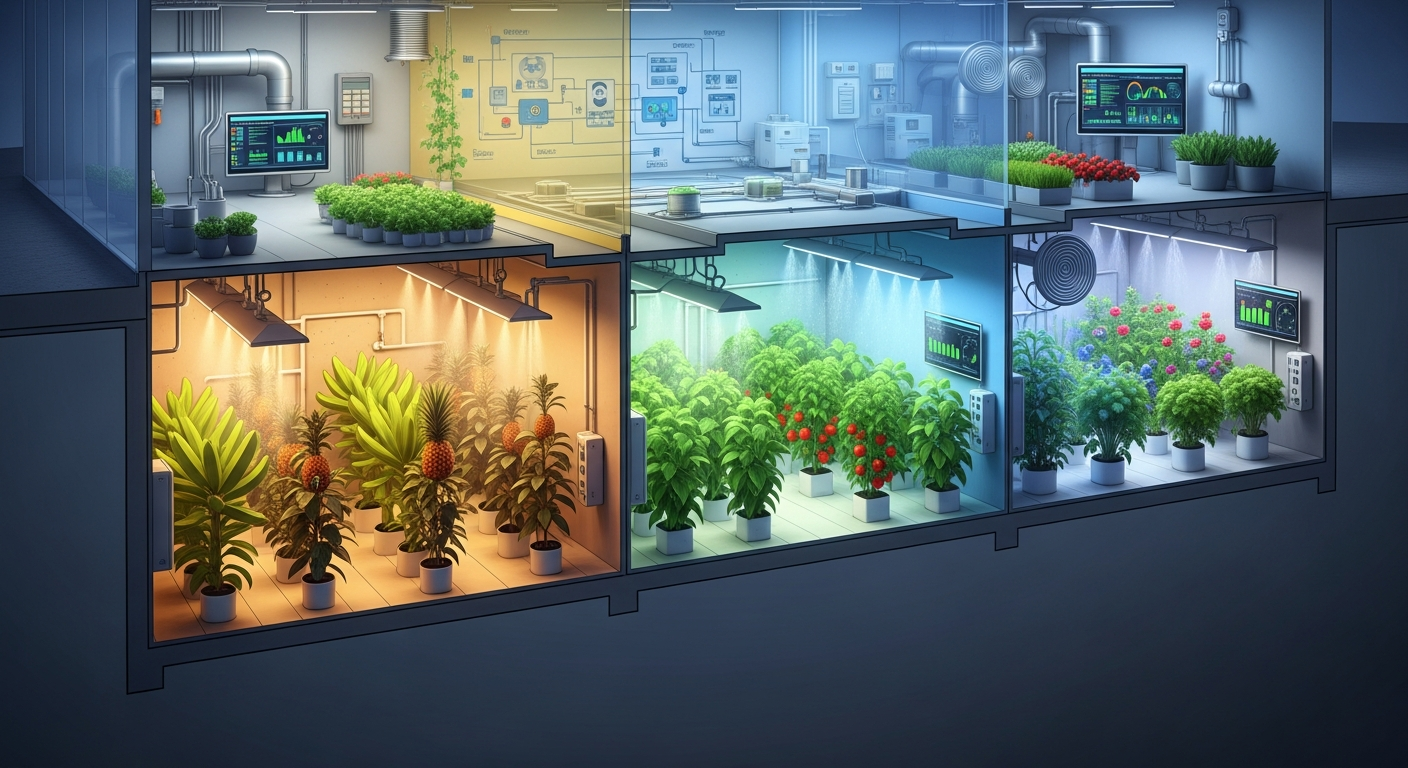
Consider the stark differences in optimal growth parameters:
- Temperature: Tropical fruits thrive in warmth, while many leafy greens prefer cooler conditions. A uniform temperature will inevitably stress one group.
- Humidity: Some plants require high humidity to prevent transpiration stress, while others are prone to fungal diseases in moist air.
- Light Intensity and Spectrum: High-light fruiting vegetables demand intense light for photosynthesis, whereas herbs and microgreens often prefer diffused or lower intensity light.
- CO2 Levels: While most plants benefit from CO2 enrichment, the optimal levels can vary significantly depending on the crop and light intensity.
By creating separate, precisely controlled zones, agricultural operations can overcome these limitations. This enables the cultivation of a far greater diversity of crops year-round, leading to higher yields, improved crop quality, reduced disease incidence due to optimized humidity, and a more resilient, profitable farming business. It’s the ultimate expression of precision agriculture within a controlled environment.
Key Environmental Factors and Zoning Considerations
Effective multi-zone system design hinges on the meticulous control of several critical environmental factors. Each factor needs to be considered for its specific impact on plant health and yield, and how it can be independently managed in different zones.
Temperature Control: The Thermal Blueprint
Temperature is perhaps the most fundamental environmental parameter. Different crops have specific optimal daytime and nighttime temperature ranges for photosynthesis, respiration, flowering, and fruiting. A multi-zone system must incorporate dedicated heating and cooling infrastructure for each zone. This might involve:
- Separate HVAC units for each zone.
- Variable speed fans and vents to manage airflow and heat distribution.
- Insulated partitions to minimize thermal transfer between zones.
- Automated sensor networks to continuously monitor and adjust temperatures.
Practical Tip: When planning, group crops with similar temperature requirements into adjacent zones to maximize energy efficiency and simplify system design.
Humidity Management: The Breath of Life
Humidity, specifically the Vapor Pressure Deficit (VPD), plays a crucial role in plant transpiration and nutrient uptake. High humidity can lead to fungal diseases, while excessively low humidity can cause plant stress and nutrient lockout. Zoning allows for precise humidity levels:
- Dehumidifiers: Essential for crops that prefer lower humidity or for managing condensation.
- Humidifiers: Crucial for high-humidity loving plants, especially during propagation or early growth stages.
- Ventilation: Proper airflow within zones helps prevent stagnant, humid air pockets.
Key Consideration: Humidity control is closely tied to temperature control. Changes in temperature significantly affect relative humidity, requiring integrated management.
Lighting Solutions: Fueling Photosynthesis
Light is the energy source for plant growth. Beyond simple on/off, growers must consider intensity, spectrum, and photoperiod. Multi-zone systems allow for varied lighting strategies:
- Light Intensity: High-intensity discharge (HID) or powerful LED fixtures for high-light crops (e.g., peppers, strawberries); lower intensity LEDs for leafy greens and herbs.
- Light Spectrum: Different wavelengths of light (red, blue, green) promote specific plant responses (e.g., more blue for vegetative growth, more red for flowering/fruiting). Zone-specific tunable LEDs offer unparalleled flexibility.
- Photoperiod: Day length requirements vary; some plants are “long-day” while others are “short-day.” Automated light schedules can simulate these conditions precisely.
Actionable Advice: Invest in energy-efficient LED lighting systems with dimming and spectrum control capabilities to maximize versatility and minimize operational costs.
CO2 Enrichment: Boosting Growth
Carbon dioxide is a primary input for photosynthesis. Increasing CO2 levels beyond ambient (typically 400 ppm) can significantly boost growth rates and yields, especially under optimal light and temperature conditions. However, the ideal CO2 levels vary by crop and growth stage. In a multi-zone system:
- CO2 generators or tanks can be plumbed to deliver specific concentrations to individual zones.
- Sensors monitor CO2 levels, feeding data to an environmental control system for precise dosing.
Airflow and Ventilation: The Invisible Guardian
Even with precise temperature and humidity controls, poor airflow can lead to microclimates, increased disease risk, and inefficient CO2 distribution. Each zone requires a dedicated ventilation strategy to:
- Ensure uniform air distribution, preventing hot/cold spots.
- Remove excess heat and humidity from the plant canopy.
- Replenish CO2 around plant leaves.
- Reduce pest and disease pressure by limiting stagnant, moist air.
Designing Your Multi-Zone System: Practical Steps and Technologies
Implementing a successful multi-zone system requires careful planning, robust infrastructure, and intelligent automation. Here’s a roadmap for design and execution:
1. Assessment and Planning: Laying the Foundation
Begin with a comprehensive analysis of your goals. What crops do you intend to grow? What are their specific environmental requirements across their life cycles? How much space is available? What’s your budget for initial investment and ongoing operations? This stage defines the number of zones needed and their respective climate parameters.
2. Zone Segmentation Strategies: Physical and Airflow Barriers
Physical separation is key. This often involves constructing insulated walls, heavy-duty curtains, or transparent partitions within a larger facility (e.g., a greenhouse or warehouse). Airflow management is equally crucial: independent ventilation systems, dedicated fans, and carefully planned air returns ensure that climate conditions from one zone do not unduly influence another.
- Rigid Partitions: Best for significant climate differences (e.g., high heat vs. cold).
- Flexible Barriers: Retractable walls or heavy-duty vinyl curtains can offer flexibility for temporary adjustments.
- Air Locks: Essential between zones with vastly different conditions to prevent air exchange when personnel move between them.
3. HVAC and Environmental Control Systems: The Heart of the System
Each zone will require its own set of HVAC components, or at least highly customizable air handlers. This includes:
- Heaters (electric, natural gas, hot water) and chillers/AC units.
- Circulation fans and exhaust fans.
- Dehumidifiers and humidifiers.
- Advanced environmental controllers (ECUs) capable of managing multiple zones independently. These systems integrate sensor data (temperature, humidity, CO2) and automate the operation of various components.
Consideration: Opt for modular systems that allow for easy expansion or reconfiguration as your needs evolve.
4. Lighting Infrastructure: Tailored Illumination
Install lighting systems appropriate for each zone’s crop requirements. This often means different types of fixtures, intensity levels, and spectrums. Integration with the central environmental control system allows for automated dimming and spectral adjustments based on time of day, crop growth stage, or specific environmental conditions.
5. Irrigation and Nutrient Delivery Systems: Precision Feeding
While not strictly climate control, zone-specific irrigation and fertigation are critical. Different crops have varying water and nutrient requirements. A multi-zone system allows for independent control of nutrient solution pH, EC (electrical conductivity), and delivery schedules for each zone, maximizing nutrient uptake and minimizing waste.
6. Monitoring and Automation: The Brains of the Operation
Modern multi-zone systems rely heavily on IoT sensors and sophisticated automation software. Sensors continuously collect data on temperature, humidity, CO2, light intensity, and substrate moisture. This data feeds into a central controller that makes real-time adjustments to maintain optimal conditions. This level of automation reduces labor, ensures consistency, and provides valuable data for continuous optimization. Artificial intelligence (AI) and machine learning (ML) are increasingly being integrated to predict plant needs and proactively adjust environments.
Benefits and Challenges of Implementing Multi-Zone Systems
The transition to multi-zone growing offers significant advantages but also comes with certain complexities.
Significant Advantages: A New Era of Cultivation
- Enhanced Yield and Quality: By providing ideal conditions, plants experience less stress, leading to faster growth, higher yields, and superior product quality (e.g., taste, nutrient content, shelf life).
- Expanded Crop Diversity: Growers are no longer limited by the “average” climate, opening doors to a wider range of specialty crops and premium produce, increasing market opportunities.
- Resource Efficiency: Precise control reduces waste of water, nutrients, and energy. For example, not all zones need intense heating or lighting simultaneously.
- Reduced Risk: Isolating crops in zones can help contain pest and disease outbreaks, preventing them from spreading throughout the entire facility.
- Faster ROI: Increased yields, premium pricing for diverse crops, and reduced operational losses can lead to a quicker return on the substantial initial investment.
Potential Hurdles: Navigating the Complexities
- Initial Investment Cost: Designing and installing multiple independent environmental control systems, partitions, and automation is a significant capital expenditure.
- System Complexity: Managing multiple distinct zones requires sophisticated control systems and a higher level of technical expertise for operation and maintenance.
- Energy Consumption: While aiming for efficiency, running multiple HVAC units and lighting systems can still lead to high energy bills if not meticulously optimized.
- Ongoing Maintenance: More equipment means more potential points of failure and a greater need for regular maintenance and calibration.
- Expertise Requirements: Operators need a deeper understanding of plant science and environmental engineering to fully leverage the system’s capabilities.
Recommendation: Engage with experienced agricultural engineers and consultants early in the design phase to navigate these challenges and ensure a robust, scalable, and energy-efficient system.
Conclusion
Designing multi-zone systems for diverse crop climate requirements represents a pinnacle in controlled environment agriculture. It moves beyond simply sheltering plants from the elements to actively crafting bespoke environments, plant by plant, zone by zone. While the initial investment and operational complexity demand careful consideration, the benefits – from dramatically increased yields and superior crop quality to expanded crop portfolios and enhanced resource efficiency – make it an increasingly attractive and necessary solution for the future of sustainable and profitable farming. As technology continues to advance, the ability to fine-tune growing conditions with unprecedented precision will empower growers to push the boundaries of agricultural productivity, delivering fresh, high-quality produce to meet the demands of a growing global population.