
As the chill of winter descends and energy costs continue their upward trajectory, every greenhouse owner faces the perennial challenge of maintaining optimal growing temperatures without breaking the bank. Your greenhouse is a haven for your plants, a carefully controlled microclimate that needs protection from the elements. But even the most robust structures can be silently leaking heat, leading to higher energy bills, inconsistent plant growth, and even condensation issues. The culprits? Often, they are unseen pathways for heat transfer known as thermal bridges. Understanding, identifying, and addressing these weak points is crucial for anyone serious about maximizing their greenhouse’s energy efficiency and creating a truly thriving environment for their botanical treasures.
What Are Thermal Bridges and Why Do They Matter in a Greenhouse?
In simple terms, a thermal bridge is a localized area within a building’s envelope that has a significantly higher thermal conductivity than the surrounding materials, creating a preferential path for heat to escape or enter. Imagine your greenhouse walls and roof as a continuous blanket designed to keep warmth inside. A thermal bridge is like a tear or a thin spot in that blanket, allowing heat to flow through much more easily.
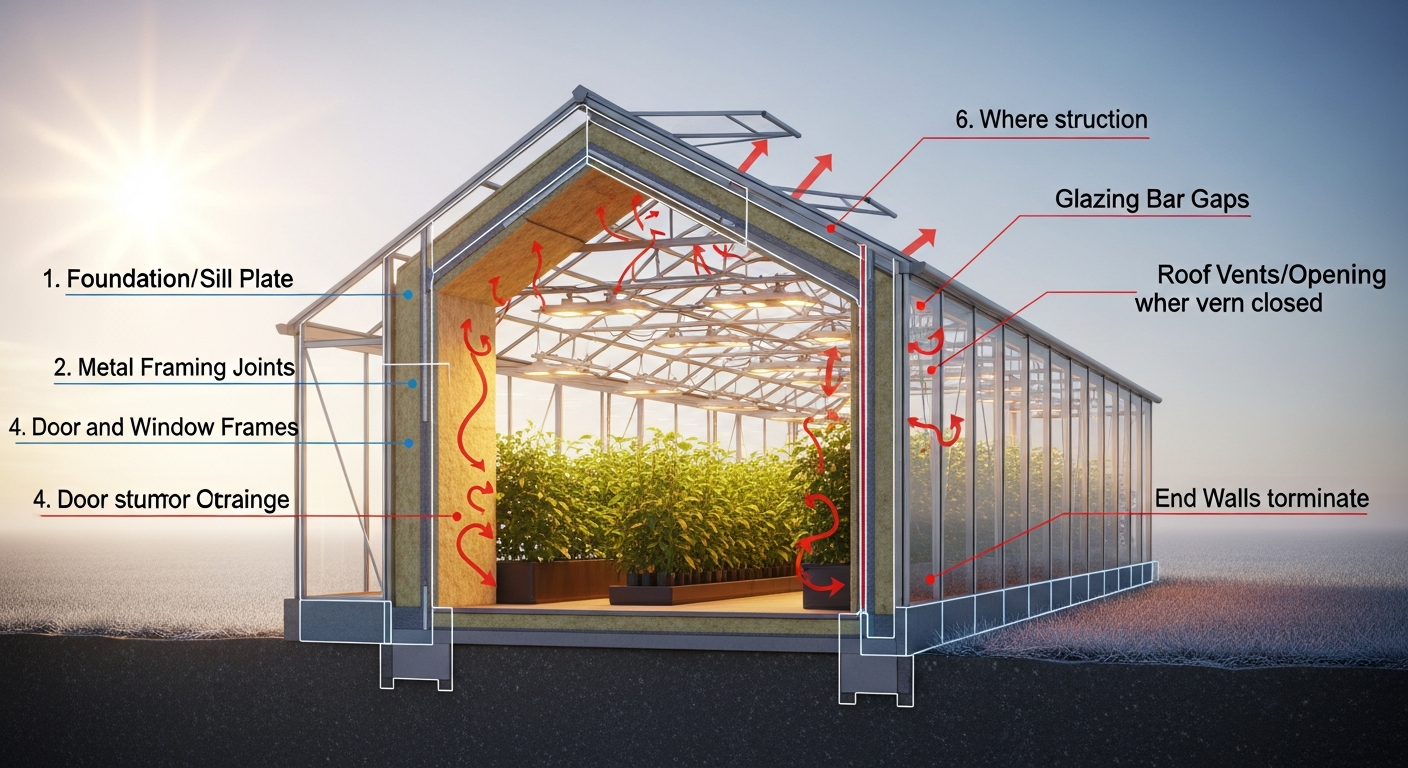
For a greenhouse, which is inherently designed to capture and retain solar energy, thermal bridges are particularly problematic. They lead to:
- Increased Heat Loss: This is the most obvious consequence, directly translating to higher heating costs as your system works harder to compensate for the escaping warmth.
- Temperature Inconsistencies: Areas near thermal bridges will be colder, potentially stressing plants located there and creating uneven growth patterns.
- Condensation: When warm, humid air inside the greenhouse comes into contact with cold surfaces caused by thermal bridges, it can cool below its dew point, leading to moisture condensation. This not only drips onto plants but can also foster fungal diseases and accelerate material degradation.
- Reduced Energy Efficiency: Overall, thermal bridges compromise the entire insulation strategy of your greenhouse, making it less sustainable and more expensive to operate.
Understanding these points of weakness is the first step toward a more efficient, resilient, and cost-effective greenhouse operation.
Common Culprits: Where to Find Thermal Bridges in Your Greenhouse Structure
Thermal bridges can lurk in various parts of your greenhouse, often where different materials meet or where insulation is interrupted. Knowing where to look is key.
Glazing Systems and Framing
The very structure that allows light in can be a major source of heat loss. Metal frames (aluminum, steel) used for supporting glazing are highly conductive materials. While modern greenhouses often feature double-pane or polycarbonate glazing for better insulation, the frames themselves can still act as significant thermal bridges.
- Metal Frames: Aluminum, in particular, is an excellent conductor of heat. Without a “thermal break” – an insulating material separating the inner and outer parts of the frame – heat easily transfers through.
- Single-Pane Glazing: If you still use single-pane glass, the entire pane, along with its frame, is a massive thermal bridge.
- Degraded Sealants and Gaskets: Over time, the sealants and rubber gaskets that hold glazing in place can crack, shrink, or detach, creating tiny gaps for air infiltration and direct heat transfer.
- Polycarbonate Edges: Even multi-wall polycarbonate, while excellent for insulation, can have exposed edges or poorly sealed connections that act as thermal bridges.
Foundations and Perimeter
The base of your greenhouse, often overlooked, is a prime area for heat loss, especially if it’s in direct contact with the cold ground.
- Uninsulated Concrete Foundations: Concrete is a decent conductor. Heat from inside the greenhouse can wick directly into the ground through uninsulated foundation walls or slab edges.
- Gaps at the Base: Small gaps or cracks between the foundation and the greenhouse’s base wall (often made of wood or metal) allow cold air to infiltrate and warm air to escape.
- Lack of Skirting/Earth Berming: If the ground around your greenhouse foundation is exposed, it can pull heat away from the structure.
Doors, Vents, and Other Openings
Any opening in your greenhouse, even when closed, has the potential to be a thermal bridge.
- Poorly Sealed Doors and Windows: Gaps around door frames or window sashes, worn-out weatherstripping, or improperly adjusted latches can allow significant drafts and heat transfer.
- Automatic Vents: While essential for ventilation, poorly designed or aging automatic vents (roof vents, side vents) may not close completely or have inadequate seals, creating continuous air leakage.
- Exhaust Fan Openings: When large exhaust fans are not in use, their openings, if not properly insulated or covered, can act as major conduits for heat loss.
Structural Connections and Joins
Wherever different components of your greenhouse structure come together, there’s a potential for a thermal bridge.
- Bolts and Fasteners: Metal bolts and other fasteners that penetrate insulated panels or connect frame elements can conduct heat.
- Panel Junctions: The points where polycarbonate panels or other glazing meet, especially if not perfectly aligned or properly sealed, can be weak spots.
- Roof-to-Wall Connections: The intersection where the roof structure meets the sidewalls is a complex area where insulation continuity can be difficult to achieve, leading to gaps or thin spots in the thermal envelope.
Utility Penetrations
Anywhere pipes, electrical conduits, water lines, or irrigation tubing enter or exit the greenhouse creates a break in the thermal envelope.
- Unsealed Gaps: If these penetrations are not meticulously sealed with caulk or expanding foam, they provide direct pathways for heat to escape and cold air to enter.
Tools and Techniques for Identifying Thermal Bridges
Once you know where to look, you need methods to pinpoint the exact locations of heat loss:
- Visual Inspection: Look for visible gaps, cracks, or deterioration in sealants, gaskets, and weatherstripping. Observe patterns of condensation or frost on interior surfaces – these often indicate cold spots where thermal bridges are present.
- The “Touch Test”: On a cold day, with the greenhouse heated, carefully feel the interior surfaces of frames, walls, and foundations. Significantly colder areas are likely thermal bridges.
- Smoke Pencil or Incense Stick: Light an incense stick or use a smoke pencil near suspected areas (vents, doors, seams) on a breezy day. Observe if the smoke is drawn in or pushed out, indicating air leaks.
- Thermal Imaging Camera: This is the most effective tool. A thermal camera (which can be rented or hired from a professional) visually displays temperature differences, making thermal bridges immediately obvious as “cold spots” in an infrared image.
- Professional Energy Audit: For a comprehensive assessment, consider hiring a professional who can perform a blower door test in conjunction with thermal imaging to identify air leakage and thermal bridging issues across your entire structure.
Mitigating Thermal Bridges: Practical Solutions for a Warmer Greenhouse
Once identified, addressing thermal bridges can significantly improve your greenhouse’s efficiency. Solutions range from simple DIY fixes to more involved retrofits or design considerations for new builds.
- Seal and Weatherstrip Everything: This is the lowest-hanging fruit.
- Apply high-quality, weather-resistant caulk to seal gaps around glazing, foundation, and utility penetrations.
- Replace worn-out weatherstripping around doors and vents.
- Use expanding foam for larger gaps, ensuring it’s appropriate for exterior use if exposed.
- Insulate Foundations:
- For existing greenhouses, consider insulating the exterior perimeter of your foundation with rigid foam insulation (XPS or EPS) buried below ground level and protected with a durable finish.
- Create an earth berm around the base of your greenhouse to provide natural insulation.
- Upgrade Glazing and Frames:
- If using single-pane glass, consider adding an interior layer of polycarbonate or even a secondary film to create a double-glazing effect.
- For new construction or major renovations, invest in thermally broken aluminum frames or frames made from less conductive materials like PVC or fiberglass.
- Ensure multi-wall polycarbonate panels are properly sealed at their edges to prevent moisture ingress and maintain their insulating properties.
- Insulate Structural Elements:
- For large metal structural members, it’s sometimes possible to add an internal layer of insulation and cladding to create a thermal break.
- Ensure that any fasteners penetrating insulation layers are minimized or utilize thermal washers to reduce conductivity.
- Cover Openings:
- Install insulated covers for exhaust fan openings when they are not in use during cold periods.
- Consider insulated curtains or blankets for doors and large vents that are frequently opened or are particularly prone to heat loss.
- Optimize Design for New Builds:
- Incorporate thermally broken framing systems from the outset.
- Design foundations with integrated insulation.
- Plan for minimal and well-sealed utility penetrations.
- Choose glazing materials with high R-values (low U-values) like multi-wall polycarbonate or insulated glass units.
Conclusion
Controlling heat loss by identifying and addressing thermal bridges is a fundamental step towards achieving optimal energy efficiency and creating a superior growing environment in your greenhouse. It’s an investment that pays dividends through reduced heating costs, healthier plants, and a more sustainable operation. By systematically inspecting your greenhouse, utilizing the right tools, and implementing practical solutions, you can significantly enhance your structure’s thermal performance, ensuring your plants remain cozy and your budget stays intact, even when winter truly bites. Embrace the challenge, and your greenhouse will thank you with flourishing foliage and abundant harvests.