
In the world of greenhouse cultivation, mastering the climate is paramount to nurturing healthy, thriving plants. Among the many tools at a grower’s disposal, shading systems stand out as critical for regulating light intensity and temperature. Too much sun can lead to scorched leaves, heat stress, and wilting, while insufficient light can stunt growth. The delicate balance often comes down to how you manage the shade – manually or with the help of automation. As experts at Greenhouse Climates, we understand this crucial decision point. This article delves into a comprehensive comparison of manual versus automated greenhouse shading systems, helping you determine the best fit for your unique growing environment and operational goals.
The Indispensable Role of Shading in Greenhouse Cultivation
Shading systems are far more than just “blockers of light”; they are sophisticated tools for environmental control. Their primary function is to mitigate excessive solar radiation, especially during peak daylight hours or in warmer climates. This not only prevents direct damage to plants but also plays a vital role in maintaining optimal internal greenhouse temperatures, reducing the need for costly active cooling.
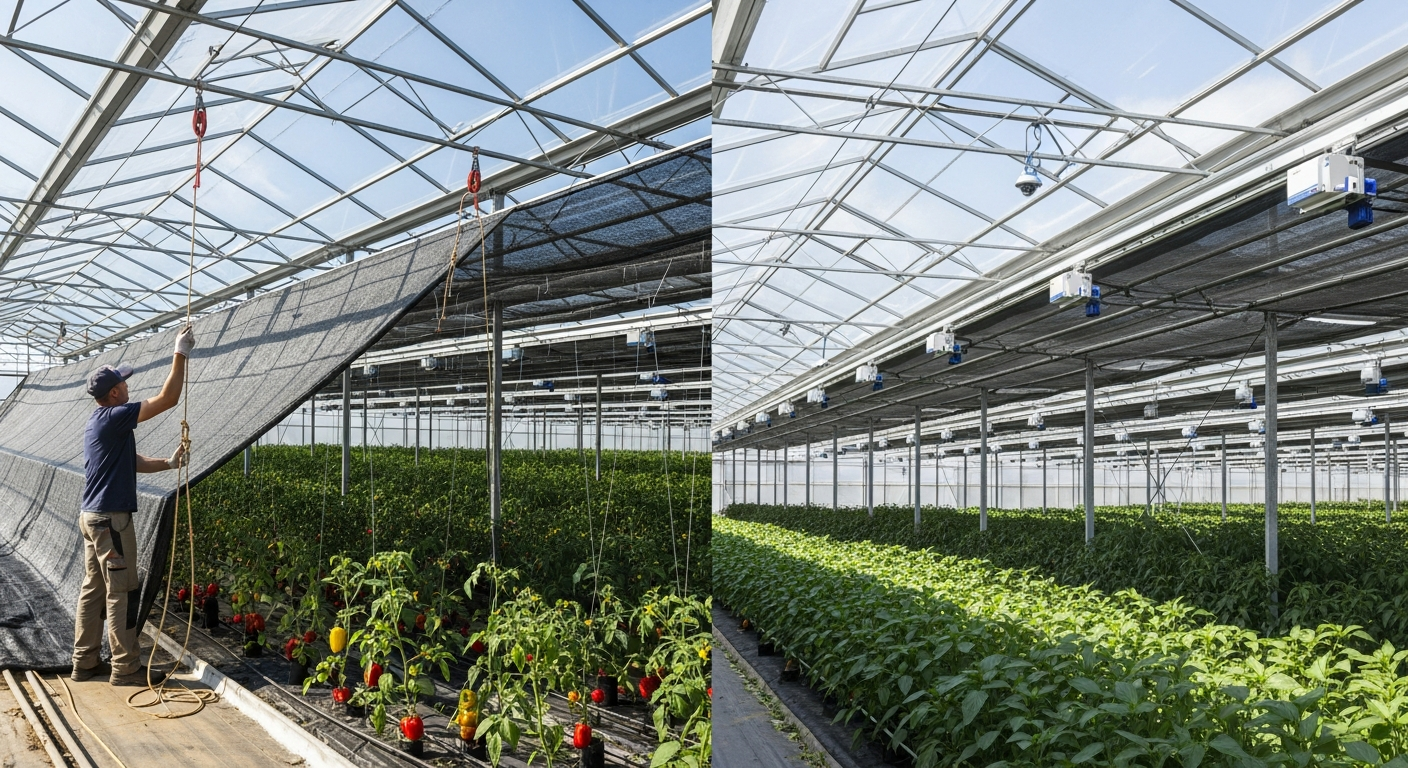
Beyond simple heat and light reduction, proper shading contributes to:
- Preventing Photoinhibition: Excess light can overwhelm a plant’s photosynthetic machinery, leading to reduced growth and stress.
- Temperature Regulation: Shading significantly reduces heat gain, lowering the overall temperature inside the greenhouse and lessening the strain on ventilation systems.
- Water Conservation: Lower temperatures and reduced light intensity decrease evapotranspiration rates, meaning plants lose less water and require less frequent irrigation.
- Optimizing Growth Stages: Different plants and different stages of growth require varying levels of light. Shading allows growers to tailor the light environment to specific needs, from delicate seedlings to mature fruiting plants.
- Energy Efficiency: By reducing heat buildup, shading systems can dramatically decrease the energy consumption of cooling fans and evaporative coolers.
Understanding these benefits is the first step in appreciating the significance of choosing the right shading mechanism for your greenhouse climate control strategy.
Manual Shading Systems: The Hands-On Approach
For many growers, especially those with smaller operations or limited budgets, manual shading systems offer a straightforward and cost-effective solution. These systems typically involve physical shade cloths that are manually deployed and retracted.
Advantages of Manual Shading:
- Lower Initial Cost: The upfront investment for manual shade cloth and its installation hardware is significantly lower than automated systems. This makes them ideal for hobbyists or startups.
- Simplicity and Ease of Maintenance: Manual systems are mechanically simple. There are no complex electronics, sensors, or motors to troubleshoot, reducing maintenance complexity and costs.
- Direct Control and Flexibility: Growers have complete, direct control over when and how much shade is applied. This can be beneficial for specific, immediate adjustments based on visual assessment or sudden weather changes.
- Independence from Power: Manual systems do not rely on electricity, making them resilient to power outages and suitable for remote locations without reliable power access.
Disadvantages of Manual Shading:
- Labor-Intensive: The most significant drawback is the time and effort required for daily deployment and retraction, especially for larger greenhouses. This can become a considerable burden during peak seasons or for commercial operations.
- Inconsistent Control: Manual adjustments are subject to human judgment and availability. This can lead to inconsistencies in light exposure, potentially impacting plant uniformity and health.
- Delayed Response: A sudden shift in weather (e.g., unexpected intense sun or cloud cover) might not be addressed immediately, leading to periods of suboptimal conditions.
- Limited Scalability: As your greenhouse operation grows, manual shading quickly becomes impractical and inefficient.
Practical Tips for Manual Shading Users:
- Choose the Right Shade Cloth: Select a shade cloth with the appropriate density (e.g., 30%, 50%, 70%) based on your plants’ needs and local climate.
- Implement a Schedule: Even with manual systems, try to adhere to a consistent schedule for deploying and retracting shade to provide stable conditions for your plants.
- Consider Roll-Up Sides: For sidewalls, manual roll-up shade cloths can offer quick ventilation and shading flexibility.
- Use Proper Fasteners: Ensure your shade cloth is securely fastened to prevent wind damage and ensure even coverage.
Automated Shading Systems: The Smart Solution
Automated shading systems represent the cutting edge of greenhouse climate control, employing sensors, motors, and control units to manage light and temperature with precision and efficiency. These systems are often integrated with other greenhouse climate control technologies.
Advantages of Automated Shading:
- Precision and Consistency: Automated systems use light sensors, temperature sensors, and timers to deploy and retract shade precisely when needed, ensuring optimal conditions around the clock. This consistency leads to healthier, more uniform crops.
- Labor Savings: Once installed and programmed, automated systems require minimal human intervention, freeing up valuable time for other greenhouse tasks. This is a massive advantage for commercial growers.
- Energy Efficiency: Smart automation can optimize shade deployment to reduce heat gain, significantly cutting cooling costs. Some systems can even act as thermal screens, retaining heat during cold nights.
- Rapid Response to Weather Changes: Sensors can detect sudden changes in light intensity or temperature and adjust the shade position almost instantly, protecting plants from sudden harsh sun or making the most of available light.
- Data Integration and Remote Control: Advanced systems can integrate with central climate control computers, allowing for data logging, analysis, and even remote control via smartphones or computers.
- Scalability: Automated systems are designed to efficiently manage shading for greenhouses of any size, from small commercial setups to vast industrial operations.
Disadvantages of Automated Shading:
- Higher Initial Cost: The primary barrier is the significant upfront investment in motors, sensors, control panels, and professional installation.
- Complexity and Maintenance: These systems are more complex than manual ones, potentially requiring specialized knowledge for setup, troubleshooting, and maintenance. Electrical components can fail.
- Reliance on Power: Automated systems require a reliable power supply. Power outages can disrupt operation unless backed up by generators or UPS systems.
- Potential for Malfunctions: Like any complex machinery, automated systems can malfunction, leading to incorrect shade deployment or retraction if not properly monitored and maintained.
Practical Tips for Automated Shading Users:
- Invest in Quality Sensors: Accurate light and temperature sensors are the brains of your system. Don’t compromise on their quality.
- Regular Calibration and Maintenance: Periodically calibrate your sensors and perform routine maintenance on motors and tracks to ensure smooth operation and longevity.
- Program for Your Specific Crops: Tailor your shading schedules and sensor thresholds to the specific light and temperature requirements of the plants you are growing.
- Consider a Backup Plan: Have a manual override option or a plan for power outages to prevent damage to your crops.
- Integrate with Other Systems: Maximize efficiency by integrating your shading automation with ventilation, heating, and irrigation controls for a truly holistic climate management system.
Choosing the Right System for Your Greenhouse
The decision between manual and automated shading isn’t about one being inherently “better” but rather which system aligns best with your specific needs, goals, and resources. Consider the following factors:
- Budget: Automated systems require a higher initial investment but can offer long-term savings in labor and energy. Manual systems are budget-friendly for the short term.
- Greenhouse Size and Scale: For small backyard greenhouses, manual systems are often sufficient. For larger commercial operations, automation quickly becomes a necessity for efficiency and consistency.
- Crop Requirements: If your crops have very precise light and temperature needs, or if you grow a variety of crops with different requirements, automated precision is invaluable.
- Time Commitment: How much time are you willing to dedicate daily to managing your greenhouse climate? If time is scarce, automation offers a significant advantage.
- Future Expansion Plans: If you anticipate expanding your greenhouse in the future, investing in an automated system now might save you from costly upgrades later.
- Local Climate: Greenhouses in regions with highly variable or intensely sunny weather will benefit more from the rapid response and precision of automated systems.
- Energy Goals: If energy efficiency and reducing your carbon footprint are high priorities, automated systems offer superior optimization capabilities.
Many growers also opt for a hybrid approach, using automated shading for the main roof area where light control is most critical and manual systems for side vents or smaller, specialized zones.
Conclusion
Both manual and automated greenhouse shading systems play a crucial role in maintaining optimal growing conditions, but they cater to different operational scales, budgets, and grower philosophies. Manual systems offer simplicity and affordability, making them excellent for hobbyists and small-scale growers who value direct control and a hands-on approach. Automated systems, while requiring a larger upfront investment, deliver unparalleled precision, consistency, labor savings, and energy efficiency, making them indispensable for commercial operations and anyone seeking to optimize their greenhouse climate with advanced technology.
By carefully evaluating your greenhouse’s size, your budget, the specific needs of your plants, and your personal time commitment, you can make an informed decision that will lead to a healthier, more productive, and more sustainable growing environment. Whatever your choice, remember that effective greenhouse climate control is an ongoing process of monitoring, adjusting, and learning, always with the goal of providing your plants with the perfect conditions to thrive.