
In the world of greenhouse cultivation, water is often seen primarily as a medium for irrigation and nutrient delivery. However, when it comes to systems designed to regulate temperature and humidity – specifically misting systems and evaporative cooling pads – the quality of that water becomes paramount. Neglecting water quality in these critical systems can lead to a cascade of problems, from diminished efficiency and equipment damage to compromised plant health. It’s not just about having water; it’s about having the right water quality to ensure your greenhouse climate control operates optimally and your plants thrive.
Why Water Quality is Non-Negotiable for Misting and Cooling
Misting systems and cooling pads work by leveraging the principle of evaporative cooling. As water evaporates, it absorbs heat from the surrounding air, effectively lowering the temperature and increasing humidity. This process, while ingenious, is highly sensitive to the properties of the water being used. Any impurities or undesirable characteristics in the water can significantly impede efficiency and lead to costly issues.
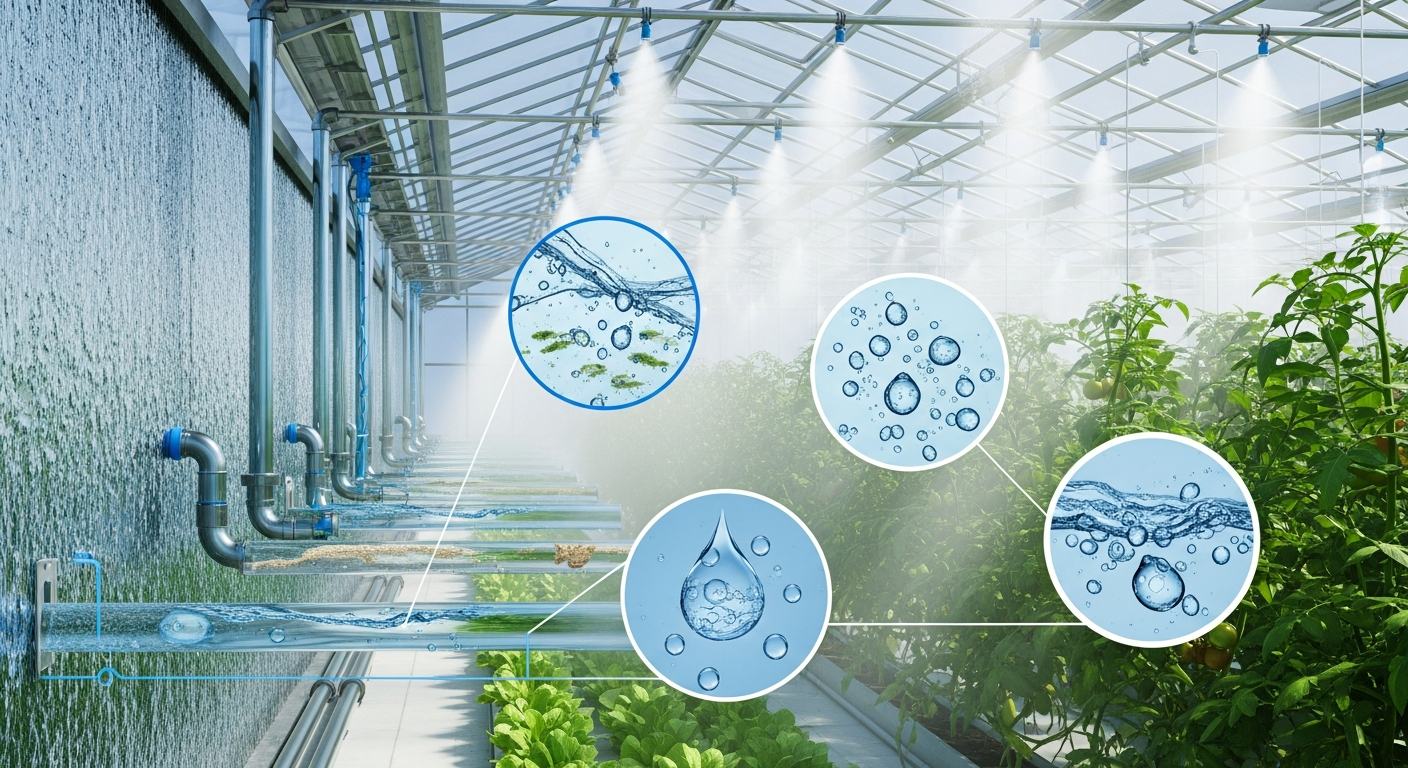
- For Misting Systems: These systems rely on fine nozzles to atomize water into a delicate mist. Poor water quality, especially water with high mineral content, can rapidly cause these tiny orifices to clog. The result? Uneven humidification, reduced cooling capacity, increased maintenance, and premature nozzle replacement. Furthermore, mineral residues can deposit on plant leaves, leaving unsightly spots, blocking stomata, and potentially affecting photosynthesis and respiration.
- For Evaporative Cooling Pads: Cooling pads, typically made of cellulose or fiberglass, provide a large surface area for water to evaporate. Hard water minerals like calcium and magnesium are particularly problematic here. As water evaporates, these minerals are left behind, accumulating as scale on the pad material. This scale reduces the pad’s evaporative surface, decreases airflow, and ultimately cripples the cooling system’s efficiency. Algae and other biological contaminants can also thrive in sumps and on pads, further blocking airflow, creating foul odors, and potentially spreading plant pathogens.
In both scenarios, compromised water quality doesn’t just impact the equipment; it directly affects the greenhouse environment, which in turn stresses your plants and can lead to lower yields or increased disease susceptibility.
Key Water Quality Parameters to Monitor
Understanding the specific characteristics of your water supply is the first step toward optimizing it. Regular testing is essential to identify potential problems. Here are the most critical parameters:
- Water Hardness (Calcium & Magnesium): This is arguably the most significant factor for misting and cooling systems. Hard water contains high concentrations of dissolved minerals, primarily calcium and magnesium ions. When water evaporates, these minerals are left behind, forming stubborn scale deposits (limescale) on nozzles, cooling pads, and even plant leaves. High hardness is the primary culprit behind clogged equipment and reduced efficiency.
- pH: The pH level measures the acidity or alkalinity of your water on a scale of 0-14. While the ideal pH for plant nutrient uptake is typically between 5.5 and 6.5, a pH that is too high or too low for misting and cooling water can accelerate corrosion of metal components or contribute to scale formation. Extremely high pH (alkaline water) often correlates with high alkalinity, which also needs consideration.
- Total Dissolved Solids (TDS) / Electrical Conductivity (EC): TDS measures the total concentration of all dissolved inorganic and organic substances in water, while EC measures the water’s ability to conduct electricity (which correlates directly with TDS). High TDS/EC indicates a high concentration of dissolved salts and minerals. For misting, high TDS can lead to significant residue on plants and equipment. For cooling pads, it exacerbates scale formation and can contribute to mineral crystallization.
- Alkalinity: Often confused with pH, alkalinity refers to the water’s capacity to neutralize acids, primarily due to the presence of bicarbonates, carbonates, and hydroxides. High alkalinity acts as a buffer, making it difficult to adjust and stabilize the water’s pH. In cooling systems, high alkalinity contributes to scale formation and can make pH management challenging.
- Chlorine and Chloramines: These disinfectants are commonly added to municipal water supplies to kill bacteria. While beneficial for potable water, they can be detrimental in a greenhouse. Chlorine can damage sensitive plant tissues, especially when applied as a fine mist. More importantly, it can degrade certain components of cooling pads and misting nozzles over time and kill beneficial microbes in recirculating systems.
- Silica: Although less common than calcium or magnesium, high levels of dissolved silica can also form extremely hard and difficult-to-remove scale deposits in cooling systems, particularly at higher temperatures.
- Heavy Metals & Other Contaminants: While less common for misting/cooling specifically, heavy metals (e.g., lead, copper, iron) can be corrosive, stain surfaces, and can be toxic to plants if they accumulate. Biological contaminants like bacteria and fungi can form biofilms, clog systems, and promote algae growth.
Common Problems and Their Consequences
Ignoring water quality issues for your misting and cooling systems is a recipe for operational headaches and financial strain. Here’s a breakdown of the most common problems:
Clogged Nozzles and Drippers
Cause: High mineral content (hardness), suspended solids, or biofilm buildup.
Consequence: Uneven mist distribution, reduced humidification and cooling, increased water pressure requirements, premature nozzle replacement, and constant maintenance cycles.
Scale Buildup
Cause: High water hardness (calcium, magnesium) and alkalinity. As water evaporates, these minerals precipitate out and form hard crusts.
Consequence:
- On Cooling Pads: Reduces the effective evaporative surface, restricting airflow and severely diminishing cooling efficiency. Pads degrade faster and require frequent replacement.
- On Misting Nozzles: Blocks orifices, leading to clogging.
- On Plant Leaves: Leaves white, unsightly spots, particularly on foliage plants. This residue can block stomata, impairing gas exchange and photosynthesis, potentially leading to nutrient imbalances or burns under intense light.
- On Equipment: Accelerates wear and tear on pumps, pipes, and other system components, leading to breakdowns and higher repair costs.
Algae and Biofilm Growth
Cause: High organic matter, nutrients in the water, stagnant water, and warm temperatures, often exacerbated by sunlight exposure in sumps and on pads.
Consequence:
- On Cooling Pads: Clogs pad pores, reducing airflow and evaporative cooling. Can lead to foul odors.
- In Sumps and Pipes: Forms slimy biofilms that can harbor pathogens, clog filters, and restrict water flow.
- Spreading Disease: Can be a vector for plant diseases, especially in recirculating systems.
Reduced System Efficiency and Increased Operating Costs
Cause: Any of the above problems leading to less effective cooling/humidification.
Consequence: Your systems work harder to achieve desired climate setpoints, consuming more energy. Frequent equipment replacement, increased labor for cleaning, and potential crop losses all add up to significant operational costs.
Solutions for Optimizing Your Greenhouse Water Quality
Proactive water management is key to preventing these problems. Here are proven strategies to ensure your misting and cooling systems receive the best possible water:
1. Regular Water Testing
Start by knowing your source water. Conduct comprehensive water tests for hardness, pH, alkalinity, TDS/EC, and chlorine. You can use DIY test kits for basic parameters or send samples to an agricultural testing lab for a more detailed analysis. Test regularly, especially if your water source changes or you notice performance issues.
2. Pre-Filtration
Before any other treatment, filter out suspended solids like sediment, rust, and debris. Sediment filters (e.g., 5-micron filters) protect subsequent treatment systems and prevent larger particles from clogging nozzles and pumps.
3. Chlorine/Chloramine Removal
If your municipal water contains chlorine or chloramines, a activated carbon filter is highly effective at removing them. This protects plants, equipment, and beneficial microorganisms.
4. Water Softeners
For moderate to high water hardness, a water softener can be an effective solution. These systems typically use an ion-exchange process to replace calcium and magnesium ions with sodium ions. While effective at preventing scale, be mindful of the added sodium, which can be a concern for some sensitive plants if the softened water is also used for irrigation.
5. Reverse Osmosis (RO) Systems
For the purest water, especially when hardness, TDS, or other contaminants are very high, a reverse osmosis (RO) system is often the gold standard. RO forces water through a semi-permeable membrane, effectively removing up to 98% of dissolved salts, minerals, heavy metals, and most organic contaminants. While a significant investment, RO water virtually eliminates scale, reduces algae growth, and extends the life of all greenhouse equipment. The primary drawbacks are the initial cost, the energy required, and the wastewater produced.
6. Deionization (DI) Systems
Often used in conjunction with RO for ultra-pure water, DI systems use ion-exchange resins to remove remaining charged ions. For misting and cooling, RO alone is usually sufficient, but DI can provide an extra layer of purity if absolutely necessary.
7. pH Adjustment Systems
For high alkalinity water, which buffers against pH changes, an acid injection system can be used to lower and stabilize the pH. This helps prevent scale formation and creates a more favorable environment. Always handle acids with extreme caution and use appropriate safety measures.
8. Regular Maintenance and Cleaning
Even with advanced water treatment, routine maintenance is crucial.
- Misting Systems: Regularly flush lines, inspect nozzles for clogging, and perform chemical or physical cleaning as needed.
- Cooling Pads: Keep the sump clean, remove debris, and periodically clean or treat pads with appropriate algaecides or descalers (ensure they are safe for plants and pad materials). Replace pads when they show significant degradation or scale buildup.
Conclusion
The success of your greenhouse climate control systems—misting and evaporative cooling—hinges on the quality of the water you supply. Investing in proper water testing and treatment is not merely an expense; it’s a critical investment in the longevity of your equipment, the efficiency of your operations, and most importantly, the health and productivity of your plants. By understanding the key water quality parameters and implementing appropriate filtration and purification strategies, you can prevent costly problems, reduce maintenance, and ensure your greenhouse environment remains precisely controlled, allowing your crops to flourish under ideal conditions. Don’t let poor water quality be the unseen obstacle to your greenhouse’s success.