
In the high-stakes world of modern horticulture, where controlled environment agriculture (CEA) and critical greenhouse hubs are pushing the boundaries of crop production, power reliability isn’t just a convenience; it’s the bedrock of success. A sudden power outage, even for a few minutes, can have catastrophic consequences, from stalled growth cycles and compromised yields to irreversible crop loss and significant financial setbacks. Imagine grow lights suddenly dimming, environmental controls failing, or irrigation systems grinding to a halt – the delicate balance of a thriving greenhouse ecosystem can quickly collapse. This is where the indispensability of battery backups and Uninterruptible Power Supply (UPS) systems becomes glaringly clear. These sophisticated solutions offer a vital shield against the unpredictable nature of power grids, ensuring continuous operation and safeguarding your valuable investments. For any operation striving for consistent quality, maximum yield, and operational resilience, understanding and implementing robust greenhouse battery backup systems is no longer optional, but absolutely essential.
The Vulnerability of Critical Greenhouse Hubs: Why Power Reliability is Non-Negotiable
Modern greenhouses, particularly those involved in Controlled Environment Agriculture (CEA), advanced research, or the cultivation of high-value crops, are intricate ecosystems meticulously designed to optimize growth conditions. Unlike traditional farming, where crops are subject to natural variations, these “critical greenhouse hubs” rely heavily on precisely managed parameters. This reliance, while enabling superior control and predictable yields, simultaneously introduces a profound vulnerability: dependence on a stable and continuous power supply.
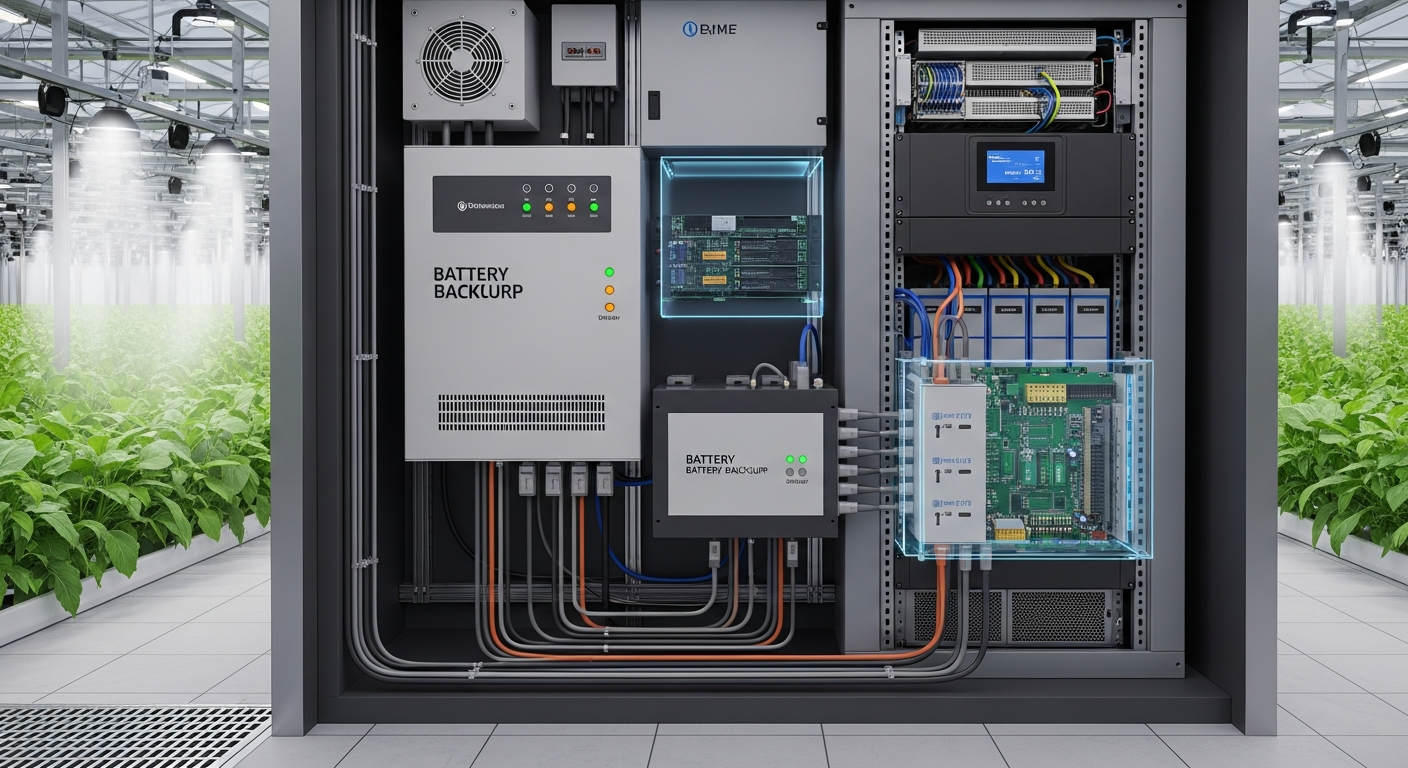
Consider the myriad of systems that cease to function during even a momentary power disruption:
- Environmental Control Systems (HVAC): This includes heating, ventilation, air conditioning, and dehumidification. Without power, temperatures can rapidly swing beyond optimal ranges, leading to heat stress, chilling injury, or the proliferation of diseases due to unchecked humidity. CO2 enrichment systems also rely on power, impacting photosynthesis rates.
- Grow Lighting Systems: Whether LED, HPS, or fluorescent, grow lights are fundamental for photosynthesis. An interruption disrupts critical photoperiods, causing stress, stunted growth, or even triggering unwanted flowering cycles in photoperiod-sensitive plants. The sudden loss and restoration of power can also be detrimental to the lifespan of expensive lighting ballasts and drivers.
- Irrigation and Fertigation Systems: Automated watering and nutrient delivery systems are crucial for precise resource management. A power outage means plants can quickly become dehydrated, or worse, water pumps could fail, leading to significant crop stress or outright loss.
- Monitoring and Automation: Sensors collecting data on temperature, humidity, pH, EC, and light intensity, along with the computers processing this data, require constant power. Loss of power means a loss of critical data, making it impossible to diagnose issues or maintain historical records necessary for optimization. Automation systems controlling vents, screens, and other physical elements also become inoperable.
- Security Systems: While not directly impacting plant health, security cameras, access control systems, and alarms are vital for protecting valuable crops and equipment. A power outage can leave your facility vulnerable.
The consequences of power loss in a critical greenhouse hub are not theoretical; they are tangible and immediate. A mere 30-minute outage can elevate temperatures to damaging levels in a sealed greenhouse on a hot day. A multi-hour disruption can lead to irreparable damage to sensitive young plants or germinating seeds. For operations dealing with high-value crops like cannabis, specialty produce, or research-grade plants, the financial losses can quickly escalate into the tens or hundreds of thousands of dollars per incident. Therefore, ensuring greenhouse power outage protection is not merely a precautionary measure but a fundamental operational imperative for safeguarding your investment, ensuring crop health, and maintaining consistent production schedules.
Understanding Battery Backups and UPS Systems: More Than Just a Generator
While a generator provides a robust long-term power solution for extended outages, it’s the battery backup and Uninterruptible Power Supply (UPS) system that bridge the critical gap between grid failure and generator startup, and provide crucial power conditioning. Often used interchangeably, it’s important to understand their distinct, yet complementary, roles in a comprehensive greenhouse power reliability strategy.
What is a Battery Backup?
At its core, a battery backup refers to any system that stores electrical energy in batteries and can supply power when the primary grid power fails. This could be a simple battery pack for a single device or a complex array of batteries integrated into a larger system. For greenhouses, a standalone battery backup might power specific low-wattage critical equipment for a predetermined duration.
What is a UPS System?
A UPS system is a more sophisticated form of battery backup designed to provide seamless, instantaneous power to connected equipment when the main power source fails. But its function extends beyond just providing emergency power:
- Instantaneous Power Transfer: The most significant advantage of a UPS is its ability to switch from utility power to battery power almost instantaneously (milliseconds), preventing any disruption to sensitive equipment. This is critical for electronic controllers, computers, and specialized grow light drivers that can be damaged or lose data from even a brief power interruption.
- Surge Protection: A UPS acts as a barrier, protecting connected devices from power surges, spikes, and lightning strikes that can severely damage expensive greenhouse electronics.
- Power Conditioning: Utility power is rarely “clean.” It can suffer from sags, brownouts, line noise, and frequency variations. A UPS system, particularly more advanced types, conditions this power, providing a stable, clean, and consistent electrical feed to your critical equipment, extending its lifespan and ensuring optimal performance.
Types of UPS Systems for Greenhouses
Understanding the different UPS topologies is crucial for selecting the right system for your greenhouse’s specific needs:
-
Standby (Offline) UPS:
This is the most basic and economical type. During normal operation, equipment runs directly off utility power. When a power failure occurs, the UPS switches to battery power. There’s a slight transfer time (typically 2-10 milliseconds), which may be acceptable for less sensitive loads like basic monitoring systems or small pumps that can tolerate a brief interruption. They offer basic surge protection but limited power conditioning.
-
Line-Interactive UPS:
A step up from standby, line-interactive UPS systems continuously monitor incoming utility power and can regulate voltage fluctuations (sags and surges) without switching to battery power. This is achieved through an autotransformer. They offer better power conditioning and protection than standby units, making them suitable for many small to medium-sized greenhouse critical loads, such as environmental controllers, irrigation timers, and certain lighting systems that can tolerate a brief transfer time during a complete outage.
-
Online (Double-Conversion) UPS:
This is the gold standard for critical applications and offers the highest level of CEA power protection. The online UPS constantly converts incoming AC power to DC to charge the batteries, and then converts it back to clean AC power for the connected equipment. This means the equipment is always running off the UPS’s inverter, completely isolated from the utility power. There is zero transfer time when utility power fails, as the batteries seamlessly take over. Online UPS systems provide superior power conditioning, precise voltage regulation, and complete isolation from all types of power disturbances. They are essential for research greenhouses, high-value crop cultivation, and any facility with extremely sensitive electronic equipment like advanced grow light drivers, climate computers, and sophisticated data logging systems where even a flicker can have significant consequences.
When planning your greenhouse power strategy, remember that while generators provide long-duration backup, a UPS system provides immediate, clean, and conditioned power, acting as the critical first line of defense against the myriad of power quality issues that can plague a modern horticultural operation. Many advanced greenhouses integrate both: a UPS to cover immediate outages and power conditioning, backed by a generator for extended grid failures.
Key Considerations for Selecting the Right UPS and Battery Backup for Your Greenhouse
Choosing the optimal UPS and battery backup system for your greenhouse is a strategic decision that requires careful planning. It’s not a one-size-fits-all solution, and miscalculating your needs can leave your critical systems vulnerable. Here are the crucial factors to consider:
A. Identify Critical Loads
Start by making a comprehensive list of all equipment that absolutely cannot tolerate a power interruption. Be specific. This might include:
- Environmental control computers and sensors
- Main grow light drivers (or at least enough to maintain photoperiod)
- Irrigation/fertigation pump controllers
- CO2 injection systems
- Automated vent and shade cloth controllers
- Data logging servers and network equipment
- Security systems
- Propagation chamber controls
Categorize these by their level of criticality. Some systems might need power for hours, others just long enough for a generator to kick in, or to perform a graceful shutdown.
B. Calculate Power Requirements (VA/Watts)
Once you have your list, determine the power consumption of each critical device. Most equipment will list its wattage (W) or Volt-Ampere (VA) rating. The VA rating indicates the apparent power, while Watts indicate the real power used. UPS systems are rated in both VA and Watts, with the Watt rating typically being 60-80% of the VA rating (Power Factor). Always prioritize the Watt rating for sizing, but ensure the VA rating is also sufficient, especially for inductive loads like motors.
- Sum Total Wattage: Add up the wattage for all critical equipment.
- Consider Inrush Current: Motors (like those in pumps or fans) and certain types of grow lights (e.g., HID lamps during startup) can draw significantly more power for a brief moment when they first turn on than their continuous operating wattage. This “inrush current” must be factored in to prevent the UPS from being overloaded during startup.
- Add Headroom: Always size your UPS with at least 20-30% extra capacity. This accounts for future expansion, unexpected load increases, and ensures the UPS isn’t constantly running at its maximum, which can shorten its lifespan. Running a UPS at 70-80% capacity is ideal for efficiency and longevity.
C. Determine Runtime Needs
How long do your critical systems need to run on battery power? This is highly dependent on your specific operational needs and whether you have a generator as a secondary backup. Common scenarios include:
- Short-term (15-30 minutes): Enough time for a standby generator to start up and transfer power.
- Medium-term (1-4 hours): Sufficient for most common, shorter grid outages, or to allow for manual intervention or safe shutdown of systems.
- Long-term (4+ hours): Necessary for remote greenhouses, facilities without a generator, or areas prone to extended power disruptions.
Longer runtimes require larger battery banks, which significantly impact the cost and footprint of the greenhouse battery backup solution.
D. Battery Technology: Lead-Acid vs. Lithium-ion
The choice of battery technology has significant implications for cost, performance, and maintenance:
- Valve Regulated Lead-Acid (VRLA/AGM):
- Pros: Lower upfront cost, widely available, proven technology.
- Cons: Shorter lifespan (3-5 years typically), heavier, larger footprint, sensitive to temperature fluctuations, require more frequent replacement, slower charging.
- Lithium-ion (Li-ion):
- Pros: Significantly longer lifespan (8-10+ years), higher energy density (smaller footprint, lighter weight), faster charging, better performance across a wider temperature range, typically comes with advanced battery management systems (BMS).
- Cons: Higher upfront cost.
While Li-ion has a higher initial investment, its longer lifespan, efficiency, and reduced maintenance often result in a lower total cost of ownership (TCO) over the lifetime of the CEA power solution, especially for larger, more critical greenhouse operations.
E. Environmental Factors
Greenhouse environments can be harsh on electronics. Consider:
- Temperature: Batteries and UPS electronics perform best within specific temperature ranges. High temperatures significantly reduce battery lifespan.
- Humidity: High humidity can lead to corrosion and short circuits.
- Dust/Pollen: Can clog cooling vents and lead to overheating.
Ideally, UPS systems and battery banks should be housed in a dedicated, climate-controlled room or enclosure. If this isn’t feasible, select units with appropriate IP (Ingress Protection) ratings for dust and moisture resistance.
F. Scalability and Monitoring
As your greenhouse evolves, your power needs may increase. Look for modular UPS systems that can be expanded with additional power modules or battery cabinets. Remote monitoring capabilities (via network cards, SNMP, or dedicated software) are invaluable for proactively managing your UPS. These systems can alert you to power disturbances, battery health issues, and impending failures, allowing for timely intervention and ensuring your greenhouse power management remains robust.
Installation, Maintenance, and Best Practices for Greenhouse Power Reliability
Investing in a high-quality UPS and battery backup system is only half the battle. Proper installation, diligent maintenance, and adherence to best practices are paramount to ensuring your greenhouse power reliability remains robust and your critical operations are truly safeguarded.
A. Professional Installation is Non-Negotiable
Given the complexity and critical nature of these systems, professional installation by qualified electricians or certified UPS technicians is essential. They will ensure:
- Correct Sizing and Load Balancing: Verifying that the UPS can handle the actual load and distributing the load efficiently across phases if applicable.
- Proper Wiring and Grounding: Incorrect wiring or grounding can lead to equipment damage, power quality issues, and safety hazards.
- Compliance with Codes: Adhering to local electrical codes and safety regulations.
- Dedicated Circuits: Ensuring critical equipment is on circuits specifically protected by the UPS.
Attempting DIY installation for significant UPS systems can void warranties, create safety risks, and compromise the very protection you’re trying to achieve.
B. Strategic Placement
Where you locate your UPS and battery banks significantly impacts their performance and longevity:
- Climate Control: As discussed, batteries are sensitive to temperature. A cool, dry, and well-ventilated environment (e.g., a dedicated utility room, away from direct sunlight, extreme heat sources, or cold drafts) is ideal. High temperatures accelerate battery degradation.
- Accessibility: Ensure easy access for maintenance, inspections, and potential battery replacement.
- Environmental Shielding: Protect units from dust, pollen, moisture, and pests common in a greenhouse environment. Consider sealed enclosures or units with higher IP ratings if they must be located within the growing area.
- Vibration and Stability: Place on a stable, level surface to prevent undue stress on components.
C. Regular Maintenance is Key to Longevity
A UPS system, particularly its batteries, is not a “set it and forget it” device. A proactive maintenance schedule is crucial:
- Battery Testing:
- Routine Checks: Conduct visual inspections for swelling, leaks, or corrosion.
- Discharge Tests: Periodically (e.g., annually) perform a controlled discharge test to verify battery health and runtime capacity. This simulates a power outage and helps identify weak batteries before a real emergency.
- Impedance Testing: For larger systems, impedance testing can gauge battery health without a full discharge.
Replace batteries according to the manufacturer’s recommendations or when performance degrades. Even if one battery in a string fails, it can compromise the entire bank.
- Environmental Monitoring: Continuously monitor the ambient temperature and humidity around the UPS and batteries. Address any deviations promptly.
- Cleaning: Regularly clean dust and debris from cooling vents and internal components to prevent overheating.
- Firmware Updates: For smart UPS systems, ensure firmware is updated to benefit from bug fixes and new features.
- Service Contracts: For complex or large-scale UPS installations, consider a service contract with the manufacturer or a specialized provider. This ensures expert maintenance and rapid response in case of issues.
D. Seamless Integration with Generators
For truly robust greenhouse power outage protection, a UPS often works in tandem with a standby generator. The UPS provides instantaneous power during the brief period it takes for the generator to detect an outage, start up, and stabilize. An Automatic Transfer Switch (ATS) is crucial here, seamlessly switching the load from utility power to generator power once it’s stable, and then back again when utility power returns. This combined approach offers the best of both worlds: immediate, clean power from the UPS, and long-duration backup from the generator.
E. Documentation and Training
Maintain comprehensive documentation for your UPS and battery backup systems, including manuals, wiring diagrams, maintenance logs, and emergency shutdown procedures. Train key staff members on the system’s operation, monitoring, basic troubleshooting, and what to do in the event of a power failure or system alert. Knowledgeable staff can prevent minor issues from escalating and ensure a quicker, safer response to power events.
F. Regular Power Audits
As your greenhouse operations evolve, your power requirements will too. Conduct regular power audits (e.g., every 1-3 years) to reassess your critical loads, verify the UPS sizing, and ensure your backup power solution still meets your needs. This proactive approach ensures your controlled environment agriculture UPS system remains adequate for your growing demands.
Conclusion
In the highly controlled and precision-driven world of modern horticulture, where every environmental parameter is meticulously managed for optimal crop health and yield, a reliable power supply is not merely an operational convenience but an absolute necessity. The vulnerability of critical greenhouse hubs to power disruptions, from grow lights to HVAC and irrigation systems, underscores the vital role of robust battery backups and Uninterruptible Power Supply (UPS) systems. These sophisticated solutions provide the instantaneous, clean power that protects your sensitive equipment, prevents catastrophic crop loss, and ensures the continuity of your operations.
By understanding the different types of UPS systems, meticulously calculating your power requirements and runtime needs, selecting appropriate battery technology, and implementing stringent installation and maintenance protocols, greenhouse operators can build an impregnable defense against the unpredictability of grid power. Whether safeguarding high-value crops, critical research, or maintaining the delicate balance of a CEA facility, investing in the right greenhouse power reliability strategy with a robust UPS and battery backup system is an investment in your success, your yields, and the long-term resilience of your horticultural enterprise. Don’t leave your critical greenhouse hub exposed to the dark; empower it with an uninterruptible future.