
In the intricate world of horticulture, where precision is paramount, growers are constantly seeking innovative methods to optimize plant development, enhance yields, and improve crop quality. One such powerful, yet often underutilized, environmental control strategy is the strategic manipulation of the difference between day and night temperatures, commonly known as DIF. While the concept of DIF has been understood for decades, its consistent and accurate application has historically been a labor-intensive challenge. Enter the age of smart controllers – sophisticated climate management systems that are revolutionizing our ability to implement and automate complex environmental strategies like negative DIF, transforming it from a theoretical advantage into a practical, repeatable, and highly effective tool for modern cultivation.
Understanding DIF and Its Horticultural Power
The term DIF is short for “Difference In Temperature,” referring specifically to the difference between the average daytime temperature and the average nighttime temperature experienced by plants. This seemingly simple metric holds profound implications for plant physiology, influencing everything from stem elongation and leaf expansion to flowering and overall plant architecture. Understanding and consciously manipulating DIF allows growers to sculpt their plants’ development, achieving desired characteristics without resorting to chemical growth regulators.
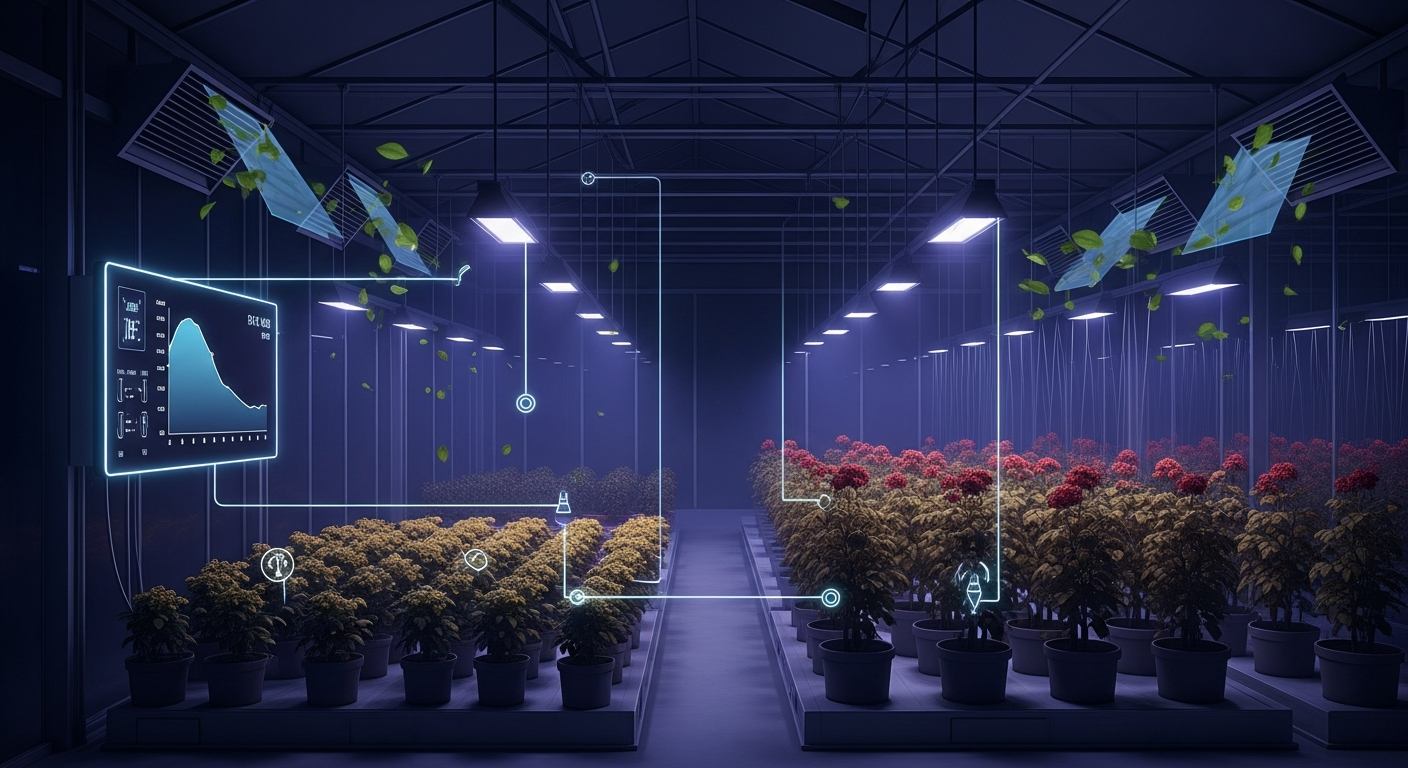
The Science Behind DIF: How Temperature Influences Growth
Plants are incredibly sensitive to their thermal environment. Temperature directly impacts metabolic rates, photosynthesis, respiration, and the activity of plant hormones. The most significant hormonal influence related to DIF is its effect on auxin, a key plant hormone responsible for cell elongation. When nighttime temperatures are lower than daytime temperatures (a negative DIF), the plant’s sensitivity to auxin in the stem tissue is reduced during the dark period. This reduction in sensitivity leads to less cell elongation, resulting in shorter internodes and more compact, sturdier plants. Conversely, if nighttime temperatures are higher than daytime temperatures (a positive DIF), auxin sensitivity increases, promoting greater cell elongation and leading to stretched, lanky growth.
Positive, Negative, and Zero DIF Explained
- Positive DIF (+DIF): Occurs when the nighttime temperature is higher than the daytime temperature (e.g., 25°C day / 28°C night). This promotes rapid stem elongation, often resulting in taller, more stretched plants with longer internodes. While sometimes desired for specific crops or growth phases (e.g., to encourage rapid initial growth), prolonged positive DIF can lead to weak stems and a less desirable plant habit.
- Negative DIF (-DIF): Occurs when the nighttime temperature is lower than the daytime temperature (e.g., 25°C day / 20°C night). This is the star of our discussion. Negative DIF inhibits stem elongation, leading to shorter internodes, stronger stems, and a more compact plant habit. It is widely used to control plant height and improve the aesthetic and structural quality of many ornamental and food crops.
- Zero DIF (0 DIF): Occurs when the daytime and nighttime temperatures are approximately the same (e.g., 25°C day / 25°C night). This provides a neutral effect on stem elongation, acting as a baseline. While stable, it doesn’t offer the specific growth-modifying benefits of positive or negative DIF.
The Benefits of Automating Negative DIF
For growers cultivating crops where compactness, strong stems, and controlled flowering are crucial, implementing a negative DIF strategy offers a multitude of benefits:
- Height Control: The primary benefit. Negative DIF is an incredibly effective non-chemical method to keep plants shorter and more compact, reducing the need for PGRs (plant growth regulators).
- Improved Plant Morphology: Beyond just height, it promotes stronger, thicker stems and often more robust branching, leading to healthier, more resilient plants.
- Enhanced Aesthetics: For ornamental crops, a compact, well-structured plant with dense foliage and abundant flowers is highly desirable. Negative DIF helps achieve this.
- Optimized Resource Utilization: Shorter plants can allow for higher plant density per square foot in certain cultivation systems, potentially increasing yield efficiency.
- Energy Efficiency (Paradoxically): While lowering night temperatures might seem counterintuitive for energy, smart implementation can leverage natural cooling or reduce heating demands during specific periods.
- Reduced Stress: Maintaining optimal environmental conditions, including appropriate DIF, can reduce overall plant stress, leading to better resistance to pests and diseases.
The challenge, historically, has been the precise and consistent application of these temperature differentials. This is where modern smart controllers become indispensable, turning a complex horticultural principle into an easily automated and highly effective cultivation practice.
The Role of Smart Controllers in Precision Climate Management
The journey from a simple thermostat to a sophisticated smart environmental controller represents a monumental leap in climate management for horticulture. These advanced systems are the brain of any modern grow operation, whether it’s a small grow tent, a commercial greenhouse, or a large-scale indoor farm. They integrate a multitude of sensors, actuators, and programmable logic to create a perfectly tailored growing environment, making the precise implementation of strategies like DIF not just possible, but highly efficient.
Evolution from Basic Thermostats to Integrated Systems
Early climate control relied on basic thermostats to turn heating or cooling systems on and off based on a single temperature setpoint. This offered minimal control and lacked the nuance required for optimized plant growth. Today’s grow room controllers and climate control systems are far more intelligent. They feature:
- Multiple Sensor Inputs: Beyond temperature, they monitor humidity, CO2 levels, light intensity, vapor pressure deficit (VPD), and even nutrient solution parameters.
- Advanced Programming Capabilities: Not just simple on/off, but intricate schedules, conditional logic (e.g., “if temperature > X AND humidity > Y, then activate exhaust fan at Z%”), and differential setpoints.
- Network Connectivity: Many controllers are IoT-enabled, allowing for remote monitoring, control, data logging, and alerts via smartphone apps or web interfaces.
- Actuator Integration: They seamlessly connect with and control a wide array of equipment, including HVAC systems, exhaust fans, circulation fans, heaters, dehumidifiers, humidifiers, CO2 generators/regulators, and lighting systems.
Key Features Essential for Automating DIF
To effectively automate a negative DIF strategy, smart controllers must possess specific features:
- Independent Day/Night Temperature Setpoints: This is fundamental. The controller must allow you to program distinct target temperatures for the photoperiod (day) and scotoperiod (night).
- Precise Temperature Sensors: Accurate, real-time temperature readings are crucial. High-quality sensors, ideally placed strategically within the plant canopy, feed data to the controller.
- Programmable Transition Periods: While a sharp drop can be effective, some growers prefer a gradual transition between day and night temperatures. Advanced controllers allow for ramp-up or ramp-down schedules.
- Timed and Event-Based Scheduling: The controller needs to understand your light cycle (when day starts and ends) to trigger the correct temperature setpoints. This can be based on a fixed clock or integrated with a light sensor.
- Feedback Loops and PID Control: Sophisticated controllers use algorithms like Proportional-Integral-Derivative (PID) control to minimize overshoot and undershoot, maintaining temperature precisely at the setpoint by finely adjusting equipment output (e.g., fan speed modulation).
- Data Logging and Analysis: The ability to record temperature data over time is invaluable for understanding trends, verifying the effectiveness of your DIF strategy, and making data-driven adjustments.
- Remote Monitoring and Alerts: Being able to check your grow environment’s temperature from anywhere and receive alerts for deviations ensures peace of mind and allows for timely intervention.
By leveraging these capabilities, environmental controllers transform the abstract concept of DIF into a tangible, controllable, and highly effective element of your cultivation strategy, ensuring plants consistently receive the precise temperature shifts needed for optimal growth.
Automating Negative DIF: A Step-by-Step Guide
Implementing an automated negative DIF strategy using a smart controller might seem daunting at first, but by breaking it down into manageable steps, you can achieve precise climate control that significantly benefits your crop. The goal is to consistently deliver a lower nighttime temperature compared to daytime, ensuring uniform plant response.
Step 1: Define Your DIF Strategy and Target Parameters
Before touching any equipment, decide on your specific DIF goals. Different crops respond best to different DIF magnitudes. For many common ornamental and vegetable crops, a negative DIF of 3°C to 7°C (5-12°F) is effective. For example:
- Daytime Temperature Setpoint: 25°C (77°F)
- Nighttime Temperature Setpoint: 20°C (68°F)
- Resulting Negative DIF: 5°C (9°F)
Consider the age and stage of your plants. Younger plants might benefit from a less aggressive DIF, while more mature plants needing height control can handle a larger differential. Also, think about the duration of the drop. Some growers implement the entire drop for the full scotoperiod, while others opt for a “DIF dip” for just the first few hours of darkness, which can be highly effective and energy-efficient.
Step 2: Selecting the Right Smart Controller
The market offers a range of smart controllers, from basic models to highly advanced integrated systems. When choosing, consider:
- Number of Zones/Outputs: Do you need to control multiple areas independently? How many devices (fans, heaters, AC units) will you connect?
- Sensor Compatibility: Ensure it supports accurate temperature sensors and any other sensors you plan to use (humidity, CO2).
- Programmability: Look for systems that offer intuitive scheduling, multiple setpoints, and custom logic.
- Remote Access & Data Logging: These features are invaluable for monitoring and optimization.
- Budget and Scalability: Choose a system that fits your current needs and allows for future expansion.
Popular brands often include models specifically designed for horticultural applications, offering robust performance and user-friendly interfaces.
Step 3: Installation of Sensors and Actuators
Proper sensor placement is critical for accurate readings. Place temperature sensors at the plant canopy level, avoiding direct airflow from fans or heating/cooling vents, and away from direct light. For larger areas, multiple sensors might be necessary to get an average reading.
Next, connect your environmental control equipment (actuators) to the controller. This typically includes:
- Heating Systems: Electric heaters, forced air furnaces.
- Cooling Systems: Air conditioners, evaporative coolers, exhaust fans.
- Ventilation Fans: Intake and exhaust fans for air exchange.
Ensure all equipment is properly sized for your grow space and wired safely according to manufacturer instructions. The controller will then send signals to these devices to maintain your programmed setpoints.
Step 4: Programming the Controller for DIF
This is where the automation magic happens. Navigate your controller’s interface to set up the following:
- Establish Day/Night Cycle: Input your light schedule (e.g., lights on at 6 AM, lights off at 6 PM). The controller uses this to define day and night periods.
- Set Daytime Temperature: Program your desired temperature setpoint for the entire photoperiod (e.g., 25°C). The controller will activate cooling or heating as needed to maintain this.
- Set Nighttime Temperature: Program your desired lower temperature setpoint for the scotoperiod (e.g., 20°C). This is your negative DIF target.
- Configure Transitions (Optional but Recommended): Some controllers allow for gradual temperature changes. For instance, instead of an abrupt drop at lights-off, you might program a 2-hour ramp-down period, dropping 2.5°C per hour to reach the night setpoint. This can reduce stress on plants and energy spikes.
- Integrate Other Climate Controls: While focusing on DIF, remember to set humidity, CO2, and ventilation parameters for both day and night as well, ensuring they complement your temperature strategy. For instance, lower nighttime temperatures often mean higher relative humidity, which might require specific ventilation or dehumidification cycles.
Step 5: Monitoring, Data Analysis, and Adjustment
Once programmed, don’t just set it and forget it. Regularly monitor your grow environment’s actual temperature trends using the controller’s data logging features. Look for:
- Consistency: Is the controller consistently hitting your target day and night temperatures?
- Overshoots/Undershoots: Are there significant deviations that indicate equipment sizing issues or the need to fine-tune PID settings?
- Transition Smoothness: If you programmed gradual transitions, are they happening as intended?
- Plant Response: Most importantly, observe your plants! Are they exhibiting the desired compact growth? Adjust your DIF magnitude (the difference between day and night temperatures) and duration based on their response.
By continuously monitoring and making small, informed adjustments, you can fine-tune your automated negative DIF strategy for maximum effectiveness and optimal plant development.
Advanced Strategies and Considerations for Optimal DIF Control
While the basic implementation of automated negative DIF can yield significant benefits, growers seeking truly optimized results can explore more advanced strategies and considerations. Integrating DIF with other environmental factors and understanding subtle nuances can further enhance plant health, morphology, and productivity.
Integrating DIF with Other Environmental Factors
Temperature is just one piece of the environmental puzzle. For a truly optimized growth environment, DIF needs to be considered in conjunction with:
- Humidity and VPD: Lowering night temperatures naturally increases relative humidity. This can push your Vapor Pressure Deficit (VPD) out of optimal ranges, potentially leading to fungal issues or reduced transpiration. Your smart controller should manage dehumidifiers or ventilation systems to maintain ideal nighttime VPD, even with cooler temperatures.
- CO2 Supplementation: CO2 enrichment is primarily beneficial during the photoperiod when photosynthesis is active. During the cooler, darker night, CO2 levels naturally rise due to plant respiration. Your controller should reduce or cease CO2 injection during the scotoperiod, which aligns with DIF implementation and saves resources.
- Light Intensity and Duration: The light cycle defines your day and night periods, directly dictating when DIF shifts occur. Ensure your lighting schedule is stable and that light intensity is appropriate for your crop’s developmental stage.
A truly integrated climate control system will manage all these factors holistically, preventing one optimized variable from negatively impacting another.
Gradual Transitions vs. Abrupt Drops: The “DIF Dip”
While an abrupt drop in temperature at lights-off can be effective, some growers prefer or find benefits in more nuanced approaches:
- Gradual Transitions: Slowly ramping down the temperature over an hour or two after lights-off can reduce plant stress from a sudden environmental shock. Many advanced controllers allow for this kind of scheduled temperature ramp.
- The “DIF Dip”: This strategy involves lowering the temperature significantly for only the first 1-3 hours after lights-off, then allowing it to return to a more moderate nighttime temperature for the remainder of the scotoperiod. This technique leverages the fact that the initial hours of darkness are often the most critical for stem elongation inhibition. It can be highly energy-efficient, as you’re only cooling aggressively for a short period, potentially using less energy than maintaining a low temperature all night.
Experiment with these strategies and use your data logging and plant observations to determine what works best for your specific crops and setup.
Root Zone Temperature Considerations
While air temperature directly influences shoot growth, remember that root zone temperature (RZT) is equally critical for nutrient uptake and overall plant health. When lowering air temperatures at night, ensure your root zone doesn’t become excessively cold, which can stress plants and hinder nutrient absorption. In hydroponic systems, this might require a separate reservoir heater with its own thermostat, ensuring RZT remains stable even as air temperature fluctuates.
Species-Specific DIF Requirements
It’s crucial to recognize that not all plants respond identically to DIF. While many common greenhouse crops (e.g., petunias, poinsettias, tomatoes) show a strong positive response to negative DIF for height control, some plants might have different optimal ranges or even respond negatively to severe temperature drops. Always research the specific requirements of your chosen crop. Start with a moderate DIF (e.g., 3-5°C) and adjust based on observation.
Energy Efficiency Tips for DIF Automation
Implementing negative DIF often involves cooling, which can be energy-intensive. To mitigate this:
- Leverage Natural Cooling: In temperate climates, early morning outdoor temperatures are often the coolest. Your environmental controller can be programmed to utilize natural ventilation and exhaust fans during these periods to achieve the nighttime drop, reducing reliance on mechanical cooling.
- Insulation and Sealing: Ensure your grow space is well-insulated and sealed to prevent unwanted heat gain during the day and heat loss at night, making your HVAC systems more efficient.
- Optimize Fan Speeds: Use controllers that can modulate fan speeds rather than just on/off. This allows for precise temperature maintenance without excessive energy use.
- Consider Thermal Blankets: In greenhouses, deploy thermal blankets at night to trap heat and assist in achieving lower ambient temperatures without excessive cooling.
Troubleshooting Common Issues
- Inconsistent Temperatures: Check sensor placement, ensure equipment is properly sized, and verify controller settings. Calibration of sensors might be necessary.
- Energy Spikes: Review your cooling/heating equipment’s efficiency and consider the “DIF dip” strategy or gradual transitions.
- Undesired Plant Response: Re-evaluate your DIF magnitude and duration. Observe plants for signs of stress (e.g., purple discoloration from cold, stunted growth) and adjust accordingly.
By applying these advanced considerations, you can move beyond basic DIF implementation to a highly refined and effective climate control strategy, maximizing plant potential and optimizing resource use.
Conclusion
The ability to precisely control and automate environmental factors is a cornerstone of modern horticulture. Among these, the strategic manipulation of the difference between day and night temperatures – DIF – stands out as a powerful, non-chemical method for influencing plant morphology and enhancing crop quality. By leveraging the sophisticated capabilities of smart environmental controllers, growers can move beyond the complexities and inconsistencies of manual adjustments, embracing an era of precision agriculture.
Automating negative DIF empowers cultivators to achieve consistent height control, promote stronger stems, and cultivate more aesthetically pleasing and productive plants. From defining precise day and night temperature setpoints to managing nuanced transition periods and integrating with other critical climate variables like humidity and CO2, smart controllers provide the intelligence and reliability needed for success. The journey involves careful planning, selecting the right technology, diligent setup, and continuous monitoring, but the rewards—in terms of improved plant health, optimized resource use, and superior yields—are substantial.
As cultivation continues to evolve, the integration of intelligent automation for strategies like DIF will undoubtedly become standard practice, allowing growers to unlock the full potential of their plants and maintain a competitive edge in an increasingly demanding market. Embracing these technologies isn’t just about efficiency; it’s about elevating the art and science of growing to unprecedented levels of precision and productivity.