
Greenhouses are sanctuaries of growth, meticulously designed to create optimal conditions for plants to thrive, often shielding them from the whims of external weather. However, a less obvious yet equally detrimental external factor can silently infiltrate these controlled environments: noise and vibration. From bustling highways and industrial zones to nearby construction sites and agricultural machinery, unwanted sound waves and structural tremors can significantly impact plant health, research accuracy, and even the efficiency of operations. This comprehensive guide delves into the critical importance of acoustic insulation in greenhouses, exploring how to effectively manage external noise and vibration to cultivate truly undisturbed and productive growing spaces.
The Hidden Impact of External Noise and Vibration on Greenhouse Environments
While we often associate ideal growing conditions with factors like light, temperature, humidity, and nutrients, the subtle yet pervasive presence of external noise and vibration is frequently overlooked. Yet, these environmental stressors can have profound, detrimental effects on plant physiology, growth rates, and overall crop yield, creating a less than optimal environment for the very organisms they are designed to nurture.
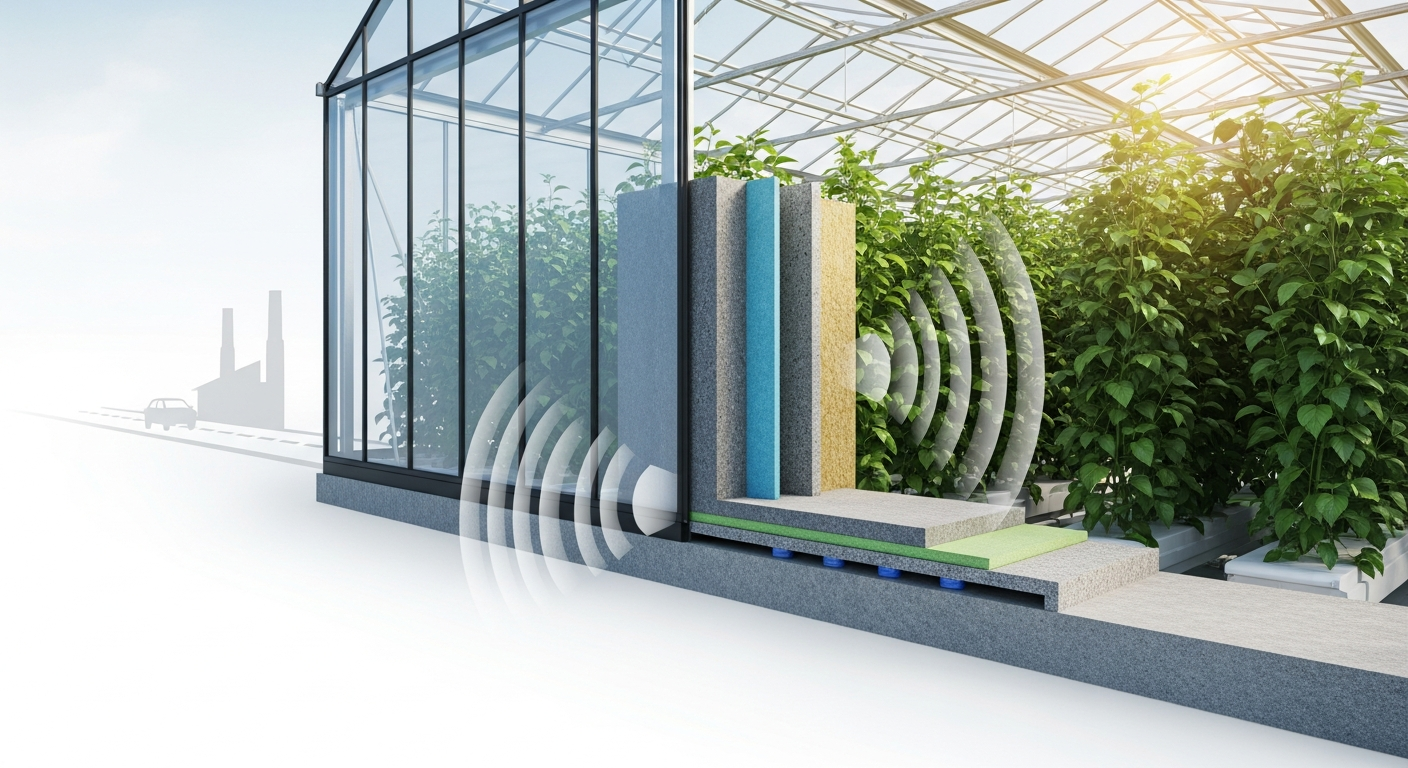
Understanding the Sources and Pathways of Disturbance
External noise and vibration can originate from a multitude of sources. Common culprits include:
- Road Traffic: Constant rumble from cars, trucks, and buses, especially for greenhouses located near busy thoroughfares.
- Industrial Activity: Machinery, manufacturing processes, and general operational noise from nearby factories or plants.
- Construction Sites: Jackhammers, heavy equipment, generators, and vehicle movements create intense, intermittent noise and ground vibration.
- Airports and Aviation: Overflying aircraft can generate significant low-frequency noise and air pressure fluctuations.
- Agricultural Machinery: Tractors, harvesters, and irrigation pumps operating in adjacent fields.
- Public Spaces: Schools, sports facilities, or entertainment venues that generate human activity noise.
These disturbances transmit into the greenhouse primarily through two pathways:
- Airborne Noise: Sound waves traveling through the air, penetrating walls, roofs, and especially common glazing materials.
- Structure-Borne Vibration: Vibrations transferred directly through the ground and building structure (foundation, frame), often perceived as a low-frequency hum or tremor.
The Physiological Consequences for Plants
Plants, far from being passive organisms, are highly responsive to their surroundings. Research increasingly shows that chronic exposure to noise and vibration can induce a range of stress responses:
- Stunted Growth: Studies have linked excessive noise to reduced biomass accumulation and slower growth rates in various plant species.
- Altered Photosynthesis: Noise stress can impair photosynthetic efficiency, reducing the plant’s ability to convert light energy into chemical energy, directly impacting yield.
- Hormonal Imbalance: Chronic stress can disrupt the delicate balance of plant hormones (e.g., auxins, gibberellins, abscisic acid), affecting root development, flowering, and fruiting.
- Reduced Crop Yield and Quality: The cumulative effect of these physiological stresses often manifests as lower yields, smaller fruits, or diminished nutritional value.
- Increased Susceptibility to Pests and Diseases: Stressed plants are generally weaker and more vulnerable to environmental challenges, including pathogen attacks and insect infestations.
- Changes in Gene Expression: On a molecular level, noise and vibration can trigger changes in gene expression related to stress response pathways, diverting energy from growth and reproduction.
Beyond plant health, excessive noise can also negatively impact greenhouse staff, affecting concentration, comfort, and overall well-being, potentially reducing efficiency and increasing the risk of errors in delicate research or cultivation tasks. For researchers, uncontrolled noise and vibration can compromise the integrity of experiments, introducing unwanted variables that skew results.
Understanding Acoustic Principles and Greenhouse Vulnerabilities
Effective acoustic insulation in greenhouses requires a fundamental understanding of how sound and vibration behave, coupled with an awareness of the inherent vulnerabilities of typical greenhouse construction.
Key Acoustic Concepts
To measure and mitigate noise, specialists use several key metrics:
- Sound Transmission Class (STC): A single-number rating of a material’s or assembly’s ability to resist airborne sound transmission. Higher STC values indicate better sound isolation.
- Noise Reduction Coefficient (NRC): Measures how much sound a material absorbs. An NRC of 0 means no absorption, while an NRC of 1 means complete absorption. This is critical for controlling reverberation *within* a space but also relevant for dampening sounds that enter.
- Mass Law: Generally, the heavier and denser a material, the better it blocks airborne sound. This is why concrete is an excellent sound barrier.
- Resonance: Structures have natural frequencies at which they vibrate most readily. External vibrations at these frequencies can amplify movement and noise.
- Flanking Paths: Sound can bypass primary barriers through indirect routes, such as unsealed gaps, vents, or even through adjacent structural elements.
Why Greenhouses are Acoustically Vulnerable
Traditional greenhouse designs prioritize light transmission and thermal regulation, often at the expense of sound insulation:
- Extensive Glazing: Glass and polycarbonate panels, while excellent for light, are typically poor sound barriers. Standard single-pane glass has a very low STC rating, allowing external noise to easily penetrate.
- Lightweight Structures: Many greenhouses are constructed with lightweight metal frames, which can readily transmit vibrations and offer minimal resistance to airborne sound.
- Air Leaks and Gaps: To manage ventilation, greenhouses often have numerous vents, doors, and seams. Even tiny gaps can significantly compromise sound insulation, as sound easily travels through air.
- Reverberant Interior: The hard, reflective surfaces (glass, concrete floors) common in greenhouses create highly reverberant interiors, meaning any noise that enters or is generated internally will echo and persist, further amplifying the perceived disturbance.
Addressing these vulnerabilities requires a strategic, multi-faceted approach that considers both airborne sound and structure-borne vibration.
Strategies and Materials for Effective Acoustic Insulation in Greenhouses
Achieving a quiet and stable greenhouse environment involves a combination of structural modifications, material selection, and strategic planning. The goal is to either block sound and vibration from entering or absorb it once it does.
1. Structural Modifications and Barriers
The first line of defense is to reinforce the greenhouse’s envelope:
- Specialized Acoustic Glazing:
- Double or Triple Glazing: Incorporating multiple panes of glass with an air or inert gas gap significantly improves STC ratings. Using different glass thicknesses in a double-glazed unit can further disrupt sound waves across a broader frequency range.
- Laminated Acoustic Glass: Features a specialized acoustic interlayer (e.g., PVB) sandwiched between two panes of glass. This interlayer dampens sound vibrations, offering superior performance compared to standard double glazing for its thickness.
- Acrylic or Polycarbonate Panels: While often lighter, thicker versions or multi-wall polycarbonate can offer better sound insulation than single-pane glass, especially when combined with air gaps.
- Mass-Loaded Walls and Foundations: For critical sides of the greenhouse facing major noise sources, consider integrating denser, heavier materials.
- Concrete or Masonry: A solid concrete foundation or a low wall section constructed from masonry blocks offers excellent sound blocking.
- Insulated Sandwich Panels: These composite panels, often used in commercial construction, feature a dense core (e.g., mineral wool, expanded polystyrene) between two rigid skins, providing both thermal and acoustic benefits.
- Air Gaps and Discontinuous Construction: Designing walls or even double roofs with an air gap between layers can drastically improve sound insulation, as sound struggles to cross a physical void.
- Sealing all Gaps and Cracks: This is perhaps the most crucial and often overlooked step. Sound, like water, will find the easiest path.
- Use high-quality acoustic sealants (e.g., caulk, weatherstripping) around all window frames, doorframes, vents, and panel seams.
- Ensure doors and windows have tight seals when closed.
2. Sound Absorptive Materials
Once sound enters the greenhouse, absorptive materials reduce reverberation, making the environment quieter:
- Acoustic Panels and Baffles:
- Made from porous materials like rockwool, mineral wool, fiberglass, or recycled polyester, these panels absorb sound waves rather than reflecting them.
- Can be installed on internal walls, ceilings, or hung as baffles, particularly in areas not directly impacting light transmission.
- Choose panels specifically designed for high-humidity environments or those with moisture-resistant facings.
- Acoustic Curtains/Blankets: Heavy, sound-absorbing curtains can be deployed on walls or used to temporarily partition noisy areas, offering flexibility.
- Strategic Internal Planting: While not a primary solution for external noise, dense internal foliage can contribute slightly to sound absorption and improve the interior acoustic comfort.
3. Vibration Isolation Measures
Addressing structure-borne vibration is distinct from airborne noise but equally important:
- Resilient Mounts and Pads:
- Place vibration isolation pads (e.g., rubber, neoprene, cork) under the foundation or structural columns, especially if vibration is transmitted through the ground.
- Equip any internal machinery (HVAC units, pumps, fans) with vibration isolators or spring mounts to prevent their operational vibrations from coupling with the greenhouse structure.
- Flexible Connections: Ensure ductwork, piping, and electrical conduits connected to vibrating equipment have flexible connectors to prevent vibration transfer through these pathways.
- Separate Foundations: For extremely sensitive research greenhouses, consider completely separate foundations for the greenhouse structure and any heavy, vibrating external equipment or nearby facilities.
4. External Noise Barriers (Landscape Solutions)
While often not sufficient on their own, external barriers can offer supplementary benefits:
- Acoustic Fences/Walls: Tall, dense barriers made of mass-loaded vinyl, concrete, or specialized acoustic panels can attenuate noise before it reaches the greenhouse.
- Earth Berms: Constructing elevated earth mounds can provide excellent sound blocking due to their mass.
- Dense Vegetation: Rows of tall, evergreen trees or thick hedges can offer some sound dampening, particularly for higher frequencies, but their effectiveness against low-frequency road noise is limited.
Designing and Implementing an Acoustic Solution for Your Greenhouse
A well-planned acoustic strategy is crucial for long-term success. It’s best to consider these elements during the initial design phase of a new greenhouse, though retrofits are also possible.
1. Conduct a Comprehensive Site Assessment
- Noise Mapping: Use specialized equipment to measure existing noise levels (dB) and frequencies at different points around and within the proposed or existing greenhouse site. Identify peak noise times and specific noise sources.
- Vibration Analysis: If vibration is suspected, conduct a professional vibration analysis to identify dominant frequencies and transmission pathways through the ground and structure.
- Identify Critical Areas: Determine which parts of the greenhouse (e.g., propagation areas, research zones, offices) require the highest level of acoustic control.
2. Define Performance Goals and Budget
- Set Clear Targets: Based on the assessment, define specific STC or NRC targets for different elements of the greenhouse envelope. What level of noise reduction is truly needed to prevent plant stress and ensure operational comfort?
- Consider Regulations: Be aware of any local noise ordinances that might apply to your facility.
- Budget Allocation: Acoustic insulation can be an investment. Prioritize areas and solutions that offer the most significant impact within your budget. Early integration during design is generally more cost-effective than retrofitting.
3. Select Appropriate Materials and Systems
- Balance Performance with Other Requirements: Acoustic materials for greenhouses must also be durable, resistant to humidity and temperature fluctuations, easy to clean, and where relevant, allow for sufficient light transmission.
- Consult with Experts: Engage an acoustical consultant or an architect experienced in specialized greenhouse design. They can recommend specific products and design strategies tailored to your unique situation.
- Look for Multi-functional Solutions: Some products offer both thermal insulation and acoustic benefits (e.g., insulated sandwich panels with dense cores), providing greater value.
4. Implement Best Installation Practices
- Attention to Detail: Even the best materials will fail if not installed correctly. Ensure all seals are airtight, panels are properly mounted, and there are no sound flanking paths.
- Isolate Components: Ensure that acoustic components are isolated from structural elements that might transmit vibrations.
- Phased Approach for Retrofits: If retrofitting an existing greenhouse, prioritize the most vulnerable areas first and gradually expand your acoustic treatment.
5. Ongoing Monitoring and Maintenance
- Regular Inspections: Periodically check seals, weatherstripping, and acoustic panel integrity for any signs of wear, damage, or gaps that could compromise performance.
- Adjustments: As noise sources or greenhouse operations change, be prepared to re-evaluate and adjust your acoustic strategy.
By systematically addressing external noise and vibration, greenhouse operators can cultivate an environment that truly optimizes plant growth, enhances research integrity, and improves the working conditions for staff, leading to healthier plants and more productive yields.
Conclusion
The quest for optimal plant growth in greenhouses extends far beyond light, temperature, and nutrients; it encompasses creating a holistic environment free from detrimental stressors. External noise and vibration, often unseen and unheard in their subtle destructive power, pose a significant threat to plant health, research accuracy, and overall operational efficiency. By embracing proactive acoustic insulation strategies – from specialized glazing and structural reinforcements to advanced sound absorption and vibration isolation techniques – greenhouse owners and operators can transform their facilities into truly serene and productive sanctuaries.
Investing in effective noise reduction and vibration control is not merely an expense but a strategic investment in the long-term success and sustainability of any greenhouse operation. It protects sensitive plant physiology, safeguards valuable research data, enhances worker well-being, and ultimately contributes to superior crop yields and quality. As we continue to refine our understanding of plant-environment interactions, the importance of a meticulously controlled, acoustically optimized greenhouse environment will only grow, solidifying its place as a cornerstone of modern, high-performance horticulture.