
In the intricate world of indoor cultivation, mastering the environment is paramount to achieving optimal plant health, vigorous growth, and abundant yields. Among the most critical environmental factors are light and climate, which, when precisely controlled and harmonized, unlock a plant’s full genetic potential. For too long, growers have managed these elements in silos, with separate timers for lights and independent thermostats for temperature. However, a revolutionary shift is underway: the integration of light schedules with climate controllers. This synergy represents the pinnacle of environmental control, transforming grow operations from merely functional to highly efficient, predictable, and exceptionally productive. By delving into the science of photoperiod management and the practicalities of advanced climate control, we can uncover how this integrated approach not only streamlines operations but also propels plant cultivation into a new era of precision agriculture.
The Foundations of Photoperiod Management and Environmental Control
Understanding the fundamental principles of how plants respond to light and their surrounding climate is the first step toward successful integration. These two elements are intrinsically linked, each influencing the other and, collectively, dictating the overall health and productivity of your crop.
Understanding Photoperiod and Plant Responses
Photoperiod refers to the duration of light (photophase) and darkness (scotophase) a plant receives over a 24-hour cycle. This critical environmental cue acts as a biological clock, signaling plants when to transition between different growth stages. Plants are broadly categorized into three types based on their photoperiodic responses:
- Short-Day Plants (SDP): These plants require a long, uninterrupted period of darkness to flower. Examples include cannabis, poinsettias, and chrysanthemums. Even a brief interruption of the dark period with light can prevent or delay flowering.
- Long-Day Plants (LDP): These plants require a short period of darkness (or a long period of light) to flower. Many common garden vegetables like spinach, lettuce, and radishes fall into this category.
- Day-Neutral Plants (DNP): Flowering in these plants is not primarily controlled by photoperiod but rather by factors like age or maturity. Tomatoes, cucumbers, and corn are examples of day-neutral plants.
Beyond flowering, photoperiod also influences other vital processes such as vegetative growth, dormancy, and the production of secondary metabolites. The intensity and spectrum of light during the photophase are equally important, driving photosynthesis and influencing plant morphology. The dark period is not merely an absence of light; it’s an active phase for various biochemical processes, including respiration and nutrient translocation. An improper dark cycle can lead to stress, reduced growth, and poor yields.
The Critical Role of Climate in Plant Health
While light is the engine of photosynthesis, climate parameters are the lubricants and coolants that keep the engine running smoothly. Optimal environmental conditions are crucial for a plant’s metabolic functions, nutrient uptake, and overall stress resistance. The key climate factors include:
- Temperature: Plants have an optimal temperature range for photosynthesis and respiration. High temperatures can cause heat stress, wilting, and reduced nutrient uptake, while low temperatures can slow growth and lead to cold stress. Temperature also significantly impacts transpiration rates.
- Humidity (Vapor Pressure Deficit – VPD): Relative humidity (RH) determines the Vapor Pressure Deficit (VPD), which measures the drying power of the air. Optimal VPD encourages healthy transpiration, nutrient uptake, and prevents issues like mold or powdery mildew. Too high RH can lead to fungal problems; too low RH can cause excessive transpiration and nutrient lockout.
- CO2 Enrichment: Carbon dioxide is a primary input for photosynthesis. In an enclosed grow environment, CO2 levels can quickly become depleted. Supplemental CO2, especially during the light period, can significantly boost photosynthetic efficiency and growth rates, provided other conditions (light, temperature) are also optimized.
- Air Movement: Gentle air circulation is essential for strengthening plant stems, preventing hot spots, distributing CO2, and reducing the risk of fungal pathogens by preventing stagnant, humid air pockets around foliage.
These climate factors are not independent; they interact dynamically. For instance, higher temperatures increase a plant’s need for water and can impact VPD. Similarly, increased light intensity boosts photosynthetic demand for CO2 and often generates more heat, necessitating adjustments to temperature and ventilation. Managing these interdependencies individually is complex; integrating their control offers a superior solution.
Bridging the Gap: Why Integration is Key
Historically, growers have relied on disparate systems to manage light schedules and environmental parameters. While functional, this fragmented approach presents numerous challenges and often falls short of achieving true optimization. The advent of integrated control systems offers a compelling alternative, delivering synergistic benefits that elevate cultivation practices.
The Limitations of Standalone Systems
Managing light timers and climate controls separately introduces several inefficiencies and potential pitfalls:
- Manual Adjustments and Human Error: Relying on manual adjustments for temperature, humidity, and CO2 in response to light cycle changes is time-consuming and prone to human error. For example, failing to reduce temperature or increase humidity during the dark cycle can stress plants or create conditions ripe for disease.
- Inefficiency and Energy Waste: Without coordinated control, systems may work against each other. A cooling system might overwork to compensate for heat generated by lights that aren’t integrated, or CO2 might be released when lights are off, wasting resources. Energy consumption often escalates due to reactive, rather than proactive, environmental management.
- Suboptimal Growing Conditions: Disconnected systems struggle to maintain the precise environmental sweet spot that plants thrive in. Fluctuations in temperature or humidity during critical photoperiod transitions can stress plants, slow growth, and ultimately impact yield quality and quantity. The ideal VPD, for instance, changes with light intensity and plant growth stage, requiring a holistic approach.
- Lack of Data and Insight: Standalone timers and basic climate controllers often lack the ability to log data, making it difficult to analyze trends, identify problems, or make informed adjustments for continuous improvement. Without this insight, growers operate largely on intuition rather than empirical data.
Synergistic Benefits of Integrated Systems
Integrating light schedules with climate controllers transforms a collection of devices into a cohesive, intelligent environmental control system. The benefits are profound:
- Enhanced Precision and Consistency: Integrated systems ensure that all environmental parameters—light, temperature, humidity, and CO2—are harmonized and precisely tuned to the plant’s current growth stage and photoperiod. This creates a stable, predictable environment that minimizes stress and maximizes genetic expression. For example, as lights dim for the “sunset” phase, the system can automatically adjust temperature and humidity to mimic natural evening conditions.
- Energy Savings and Resource Optimization: By orchestrating all components, integrated systems prevent wasteful overlaps or inefficiencies. HVAC systems can proactively ramp down as lights dim, CO2 can be precisely dosed only when photosynthesis is active, and irrigation can be scheduled based on light intensity and plant transpiration rates. This leads to significant reductions in energy consumption and optimized use of water and nutrients.
- Improved Plant Health and Yield: A consistently optimized environment translates directly into healthier plants. Reduced stress, ideal VPD, and precise nutrient delivery contribute to stronger growth, better disease resistance, and ultimately, higher quality and quantity of yield. Plants grown under integrated control are less likely to suffer from issues caused by environmental fluctuations.
- Remote Monitoring and Control: Many modern integrated systems offer cloud-based platforms and mobile applications. This allows growers to monitor their environment in real-time, receive alerts for anomalies, and make adjustments from anywhere in the world. This level of control provides peace of mind and allows for rapid intervention if issues arise, preventing costly crop damage.
- Data-Driven Decision Making: Integrated systems typically log extensive data on light cycles, climate parameters, and even plant responses. This invaluable data can be analyzed to identify optimal growing recipes, troubleshoot problems, and continually refine environmental control strategies for future crops, moving towards truly predictive agriculture.
Technologies and Strategies for Seamless Integration
Achieving seamless integration requires understanding the core technologies involved and implementing sound strategies for their deployment and management. The goal is to create a dynamic, responsive environment that mirrors the subtle shifts a plant would experience in nature, but with far greater precision and control.
Components of an Integrated System
A sophisticated integrated environmental control system typically comprises several key technological components working in concert:
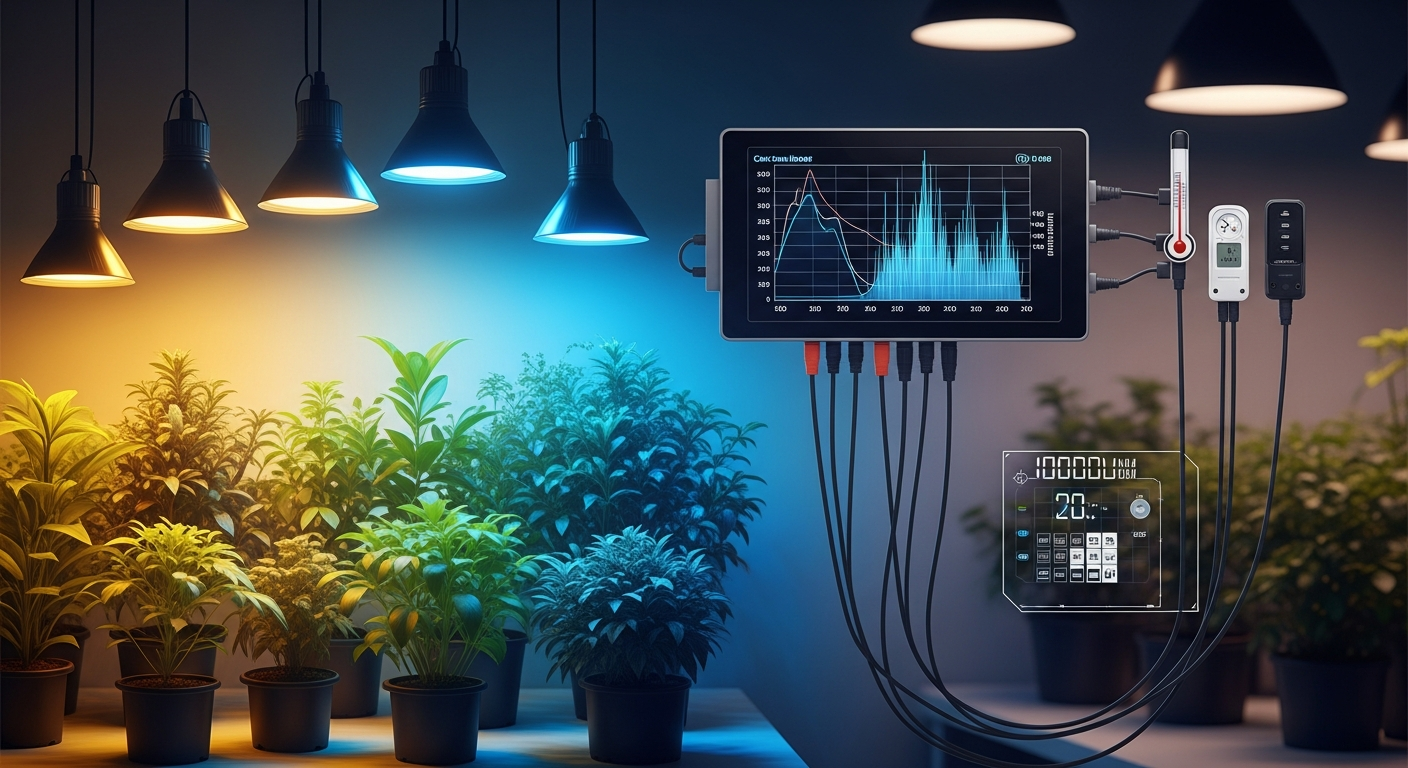
- Smart Climate Controllers: These are the brains of the operation. Modern controllers feature multiple input sensors (for temperature, humidity, CO2, light intensity) and numerous outputs (to control lights, fans, humidifiers, dehumidifiers, CO2 generators, heaters, AC units, irrigation pumps). They are programmable, allowing for complex logic and conditional automation.
- Advanced Horticultural Lighting Systems: While simple on/off timers can control basic lights, true integration benefits from advanced LED grow lights. These systems often feature:
- Dimmability: Allowing for gradual “sunrise” and “sunset” simulations, as well as adjustments to light intensity based on growth stage or external factors.
- Spectrum Control: The ability to adjust the light spectrum (e.g., increasing red light for flowering, blue light for vegetative growth) to optimize specific plant responses.
- External Control Ports: Allowing the lights to be directly connected and controlled by the central climate controller or management software.
- Environmental Sensors: Accurate and reliable sensors are critical. These include:
- Temperature Sensors: To monitor ambient and canopy temperatures.
- Humidity Sensors: To measure relative humidity and calculate VPD.
- CO2 Sensors: To maintain optimal CO2 levels for photosynthesis.
- Light Intensity Sensors (PAR/PPFD Meters): To measure the photosynthetically active radiation delivered to the plants, allowing for precise DLI (Daily Light Integral) management.
- Centralized Control Software/Platforms: This software is the interface through which growers program, monitor, and manage their integrated system. Often cloud-based, these platforms provide data visualization, alert notifications, remote access, and the ability to create complex environmental “recipes” for different plant strains or growth stages.
Implementation Strategies and Best Practices
Effective integration goes beyond simply connecting devices; it involves strategic planning and thoughtful programming:
- Choosing the Right System: Select a system that is scalable to your operation, compatible with your existing equipment (or allows for easy upgrades), and offers the level of precision and automation you require. Consider ease of use, customer support, and the longevity of the manufacturer.
- Programming Light Cycles with Finesse: Instead of abrupt on/off transitions, program gradual “sunrise” and “sunset” phases where light intensity slowly increases or decreases over 30-60 minutes. This mimics natural conditions, reduces plant shock, and allows the plant’s metabolism to gradually adapt. For short-day plants, ensure the dark period is absolutely uninterrupted.
- Coordinating Climate Parameters with Light: This is where the true power of integration lies:
- Temperature Adjustments: Program higher temperatures during the light period when plants are actively photosynthesizing and respiring. Lower temperatures during the dark period can reduce respiration, conserve energy, and encourage specific developmental processes, mimicking natural diurnal temperature shifts.
- Humidity Management: Adjust humidity levels to maintain optimal VPD throughout the light and dark cycles. Higher light intensity often means higher transpiration, so lower humidity (higher VPD) might be appropriate. During the dark period, higher humidity (lower VPD) can be beneficial for reducing water loss and aiding recovery.
- CO2 Enrichment Timing: CO2 supplementation should only occur during the light period when plants are actively photosynthesizing and can utilize it. The system should automatically shut off CO2 delivery as lights dim or turn off, preventing waste.
- Air Circulation: Ensure fans are programmed to provide continuous, gentle air movement, adjusting speed based on temperature or humidity needs to prevent hot spots or stagnant air.
- Data Logging and Analysis: Utilize the system’s data logging capabilities. Regularly review historical data on temperature, humidity, CO2, and light intensity. Look for patterns, identify deviations from optimal conditions, and use this information to fine-tune your environmental “recipes” for continuous improvement. This data is invaluable for troubleshooting and optimizing future crop cycles.
- Calibration and Maintenance: Regularly calibrate all sensors to ensure accurate readings. Perform routine maintenance on all connected equipment (lights, fans, HVAC, humidifiers) to ensure they operate efficiently and reliably within the integrated system.
Advanced Applications and Future Trends
As technology continues to evolve, integrated environmental control systems are becoming even more sophisticated, offering advanced applications and hinting at a future where grow environments are self-optimizing and predictive.
Dynamic Photoperiod and Light Intensity Adjustments
Beyond simple on/off cycles, advanced systems can now implement dynamic adjustments:
- Mimicking Natural Seasonal Changes: For certain crops, simulating the gradual lengthening or shortening of days throughout their lifecycle can trigger specific growth responses or improve secondary metabolite production, resulting in higher quality yields.
- Optimizing Daily Light Integral (DLI): Instead of maintaining constant light intensity, systems can adjust intensity throughout the day, or even across different days, to meet a target DLI. This ensures plants receive the optimal amount of light energy over 24 hours, preventing light stress or under-lighting, and maximizing energy efficiency. Intensity can also be modulated in response to real-time plant demand or energy costs.
- Spectrum Shifting: Some advanced LED systems allow for dynamic adjustments to the light spectrum throughout the day or across different growth stages. For instance, shifting to a higher blue light component during vegetative growth can promote compact growth, while increasing red light during flowering can enhance biomass and flower development.
AI and Machine Learning in Environmental Control
The future of integrated climate and light control is increasingly being shaped by artificial intelligence (AI) and machine learning (ML):
- Predictive Analytics for Plant Stress: AI algorithms can analyze vast datasets from sensors, potentially even incorporating camera feeds for visual plant analysis, to predict the onset of plant stress, nutrient deficiencies, or disease before visible symptoms appear. This allows for proactive intervention, preventing yield loss.
- Automated Optimization Loops: Machine learning can continuously analyze plant growth data (e.g., growth rate, yield metrics) in conjunction with environmental parameters. It can then autonomously adjust light schedules, temperature, humidity, and CO2 settings in real-time to continuously optimize for specific grower objectives, such as maximum yield, specific cannabinoid profiles, or accelerated growth.
- Self-Correction and Learning: These systems can learn from past crop cycles, refining their control strategies and adapting to subtle changes in plant genetics or environmental conditions, becoming more efficient and effective over time without direct human intervention.
IoT and Remote Management
The Internet of Things (IoT) revolutionizes how growers interact with their integrated systems:
- Mobile App Control and Alerts: Growers can monitor and control their entire grow environment from a smartphone or tablet, receiving instant notifications for any deviations from set parameters or equipment malfunctions.
- Multi-Zone Management: For larger operations with multiple grow rooms or zones, IoT platforms allow for centralized management of all environments, each with its unique environmental “recipe,” from a single dashboard.
- Integration with Other Grow Systems: Future systems will see even deeper integration with other aspects of cultivation, such as nutrient delivery systems, pest management protocols, and even automated harvesting, creating a truly holistic and intelligent grow operation.
Conclusion
The integration of light schedules with climate controllers represents a transformative leap forward in horticultural management. By moving beyond fragmented, manual control, growers can unlock unparalleled precision, efficiency, and consistency in their cultivation practices. This synergistic approach ensures that every aspect of the grow environment—from the subtle nuances of light intensity and spectrum to the critical balance of temperature, humidity, and CO2—is harmonized to meet the plant’s exact needs at every stage of its life cycle. The benefits are clear: reduced energy consumption, optimized resource utilization, significantly improved plant health, and ultimately, higher quality and more abundant yields. As technology advances, with AI-driven optimization and seamless IoT connectivity on the horizon, the capabilities of integrated environmental control systems will only continue to expand, paving the way for a future where cultivation is more predictable, sustainable, and profitable than ever before. For serious growers aiming to maximize their potential, embracing this integrated approach is not just an advantage; it is becoming an indispensable necessity.