
In the intricate world of greenhouse cultivation, water is life. It nourishes plants, delivers vital nutrients, and regulates environmental conditions. Yet, the efficiency and safety of your greenhouse’s water system often depend on components you rarely see or think about. Two such unsung heroes are check valves and backflow preventers. These critical devices are not just plumbing accessories; they are fundamental guardians of your system’s integrity, protecting everything from your precious plants to your potable water supply. Understanding their role and ensuring their proper implementation is key to a healthy, productive, and compliant greenhouse operation.
Understanding the Essentials: Check Valves
At its core, a check valve is a simple yet incredibly effective mechanical device designed to allow water (or any fluid) to flow in only one direction, automatically preventing flow in the opposite direction. Think of it as a one-way gate for your water lines.
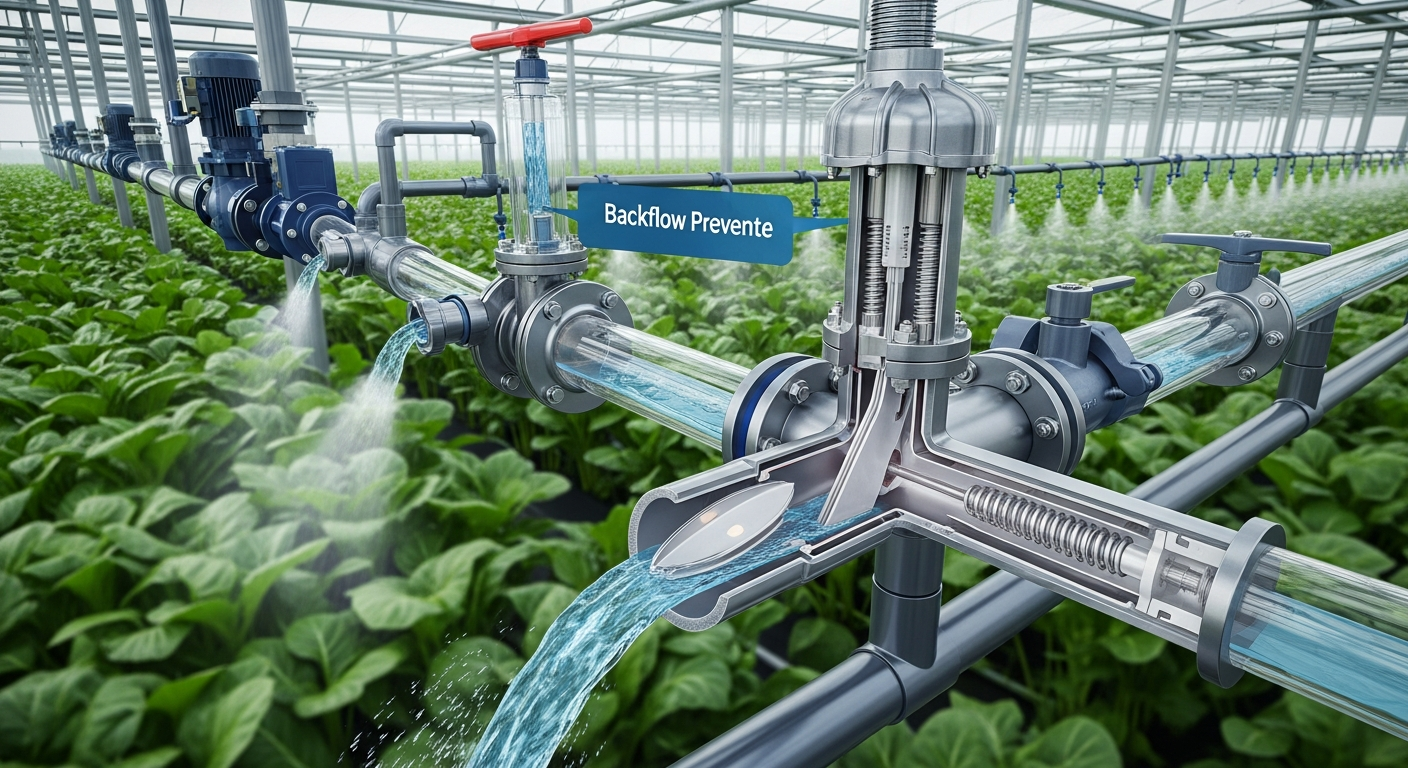
How Check Valves Work
Most check valves operate based on pressure differentials. When the pressure on the upstream side (the side from which water is intended to flow) exceeds the pressure on the downstream side, the valve opens. If the pressure differential reverses, or if there’s no flow, a mechanism (like a spring, swing gate, or ball) closes the valve, stopping any backflow.
Types of Check Valves Relevant to Greenhouses
- Swing Check Valve: Features a hinged disc that swings open with forward flow and closes with reverse flow. Best for systems with infrequent flow changes.
- Lift Check Valve: Uses a disc or ball that is lifted off its seat by forward flow and reseats due to gravity or a spring to prevent backflow. Ideal for horizontal lines with consistent flow.
- Ball Check Valve: Employs a free-floating ball that moves out of the way for forward flow and rolls back into a seat to block reverse flow. Excellent for dirty water as they are less prone to clogging.
- Spring-Loaded Check Valve: Utilizes a spring to help close the valve, making it effective in various orientations and for applications requiring a quick, positive shut-off. Often found in drip irrigation zones to prevent drain-back.
Why Check Valves are Crucial in Greenhouses
Their role in a greenhouse extends beyond simple flow control:
- Preventing Drain-Back: In irrigation lines, especially drip systems, check valves prevent water from draining out of laterals when the system shuts off. This maintains consistent pressure, prevents air locks, and ensures uniform start-up irrigation.
- Protecting Pumps: They prevent water from flowing back into a pump when it’s off, which can cause damage or reduce efficiency.
- Isolating Zones: In complex irrigation systems, check valves can isolate different zones, preventing water from one zone from flowing into another when it’s not intended.
- Maintaining Pressure: They help maintain specific pressure in certain sections of the system, crucial for precise irrigation and nutrient delivery.
The Critical Role of Backflow Preventers
While a check valve prevents simple backflow, a backflow preventer is a more sophisticated and robust device specifically engineered to protect potable (drinkable) water supplies from contamination caused by back-siphonage or back-pressure. In a greenhouse setting, where fertilizers, pesticides, and other non-potable liquids are commonplace, these devices are absolutely non-negotiable.
How Backflow Preventers Work
Backflow preventers operate using a combination of check valves, relief valves, and atmospheric vents to create an air gap or a pressure differential that makes it virtually impossible for contaminated water to enter the clean water supply. They are designed to fail-safe, meaning if a component malfunctions, the device will still prevent backflow.
Why Backflow Preventers are Non-Negotiable
- Protecting Potable Water: This is their primary and most critical function. Without them, there’s a significant risk of chemicals, pathogens, or even dirty pond water being siphoned back into your municipal or well water supply, posing serious health risks.
- Legal and Code Compliance: Most jurisdictions have strict plumbing codes requiring the installation of specific types of backflow preventers where a potential cross-connection exists between a potable water source and a non-potable source (like a greenhouse irrigation system with chemical injection).
- Environmental Responsibility: Preventing contamination protects not just human health but also surrounding ecosystems from chemical runoff.
Types of Backflow Preventers for Greenhouses
The type of backflow preventer required depends on the level of hazard associated with the potential contaminant:
- Double Check Valve Assembly (DCVA): Consists of two independently operating spring-loaded check valves in a series, plus shut-off valves and test cocks. Suitable for low-to-medium hazard applications where contaminants are not highly toxic (e.g., connection to an irrigation system without chemical injection).
- Reduced Pressure Zone (RPZ) Assembly: The most robust type, featuring two independent check valves, an automatically operating differential pressure relief valve located between them, plus shut-off valves and test cocks. Essential for high-hazard applications involving fertilizers, pesticides, or other toxic substances.
- Pressure Vacuum Breaker (PVB) & Atmospheric Vacuum Breaker (AVB): These prevent back-siphonage only (not back-pressure). PVBs are pressure-rated and suitable for continuous pressure, while AVBs are not. They introduce an air gap to prevent suction. Often used on individual hose bibs or irrigation zones where the risk is lower and the potential for back-pressure is minimal.
Applications and Benefits in Greenhouse Climates
Integrating check valves and backflow preventers throughout your greenhouse system offers immense benefits for efficiency, plant health, and safety.
Irrigation Systems
- Drip & Micro-Irrigation: Small spring-loaded check valves can be installed at the head of each drip zone or even at individual emitters to prevent lines from draining after irrigation, ensuring all plants receive water simultaneously when the system restarts and avoiding dry spots. This also prevents localized water hammer.
- Fertigation & Chemigation: This is where backflow preventers shine. If you inject fertilizers, pesticides, or other chemicals into your irrigation water, an RPZ assembly is typically mandated on the main potable water supply line leading to your injection point. This prevents concentrated chemicals from flowing back into your drinking water. Even a simple venturi injector benefits from a small anti-siphon valve.
- Sprinkler & Misting Systems: Check valves prevent water from draining out of overhead lines, reducing water waste and ensuring immediate, uniform coverage upon system activation.
Water Sourcing & Storage
If you supplement your potable water with non-potable sources like rainwater harvesting systems, ponds, or recycled water, backflow prevention is paramount. A properly installed backflow preventer separates these sources from your clean water supply, even if they are connected through a common manifold for versatility.
Protecting Equipment and Maintaining Efficiency
- Pump Protection: Check valves downstream of booster pumps prevent water from flowing back through the pump when it’s off, protecting impellers and reducing wear.
- Consistent Pressure: By preventing drain-back, check valves help maintain more consistent pressure throughout your system, which is vital for the precise operation of nozzles, emitters, and other pressure-sensitive equipment.
- Preventing Air Locks: Empty irrigation lines can fill with air, leading to air locks that obstruct water flow. Check valves help keep lines primed with water, minimizing this issue.
Installation, Maintenance, and Best Practices
The effectiveness of these devices hinges on proper selection, installation, and ongoing maintenance.
Proper Selection
- Assess Hazard Level: Determine whether your application poses a low, medium, or high hazard to potable water. This dictates the type of backflow preventer required. When in doubt, always opt for the more robust option (e.g., RPZ over DCVA for chemical injection).
- Understand Local Codes: Consult local plumbing codes and water utility requirements. They often specify the exact type of backflow prevention device needed for various applications.
- Match Flow and Pressure: Ensure the valve’s size and pressure rating match your system’s specifications.
Installation Tips
- Correct Orientation: Check valves and backflow preventers are direction-specific. Look for an arrow indicating the direction of flow and install accordingly. Incorrect installation renders them useless.
- Accessibility: Install backflow preventers in easily accessible locations for testing and maintenance. RPZ assemblies, in particular, often need annual testing.
- Manufacturer Guidelines: Always follow the manufacturer’s specific installation instructions for optimal performance and warranty validity.
Regular Maintenance
- Visual Inspection: Periodically check all valves for leaks, corrosion, or visible damage.
- Backflow Preventer Testing: Most municipal water authorities mandate annual testing of backflow preventers (especially RPZs and DCVAs) by a certified technician. This ensures they are functioning correctly to protect the public water supply. Keep records of these tests.
- Check Valve Functionality: While not typically requiring certified testing, periodically observe your system to ensure check valves are holding pressure and preventing drain-back. A failing check valve might manifest as uneven irrigation start-up or air in the lines.
- Winterization: In colder climates, ensure all outdoor backflow preventers are properly drained or insulated to prevent freezing and damage.
Troubleshooting Common Issues
If you observe consistent pressure drops, uneven irrigation, or unexplained water loss, a faulty check valve might be the culprit. If your backflow preventer is constantly discharging water, it likely indicates a problem with the relief valve, signaling a need for immediate inspection and repair by a qualified technician.
By investing in quality check valves and backflow preventers, and adhering to diligent maintenance schedules, you are safeguarding your plants, your water supply, and your peace of mind.
Conclusion
The success of any greenhouse operation hinges on the reliability and safety of its water infrastructure. Check valves and backflow preventers, though often out of sight, are vital components that maintain system integrity, optimize irrigation efficiency, and, most importantly, protect public health by preventing contamination of potable water sources. By understanding their function, selecting appropriate devices for your specific applications, and committing to regular maintenance, greenhouse growers can ensure a robust, compliant, and thriving growing environment for years to come. Don’t underestimate the power of these silent guardians in your greenhouse climates.