
In the dynamic world of greenhouse cultivation, achieving optimal plant growth while maximizing resource efficiency is paramount. For decades, growers have sought innovative solutions to refine their irrigation strategies, moving beyond traditional methods to embrace more precise and sustainable practices. Among these advancements, subsurface irrigation (SSI) stands out as a sophisticated technique revolutionizing how plants receive water and nutrients. By delivering moisture directly to the root zone, SSI minimizes waste, enhances plant health, and offers a suite of technical advantages that make it an indispensable tool for modern greenhouse operations. Let’s delve into the intricate benefits and essential principles behind implementing this cutting-edge irrigation system.
Understanding Subsurface Irrigation: A Technical Overview
Subsurface irrigation, often referred to as SDI (subsurface drip irrigation), is a method where the water delivery system, typically composed of drip lines with integrated emitters, is buried beneath the soil surface. Unlike conventional drip irrigation where emitters lie on top of the soil, SSI systems precisely deliver water and dissolved nutrients directly into the root zone of plants. This targeted approach ensures that every drop contributes directly to plant uptake, bypassing the superficial soil layers prone to evaporation.
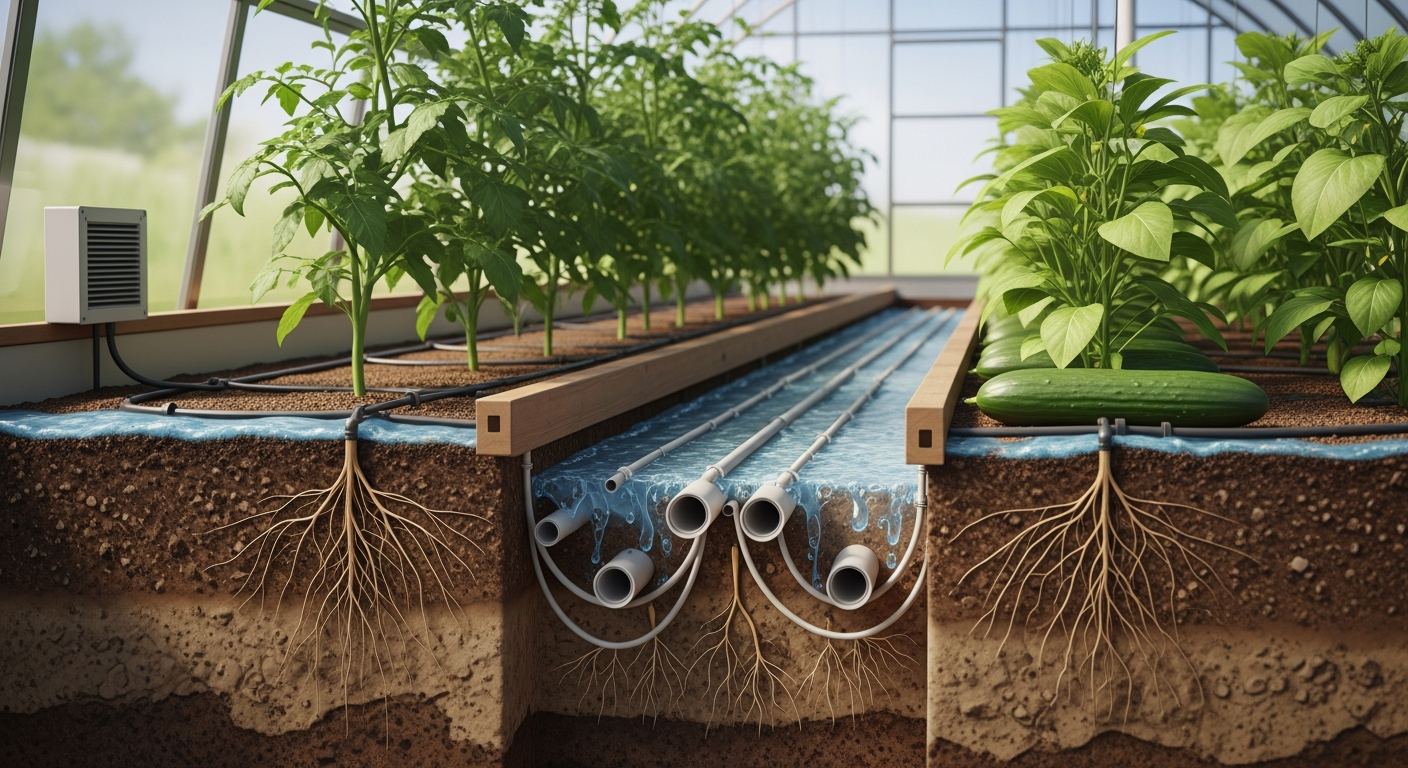
The core components of an SSI system are similar to surface drip irrigation but with specific considerations for their buried application. These include a main pipeline, lateral lines with specialized drip emitters, a filtration unit (critical for preventing clogs), pressure regulators to ensure uniform flow, and control valves, often managed by an automated system. The emitters in subsurface lines are designed to resist root intrusion and soil particle ingress, featuring specialized anti-siphon and anti-drainback mechanisms to maintain system integrity. This direct delivery mechanism is what underpins the numerous technical benefits SSI offers to greenhouse environments.
Technical Benefits of Subsurface Irrigation in Greenhouses
Adopting a subsurface irrigation system in your greenhouse offers a multitude of technical and operational advantages, transforming resource management and plant productivity.
- Unprecedented Water Efficiency: The most significant technical benefit of SSI is its superior water efficiency. By burying the drip lines, water is delivered directly to the root zone, virtually eliminating evaporation losses from the soil surface and reducing runoff. This precision irrigation technique can lead to a 20-50% reduction in water usage compared to surface irrigation methods, making it a cornerstone of sustainable greenhouse practices and significant water conservation.
- Optimized Nutrient Delivery (Fertigation): SSI excels in fertigation, the practice of delivering dissolved fertilizers through the irrigation water. Nutrients are applied directly where they are needed most – at the active root zone – minimizing leaching below the root zone and reducing nutrient volatilization. This leads to more efficient nutrient uptake by plants, less fertilizer waste, and a significant improvement in overall nutrient management, contributing to healthier, more vigorous plant growth.
- Enhanced Plant Health and Growth: Consistent and localized moisture availability at the root zone promotes optimal root development and reduces plant stress. Since the foliage remains dry, SSI systems significantly reduce the incidence of foliar diseases such as powdery mildew and blight, which thrive in wet conditions. Furthermore, the absence of surface wetting helps maintain better soil aeration and prevents soil compaction often associated with overhead watering, fostering a healthier root environment.
- Effective Weed Suppression: By keeping the soil surface dry, subsurface irrigation naturally suppresses weed germination and growth. Weeds require surface moisture to sprout and establish, so depriving them of this resource dramatically reduces weed pressure within the greenhouse, saving on labor and herbicide costs.
- Reduced Labor and Operational Costs: Automation is easily integrated with SSI systems, allowing for precise scheduling and remote monitoring. This significantly reduces manual labor associated with watering, weeding, and fertilizer application. The extended lifespan of buried components, protected from UV degradation and mechanical damage, also contributes to lower long-term maintenance costs.
- Improved Air Quality and Humidity Control: Without water evaporating from the soil surface or plant foliage, SSI helps maintain lower humidity levels within the greenhouse. This improved air quality reduces the risk of condensation-related issues and provides a more stable microclimate for sensitive crops.
Key Principles for Subsurface Irrigation System Installation
Implementing a successful subsurface irrigation system requires careful planning and adherence to specific installation principles to ensure optimal performance and longevity.
- Thorough Planning and Design:
- Soil Analysis: Understand your greenhouse’s soil type (e.g., sandy, loamy, clay). This influences emitter spacing, system pressure, and irrigation scheduling. Different soils have varying water infiltration rates and water-holding capacities.
- Crop Requirements: Consider the crop type, root depth, and water demands. This will dictate the depth at which the drip lines are buried and the desired emitter flow rate.
- Greenhouse Layout: Design the system to accommodate your greenhouse structure, growing benches, and access pathways. Plan for efficient main and lateral line routing.
- Water Source Assessment: Evaluate the quality and pressure of your water source. High particulate matter necessitates robust filtration, and consistent pressure is vital for uniform water distribution.
- Component Selection:
- Drip Lines and Emitters: Choose heavy-duty, pressure-compensating (PC) drip lines with root-resistant emitters. PC emitters ensure uniform water output regardless of changes in topography or pressure within the line, which is crucial for even plant growth. Emitter spacing should be tailored to your soil type and crop density.
- Filtration System: This is non-negotiable for SSI. Install a multi-stage filtration system, typically including a screen filter and/or disc filter, to prevent clogging of the small emitter orifices. Regular flushing of filters is essential.
- Pressure Regulation: Incorporate pressure regulators to maintain consistent operating pressure throughout the system, ensuring all emitters discharge water uniformly.
- Control System: Invest in an automated controller capable of managing irrigation schedules based on time, soil moisture sensors, or evapotranspiration rates. This optimizes water use and minimizes labor.
- Air Vents/Vacuum Relief Valves: Install these at high points and ends of lines to prevent vacuum formation, which can draw soil into emitters when the system is shut down, and to allow air to escape during startup.
- Installation Depth and Spacing:
- Depth: A common installation depth for greenhouse crops ranges from 4 to 12 inches (10-30 cm), depending on the crop’s root depth and soil type. Shallower depths might be suitable for shallow-rooted annuals, while deeper depths benefit perennial crops.
- Spacing: Emitter spacing within the drip line and the spacing between lateral lines should ensure adequate overlap and uniform water coverage across the entire root zone. Consult manufacturer guidelines and conduct soil wetting pattern tests if unsure.
- Maintenance Considerations:
- System Flushing: Design the system with flush valves at the end of each lateral line to allow periodic flushing of accumulated particles.
- Chemical Treatment: Periodically inject appropriate chemicals (e.g., dilute acids or chlorine solutions) into the system to prevent or clear organic and inorganic clogs.
- Monitoring: Regularly inspect pressure gauges, filter cleanliness, and overall system performance to identify and address issues promptly.
Practical Tips for Maximizing Your Subsurface Irrigation System
To truly harness the power of your SSI system, consider these practical tips:
- Integrate Soil Moisture Sensors: Pair your automated irrigation controller with soil moisture sensors. These sensors provide real-time data on soil water content, allowing your system to irrigate only when necessary, further optimizing water use and preventing over- or under-watering.
- Regularly Monitor Water Quality: Periodically test your irrigation water for pH, EC (electrical conductivity), and mineral content. High levels of certain minerals can lead to emitter clogging, so understanding your water quality helps in selecting appropriate filtration and chemical treatment strategies.
- Create Detailed System Maps: Keep accurate records of your system’s layout, including the location of main lines, laterals, valves, and filters. This will be invaluable for troubleshooting and future maintenance.
- Implement a Preventative Maintenance Schedule: Don’t wait for problems to arise. Schedule regular filter cleaning, line flushing, and system inspections to prevent clogs and ensure consistent performance.
- Consult with Experts: If you’re new to subsurface irrigation, consider consulting with an irrigation specialist or a greenhouse consultant. Their expertise can help you design a system perfectly tailored to your specific crops and greenhouse environment.
Conclusion
Subsurface irrigation systems represent a significant leap forward in greenhouse technology, offering unparalleled efficiency in water and nutrient delivery. By understanding its technical benefits – from superior water conservation and optimized fertigation to enhanced plant health and reduced labor – and adhering to sound installation principles, greenhouse operators can unlock a new level of productivity and sustainability. Investing in SSI is not just about upgrading your irrigation; it’s about embracing a smarter, more environmentally responsible approach to cultivation that yields healthier plants and a more profitable operation. As the demand for efficient resource management continues to grow, subsurface irrigation will undoubtedly remain a cornerstone of modern greenhouse climate control strategies.