
In the high-stakes world of modern greenhouse cultivation, precise water and nutrient delivery are non-negotiable. Automated irrigation systems, from sophisticated drip lines to hydroponic nutrient film techniques, are the lifeblood of plant health and productivity. Yet, a silent, insidious enemy constantly threatens this intricate network: biofilms. These slimy microbial communities can wreak havoc on your water lines, leading to blockages, uneven nutrient distribution, and even disease outbreaks. Understanding and actively managing biofilms and the resulting clogging is crucial for maintaining optimal growing conditions and safeguarding your greenhouse investment.
Understanding Biofilms: The Silent Threat to Your Irrigation
Biofilms are not just simple slime; they are complex communities of microorganisms—bacteria, fungi, algae, and protozoa—encased in a self-produced protective matrix of extracellular polymeric substances (EPS). This sticky, glue-like substance allows them to adhere firmly to almost any surface, including the inner walls of your greenhouse water lines, pipes, tanks, and emitters.
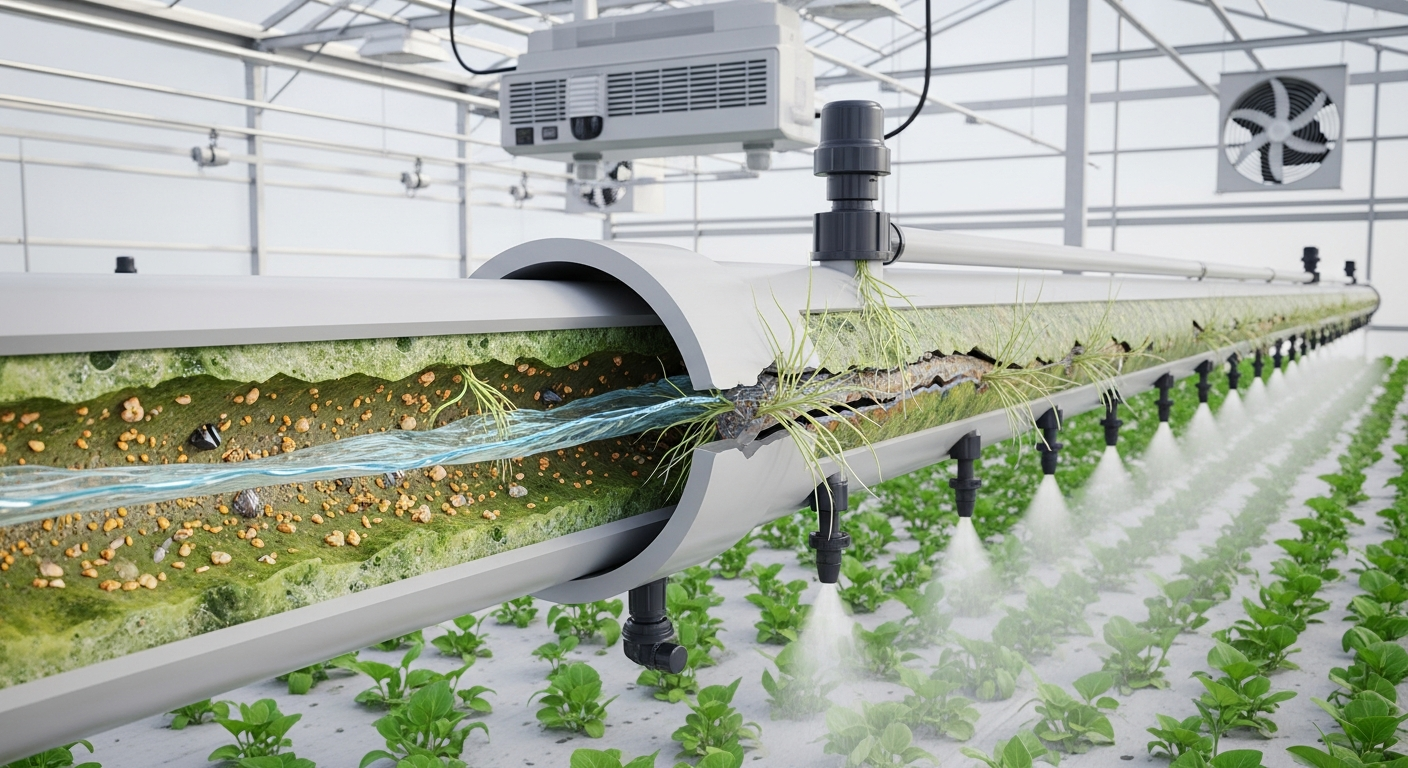
Why Biofilms Are a Major Problem in Greenhouse Irrigation:
- Clogging and Reduced Flow: This is the most immediate and visible problem. As biofilms grow, they reduce the internal diameter of pipes and, critically, block the tiny orifices of drip emitters, spray nozzles, and filters. This leads to uneven watering, nutrient starvation in certain areas, and increased water pressure requirements.
- Nutrient Imbalance: Biofilms are living entities that consume nutrients. They can actively strip essential elements from your nutrient solution, altering its composition before it reaches your plants. This can lead to localized nutrient deficiencies and necessitate constant adjustments.
- Pathogen Reservoirs: Perhaps most alarming, biofilms can serve as protected havens for plant pathogens like Pythium, Phytophthora, and various bacteria. These pathogens can detach from the biofilm and infect your crops, leading to significant crop losses and disease management challenges.
- Reduced System Efficiency: Clogged lines and emitters mean your pumps work harder, consuming more energy. Uneven delivery wastes water and nutrients, directly impacting your bottom line and sustainability efforts.
- Equipment Degradation: Continuous exposure to biofilms and the chemicals used to treat them can accelerate wear and tear on pumps, filters, and other irrigation components.
Identifying the Early Signs of Clogging and Biofilm Buildup
Early detection is key to preventing widespread problems. Regular monitoring and keen observation can save you significant time and cost down the line. Look for these warning signs:
- Uneven Plant Growth: Patches of stunted or stressed plants often indicate inconsistent water and nutrient delivery, a classic symptom of localized clogging.
- Decreased Water Pressure: A noticeable drop in pressure within specific zones or throughout your automated water lines can signal blockages.
- Visible Slime or Algae: Inspect water tanks, filter housings, and any clear tubing for slimy residues or green algal growth. Where you see it, assume it’s also present unseen within the lines.
- Frequent Filter Blockages: If your irrigation filters require cleaning or replacement more often than usual, it’s a strong indicator that particulate matter or biofilm fragments are circulating.
- Increased Pump Run Times: If your pumps are running longer to deliver the same volume of water, it suggests increased resistance due to clogged pipes.
- Dripper/Emitter Issues: Visually inspect individual drippers. Look for reduced flow, erratic spray patterns, or completely blocked emitters.
- Unexplained pH or EC Shifts: While many factors can influence these, persistent shifts in your nutrient solution, especially if a pattern emerges, could indicate microbial activity within the system.
Proactive Strategies: Preventing Biofilms from Taking Hold
Prevention is always superior to cure. Implementing a robust preventative maintenance schedule is the most effective approach to managing biofilms and ensuring consistent water line performance.
1. Optimize Water Quality at the Source:
- Superior Filtration: Install multi-stage filtration appropriate for your water source. This typically includes sediment filters (screen, disc, or sand media) to remove physical particles that can serve as nucleation sites for biofilm growth.
- Water Source Analysis: Regularly test your water source (well, municipal, rainwater) for microbial load, pH, hardness, and nutrient content. Adjust pre-treatment strategies accordingly.
- Source Water Tank Sanitation: Regularly clean and sanitize all water storage tanks. Algae and bacteria thrive in stagnant water, and these tanks are often the primary source of initial inoculum for your irrigation system.
2. Smart System Design and Maintenance:
- Minimize Dead Ends: Design your automated irrigation system to avoid stagnant zones or dead-end pipes where water can sit and biofilms can flourish.
- Regular Flushing: Implement a routine flushing program for your main lines and lateral lines. This helps dislodge loose particles and nascent biofilm layers before they become established.
- Proper Sizing: Ensure pipes and emitters are correctly sized for your flow rates to minimize turbulence and maintain adequate velocity, which can inhibit attachment.
3. Chemical Prevention (Ongoing Dosing):
Introducing low, continuous doses of specific chemicals can effectively inhibit biofilm formation without harming your plants.
- Hydrogen Peroxide (H2O2): A powerful oxidizer that breaks down organic matter and microbial cells. Dosed continuously at low concentrations, it helps keep lines clean.
- Chlorine Dioxide (ClO2): Another effective oxidizer that penetrates biofilms. It’s stable across a wide pH range and has a lower corrosive effect than elemental chlorine, but requires careful handling and precise dosing.
- Beneficial Microbes: Some products introduce beneficial microbial consortia that compete with and inhibit the growth of biofilm-forming pathogens.
- Acidification: Maintaining your nutrient solution pH in the optimal range (typically 5.5-6.5) can also inhibit the growth of certain algae and bacteria, though its primary purpose is nutrient availability.
Reactive Solutions: Cleaning and Treating Existing Clogs
Even with the best preventative measures, clogs can occur. When they do, reactive strategies are necessary. Always proceed with caution, especially when using strong chemicals.
1. Physical Cleaning Methods:
- High-Pressure Flushing: For larger pipes, a targeted high-pressure flush can dislodge significant blockages.
- Manual Cleaning: For individual emitters or small sections of tubing, manual disassembly and scrubbing may be necessary, though this is labor-intensive for large-scale operations.
2. Chemical Shock Treatments:
These involve introducing higher concentrations of chemicals for a limited time to break down established biofilms and dislodge clogs. Always ensure your system materials (pipes, seals) are compatible with the chosen chemical.
- Hydrogen Peroxide Shock: A stronger concentration of H2O2 can be used as a system flush. Follow manufacturer guidelines precisely, ensure thorough rinsing, and avoid contact with plants during treatment.
- Acid Flushes: Acids like nitric acid, phosphoric acid, or even citric acid can dissolve mineral deposits and disrupt biofilm structures. Extreme caution is needed; acids are corrosive and can be dangerous. Always wear appropriate PPE.
- Chlorine Bleach (Sodium Hypochlorite): Can be effective, but its effectiveness is pH-dependent, and it can be corrosive. Chlorine can also interact negatively with certain nutrients and plant roots, so thorough rinsing is absolutely critical.
- Specialized Biofilm Cleaners: Commercial products specifically designed for irrigation system cleaning often combine multiple active ingredients for enhanced efficacy.
Important Safety Note: Always follow manufacturer’s instructions for chemical treatments. Wear appropriate personal protective equipment (PPE) including gloves, eye protection, and respirators. Ensure adequate ventilation. Flush lines thoroughly with clean water after any chemical treatment to prevent damage to plants or nutrient imbalances.
Integrated Management: A Holistic Approach to Clean Water Lines
Effective biofilm and clog management is not a one-time fix but an ongoing process that combines multiple strategies into an integrated program.
- Regular Monitoring and Inspection: Make routine checks of pressure gauges, flow rates, and visual inspections of clear tubing and emitters a standard operating procedure.
- Water Quality Testing: Periodically test your outgoing irrigation water for microbial counts, pH, and EC to catch issues before they escalate.
- Record Keeping: Maintain detailed logs of all maintenance, flushing, chemical treatments, and observed issues. This data helps identify patterns, optimize your schedule, and troubleshoot problems more effectively.
- Staff Training: Ensure all greenhouse staff are trained to identify signs of clogging and biofilm buildup and understand the proper procedures for system maintenance and treatment.
- Consultation with Experts: Don’t hesitate to consult with irrigation specialists, water treatment professionals, or chemical suppliers. They can offer tailored advice and solutions for your specific greenhouse setup and water conditions.
Conclusion
Automated greenhouse water lines are sophisticated systems designed to deliver life-sustaining water and nutrients precisely where and when they’re needed. Biofilms and the subsequent clogging they cause pose a constant threat to this precision, impacting everything from plant health and yield to operational efficiency and disease control. By adopting a proactive, integrated management strategy that encompasses superior water quality, smart system design, preventative dosing, and diligent monitoring, you can effectively combat this invisible enemy. Investing in robust biofilm management is an investment in the long-term health, productivity, and profitability of your greenhouse operation, ensuring that your plants receive the consistent, clean hydration they deserve.