
In the delicate ecosystem of a greenhouse, maintaining precise environmental conditions is not just ideal—it’s absolutely essential for crop health and productivity. From perfectly timed irrigation cycles to consistent nutrient delivery and stable climate control, every system plays a critical role. Yet, even the most robust systems are susceptible to failure. A blocked irrigation line, a faulty pump in a hydroponic setup, or an unexpected drop in water pressure for a cooling system can quickly turn a thriving environment into a disaster zone, leading to significant crop loss and financial setbacks. This is where vigilant monitoring becomes not just a luxury, but a fundamental necessity. Investing in an effective early warning system, particularly through the strategic deployment of flow sensors and alarms, is the cornerstone of protecting your greenhouse investment and ensuring uninterrupted growth.
The Silent Threat: Understanding System Failures in Greenhouses
Greenhouse operations rely on an intricate dance of interconnected systems. When one component falters, the ripple effect can be devastating. Imagine an irrigation system designed to deliver precise amounts of water and nutrients to thirsty plants. If a pipe cracks, a pump fails, or an emitter clogs, plants either starve or drown. Similarly, in a climate-controlled environment, a malfunctioning circulation pump in a heating or cooling loop can lead to rapid temperature fluctuations, stressing or even killing sensitive crops.
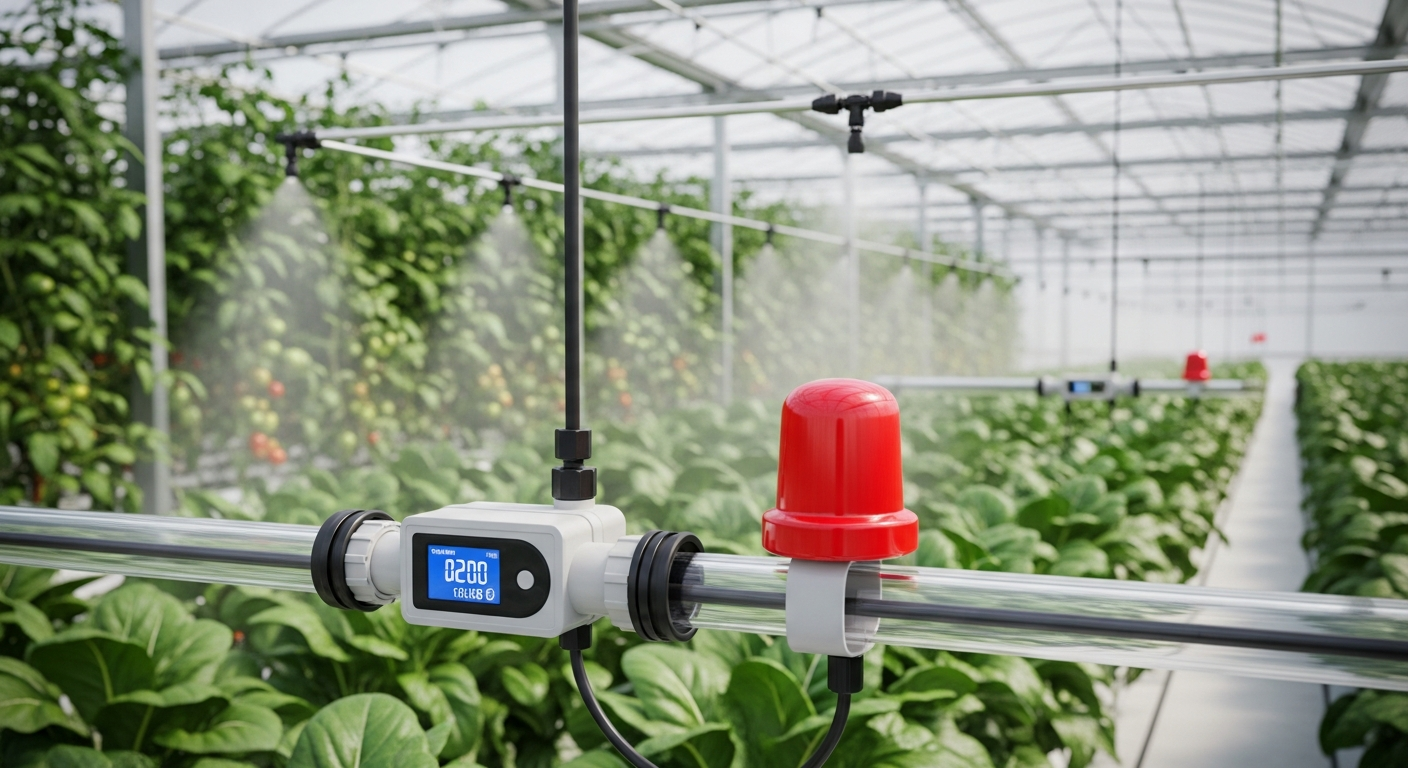
The challenges:
- Irrigation Issues: Clogged lines, leaks, pump failures, or incorrect flow rates can lead to under-watering, over-watering, or uneven nutrient distribution.
- Climate Control Malfunctions: Problems with water circulation in evaporative cooling pads or heating systems can cause temperatures to skyrocket or plummet.
- Nutrient Delivery Disruptions: Hydroponic and aquaponic systems are highly dependent on continuous and consistent flow of nutrient-rich water. Stagnation or incorrect circulation can lead to oxygen deprivation and nutrient lockout.
- Water Supply Failures: A sudden drop in main water pressure or a break in the supply line can halt critical processes.
Traditional monitoring methods, often involving periodic manual checks, are simply inadequate for the speed and scale at which these problems can develop. By the time a human observes wilting plants or an overheating greenhouse, significant damage may already be done. This highlights the urgent need for automated, real-time surveillance.
Flow Sensors: Your Greenhouse’s Early Warning Detectives
Flow sensors are ingenious devices designed to measure the rate or volume of liquid or gas moving through a pipe or channel. In a greenhouse setting, their application is incredibly versatile and powerful, turning them into indispensable ‘detectives’ for potential system failures.
Precise Irrigation Management
One of the most critical areas where flow sensors shine is in irrigation. By installing sensors at strategic points, you can:
- Verify Water Delivery: Confirm that water is actually flowing to specific zones or rows of plants, rather than just assuming the pump is running.
- Detect Clogs and Blockages: A sudden drop in flow rate in a specific line can indicate a partial or complete blockage, allowing you to address it before plants suffer.
- Identify Leaks and Bursts: An unexpectedly high flow rate when only specific zones should be active can signal a burst pipe or a major leak, preventing water waste and potential flooding.
- Monitor Nutrient Solution Flow: Ensure a consistent and accurate delivery of nutrient solutions in fertigation systems, preventing nutrient deficiencies or excesses.
This level of detailed insight allows for immediate intervention, saving water, nutrients, and most importantly, your crops.
Optimizing Climate Control Systems
Climate control systems, especially those relying on water circulation for heating or cooling, greatly benefit from flow sensor integration:
- Evaporative Cooling Efficiency: Ensure water is consistently flowing across cooling pads, preventing dry spots that reduce cooling efficiency and potentially damage the pads.
- Heating System Integrity: Monitor the circulation of hot water or antifreeze in heating pipes, detecting pump failures or blockages that could lead to cold spots or freezing pipes.
- Boiler and Chiller Performance: Verify proper water flow through heat exchangers, critical for the efficient operation and longevity of these expensive components.
Maintaining optimal flow ensures these systems operate at peak efficiency, preventing energy waste and crop damage from extreme temperatures.
Safeguarding Hydroponic and Aquaponic Setups
For soilless cultivation methods, constant water movement is the lifeblood of the system. Flow sensors are paramount for:
- Nutrient Solution Circulation: Guaranteeing continuous movement of nutrient-rich water to plant roots, preventing stagnation that can lead to oxygen deprivation and root diseases.
- Pump Health Monitoring: A decrease or cessation of flow can be an early indicator of a failing pump, allowing for proactive maintenance or replacement.
- Filtration System Performance: Monitoring flow before and after filters can indicate when filters are becoming clogged and need cleaning or replacement.
In these highly sensitive systems, even a brief interruption in flow can have catastrophic consequences, making real-time flow monitoring absolutely non-negotiable.
The Power of Alarms: Turning Data into Action
A flow sensor provides invaluable data, but data alone isn’t enough. The true power lies in pairing these sensors with intelligent alarm systems. An alarm transforms raw data into actionable alerts, ensuring that deviations from optimal flow rates are immediately brought to your attention.
How it works: Flow sensors are connected to a central control system that has pre-set thresholds. If the measured flow rate drops below a minimum threshold (e.g., indicating a blockage or pump failure) or exceeds a maximum threshold (e.g., signaling a burst pipe), the system triggers an alarm. These alarms can take various forms:
- Audible Alerts: Sirens or buzzers for immediate on-site notification.
- Visual Indicators: Flashing lights or warning displays on a control panel.
- Remote Notifications: SMS messages, emails, or push notifications to your smartphone, ensuring you’re informed even when off-site.
- Automated Responses: Advanced systems can even initiate automated responses, such as shutting off a pump, activating a backup system, or closing a valve, to mitigate damage immediately.
The ability to receive instant notifications, particularly remote ones, means you can respond to critical issues in minutes, not hours. This dramatically reduces potential crop damage, minimizes water and energy waste, and provides invaluable peace of mind.
Setting Up Effective Alarms: Best Practices
To maximize the effectiveness of your alarm system:
- Identify Critical Points: Install sensors at the most vulnerable and crucial points of your greenhouse infrastructure.
- Establish Realistic Thresholds: Set minimum and maximum flow rates that accurately reflect normal operation and trigger alerts only when true anomalies occur.
- Choose Reliable Notification Methods: Opt for a system that provides multiple notification channels (e.g., both local audible alarms and remote SMS alerts).
- Regularly Test Your System: Periodically test your sensors and alarms to ensure they are fully functional and that notification pathways are active.
- Develop a Response Protocol: Have a clear plan in place for how to react to different types of alarms, assigning responsibilities to staff members.
Implementing Flow Sensors & Alarms in Your Greenhouse
Integrating flow sensors and alarms is a strategic investment that pays dividends in operational efficiency and crop security. Here’s how to approach implementation:
Choosing the Right Sensors
The market offers various types of flow sensors, each with specific advantages:
- Turbine Sensors: Good for clean liquids, measure volumetric flow.
- Paddle Wheel Sensors: Cost-effective, suitable for moderate flow rates.
- Electromagnetic (Mag) Sensors: Highly accurate, no moving parts, ideal for nutrient solutions or dirty water.
- Ultrasonic Sensors: Non-intrusive, good for varying fluid types, but can be more expensive.
Consider the specific fluid (water, nutrient solution, air), the required accuracy, the flow rate range, and compatibility with your existing control systems when making your selection. Ensure the sensor materials are resistant to corrosion from any chemicals or nutrients they might encounter.
Installation Considerations
Proper installation is crucial for sensor accuracy and longevity:
- Optimal Placement: Install sensors in straight pipe runs, away from elbows, valves, and pumps, to minimize turbulence and ensure accurate readings.
- Accessibility: Ensure sensors are easily accessible for cleaning, maintenance, and calibration.
- Professional Guidance: For complex or large-scale greenhouse climate control systems, consider consulting with automation specialists for installation and integration.
Integration with Automation Systems
The true potential of flow sensors and alarms is unlocked when integrated into a comprehensive greenhouse automation system. This allows for:
- Centralized Monitoring: View all critical flow data from a single dashboard.
- Automated Adjustments: Program the system to automatically adjust pump speeds, open/close valves, or even activate backup systems based on flow sensor data.
- Data Logging and Analysis: Collect historical flow data to identify trends, optimize operational schedules, and predict potential failures before they occur – a key aspect of preventative maintenance.
Conclusion
In the dynamic and often demanding world of greenhouse cultivation, vigilance is paramount. System failures, though sometimes unavoidable, do not have to lead to catastrophic losses. By strategically deploying flow sensors and integrating them with robust alarm systems, greenhouse operators can gain unparalleled insight into their critical infrastructure.
These essential tools provide real-time monitoring, offering an immediate heads-up when something goes awry in your irrigation, nutrient delivery, or climate control systems. This proactive approach allows for rapid intervention, minimizing damage, conserving resources, and ultimately safeguarding your precious crops and your investment. Embrace the power of intelligent monitoring; it’s not just a safeguard, it’s a fundamental component of modern, efficient, and resilient greenhouse management.