
In the intricate world of greenhouse cultivation, achieving optimal plant health and maximizing yield hinges on a multitude of environmental controls. Among these, irrigation stands as a fundamental pillar, and modern greenhouses demand far more than a simple hose and sprinkler. As operations scale and crop diversity increases, the need for sophisticated water management becomes paramount. This is where multi-zone greenhouse irrigation systems step in, offering unparalleled precision and efficiency. At the heart of these intelligent watering networks lies a crucial, often unsung hero: the solenoid valve.
For greenhouse operators, hobbyists, and commercial growers alike, understanding the pivotal role of these electro-mechanical devices can revolutionize their approach to water conservation, nutrient delivery, and ultimately, their bottom line. Let’s delve into how solenoid valves empower precision irrigation and elevate the art of climate control in the greenhouse environment.
Understanding the Need for Multi-Zone Greenhouse Irrigation
Imagine a vast greenhouse cultivating a range of plants from delicate seedlings requiring fine misting to mature, thirsty tomatoes needing deep, consistent watering, all while housing drought-tolerant succulents in another corner. Attempting to water all these diverse needs simultaneously with a single irrigation system is not only inefficient but detrimental. This is precisely why multi-zone irrigation has become an industry standard.
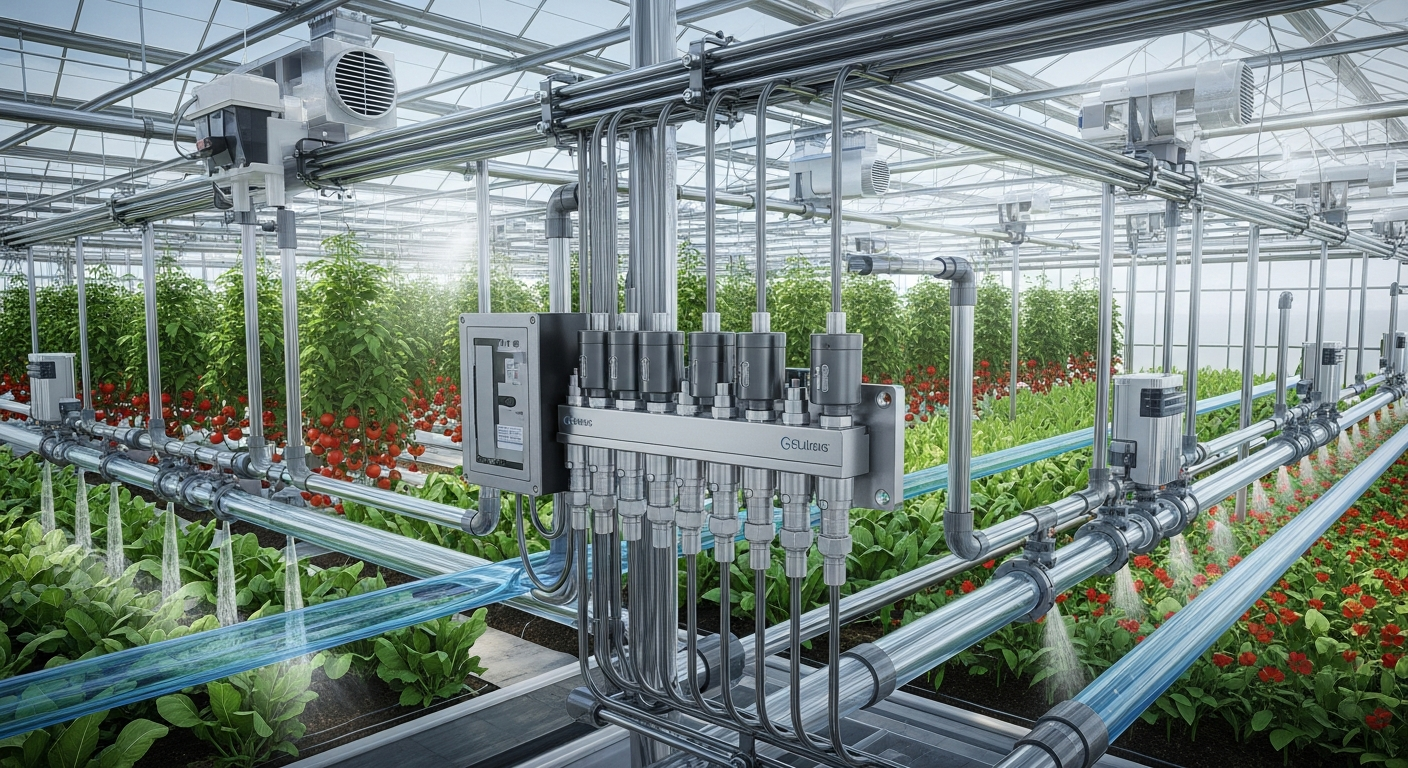
Multi-zone systems divide the greenhouse into distinct areas, or “zones,” each with its own unique watering schedule and requirements. These zones can be defined by:
- Plant Type: Different species have varying water uptake rates and root systems.
- Growth Stage: Young plants, vegetative growth, and fruiting stages all have different hydration demands.
- Light & Temperature Zones: Areas under different light intensities or temperature regimes will have varying evaporation rates.
- Soil Medium: Some growing media retain water longer than others, influencing watering frequency.
- Nutrient Requirements: Specific zones might need different nutrient concentrations delivered with water.
Without the ability to isolate and control water flow to each of these zones independently, growers face significant challenges: wasted water, inconsistent plant growth, nutrient runoff, and increased disease susceptibility from overwatering. This is where the reliability and responsiveness of solenoid valves become indispensable, acting as the precise gatekeepers of water flow to each specific zone.
Solenoid Valves: The Precision Control Heartbeat of Your System
So, what exactly is a solenoid valve, and how does it work its magic in a complex greenhouse setup? Fundamentally, a solenoid valve is an electromechanically operated valve. It uses an electric current to generate a magnetic field, which in turn moves a plunger to open or close an orifice, thereby controlling the flow of fluid—in our case, water or nutrient solution.
How They Function in an Automated System:
- Electrical Signal: An irrigation controller (which can be a simple timer, a sophisticated climate computer, or a smart greenhouse management system) sends an electrical signal to the solenoid valve assigned to a specific zone.
- Magnetic Field Generation: This electrical signal energizes a coil (the “solenoid”) within the valve, creating an electromagnetic field.
- Plunger Movement: The magnetic field pulls a metallic plunger or armature, which is typically connected to a diaphragm or piston.
- Valve Operation: Depending on the valve design (normally closed or normally open), this movement either opens a port, allowing water to flow, or closes it, stopping the flow. Most greenhouse irrigation systems utilize “normally closed” valves, meaning they are closed by default and open only when energized.
- Precise Control: When the controller deactivates the electrical signal, the magnetic field dissipates, and a spring typically returns the plunger to its original position, closing the valve and stopping water flow to that zone.
This rapid, reliable, and remote-controlled operation makes solenoid valves perfect for managing the dynamic needs of modern greenhouse irrigation. They allow for instantaneous, on-demand watering or nutrient delivery to specific zones without manual intervention.
Key Benefits of Integrating Solenoid Valves in Greenhouse Irrigation
The integration of solenoid valves into a multi-zone irrigation system offers a cascade of benefits that directly impact the efficiency, sustainability, and profitability of a greenhouse operation.
1. Unmatched Water Conservation
By delivering water only where and when it’s needed, solenoid valves drastically reduce water waste. No more overwatering an entire bay because one section is thirsty. This precision control, especially when paired with moisture sensors and weather data, ensures that every drop counts, making your operation more environmentally friendly and cost-effective.
2. Optimized Nutrient Delivery
Many modern greenhouse operations utilize fertigation, where nutrients are delivered directly through the irrigation water. Solenoid valves enable precision nutrient delivery, ensuring that plants in each zone receive the exact formulation and concentration of nutrients required for their specific growth stage. This prevents nutrient leaching, minimizes fertilizer waste, and promotes healthier, more vigorous growth.
3. Enhanced Plant Health and Increased Yields
Consistent and appropriate watering is crucial for plant health. Underwatering causes stress, while overwatering can lead to root rot and fungal diseases. Solenoid valves facilitate the ideal watering regimen for each zone, reducing plant stress, minimizing disease outbreaks, and ultimately leading to stronger, more productive plants and higher crop yields.
4. Automation and Labor Savings
Once programmed, a solenoid-based irrigation system operates automatically. This frees up valuable labor hours that would otherwise be spent manually watering, allowing staff to focus on other critical tasks like pruning, pest management, or harvesting. The ability to monitor and control systems remotely further enhances operational efficiency, contributing to a truly “smart greenhouse” experience.
5. Flexibility and Scalability
As your greenhouse operations evolve, adding new zones or modifying existing ones is relatively straightforward with solenoid valves. Their modular nature allows for easy expansion, adapting to changing crop plans or expanding facility footprints without overhauling the entire irrigation infrastructure. This makes them a wise long-term investment for any growing operation.
Selecting and Maintaining Your Solenoid Valves
To fully harness the power of solenoid valves, thoughtful selection and diligent maintenance are key. Here are some practical tips:
Choosing the Right Valve:
- Voltage: Most greenhouse systems use 24V AC, but ensure compatibility with your controller.
- Material: Plastic valves are common for water/fertilizer and are corrosion-resistant. Brass is more durable for high-pressure applications but can be heavier and more expensive.
- Flow Rate & Pressure Rating: Match the valve’s specifications to the expected flow and pressure of your irrigation zone to prevent damage or inefficient operation.
- Connection Size: Ensure the valve’s inlet/outlet sizes match your existing piping (e.g., 1/2″, 3/4″, 1″).
- Normally Closed vs. Normally Open: As mentioned, normally closed is standard for irrigation, as it prevents continuous flow in case of power failure.
Installation Tips:
- Proper Orientation: Follow manufacturer guidelines for correct flow direction.
- Accessible Placement: Install valves in locations that are easy to access for inspection and maintenance.
- Water Tight Seals: Use appropriate thread seal tape or compound to prevent leaks.
- Electrical Connections: Ensure all wiring is secure, waterproofed, and installed according to electrical codes, especially in damp greenhouse environments.
Maintenance for Longevity:
- Regular Inspection: Periodically check valves for leaks, corrosion, or physical damage.
- Filter Cleaning: If your system has main filters or individual zone filters, ensure they are cleaned regularly to prevent debris from clogging the valve’s internal mechanisms.
- Troubleshooting: Familiarize yourself with common issues like stuck-open/closed valves (often due to debris or solenoid coil failure) or electrical connection problems.
- Winterization: If your greenhouse experiences freezing temperatures, ensure valves are properly drained or protected to prevent ice damage.
Conclusion
In the evolving landscape of greenhouse climate control and horticulture, the seemingly simple solenoid valve plays a monumental role in achieving advanced water management. By enabling precise, automated, and multi-zone irrigation, these devices are instrumental in fostering healthier plants, conserving precious resources, and ultimately boosting the productivity and sustainability of modern greenhouses. Investing in quality solenoid valves and integrating them effectively into your automated watering system isn’t just an upgrade; it’s a strategic move towards a more efficient, environmentally responsible, and profitable future for your cultivation efforts. Embrace the power of precision and let solenoid valves lead your greenhouse irrigation into a new era of excellence.