
In the intricate world of greenhouse cultivation, growers meticulously fine-tune variables like light intensity, CO2 levels, and nutrient formulations to coax the best from their plants. Yet, one critical factor often operates beneath the surface, literally, influencing every aspect of plant health and productivity: the temperature of the water delivered to the roots. For those operating automated growing systems, understanding and controlling water temperature isn’t just an advantage—it’s a game-changer. This article delves into how water temperature directly impacts nutrient uptake and offers practical strategies for optimizing this often-overlooked environmental control.
The Hidden Mechanics: How Water Temperature Governs Root Function
Plant roots are the unsung heroes of growth, absorbing water and essential nutrients from the surrounding medium. Their efficiency, however, is highly dependent on their environment, and water temperature plays a surprisingly profound role. Think of roots as a complex metabolic factory; temperature influences the speed and effectiveness of every process within them.
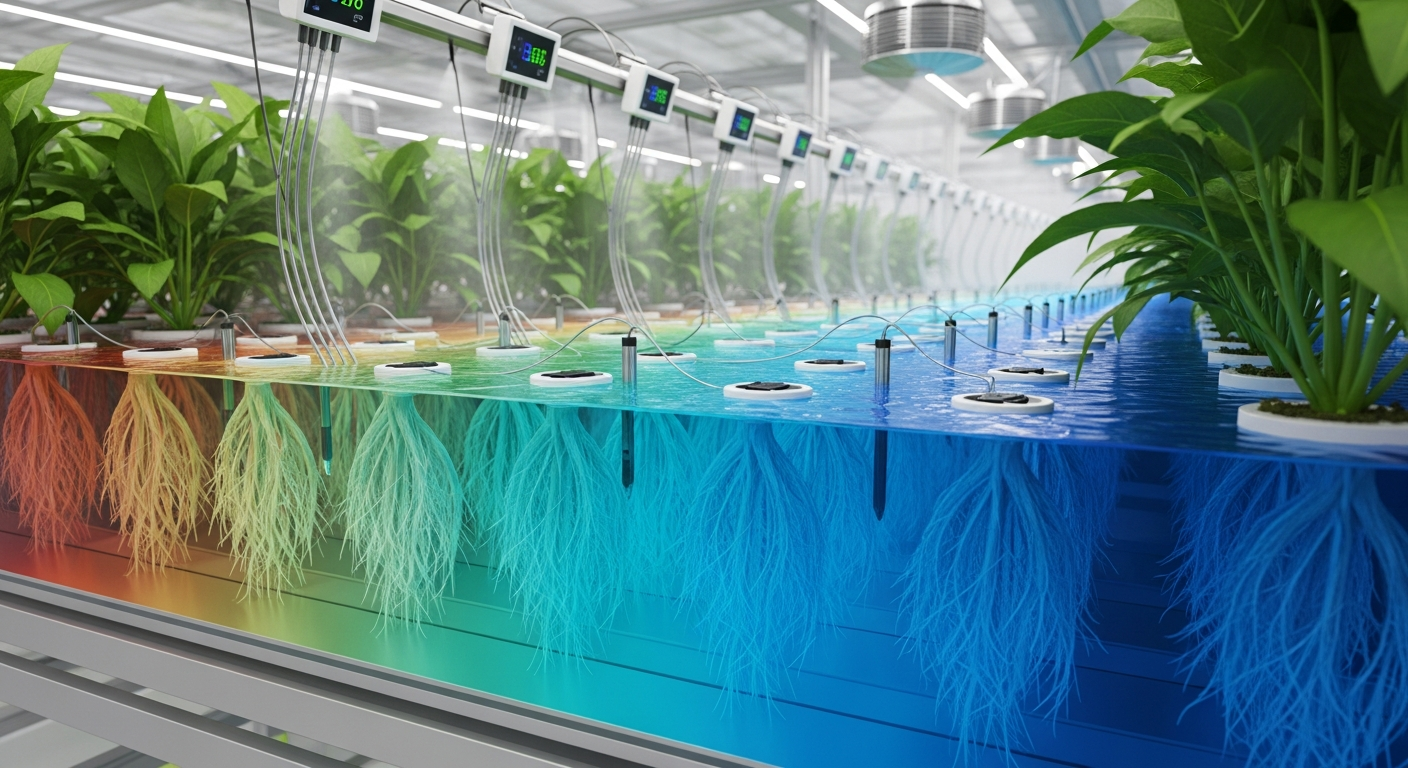
Impact on Dissolved Oxygen
Perhaps the most critical immediate effect of water temperature is on the concentration of dissolved oxygen (DO). Roots, like all living tissues, respire, requiring oxygen to convert sugars into energy for growth and nutrient transport. Cold water holds significantly more dissolved oxygen than warm water. As water temperature rises, its capacity to hold oxygen plummets. In automated systems, especially recirculating hydroponic or aeroponic setups, this can quickly lead to oxygen deprivation in the root zone. A lack of DO stresses roots, making them less efficient at absorbing water and nutrients, and can even lead to root death and the development of anaerobic pathogens.
Nutrient Solubility and Mobility
The solubility of nutrients in water is also temperature-dependent, though to a lesser extent than dissolved oxygen. More importantly, temperature affects the metabolic activity of the roots themselves. Enzymes within root cells, responsible for various biochemical reactions, function optimally within specific temperature ranges. If the water is too cold, enzyme activity slows down dramatically, hindering the active transport of nutrients into the root cells. Conversely, if the water is too hot, enzymes can denature, impairing root function and potentially causing irreversible damage. Both scenarios lead to reduced nutrient uptake, even if the nutrient solution itself is perfectly balanced.
The Detrimental Extremes: Too Hot or Too Cold
Maintaining a balanced root zone temperature is paramount. Deviations from the optimal range can manifest as a variety of problems, impacting plant vigor and ultimately, yield.
The Perils of High Water Temperature
- Oxygen Deprivation: As discussed, warmer water holds less oxygen, starving roots and hindering their ability to absorb nutrients. This is often the primary cause of issues in warmer water.
- Increased Pathogen Risk: High water temperatures create an ideal breeding ground for harmful root pathogens like Pythium and Phytophthora. These “root rot” diseases thrive in warm, low-oxygen environments, leading to wilting, discolored roots, and eventual plant collapse.
- Algal Growth: Warm, nutrient-rich water also encourages rapid algal growth in reservoirs and plumbing, which competes with plants for nutrients and can clog irrigation lines.
- Accelerated Respiration: While plants need to respire, excessive heat can cause roots to respire too quickly, consuming stored energy reserves faster than they can be replenished, leading to stunted growth.
- Nutrient Imbalance: Some nutrients, like iron, can become less available at very high temperatures, leading to specific deficiencies even when they are present in the solution.
The Challenges of Low Water Temperature
- Slowed Metabolism: Cold water significantly slows down the metabolic processes within roots. This means slower water uptake, reduced nutrient absorption, and an overall sluggish growth rate. Plants may appear stunted and lack vigor.
- Reduced Transpiration: With reduced water uptake, plants also transpire less, which can negatively impact the plant’s cooling mechanism and the upward movement of nutrients throughout the plant.
- Cold Shock and Stress: Sudden drops in water temperature can induce cold shock, severely stressing plants and potentially causing permanent damage or stunting.
- Mineral Precipitation: In some cases, extremely cold water can reduce the solubility of certain nutrient salts, leading to precipitation and making them unavailable to the plants.
Finding the Sweet Spot: Optimal Root Zone Temperatures
So, what’s the ideal water temperature for your plants? While it varies slightly depending on the specific plant species, growth stage, and growing medium, a general range for most common greenhouse crops is 65-75°F (18-24°C). Within this range, roots can maintain healthy metabolic activity, sufficient dissolved oxygen levels are typically present, and the risk of pathogen proliferation is minimized.
- Cool-season crops (e.g., lettuce, spinach, some herbs) might prefer the lower end of this range (18-20°C / 65-68°F).
- Warm-season crops (e.g., tomatoes, peppers, cucumbers) often thrive at the upper end (22-24°C / 72-75°F).
It’s important to monitor and adjust based on your specific crop’s needs and observed plant health. Consistency is key; large fluctuations in temperature can be more detrimental than slightly sub-optimal but stable temperatures.
Mastering Temperature Control in Automated Systems
The beauty of automated greenhouse systems lies in their ability to precisely control environmental variables. Water temperature is no exception. Integrating monitoring and control mechanisms for your nutrient solution can unlock significant improvements in plant performance.
Monitoring is Key
The first step is always to know your current conditions. Invest in reliable root zone thermometers or, even better, temperature probes integrated into your automated monitoring system. These can provide continuous data on your nutrient solution temperature, alerting you to deviations from your target range. Many advanced pH/EC meters also include temperature readings.
Heating the Solution
If your nutrient solution consistently falls below the optimal range, especially during colder months or in unheated greenhouses, you’ll need a heating solution:
- Submersible Heaters: Aquarium heaters are a simple, cost-effective option for smaller reservoirs. Ensure they are sized appropriately for your volume of water.
- Inline Heaters: For larger, more complex recirculating systems, inline heaters can be integrated into the plumbing, heating the solution as it flows.
- Recirculating Water Heaters: Industrial-grade units can manage large volumes and are often integrated with central climate control systems.
- Insulation: Insulating your reservoirs and plumbing can significantly reduce heat loss, making any heating efforts more efficient.
Cooling the Solution
Overheating is a common issue, particularly in warmer climates or during summer months. Cooling strategies include:
- Water Chillers: These are the most effective solution for larger automated systems. Water chillers actively cool your nutrient solution and can be precisely set to maintain a desired temperature. They come in various sizes and capacities to suit different system volumes.
- Reservoir Location and Shading: Whenever possible, locate reservoirs in cooler, shaded areas. Covering reservoirs with reflective materials or insulation can also prevent solar gain.
- Air Circulation: Ensuring good air circulation around reservoirs can help dissipate heat.
- Evaporative Cooling: While less precise, allowing some evaporation from a larger reservoir surface can provide a slight cooling effect.
- Automated Integration: Modern climate control systems can link directly to water chillers or heaters, activating them automatically to maintain the set root zone temperature. This creates a truly stable and optimized environment.
Practical Considerations for Automated Systems
- Reservoir Size: Larger reservoirs are more thermally stable and less prone to rapid temperature fluctuations.
- Flow Rates: Ensure adequate flow to prevent “hot spots” or “cold spots” in different parts of your system.
- Cleaning Regimen: Regular cleaning of reservoirs and plumbing prevents biofilm and algal buildup, which can insulate and make temperature control less efficient, as well as contributing to pathogen issues.
- Nutrient Mixing: Ensure even mixing of nutrients after any temperature adjustment.
Conclusion
The impact of water temperature on nutrient uptake is a foundational principle that savvy greenhouse operators cannot afford to overlook. By actively managing and optimizing the temperature of your nutrient solution in automated systems, you directly influence root health, dissolved oxygen levels, nutrient availability, and overall plant resilience. Investing in appropriate monitoring and control equipment—whether it’s a simple thermometer, an integrated climate control system, or a dedicated water chiller—can translate into healthier plants, faster growth, and significantly improved yields. Pay attention to your roots; they’re telling you how well they can “drink” and “eat,” and water temperature is often the silent orchestrator of their success.