
Transforming a dry, arid landscape into a lush, thriving greenhouse environment is a dream for many growers. However, the stark reality of maintaining optimal humidity levels in such challenging conditions presents a unique set of technical hurdles. In climates where the air is constantly thirsty, drawing moisture aggressively from everything it touches, keeping your plants hydrated and happy within an enclosed structure is a battle against nature itself. This article delves into the intricate technical challenges faced by greenhouse operators in dry regions and explores the sophisticated solutions required to create a stable, plant-friendly atmosphere.
The Unique Hurdle: Understanding Arid Environments and Plant Needs
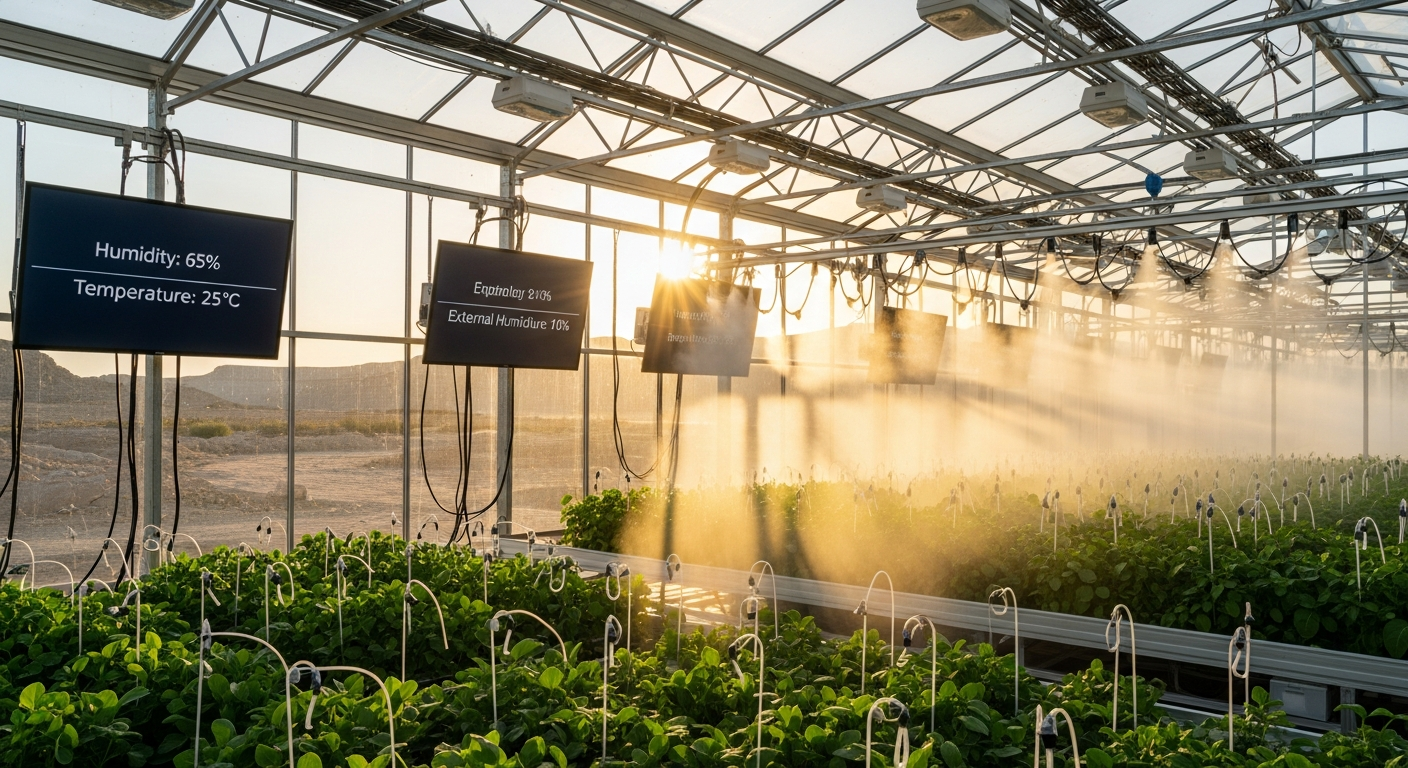
Arid and semi-arid climates are characterized by extremely low ambient relative humidity (RH), often dipping below 20% or even 10%. This dry air creates an enormous vapor pressure deficit (VPD) between the plant’s leaves and the surrounding atmosphere. High VPD drives rapid transpiration, where plants lose water vapor through their stomata at an accelerated rate. While transpiration is a natural and necessary process for nutrient uptake and cooling, excessive transpiration in dry environments leads to several problems:
- Dehydration Stress: Plants struggle to absorb water fast enough to compensate for loss, leading to wilting, stunted growth, and reduced yield.
- Nutrient Uptake Issues: Impaired water flow can hinder the transport of essential nutrients from the roots to the foliage.
- Increased Energy Expenditure: Plants expend significant energy trying to regulate their internal water balance, diverting resources from growth and fruit production.
- Pest Vulnerability: Stressed plants are more susceptible to certain pests like spider mites, which thrive in dry conditions.
The core challenge is not just to add moisture, but to do so efficiently and sustainably, creating a consistent microclimate that mimics the plant’s ideal natural habitat, rather than fighting a losing battle against the outside elements.
Core Technical Challenges in Humidity Management
Overcoming the inherent dryness of arid regions requires more than just spraying water. Several complex technical factors complicate the process:
Massive Water Loss and High Demand
The primary battle is against the sheer volume of moisture the dry external air wants to absorb. Any small leak, vent opening, or even permeable surface can allow dry air to infiltrate, rapidly pulling humidity out of the greenhouse. This necessitates the introduction of vast quantities of water vapor to maintain desired RH levels, leading to:
- High Water Consumption: Humidification systems in arid zones typically require significantly more water than those in temperate climates. This can be a major issue in water-scarce regions.
- Continuous Operation: Systems often need to run almost constantly, leading to increased wear and tear and higher maintenance demands.
Energy Consumption and Operational Costs
Generating and distributing humidity consumes considerable energy. Whether it’s pumping water at high pressure, running fans for evaporative cooling, or operating ultrasonic transducers, the power requirements can be substantial. In arid climates, the energy load is compounded by the often simultaneous need for cooling, as dry heat frequently accompanies low humidity. Balancing the energy costs of humidification with those of cooling and ventilation becomes a critical economic consideration for growers.
Achieving Uniform Distribution and Preventing Overshoot
Simply generating humidity isn’t enough; it must be evenly distributed throughout the entire greenhouse space. Without proper design, “hot spots” (or in this case, “dry spots”) can occur, leading to inconsistent plant growth. Conversely, generating too much humidity too quickly, or allowing it to condense on leaves or structures, can lead to its own set of problems:
- Condensation: Excess moisture can condense on plant surfaces, creating ideal conditions for fungal diseases like botrytis.
- Uneven Growth: Areas with insufficient humidity will stress plants, while areas with too much may promote disease.
- Sensor Accuracy: Ensuring humidity sensors are accurately placed and calibrated is vital for precise control. Incorrect readings can lead to inefficient system operation.
Water Quality and Maintenance
The water used for humidification can significantly impact system performance and longevity. Hard water, rich in minerals like calcium and magnesium, can cause several issues:
- Nozzle Clogging: Fine nozzles in fogging systems are particularly susceptible to mineral buildup, requiring frequent cleaning or replacement.
- Scale Buildup: Evaporative pads can become encrusted with mineral deposits, reducing their efficiency and lifespan.
- “White Dust”: Ultrasonic systems, if not using purified water, can disperse fine mineral particles that settle on plants and equipment, potentially affecting photosynthesis and requiring cleaning.
Pre-treatment of water, often using reverse osmosis (RO) systems, becomes a near necessity, adding to the initial investment and ongoing maintenance.
Humidification Technologies: Strengths and Limitations
Selecting the right humidification technology is crucial, with each option offering distinct advantages and drawbacks in arid conditions:
1. Evaporative Cooling Systems (Pad and Fan)
- How they work: Air is drawn through wet cellulose pads, causing water to evaporate and cool the air while simultaneously adding moisture.
- Pros: Relatively simple, cost-effective for large areas, provides both cooling and humidification, good for high air exchange rates.
- Cons: Less precise humidity control, can lead to saturation zones near pads, significant water consumption, prone to mineral buildup on pads, can raise humidity excessively in already humid conditions (not a problem in arid, but important distinction).
2. High-Pressure Fogging Systems
- How they work: Water is pressurized (typically 1000 psi or more) and forced through fine nozzles, creating a super-fine mist (5-20 micron droplets) that flash-evaporates, cooling and humidifying the air.
- Pros: Highly effective for rapid humidification and cooling, excellent distribution with minimal wetting, precise control possible.
- Cons: High initial investment, requires extremely pure water (RO is essential), susceptible to nozzle clogging without proper filtration, maintenance of high-pressure pumps and lines.
3. Ultrasonic Humidifiers
- How they work: High-frequency vibrations from transducers generate a cool, fine mist from water.
- Pros: Very fine droplets, highly energy-efficient for the volume of mist produced, quiet operation, precise control, good for localized humidification (e.g., propagation benches).
- Cons: Typically lower output compared to fogging for large commercial greenhouses, can still produce “white dust” if unpurified water is used, transducers require periodic cleaning/replacement.
4. Steam Humidifiers
- How they work: Water is boiled to create sterile steam, which is then dispersed.
- Pros: Delivers sterile humidity, very fast response time.
- Cons: Extremely high energy consumption (heating water to boiling point), significantly raises ambient air temperature (undesirable in hot arid climates), rarely a primary solution for large arid greenhouses due to cost and heat.
Advanced Strategies for Optimal Humidity Control
Successful humidity management in arid climates often involves a multi-pronged, integrated approach:
- Vapor Pressure Deficit (VPD) Targeting: Moving beyond simple relative humidity, focusing on VPD provides a more accurate measure of plant transpiration stress. Advanced environmental control systems can adjust humidification based on target VPD ranges, optimizing plant health and growth.
- Integrated Environmental Control Systems (IECS): Linking humidification systems with other climate controls (ventilation, cooling, heating, shading) is crucial. For example, a system might slightly reduce ventilation before a humidification cycle to minimize moisture escape, or activate shade cloth to reduce heat load, indirectly lowering the demand for cooling and humidification.
- Staged and Zoned Humidification: Instead of a single, powerful system, deploying multiple smaller units or zoning the greenhouse allows for more precise control. Different crops or developmental stages may have varying humidity requirements, which can be met by tailoring output to specific zones.
- Optimized Water Management: Implementing rainwater harvesting, greywater recycling (if appropriately treated), and closed-loop systems can significantly reduce the overall water footprint, a critical factor in arid regions. Reverse osmosis (RO) systems are almost essential for pre-treating water for fogging and ultrasonic units, protecting equipment and plants from mineral residue.
- Greenhouse Design Enhancements:
- Air Sealing: Minimizing leaks and gaps in the greenhouse structure is paramount to prevent the rapid escape of humidified air and infiltration of dry outside air.
- Thermal Mass: Incorporating materials with high thermal mass (e.g., concrete pathways, water tanks) can help stabilize internal temperatures and humidity fluctuations.
- Double Layer Glazing/Polycarbonate: Provides better insulation, reducing both heat gain/loss and moisture escape.
- Sensor Network and Calibration: Deploying a robust network of highly accurate RH and temperature sensors throughout the greenhouse, and regularly calibrating them, is the bedrock of effective control. Data from these sensors informs the IECS, enabling responsive and precise adjustments.
- Predictive Control: Utilizing weather forecasts and historical data, advanced systems can anticipate changes in external conditions and proactively adjust humidification, rather than reacting after the fact.
Conclusion
The technical challenges of maintaining humidity in dry, arid climates are substantial, requiring significant investment in advanced technology, careful design, and diligent management. From battling relentless water loss and high energy demands to ensuring uniform distribution and pristine water quality, every aspect of greenhouse operations is impacted. However, by understanding these challenges and implementing sophisticated solutions—including high-pressure fogging, advanced environmental control systems, VPD targeting, and strategic water management—growers can overcome these hurdles. The reward is a thriving, resilient greenhouse ecosystem that supports healthier plants, higher yields, and sustainable practices, even in the most unforgiving environments.