
Drip, drip, drip. While a gentle rain might be music to a gardener’s ears outdoors, the incessant sound of water droplets falling inside your greenhouse is often a prelude to trouble. Greenhouse condensation, that ubiquitous fog and steady drip from your ceiling, isn’t just an aesthetic nuisance; it’s a silent threat to plant health, light transmission, and energy efficiency. Fortunately, modern horticultural science offers a powerful ally in this battle: anti-drip coatings. These innovative treatments are revolutionizing how growers manage their indoor climates, providing a clearer, healthier, and more productive environment for their cherished crops.
Understanding Greenhouse Condensation: The Enemy Within
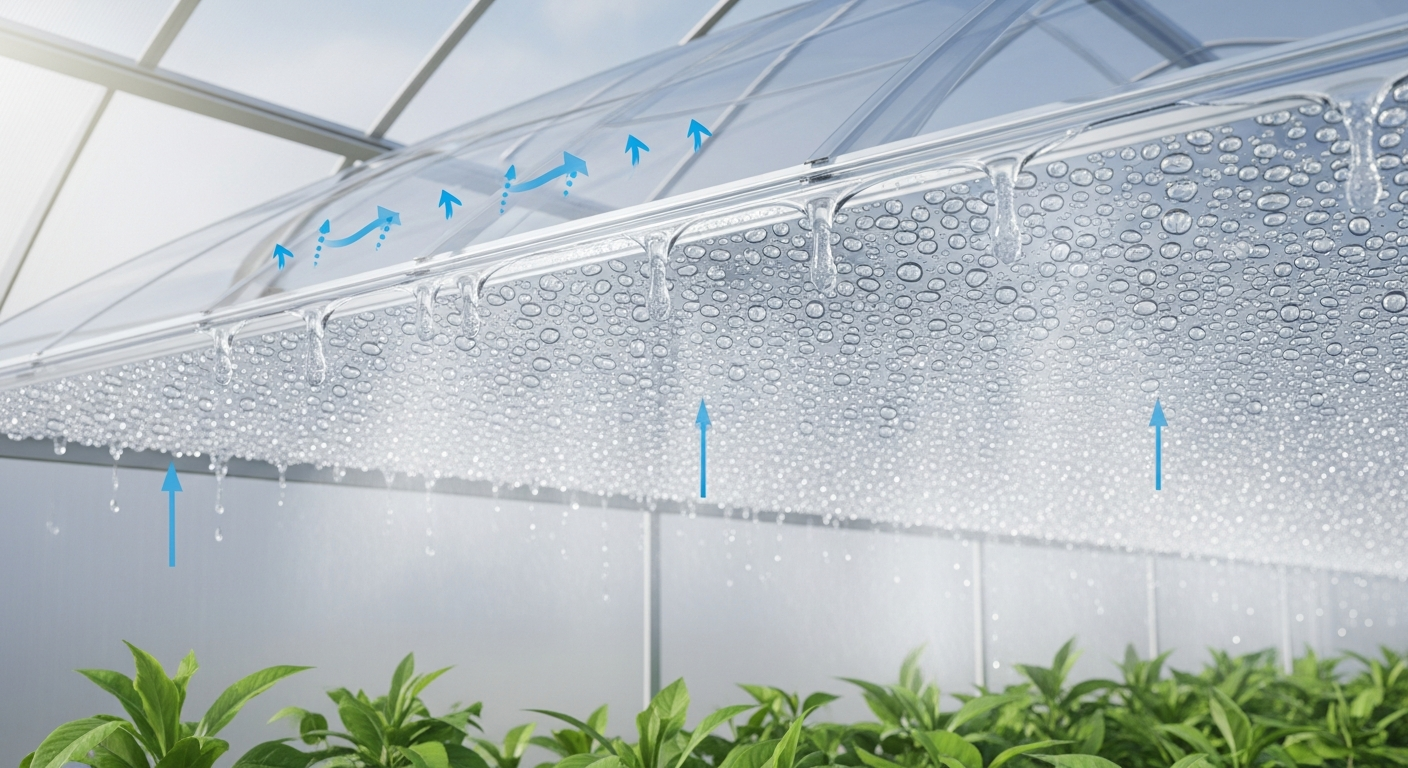
Before we delve into the solution, it’s crucial to understand the problem. Condensation forms when warm, moist air inside your greenhouse comes into contact with a cooler surface – typically the greenhouse cover material itself, be it polyethylene film, polycarbonate, or glass. The air cools rapidly, losing its ability to hold moisture, which then precipitates as tiny water droplets. While this is a natural thermodynamic process, its consequences in a controlled growing environment can be severe:
- Disease Spread: Water droplets accumulating on plant leaves create ideal conditions for the proliferation of fungal diseases (like Botrytis, powdery mildew, and downy mildew) and bacterial infections. Splashing drips can also spread pathogens from infected plants to healthy ones.
- Reduced Light Transmission: A ceiling covered in countless water droplets scatters and reflects incoming sunlight, significantly reducing the amount of photosynthetically active radiation (PAR) reaching your plants. This can lead to stunted growth, reduced yields, and lower crop quality.
- Leaf Scalding and Damage: Water droplets act as miniature lenses, concentrating sunlight and potentially scalding or burning delicate plant foliage.
- Energy Loss: Wet surfaces transfer heat more readily than dry ones. A greenhouse cover constantly battling condensation will lose heat faster, leading to increased heating costs.
- Uneven Growth: Areas with heavy dripping may experience localized cooling and wetness, leading to inconsistent growth patterns across your crop.
Effectively managing greenhouse humidity and preventing condensation is therefore paramount for maintaining optimal growing conditions and ensuring robust plant health.
The Science Behind Anti-Drip Coatings: A Hydrophilic Transformation
The magic of anti-drip coatings lies in their ability to manipulate the fundamental properties of water and surface tension. Traditionally, water tends to form spherical droplets on most surfaces due to its high surface tension. Think of water beading up on a freshly waxed car – that’s a hydrophobic (water-repelling) surface at play.
Anti-drip coatings, however, are engineered to create a hydrophilic (water-attracting) surface. This is achieved by incorporating special surfactant additives into the greenhouse film or applying them as a liquid coating. Here’s how it works:
- Changing Surface Tension: These additives reduce the surface tension between the water and the film material.
- Spreading, Not Beading: Instead of forming individual, light-scattering droplets, condensed water spreads out into a thin, uniform, transparent film across the entire surface.
- Gravity at Work: This continuous film then flows smoothly down the side walls of the greenhouse, either into collection gutters or dissipating as humidity into the soil, preventing any dripping onto the plants below.
This simple yet profound change in how water behaves on the greenhouse cover yields several critical benefits:
- Elimination of Dripping: The primary goal is achieved – no more water falling onto your precious plants, drastically reducing the risk of fungal diseases and bacterial infections.
- Maximized Light Transmission: A continuous film of water causes minimal refraction and scattering of light compared to thousands of individual droplets. This means more PAR reaches your crops, leading to stronger growth and higher yields.
- Improved Energy Efficiency: The thin water film maintains a more consistent temperature with the film itself, reducing heat loss compared to cold, dripping surfaces. This contributes to better energy efficiency.
- Enhanced Crop Uniformity: By preventing localized wetness and temperature drops, anti-drip coatings help maintain a more uniform environment, promoting consistent crop quality.
Types of Anti-Drip Solutions
Most commonly, anti-drip properties are integrated directly into multi-layer polyethylene greenhouse films during the manufacturing process. These films have the anti-drip layer on the inner surface. There are also spray-on anti-drip coatings available for existing structures, though these may require reapplication and generally offer less durability than integrated films.
Choosing and Maintaining Anti-Drip Coatings for Optimal Performance
Selecting the right anti-drip solution and ensuring its longevity are crucial for long-term success in condensation control.
Factors to Consider When Choosing:
- Film Type and Lifespan: High-quality multi-layer polyethylene films with integrated anti-drip often come with UV stabilizers and other additives for durability. Consider the expected lifespan of the film and coating.
- Crop Specific Needs: While most crops benefit, some very sensitive varieties might have particular environmental requirements that influence film choice.
- Climatic Conditions: Your local climate (e.g., high humidity, cold winters) will impact the severity of condensation and the demands on your anti-drip system.
- Installation Requirements: Ensure the film is installed with the anti-drip layer facing inwards. Proper tensioning during installation is also important to prevent pockets where water could accumulate.
Practical Tips for Longevity and Effectiveness:
- Proper Ventilation: Anti-drip coatings work best when combined with good ventilation practices. While they manage the condensation, they don’t eliminate the excess humidity itself. Ensure adequate air exchange to remove moist air from the greenhouse.
- Keep it Clean: Dust, dirt, and chemical residues can compromise the hydrophilic properties of the coating. Regular, gentle cleaning of the inner surface (if accessible and recommended by the manufacturer) can help maintain effectiveness.
- Avoid Abrasion: Be careful not to abrade the inner surface of the film during installation or maintenance, as this can damage the anti-drip layer.
- Monitor Performance: Regularly inspect your greenhouse cover. If you start to notice beading and dripping again, it might be time to clean the film or consider replacement if the coating’s lifespan is nearing its end.
Beyond Coatings: A Holistic Approach to Humidity Management
While anti-drip coatings are an incredibly effective tool, they are just one component of a comprehensive strategy for humidity management and greenhouse environment control. For optimal results, consider integrating anti-drip films with other best practices:
- Strategic Ventilation: Implement both passive (vents, roll-up sides) and active (exhaust fans, circulation fans) ventilation systems to remove saturated air and introduce drier air.
- Appropriate Heating: Maintain a stable internal temperature to prevent cold spots where condensation can readily form. Heating pipes under benches can also help warm plant canopy air.
- Humidity Sensors and Controllers: Automate your ventilation and heating systems using precise humidity sensors to react proactively to rising moisture levels.
- Optimized Irrigation: Water plants early in the day, allowing foliage to dry before nightfall when temperatures drop and condensation risk increases. Avoid overwatering.
- Proper Plant Spacing: Ensure adequate space between plants to allow for good air circulation around the foliage, which helps reduce localized humidity.
- Dehumidifiers: In highly sealed or specialized greenhouses, commercial dehumidifiers can be an effective way to directly remove moisture from the air.
Conclusion: A Clear Path to Healthier Greenhouse Climates
The science of anti-drip coatings represents a significant leap forward in greenhouse climate control. By transforming how water behaves on greenhouse covers, these coatings offer a powerful defense against the detrimental effects of condensation – from reducing disease pressure and maximizing vital light transmission to improving energy efficiency and promoting uniform plant growth. For any serious greenhouse enthusiast or commercial grower, understanding and implementing anti-drip technology is no longer a luxury but a fundamental step towards cultivating healthier plants, achieving higher yields, and ensuring a more sustainable and productive growing environment. Embrace the clear view, and let your greenhouse truly flourish.