
Summer heat can be relentless, posing a significant challenge for greenhouse growers aiming to maintain optimal conditions for their plants. Evaporative cooling systems are a popular and energy-efficient solution, drawing heat out of the greenhouse by evaporating water. They work wonders in dropping temperatures, especially in dry climates. However, this brilliant technology introduces its own unique challenge: increased humidity. While beneficial to a point, excessive humidity, particularly during warm summer months, can quickly turn from an asset into a liability, creating a breeding ground for diseases and hindering plant growth. Successfully navigating summer means mastering the art of balancing temperature reduction with precise humidity control.
The Double-Edged Sword: Evaporative Cooling and Humidity
Evaporative cooling operates on a simple, yet elegant principle: as water evaporates, it absorbs latent heat from the surrounding air, thereby lowering the air’s temperature. In a greenhouse setting, this is typically achieved by drawing hot, dry outside air through water-saturated cooling pads on one side of the structure, while exhaust fans pull the now cooler, moister air out through the other side. This process effectively drops internal temperatures, making the greenhouse environment more comfortable for plants.
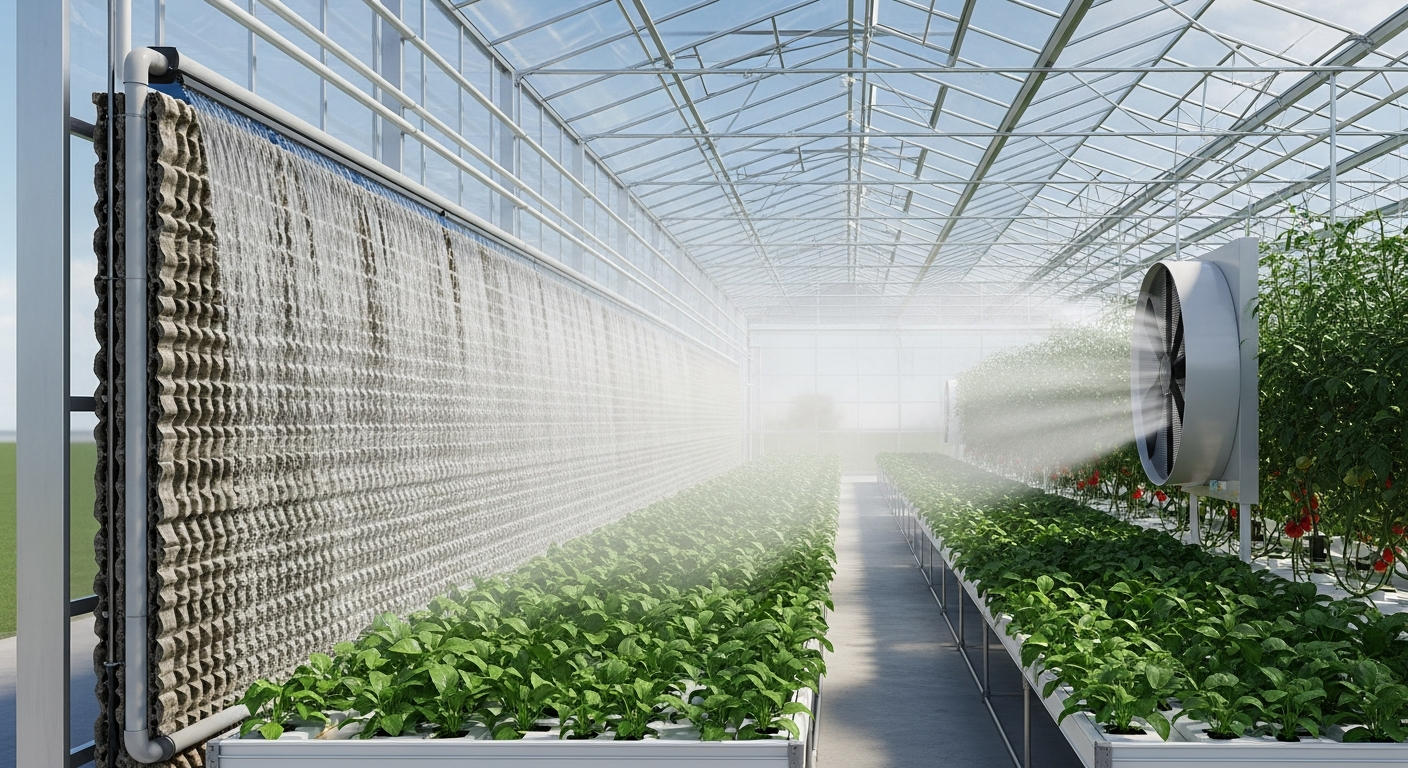
The inherent byproduct of this cooling mechanism is an increase in relative humidity (RH). Each gallon of water evaporated releases a significant amount of water vapor into the air. While some increase in humidity can be beneficial for plant transpiration and overall health, particularly in very arid regions, there’s a delicate balance to strike. When external humidity levels are already high, or when the evaporative cooling system is run excessively, the internal greenhouse humidity can quickly skyrocket to detrimental levels. Understanding this fundamental trade-off is the first step towards effective greenhouse climate control.
A key concept here is Vapor Pressure Deficit (VPD). VPD measures the difference between the amount of moisture in the air and how much moisture the air can hold when saturated. It’s a critical indicator for plant health, as it directly influences transpiration rates. High humidity (low VPD) reduces the plant’s ability to transpire, which can impair nutrient uptake and make plants more susceptible to disease. Low humidity (high VPD) can lead to excessive transpiration and stress. Evaporative cooling, by increasing humidity, naturally lowers VPD, making careful management essential.
Why High Humidity Spells Trouble for Greenhouse Plants
While often overlooked in the pursuit of cooling, persistently high humidity within the greenhouse creates several serious problems for plants, impacting their health, growth, and ultimately, your yield.
Fungal and Bacterial Diseases Flourish
This is arguably the most significant risk associated with high greenhouse humidity. Many destructive plant pathogens, particularly fungi like powdery mildew, botrytis (gray mold), downy mildew, and various bacterial blights, thrive in moist, stagnant conditions. Spores germinate readily on wet leaf surfaces, and the lack of proper drying time allows diseases to spread rapidly. Once established, these diseases can be difficult and costly to eradicate, leading to significant crop losses.
Impaired Transpiration and Nutrient Uptake
Transpiration is the process by which plants release water vapor through their stomata (pores) and draw water and dissolved nutrients up from their roots. It’s crucial for nutrient delivery and regulating internal plant temperature. When the ambient air is saturated with moisture (high humidity), the plant’s ability to transpire effectively is significantly reduced because there’s little difference in water potential between the plant and the air. This can lead to:
- Nutrient Deficiencies: If plants can’t transpire, they can’t effectively draw up water and vital nutrients, potentially leading to deficiencies even if nutrients are abundant in the soil.
- Reduced Growth: Stomata may close to conserve water, but this also limits CO2 uptake, slowing photosynthesis and overall growth.
- Physiological Disorders: Certain crops can develop internal tip burn or other issues due to poor calcium uptake, which is linked to transpiration.
Weakened Plant Structure and Reduced Pollination
Plants grown under consistently high humidity tend to develop soft, sappy growth with elongated stems (etiolation). This makes them structurally weaker, more susceptible to pests, and less resilient to stress. Flowers may also suffer, as high humidity can cause pollen to become sticky and clumpy, hindering effective pollination and fruit set, especially for crops that rely on wind or vibration for pollen dispersal.
Proactive Strategies for Humidity Management with Evaporative Cooling
Successfully managing summer humidity alongside evaporative cooling requires a multi-faceted approach. Integrating these strategies will help you maintain an optimal environment for your plants.
Optimize Your Evaporative Cooling System Operation
- Cycle the System Smartly: Instead of continuous operation, use humidistats and timers to cycle your evaporative cooling system. Run it only when necessary to bring temperatures down, then allow exhaust fans to continue running without the water pump to purge moist air. This allows periods for the greenhouse air to dry out.
- Maintain Cooling Pads: Ensure your cooling pads are clean and in good condition. Clogged, degraded, or algae-ridden pads reduce cooling efficiency and can harbor pathogens. Regular cleaning and timely replacement are crucial. Also, check for even water distribution; dry spots reduce cooling and increase fan load.
- Monitor Water Quality: Hard water can lead to mineral buildup on pads, reducing their effectiveness. Consider water treatment if mineral deposits are a persistent issue.
Enhance Airflow and Ventilation
Good greenhouse ventilation is your primary defense against excessive humidity. This goes beyond just the exhaust fans that work with your evaporative cooler.
- Adequate Exhaust Fan Capacity: Ensure your exhaust fans are appropriately sized for your greenhouse volume, capable of achieving a minimum of one air exchange per minute when fully operational. Proper fan placement, opposite the cooling pads, ensures efficient air movement across the entire space.
- Horizontal Airflow Fans (HAFs): Install HAF fans to create continuous, gentle air movement throughout the crop canopy. These fans don’t exchange air with the outside but prevent pockets of stagnant, moist air from forming around plants, promoting uniform temperature and humidity and helping to dry leaf surfaces.
- Strategic Venting: If your greenhouse has roof or side vents, use them when outside humidity is lower than inside, particularly during cooler parts of the day or night. This allows for purging of humid air without relying solely on mechanical systems.
Strategic Plant and Watering Practices
Your cultural practices play a significant role in managing humidity within the plant canopy.
- Proper Plant Spacing: Avoid overcrowding. Allow adequate space between plants to facilitate air movement around individual plants and through the canopy. This prevents the formation of microclimates with excessively high humidity.
- Timing of Watering: Water early in the morning. This allows plants ample time to absorb water and for excess moisture to evaporate from the soil surface and leaf surfaces before evening. Watering late in the day can leave plants wet overnight, drastically increasing disease risk.
- Avoid Overhead Watering: Where possible, use drip irrigation or other bottom-watering methods to keep foliage dry. If overhead watering is necessary, ensure it’s done early enough for leaves to dry completely.
- Pruning and Defoliation: Periodically remove old, yellowing, or excess foliage to improve air circulation within the plant canopy. This can also reduce the total leaf surface area contributing to transpiration.
Consider Supplemental Dehumidification
In highly humid climates, or during extended periods of cool, wet weather, even optimized ventilation and cultural practices might not be enough. This is where active dehumidification comes into play.
- Desiccant Dehumidifiers: These use a material to absorb moisture from the air. They are effective but can be energy-intensive.
- Refrigeration Dehumidifiers: These work like air conditioners, cooling air to condense moisture, then reheating it before returning it to the greenhouse. They can also add a small amount of heat to the greenhouse, which can be beneficial in some scenarios.
Supplemental dehumidifiers are typically deployed strategically, especially during nighttime hours when evaporative cooling isn’t running and plants are still transpiring, leading to a natural humidity buildup. Integrating them with your climate control system can provide precise environmental regulation.
Monitor and Automate for Precision
The days of guesswork are over. Modern technology allows for precise control over your greenhouse environment.
- Sensors: Install accurate temperature and humidity sensors (hygrometers) at various points within your greenhouse, especially within the plant canopy. Consider sensors that can calculate VPD.
- Climate Controllers: Invest in a good environmental controller that can integrate data from your sensors to automate the operation of your evaporative cooling, exhaust fans, HAF fans, and even dehumidifiers. Set parameters for temperature, relative humidity, and VPD, and let the system make real-time adjustments.
- Data Logging: Many controllers offer data logging capabilities. Reviewing this data regularly can help you identify patterns, troubleshoot issues, and fine-tune your humidity management strategies over time.
Conclusion
Evaporative cooling is an indispensable tool for managing summer heat in many greenhouses, offering an energy-efficient path to lower temperatures. However, its efficacy is inextricably linked with its impact on humidity. Mastering summer climate control isn’t just about keeping things cool; it’s about achieving a delicate balance where temperature, humidity, and airflow work in harmony to foster robust plant health.
By understanding the mechanisms at play, implementing proactive strategies from optimized system operation and enhanced ventilation to smart watering and strategic plant management, and leveraging modern monitoring and automation, you can transform the challenge of summer humidity into an opportunity for superior plant growth. The goal is to create an environment where your plants not only survive the heat but thrive, free from the risks of disease and impaired growth that high humidity can bring. Staying vigilant and adaptable in your approach will ensure your greenhouse remains a productive haven, even during the most sweltering summer days.