
The journey from a tiny seed to a thriving plant is a miraculous one, and for many greenhouse enthusiasts, the initial stages in seedling trays and propagation domes are among the most rewarding. However, this delicate phase requires precise environmental control, with humidity being a silent, yet incredibly powerful, orchestrator of success or failure. Mastering humidity management ensures robust germination, strong root development, and ultimately, healthier, more vigorous young plants ready to conquer the world outside their protected environment.
The Crucial Role of Humidity for Young Plants
Humidity, or the amount of moisture in the air, plays an indispensable role in the early life cycle of plants. For seedlings and cuttings, maintaining optimal humidity levels is not just beneficial; it’s often critical for survival and successful establishment.
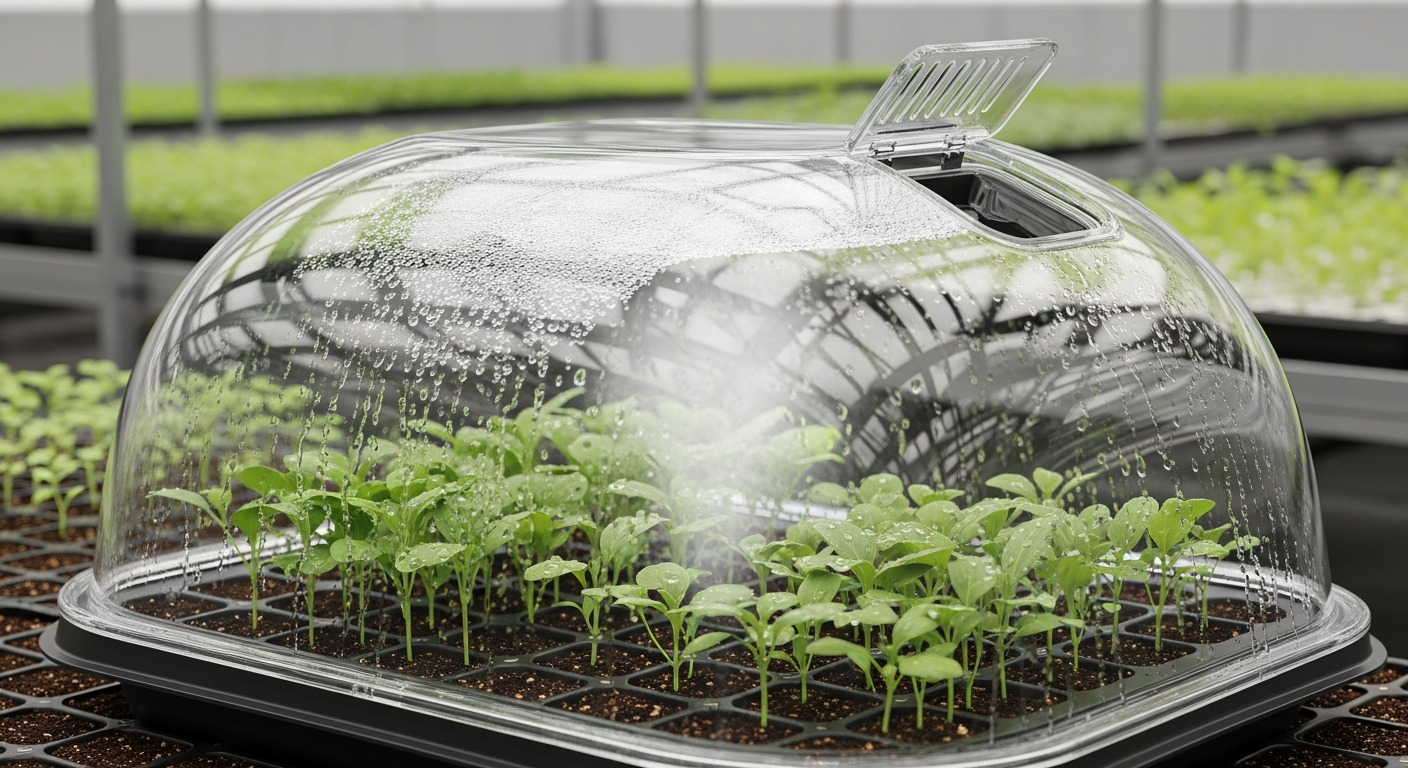
Facilitating Germination and Early Growth
During germination, seeds absorb water through a process called imbibition. High humidity in seedling trays and propagation domes prevents the tiny, emerging roots and shoots from drying out before they can establish themselves in the growing medium. A consistently moist, humid environment encourages faster and more uniform germination rates. Without sufficient atmospheric moisture, delicate nascent roots can shrivel, and tiny cotyledons can struggle to unfurl, hindering the seedling’s ability to photosynthesize and grow.
Preventing Desiccation in Cuttings
For propagating cuttings, high humidity is even more paramount. Cuttings lack roots to absorb water, so they rely entirely on their ability to minimize water loss from their leaves until new roots form. A propagation dome acts like a mini-greenhouse, creating a microclimate of high humidity that reduces transpiration (water loss through leaves), allowing the cutting to focus its energy on developing a strong root system. Without this protective moist layer, cuttings would quickly dehydrate and perish.
The Double-Edged Sword: Too Much or Too Little Moisture
While essential, humidity is a delicate balance. Too little humidity leads to desiccation, stunted growth, and failed propagation. The delicate cells of young plants dry out, leading to irreversible damage. Conversely, excessive humidity creates an ideal breeding ground for fungal diseases like damping-off, gray mold (Botrytis), and powdery mildew. These pathogens can rapidly decimate an entire tray of seedlings overnight. It can also lead to weak, “leggy” growth as plants stretch to find better air circulation.
Essential Tools and Techniques for Humidity Control
Successful humidity management in your greenhouse climates relies on understanding and utilizing the right tools and techniques. From the very containers you use to the air you circulate, every element contributes to the overall moisture balance.
Propagation Domes and Seedling Trays
- Propagation Domes: These clear plastic covers are the primary tool for creating a high-humidity environment. They trap moisture evaporating from the growing medium, forming a humid microclimate. Many domes come with adjustable vents, which are crucial for gradual humidity reduction and air exchange.
- Seedling Trays: Choose trays with good drainage holes to prevent waterlogging, even when a dome is in place. Shallow trays are often preferred for seedlings as they promote air circulation around the root zone. Bottom watering techniques (placing the tray in a shallow pool of water) can help maintain consistent moisture in the growing medium without over-saturating the surface.
Monitoring and Adjusting Humidity Levels
- Hygrometers: A digital hygrometer is an invaluable tool for accurately measuring relative humidity (RH) inside your dome or growing area. Placing one inside a dome gives you precise data, allowing you to make informed adjustments rather than guessing.
- Ventilation: This is arguably the most critical aspect of humidity control. As soon as seeds germinate or cuttings show signs of rooting, you must begin to introduce fresh air. Adjustable vents on domes should be opened incrementally. If your dome lacks vents, periodically lift the dome for a few minutes each day. This prevents stagnant, overly humid air and discourages fungal growth.
- Misting: A fine mist sprayer can be used to lightly moisten the air and foliage, especially for cuttings, but use with caution. Over-misting can lead to water droplets sitting on leaves, which can promote disease. Aim for a fine fog rather than heavy wetting.
- Heating Mats: While primarily used to provide bottom heat for germination and root development, heating mats also subtly influence humidity. The warmth they provide increases evaporation from the growing medium, thus elevating humidity levels. Be mindful of this interaction and adjust ventilation accordingly.
Watering Practices
How you water your seedlings significantly impacts humidity. Bottom watering is often recommended as it allows the growing medium to absorb water from below, keeping the surface drier and less hospitable to fungi, while still ensuring adequate moisture for roots. If top-watering, do so gently and avoid soaking the foliage.
Mastering Humidity Through the Seedling Stages
The ideal humidity level isn’t static; it evolves as your young plants develop. Understanding these stages is key to successful propagation.
Stage 1: Germination and Rooting (High Humidity)
For initial germination or when rooting cuttings, aim for a very high relative humidity, typically 80-100%. This environment is critical for seeds to imbibe water and for cuttings to minimize water loss. Keep dome vents closed, but still check daily for any signs of mold or excessive condensation. If heavy condensation is visible, briefly lift the dome to allow some air exchange before closing it again.
Stage 2: Early Growth (Moderate-High Humidity)
Once seeds have germinated and developed their first true leaves, or cuttings have visibly started forming roots, it’s time to gradually reduce humidity. Aim for 60-80% RH. Begin by opening the vents on your propagation dome slightly for a few hours each day. This introduces fresh air and starts to acclimate the plants to slightly less humid conditions. Increase the duration and opening of the vents over several days.
Stage 3: Hardening Off (Gradual Reduction)
Before transplanting seedlings outdoors or into a less controlled environment, they need to undergo a process called “hardening off.” This is a crucial step where you progressively expose plants to harsher conditions – lower humidity, cooler temperatures, increased light, and greater air movement. Over 7-14 days, gradually decrease the humidity to 40-60% RH. This involves fully opening dome vents, then propping the dome open, and eventually removing it completely for increasing periods. This slow transition builds resilience, preventing transplant shock and ensuring the plants can thrive in their new home.
Common Pitfalls and Troubleshooting
Even with the best intentions, issues can arise. Knowing how to troubleshoot humidity-related problems can save your young plants.
- Damping-Off: The most dreaded seedling killer. If you see seedlings suddenly toppling over at the soil line, often with a constricted stem, it’s likely damping-off. This is caused by fungal pathogens that thrive in overly wet, stagnant conditions.
Solution: Immediately increase ventilation, remove affected seedlings, and ensure good air circulation. Consider applying a natural fungicide like chamomile tea or a commercial seedling-safe product. Prevent by using sterile starting mix and avoiding overwatering. - Leggy Seedlings: Tall, spindly seedlings stretching for light often indicate insufficient light, but high humidity combined with poor air circulation can exacerbate the problem.
Solution: Ensure adequate light exposure and increase ventilation. - Mold/Mildew on Growing Medium or Leaves: Fuzzy growth on the soil surface or white powdery spots on leaves are clear signs of excessive humidity and poor air circulation.
Solution: Increase ventilation immediately. Remove any visible mold with a sterile tool. Reduce watering frequency. - Wilting or Crisping Leaves: This indicates too little humidity, causing the plants to lose water faster than they can absorb it.
Solution: Increase humidity by closing dome vents slightly or misting lightly. Check the growing medium moisture – it might be too dry.
Conclusion
Managing humidity in seedling trays and propagation domes is a cornerstone of successful plant propagation. It’s a dance between providing the life-giving moisture young plants need and protecting them from the threats of stagnant, disease-ridden environments. By understanding the evolving needs of your seedlings and cuttings, utilizing the right tools like propagation domes and hygrometers, and meticulously adjusting ventilation, you empower your plants to develop robust root systems, strong stems, and healthy leaves. Embrace the subtleties of environmental control, and your greenhouse climates will reward you with a bounty of thriving young plants ready for their next adventure.