
In the intricate world of greenhouse cultivation, growers often meticulously monitor temperature and relative humidity (RH). While these metrics are undoubtedly vital, they only tell part of the story. There’s a powerful, often misunderstood environmental factor that acts as the true orchestrator of plant health and growth: Vapor Pressure Deficit (VPD). Understanding and managing VPD is not just an advanced technique for expert growers; it’s a fundamental key to unlocking your plants’ full potential, optimizing their transpiration, and ensuring robust development. Let’s delve into what VPD is, why it matters, and how you can harness its power in your own greenhouse.
What Exactly is Vapor Pressure Deficit (VPD)?
At its core, Vapor Pressure Deficit (VPD) describes the difference between the amount of moisture currently in the air and the maximum amount of moisture the air could hold when it’s fully saturated. Think of it like a sponge: a very dry sponge (high VPD) wants to absorb a lot of water, while a damp sponge (low VPD) has little capacity left to absorb more. In the context of plants, this “sponge” is the air surrounding the leaves, and the “water” it wants to absorb comes directly from the plant itself through transpiration.
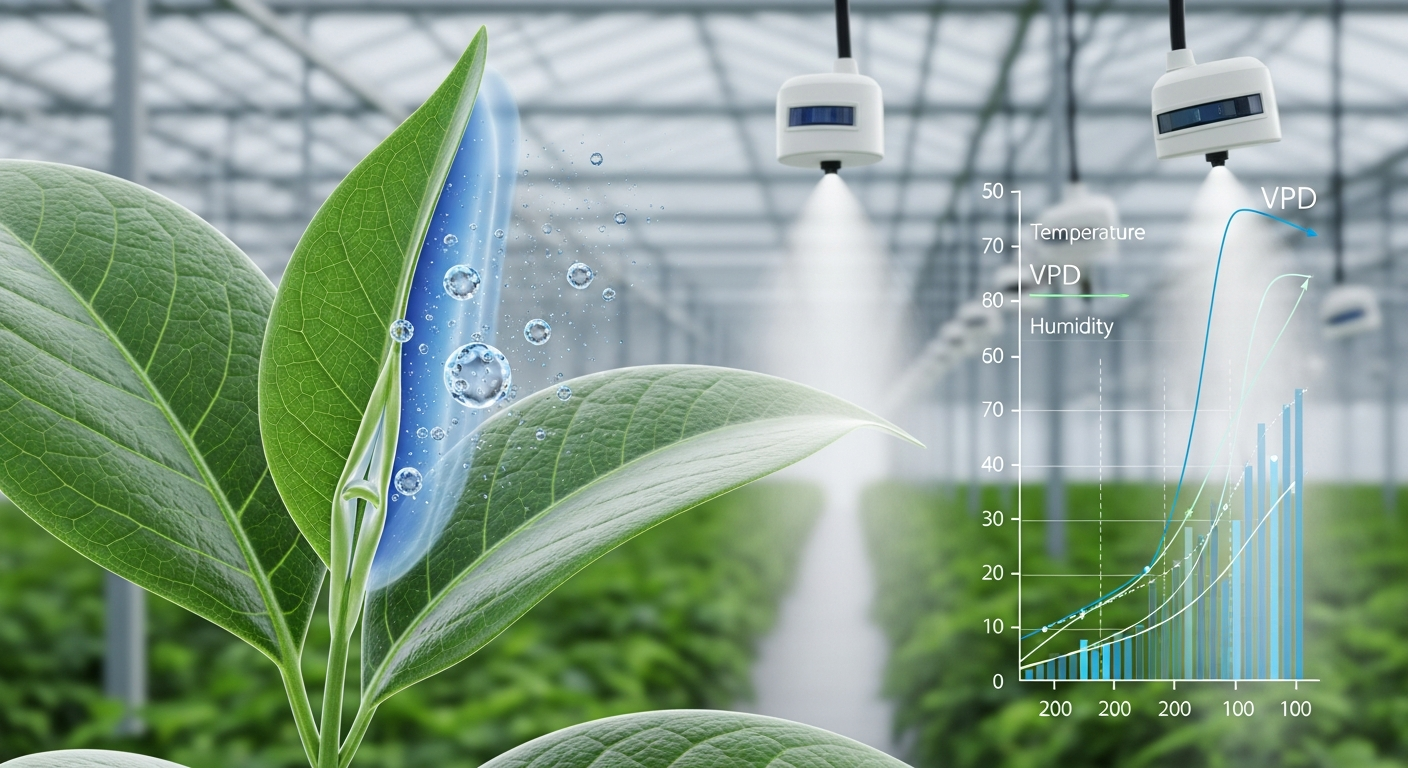
VPD isn’t just about relative humidity; it’s a more accurate and comprehensive measure because it takes into account both air temperature and, crucially, leaf temperature. Here’s why leaf temperature is so important:
- The air right at the surface of a leaf is often cooler or warmer than the ambient air, influencing the actual vapor pressure difference.
- It’s the vapor pressure difference between the inside of the leaf and the air outside the leaf that drives transpiration.
A higher VPD means the air is “drier” relative to the plant, and it will pull moisture from the leaves more aggressively. A lower VPD means the air is “wetter” relative to the plant, and transpiration will slow down. This invisible force profoundly impacts how your plants drink, breathe, and grow.
Why VPD is Crucial for Plant Health and Growth
The significance of VPD extends far beyond mere environmental metrics. It directly influences several critical physiological processes within your plants, making it a cornerstone of effective greenhouse climate control.
1. Driving Transpiration and Nutrient Uptake
Transpiration is the process by which plants release water vapor through tiny pores on their leaves called stomata. This isn’t just “sweating”; it’s the engine that powers the entire plant. As water evaporates from the leaves, it creates a negative pressure (a “pull”) that draws water and dissolved nutrients up from the roots. This is often referred to as the “transpirational pull.”
- High VPD: When VPD is high, the air has a strong “thirst” for moisture, leading to rapid transpiration. While this can increase nutrient uptake, excessively high VPD can cause plants to transpire too quickly, leading to dehydration, wilting, nutrient lockout, and even stomatal closure to conserve water, which halts photosynthesis.
- Low VPD: Conversely, when VPD is low, the air is nearly saturated, and the “pull” on the plant’s moisture is weak. This slows down transpiration, reducing the rate of water and nutrient uptake. Persistently low VPD can lead to issues like soft, stretched growth, reduced calcium transport (leading to tip burn), and significantly increased risk of fungal diseases like powdery mildew and botrytis due to stagnant moisture on leaves.
Maintaining an optimal VPD ensures a steady, efficient flow of water and nutrients, promoting robust plant growth and development.
2. Optimizing Photosynthesis and CO2 Uptake
Stomata, the same pores used for transpiration, are also responsible for taking in carbon dioxide (CO2), which is essential for photosynthesis. The plant faces a constant dilemma: open stomata to take in CO2, but lose water, or close stomata to conserve water, but starve for CO2.
An ideal VPD helps the plant find the perfect balance, allowing stomata to remain open sufficiently for CO2 intake without excessive water loss. When VPD is either too high or too low, plants tend to close their stomata, impairing CO2 uptake and, consequently, photosynthesis, directly impacting your yield.
3. Disease Prevention and Stress Reduction
Proper VPD management is a powerful tool in your integrated pest management (IPM) strategy:
- Avoiding Moisture-Related Diseases: Low VPD environments create ideal conditions for fungal pathogens like botrytis, downy mildew, and powdery mildew to thrive, as moisture can sit on leaf surfaces for extended periods.
- Reducing Plant Stress: Extreme VPDs (either too high or too low) put plants under unnecessary stress, making them more susceptible to pests and diseases, and hindering their ability to perform optimally.
By keeping VPD within a healthy range, you create an environment where plants are strong and resilient, naturally better equipped to resist threats.
Measuring and Calculating VPD in Your Greenhouse
Unlike relative humidity or temperature, VPD isn’t something you can measure directly with a single off-the-shelf sensor. It requires understanding the relationship between several variables:
- Air Temperature: The temperature of the ambient air in your greenhouse.
- Relative Humidity (RH): The percentage of moisture in the air compared to what it can hold at that temperature.
- Leaf Temperature: The actual temperature of the plant leaves themselves. This is a critical, often overlooked factor, as it can differ significantly from air temperature due to light intensity, air movement, and plant transpiration.
While the exact formula for calculating VPD is complex and involves saturated vapor pressure curves, most modern growers don’t need to do the math manually. Here’s how to approach it:
- Dedicated VPD Sensors/Controllers: The most straightforward approach is to invest in environmental control systems that integrate sensors for air temperature, RH, and optionally, an infrared sensor for leaf temperature. These systems can then calculate and display real-time VPD values, often providing historical data and even automating adjustments to your climate control equipment.
- Manual Measurement & Online Calculators/Charts: For a more hands-on approach, you’ll need:
- A reliable temperature and humidity sensor (hygrometer).
- An infrared thermometer (IR gun) to accurately measure leaf surface temperature. Point it at multiple leaves, averaging the readings.
- Once you have these three data points, you can input them into numerous free online VPD calculators or consult a VPD chart to determine your current value in kilopascals (kPa).
Practical Tip: When measuring leaf temperature, aim for leaves in the middle of your plant canopy that are representative of your overall crop. Avoid pointing at hot spots like direct lights or cold spots near vents. Consistent sensor placement is key for accurate monitoring.
Optimizing VPD for Different Growth Stages
Just as plants have varying needs for light, nutrients, and water throughout their lifecycle, their optimal VPD range also shifts. Tailoring your VPD to each growth stage helps maximize genetic potential and mitigate common issues.
1. Propagation & Cloning (Rooting Stage)
- Optimal VPD Range: 0.4 – 0.8 kPa (low)
- Why: Cuttings and seedlings have undeveloped or no roots. A low VPD means the air is very humid, minimizing transpiration and preventing delicate tissues from drying out before roots can establish. This reduces stress and encourages rapid rooting.
- How to Achieve: Use humidity domes, misters, foggers, and maintain slightly higher air temperatures to keep RH elevated.
2. Vegetative Growth
- Optimal VPD Range: 0.8 – 1.2 kPa (moderate)
- Why: During the vegetative phase, plants are focused on developing strong root systems, robust stems, and lush foliage. A moderate VPD encourages active transpiration and nutrient uptake, fueling rapid growth without causing stress. It allows stomata to remain open, maximizing CO2 intake for photosynthesis.
- How to Achieve: Balance temperature and humidity. Often involves slightly lowering RH or raising air temperature compared to the propagation stage, alongside good air circulation.
3. Flowering / Fruiting
- Optimal VPD Range: 1.2 – 1.6 kPa (higher)
- Why: As plants transition to flowering or fruiting, a slightly higher VPD is often beneficial. It encourages vigorous transpiration, which can help move essential nutrients like calcium to developing flowers and fruits. The slightly drier conditions also reduce the risk of fungal diseases, which are particularly detrimental to blooms and harvests.
- How to Achieve: Gradually increase air temperature and/or decrease relative humidity. Good ventilation and dehumidifiers become crucial tools here. Be cautious not to go too high, as extreme VPD can still cause stress.
General Adjustment Strategies:
- To Increase VPD:
- Increase air temperature.
- Decrease relative humidity (use dehumidifiers, increase ventilation/exhaust).
- To Decrease VPD:
- Decrease air temperature.
- Increase relative humidity (use humidifiers, misters, reduce ventilation).
Remember that leaf temperature is a significant factor. Increased light intensity will raise leaf temperature, effectively increasing VPD if air temperature and RH remain constant. Good air circulation can help homogenize leaf temperatures and prevent hot spots.
Conclusion
Vapor Pressure Deficit (VPD) is more than just another number to track; it’s a dynamic indicator of your greenhouse’s atmospheric thirst and a direct reflection of your plants’ comfort and efficiency. By moving beyond simple temperature and humidity readings to understand and actively manage VPD, you gain unprecedented control over plant transpiration, nutrient uptake, and overall physiological health.
Embracing VPD management means creating a more stable, productive environment, leading to stronger plants, fewer disease issues, and ultimately, higher-quality yields. It’s the mark of a truly optimized greenhouse climate. Start incorporating VPD into your monitoring routine, experiment with adjustments, and watch your plants thrive like never before.