
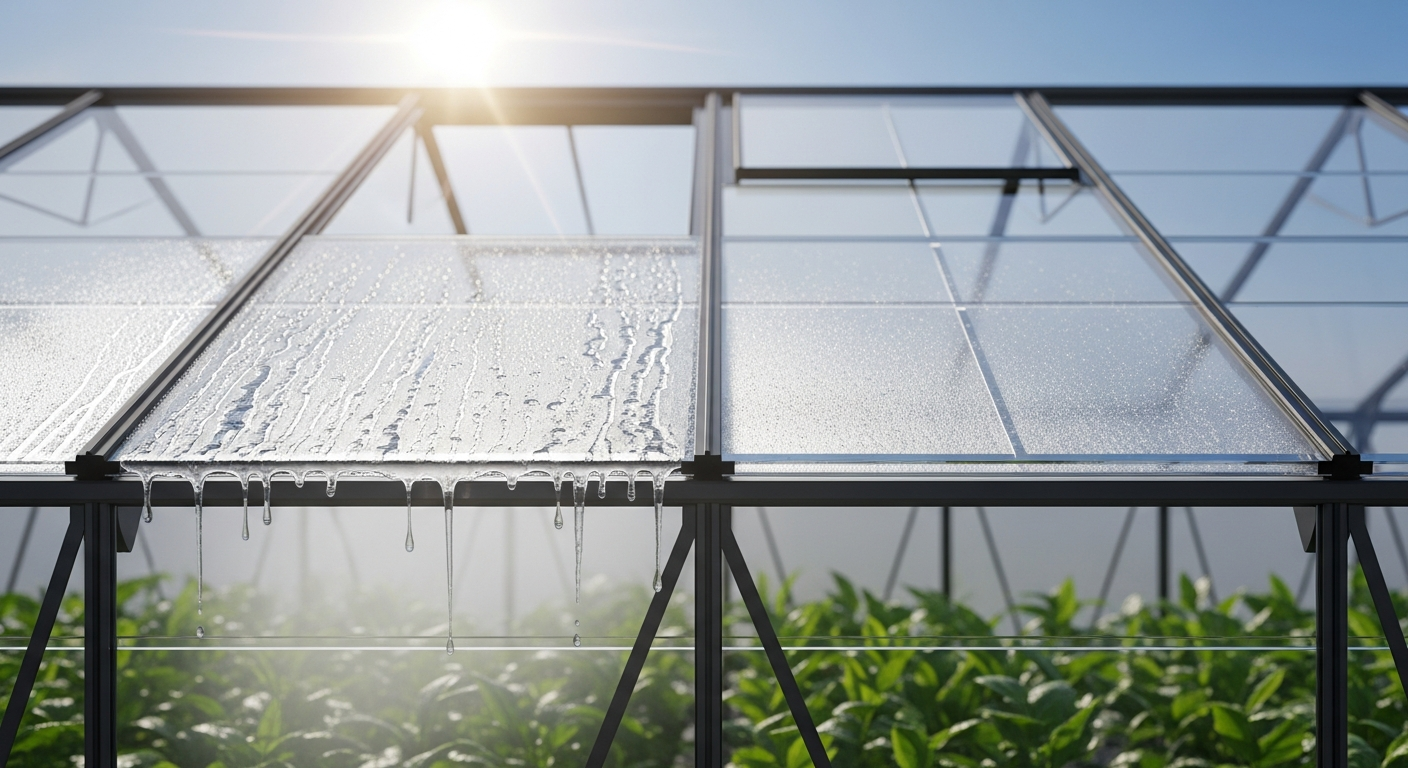
Condensation in a greenhouse is a familiar sight for many growers – those shimmering droplets clinging to the roof and walls, often seeming benign. However, this common phenomenon is far more than just aesthetic; it’s a critical indicator of uncontrolled greenhouse humidity and a significant threat to plant health and operational efficiency. When warm, moist air inside your greenhouse comes into contact with colder surfaces, like your glazing, water vapor transforms back into liquid, creating condensation. Left unchecked, this can lead to a cascade of problems from fungal diseases to reduced light transmission. While many factors influence your greenhouse’s microclimate, one of the most fundamental yet often underestimated elements is your choice of glazing material. Understanding how different glazing options impact the thermal dynamics of your greenhouse is key to effectively managing humidity and ensuring a thriving growing environment.
The Persistent Challenge of Condensation in Your Greenhouse
Imagine your greenhouse as a miniature ecosystem. Plants transpire, releasing water vapor, and watering further increases the moisture content in the air. As this warm, humid air rises, it eventually meets the cooler surfaces of your greenhouse roof and walls. This temperature differential triggers condensation, causing water droplets to form. While a certain level of humidity is beneficial for plants, excessive or persistent condensation creates a multitude of issues. First and foremost, dripping water directly onto foliage creates ideal conditions for the proliferation of fungal and bacterial diseases, such as Botrytis (gray mold) and powdery mildew, which can quickly devastate a crop. These droplets can also magnify sunlight, leading to localized leaf burn, and wash off foliar applied nutrients or pesticides. Beyond plant health, heavy condensation can reduce the amount of light entering your greenhouse by scattering and blocking sunlight, impacting plant growth and yield. Over time, constant moisture can even degrade structural components, particularly in wooden greenhouses. Effectively managing greenhouse humidity and minimizing condensation is thus not just good practice; it’s essential for a healthy, productive growing operation.
Understanding Glazing Materials: A Foundation for Humidity Control
The material you choose for your greenhouse’s covering, or glazing, acts as the primary barrier between your controlled internal environment and the external climate. Its thermal properties directly dictate how well your greenhouse retains heat and, consequently, how warm its internal surfaces remain. Let’s explore the common glazing materials and their inherent characteristics:
- Single-Pane Glass: The traditional choice, offering excellent light transmission and aesthetic appeal. However, single-pane glass has poor thermal insulation. Its U-value (a measure of heat transfer) is high, meaning heat easily escapes, and the inner surface temperature often closely mirrors the outside ambient temperature.
- Double-Pane Glass: Comprising two layers of glass separated by an air or inert gas-filled gap, this option significantly improves thermal performance compared to single-pane. The trapped air acts as an insulator, reducing heat loss and keeping the inner pane much warmer.
- Polycarbonate (Twin-Wall, Multi-Wall): A popular modern choice, polycarbonate panels are highly durable, lightweight, and offer excellent insulation. Twin-wall or multi-wall structures create multiple air pockets that trap heat, leading to superior thermal performance and diffused light, which can be beneficial for plant growth.
- Polyethylene Film: The most economical option, polyethylene film is a flexible plastic sheeting. While single layers offer minimal insulation, double layers inflated with air (often called “double poly”) create an insulating air pocket, drastically improving thermal performance. Various grades offer different lifespans and properties.
The key takeaway here is that materials with better insulation (lower U-value, higher R-value) will have warmer internal surface temperatures, which directly impacts their propensity for condensation.
Glazing’s Direct Role in Managing Greenhouse Condensation
The link between your glazing choice and condensation is rooted in the surface temperature of the material. Warmer internal surfaces are less likely to cause condensation than colder ones. Here’s how each glazing type performs:
- Single-Pane Glass: Due to its poor insulation, the inner surface of single-pane glass rapidly cools when outside temperatures drop. This makes it highly susceptible to condensation. As warm, humid air rises, it quickly cools upon contact with the cold glass, leading to heavy and frequent dripping. Managing humidity in a single-pane glass greenhouse requires very diligent ventilation and heating strategies.
- Double-Pane Glass: The insulating air gap in double-pane glass keeps the inner pane significantly warmer than single-pane. This reduced temperature differential between the indoor air and the glazing surface drastically lowers the likelihood and severity of condensation. While not entirely eliminating it in extreme conditions, it’s a vast improvement, resulting in less dripping and better light transmission.
- Polycarbonate: Multi-wall polycarbonate excels at reducing condensation. The trapped air within its structure provides excellent thermal insulation, ensuring the inner surface remains much closer to the internal air temperature. This minimizes the temperature difference and, consequently, greatly reduces condensation formation. Growers using polycarbonate often report significantly drier internal surfaces and fewer condensation-related issues.
- Polyethylene Film: A single layer of polyethylene film offers very little insulation and is highly prone to condensation, much like single-pane glass. However, when two layers of polyethylene film are inflated to create an air gap, its insulating properties improve dramatically. This double-layer system, often used for hoop houses and commercial operations, significantly reduces condensation by keeping the inner layer warmer, making it a cost-effective solution for moisture control.
By understanding these differences, you can make an informed decision that aligns with your climate, crops, and budget, directly impacting your ability to control greenhouse humidity effectively.
Innovative Glazing Solutions: Anti-Drip Coatings and Advanced Materials
Beyond the fundamental structural differences in glazing materials, technological advancements have introduced specialized solutions specifically designed to combat condensation. One of the most impactful innovations is the advent of anti-condensate (anti-drip) coatings.
These coatings, applied to the inner surface of various glazing materials (especially polyethylene film and some polycarbonate panels), work by altering the surface tension of the material. Instead of allowing water vapor to form discrete droplets that scatter light and eventually drip, the coating causes the water to spread out into a thin, continuous film. This film then flows smoothly down the surface and away from plants, often directed into gutters. The benefits are manifold:
- Improved Light Transmission: A continuous water film refracts light less severely than individual droplets, leading to better light penetration and distribution within the greenhouse.
- Reduced Disease Risk: Eliminating dripping water directly onto plant foliage significantly reduces the conditions conducive to fungal diseases like Botrytis.
- Enhanced Plant Health: By preventing drip and improving light, plants experience a more stable and favorable growing environment.
Anti-drip coatings are a game-changer for greenhouse condensation management, particularly for crops sensitive to moisture. While they are most commonly found on polyethylene films, some multi-wall polycarbonate panels also come with factory-applied anti-drip layers. It’s crucial to note that these coatings have a lifespan and may degrade over time, particularly on films that need periodic replacement. When selecting glazing, always inquire about the presence and durability of anti-condensate treatments.
Other advanced glazing types, such as those with infrared (IR) blocking properties, can also indirectly aid in condensation control. By retaining more heat overnight, they help stabilize internal temperatures, reducing the temperature differentials that drive condensation formation.
Beyond Glazing: A Holistic Approach to Greenhouse Humidity Management
While your glazing choice is undeniably a cornerstone of condensation control, it’s just one component of a comprehensive greenhouse climate management strategy. To truly optimize your greenhouse humidity and eliminate condensation issues, you need to integrate several other crucial elements:
- Effective Ventilation: This is arguably the most critical complementary strategy. Ventilation removes stale, moist air from the greenhouse and replaces it with drier, fresh air from outside.
- Natural Ventilation: Achieved through roof vents and side vents, relying on convection currents and wind pressure. Best for moderate climates.
- Forced Ventilation: Utilizes exhaust fans and intake shutters to rapidly exchange air. Essential for hot climates or when precise humidity control is needed.
- Adequate Heating: Maintaining optimal internal temperatures, especially during colder periods, directly reduces the temperature differential between the air and the glazing surfaces. A warmer surface means less condensation. Smart heating strategies can also involve ‘purge heating’ – briefly raising the temperature during a ventilation cycle to dry out the air.
- Consistent Air Circulation: Even with good ventilation, pockets of stagnant, humid air can form, particularly around plant canopies. Horizontal airflow (HAF) fans continuously move air throughout the greenhouse, homogenizing temperatures and humidity levels, preventing localized condensation.
- Careful Watering Practices: Overwatering plants or watering late in the day can significantly contribute to the moisture load in the greenhouse air. Water efficiently and consider the timing to allow foliage to dry before nightfall.
- Smart Climate Control Systems: Modern greenhouse automation systems can integrate sensors for temperature, humidity, and even light levels to automatically control vents, fans, heaters, and shade cloths. These systems can maintain precise environmental conditions, dynamically reacting to internal and external changes to proactively prevent condensation.
By combining an intelligent glazing choice with these active management strategies, you create a robust system that effectively controls greenhouse humidity, safeguards your plants, and maximizes your growing potential.
Conclusion
Managing condensation is a continuous battle for any greenhouse grower, but the fight becomes significantly easier with the right tools. Your choice of glazing material stands as one of the most fundamental decisions influencing the thermal dynamics and, consequently, the humidity levels within your greenhouse. From the high condensation potential of single-pane glass to the excellent insulation and anti-drip properties of modern polycarbonate and double-layer polyethylene, each material offers distinct advantages and challenges. By prioritizing glazing with superior thermal insulation and considering advanced options like anti-condensate coatings, you can drastically reduce the occurrence of detrimental dripping and maintain a more stable, healthier environment for your plants. Remember, however, that glazing is part of a larger picture. Integrating effective ventilation, strategic heating, consistent air circulation, and smart watering practices will provide a holistic approach to greenhouse humidity control. Invest wisely in your greenhouse’s skin, and couple it with active climate management, to ensure a thriving, disease-free, and productive growing season year after year.