
In the world of controlled-environment agriculture, maintaining optimal temperatures is paramount. As energy costs continue to rise and the push for sustainable practices intensifies, greenhouse operators are constantly seeking innovative and eco-friendly heating solutions. Among the most promising options are solar air heaters, devices that ingeniously harness the sun’s abundant, free energy to warm the air within your greenhouse. Far from complex, their fundamental principles are rooted in simple physics, offering a compelling path to reduced energy bills and a greener footprint. Let’s delve into how these systems work to transform direct sunlight into vital heat for your plants.
Understanding the Core Principle: How Solar Air Heaters Work
At its heart, a solar air heater operates on the principle of thermal energy conversion, directly capturing solar radiation and transferring its heat to air. This process mimics a natural phenomenon we all experience: the sun warming a dark surface. The basic mechanism involves three key steps:
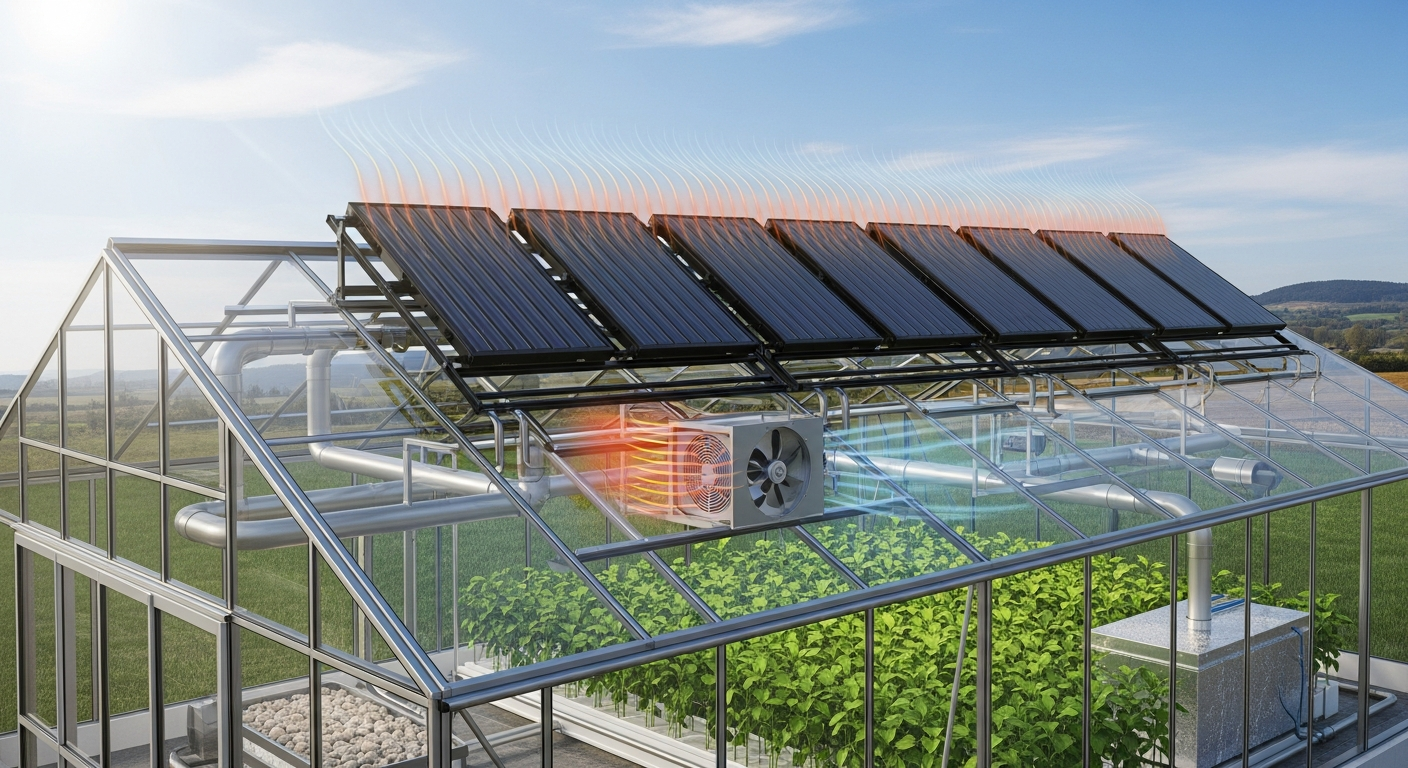
- Absorption: Solar radiation, primarily visible light and infrared, passes through a transparent cover (glazing) and strikes a dark-colored surface, known as the absorber plate. Dark surfaces are highly efficient at absorbing solar energy.
- Conversion: As the absorber plate absorbs sunlight, the solar energy is converted into thermal energy, causing the plate’s temperature to rise significantly.
- Heat Transfer: Air is then circulated over or through channels created by the heated absorber plate. As the cooler air comes into contact with the hot surface, heat is transferred from the plate to the air via convection and conduction. This warmed air is then directed into the greenhouse.
This simple yet effective method allows for the direct harvesting of direct sun energy for space heating, bypassing the need for electricity to generate heat, and significantly reducing reliance on fossil fuels.
Passive vs. Active Solar Air Heating
While the core principle remains the same, solar air heaters can be broadly categorized into passive and active systems:
- Passive Systems: These rely on natural convection (thermosiphon effect) to circulate air. As air heats up within the collector, it becomes less dense and rises into the greenhouse, while cooler, denser air from the greenhouse sinks and enters the bottom of the collector to be heated. This requires no fans or external power, making them incredibly simple and robust.
- Active Systems: These use fans or blowers to force air through the collector and into the greenhouse. Active systems offer more control over air circulation and can move larger volumes of air, making them suitable for larger greenhouses or when heat needs to be distributed more uniformly. They require a small amount of electricity to power the fan.
Key Components of a Solar Air Heater System
To effectively capture and transfer solar energy, a solar air heater is comprised of several essential components, each playing a crucial role in the process of solar heating principles:
- Collector Housing: This is the outer frame that encases all the internal components. It’s typically made from durable, weather-resistant materials and often insulated to minimize heat loss to the surroundings.
- Glazing (Transparent Cover): Usually made of glass or specialized polycarbonate, this cover allows solar radiation to pass through while trapping the heat inside (the greenhouse effect). It also protects the absorber plate from environmental elements. Low-iron glass or certain plastics are preferred for their high transmissivity.
- Absorber Plate: This is the heart of the collector. It’s a dark-colored (often black) metallic or composite plate designed to absorb maximum solar radiation. The surface material is critical for efficient energy conversion. Designs vary, including flat plates, corrugated sheets, or even multiple layers of mesh to maximize surface area for heat transfer.
- Air Channels: Pathways are designed within the collector to ensure that air flows efficiently over or through the heated absorber plate, maximizing contact time and heat exchange.
- Insulation: Placed behind the absorber plate and on the sides of the collector, insulation prevents heat from escaping back into the atmosphere, directing it instead into the air stream.
- Air Inlet/Outlet: Openings for cooler greenhouse air to enter the collector and for heated air to exit back into the greenhouse.
- Fan/Blower (for Active Systems): An electrically powered device that pushes or pulls air through the collector, ensuring consistent airflow and heat delivery.
Types of Solar Air Heaters for Greenhouse Applications
The versatility of solar air heaters means there are various designs suitable for different greenhouse needs and budgets. Understanding the distinctions helps in choosing or even building the right system for your specific “greenhouse heating” requirements:
- Glazed Flat-Plate Collectors: These are the most common type, featuring a transparent cover, an insulated box, and an absorber plate. Air flows beneath or through channels in the absorber plate, gets heated, and is then directed into the greenhouse. They are effective for both passive (thermosiphon) and active systems.
- Unglazed Transpired Collectors (UTCs): Often used for larger commercial applications, UTCs consist of a dark, perforated metal absorber plate mounted a short distance from the greenhouse wall. Air from the greenhouse is drawn through the perforations, heated by the sun-warmed plate, and then delivered to the greenhouse interior via a fan. They are very efficient at pre-heating ventilation air.
- Attached Sunspaces/Trombe Walls: While not strictly solar air heaters in the traditional sense, these architectural elements utilize similar principles. An attached sunspace (a lean-to greenhouse) can capture solar heat which then passively radiates or is fan-assisted into the main greenhouse. A Trombe wall is a thick, south-facing wall painted dark, with a glazed exterior. Air circulates between the glass and the wall, heating up and entering the greenhouse.
- DIY Solar Air Heaters: Many greenhouse enthusiasts opt to build their own systems using readily available materials like aluminum cans, corrugated metal, or even old window screens painted black, encased in a simple wooden frame with a polycarbonate cover. These can be remarkably effective for supplemental heating and demonstrate the core principles beautifully.
When considering any of these options, proper sizing and orientation (typically south-facing for maximum sun exposure) are critical for maximizing the capture of direct sun energy.
Benefits and Practical Considerations for Greenhouse Climates
Integrating solar air heaters into your greenhouse heating strategy offers a wealth of advantages, aligning perfectly with modern goals for sustainability and cost-effectiveness:
- Reduced Heating Costs: By leveraging free solar energy, you significantly cut down on electricity, natural gas, or propane bills, leading to substantial long-term savings.
- Environmental Sustainability: Decreased reliance on fossil fuels means a smaller carbon footprint and a more eco-friendly operation.
- Enhanced Plant Health: Consistent, gentle heating can contribute to better plant growth and higher yields, especially in shoulder seasons or during mild winter days.
- System Longevity and Low Maintenance: With no moving parts (in passive systems) or minimal components (in active systems), solar thermal collectors are generally very durable and require little maintenance.
- Independence from the Grid: In some cases, especially with passive systems, you gain a degree of energy independence, which can be crucial in remote locations or during power outages.
However, successful implementation also requires some practical considerations:
- Sizing and Placement: The collector area must be appropriately sized for your greenhouse volume and heating needs. Proper south-facing orientation and tilt angle are crucial for maximum solar gain throughout the day and year.
- Backup Heating: Solar air heaters are most effective during sunny daylight hours. You will still need a backup heating system for cloudy days, nighttime, and peak winter periods when solar gain is insufficient.
- Integration: Consider how the solar air heater will integrate with your existing ventilation and heating systems for seamless operation. Ducting and fan controls (for active systems) should be carefully planned.
- Local Climate: The effectiveness of a solar air heater is highly dependent on your local solar insolation levels and average winter temperatures.
Conclusion: Harnessing the Sun for a Sustainable Greenhouse Future
Solar air heaters represent an intelligent, sustainable, and increasingly vital solution for greenhouse heating. By understanding the straightforward principles of how they harvest direct sun energy for heat – absorption, conversion, and heat transfer – greenhouse operators can make informed decisions about integrating these systems. Whether you opt for a commercially available unit or embark on a rewarding DIY project, incorporating solar air heating can significantly reduce your operational costs, lessen your environmental impact, and contribute to the overall health and productivity of your greenhouse. Embrace the power of the sun and steer your greenhouse towards a more energy-efficient and sustainable future with these innovative thermal collectors.