
The quest for the perfect greenhouse climate is a delicate balance. While the sun is the lifeblood of plant growth, its relentless power can quickly transform your carefully cultivated environment into an oven, especially during warmer months. Managing excessive heat gain is a perennial challenge for growers, leading to stressed plants, wasted water, and exorbitant cooling costs. But what if there was a sophisticated yet elegant solution that could passively regulate your greenhouse temperature, significantly reducing the reliance on active cooling systems? Enter low-emissivity (low-E) coatings, a transformative technology that is revolutionizing greenhouse climate control and offering a sustainable path to cooler, more efficient growing spaces.
The Science Behind Cooler Greenhouses: How Low-E Coatings Work
At its core, a low-E coating is a microscopically thin, transparent metallic layer applied to the surface of greenhouse glazing (glass or polycarbonate). Its primary function is to manipulate the radiant energy spectrum, effectively acting as a selective filter for heat. While most people associate low-E with keeping heat in during winter, certain formulations are specifically engineered to keep heat out during warmer periods, making them invaluable for greenhouse cooling.
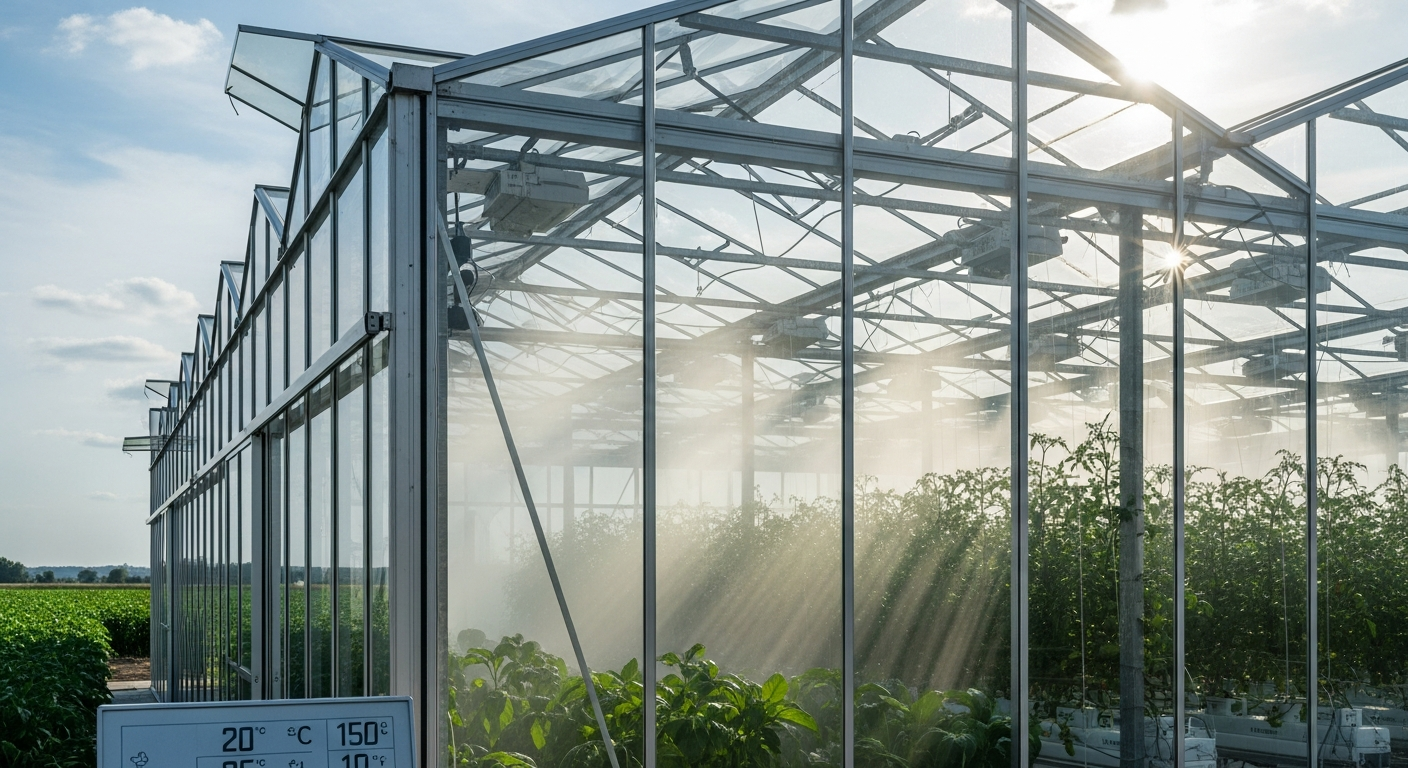
Here’s how they tackle heat gain:
- Reflecting Solar Infrared: A significant portion of the sun’s energy arrives as infrared (IR) radiation, which is what we feel as heat. Low-E coatings are designed to reflect a large percentage of this incoming IR radiation back into the atmosphere before it can penetrate the greenhouse structure. This dramatically reduces the amount of heat energy that enters your growing space.
- Minimizing Radiant Heat Transfer: Beyond direct solar radiation, heat can also radiate from warm surfaces within the greenhouse. Low-E coatings reduce the emissivity of the glazing surface, meaning it absorbs less heat and re-radiates less heat inwards. This helps maintain a cooler interior environment by preventing heat from being trapped and continually radiated by the greenhouse structure itself.
- Allowing Visible Light: Crucially, these coatings are spectrally selective, meaning they allow the vast majority of visible light (the spectrum essential for photosynthesis) to pass through unimpeded. This ensures your plants receive all the light they need to thrive, without the accompanying oppressive heat.
In essence, low-E coatings provide a passive barrier against unwanted heat, reducing the thermal load on your greenhouse before it even becomes an issue.
Significant Energy Savings and Reduced Operating Costs
One of the most compelling advantages of integrating low-E coatings into your greenhouse design is the substantial impact on your energy bills. Traditional cooling methods – such as exhaust fans, evaporative coolers, and misters – are energy-intensive and can represent a significant portion of a grower’s operating expenses. By proactively preventing heat from entering the greenhouse, low-E coatings directly reduce the demand for these active cooling systems.
- Lower Electricity Bills: With less heat to remove, your fans and cooling pads don’t have to work as hard or as often. This translates directly into lower electricity consumption and noticeable savings on your utility bills, particularly during peak summer months.
- Reduced Wear and Tear: Less strenuous operation of cooling equipment also means less wear and tear. This extends the lifespan of your fans, pumps, and motors, reducing maintenance costs and the frequency of costly replacements.
- Optimized Resource Allocation: The money saved on energy and maintenance can be reinvested into other areas of your operation, such as advanced nutrient delivery systems, pest management, or cultivar research, ultimately boosting your overall productivity and profitability.
- Long-Term Return on Investment: While there’s an initial investment in low-E glazing, the ongoing energy savings often provide a rapid return on investment, making it a financially smart choice for both commercial growers and hobbyists looking to cut long-term operating costs.
Cultivating Healthier Plants and a Superior Growing Environment
Beyond the financial benefits, low-E coatings create a significantly improved environment for your plants, fostering healthier growth and potentially higher yields.
- Stable Internal Temperatures: Extreme temperature fluctuations are detrimental to plant health, causing stress, wilting, and impaired physiological processes. Low-E coatings help maintain a more consistent and stable internal temperature, preventing sudden spikes that can shock plants.
- Reduced Thermal Stress: By mitigating excessive heat, plants experience less thermal stress. This means more energy can be directed towards growth, flowering, and fruit production, rather than heat dissipation. You’ll observe stronger plants with less incidence of sun scald or heat-related damage.
- Better Humidity Management: With more stable temperatures, it becomes easier to manage relative humidity levels within the greenhouse. This can help reduce the risk of humidity-related diseases like powdery mildew and botrytis, which thrive in inconsistent conditions.
- Improved Nutrient Uptake: When plants are not struggling against excessive heat, their root systems function more efficiently, leading to better nutrient and water uptake. This contributes to more vigorous growth and overall plant vitality.
- Uniform Growth Across the Greenhouse: Low-E coatings help create a more uniform temperature distribution throughout the greenhouse. This eliminates problematic hot spots and cold zones, ensuring that all plants, regardless of their position, experience optimal growing conditions.
Beyond Efficiency: Environmental Perks and Long-Term Value
Adopting low-E coatings for your greenhouse cooling strategy extends its benefits beyond immediate financial and horticultural gains, contributing to a more sustainable and resilient operation.
- Reduced Carbon Footprint: By significantly decreasing energy consumption from active cooling systems, low-E coatings directly lower your greenhouse’s carbon footprint. This aligns with modern sustainability goals and demonstrates a commitment to environmentally responsible growing practices.
- Less Water Usage: For greenhouses relying on evaporative cooling systems, reducing the overall heat load means less water is needed to achieve desired temperatures. This is a crucial advantage in regions facing water scarcity and contributes to more sustainable water management.
- Enhanced Comfort for Workers: A cooler, more stable greenhouse environment isn’t just better for plants; it also creates a more comfortable and productive working space for your staff. Reduced heat stress for employees can lead to increased efficiency and job satisfaction.
- Protection of Greenhouse Infrastructure: Extreme temperature swings can put stress on greenhouse materials, potentially leading to premature degradation. By moderating internal temperatures, low-E coatings can contribute to the longevity of your greenhouse structure and its various components.
- Versatility and Future-Proofing: Many low-E coatings are designed to offer year-round benefits, keeping heat out in summer and reflecting radiant heat back in during winter, thus optimizing energy efficiency across all seasons. Investing in this technology future-proofs your greenhouse against fluctuating energy costs and increasingly extreme weather patterns. When selecting low-E glazing, consider its Solar Heat Gain Coefficient (SHGC) and U-factor, as these metrics indicate its performance in rejecting heat and retaining heat, respectively. For cooling, a low SHGC is paramount.
Embrace Smart Cooling for a Thriving Greenhouse
The challenges of greenhouse cooling are undeniable, but the advent of low-emissivity coatings offers a powerful and elegant solution. By harnessing the principles of passive heat rejection, low-E coatings deliver a multitude of benefits: from substantial energy savings and reduced operating costs to the creation of a consistently optimal environment for plant health and growth. Furthermore, they contribute to a greener footprint, embodying a sustainable approach to modern horticulture.
For any grower looking to enhance efficiency, reduce costs, and cultivate stronger, more productive plants, investigating low-E coatings is a strategic investment. Embrace this smart cooling technology and transform your greenhouse into a sanctuary of optimal climate control, where plants can truly flourish, season after season.