
The gentle hum of a well-regulated greenhouse is music to any grower’s ears. Achieving that perfect harmony of light, temperature, and humidity, however, often requires a nuanced approach to climate control. Among the most crucial tools in a grower’s arsenal is shade netting, a deceptively simple material that can make all the difference between thriving plants and stressed crops. But not all shade nettings are created equal. As you navigate the options for your greenhouse climates, you’ll inevitably encounter two primary contenders: polyethylene (PE) and polyester (PET). Understanding the distinct properties, advantages, and limitations of each is key to making an informed decision that will benefit your plants and your bottom line. Let’s delve into a comprehensive comparison to help you choose the ideal shade solution for your green haven.
Understanding Greenhouse Shade Netting: More Than Just Shade
Before we dissect the materials, it’s essential to grasp the fundamental role of greenhouse shade netting. Its primary function is, of course, to reduce the intensity of sunlight reaching your plants. Excessive sun can lead to scorching, wilting, and inhibited growth, especially for shade-loving species or young seedlings. Beyond simple shade, netting also plays a vital role in:
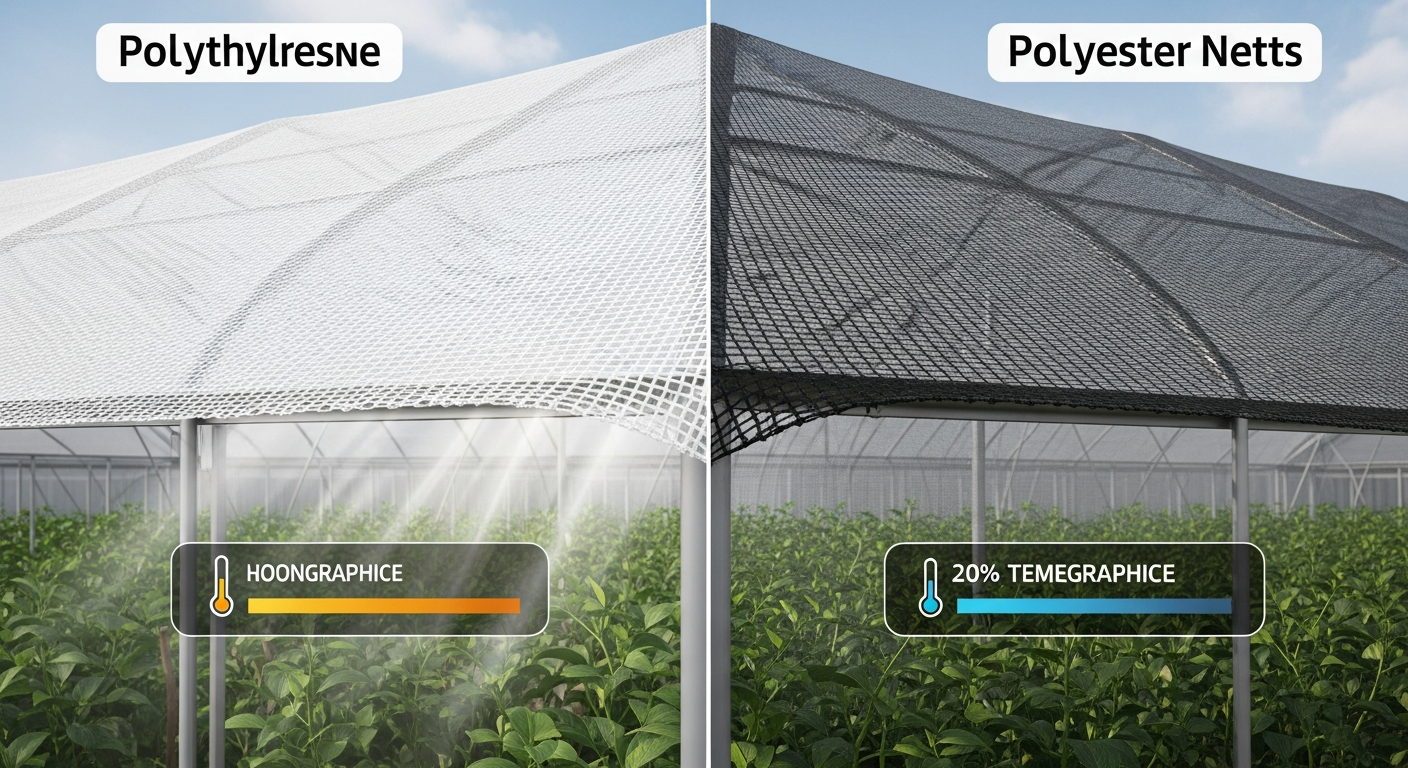
- Temperature Regulation: By blocking direct solar radiation, shade nets can significantly lower the ambient temperature inside your greenhouse, reducing the stress on plants and minimizing the need for active cooling systems.
- Light Diffusion: Some nets are designed not just to block light, but to scatter and diffuse it more evenly across the plant canopy. This prevents hot spots and ensures that lower leaves also receive adequate, usable light.
- Pest Protection: While not their primary purpose, tightly woven shade nets can offer a degree of physical barrier against larger pests and birds.
- Hail and Wind Protection: A robust shade net can also provide a buffer against harsh weather elements like hail, strong winds, and heavy rain, protecting your valuable crops and greenhouse structure.
The effectiveness of shade netting is typically measured by its “shade factor” or “shade percentage,” indicating how much solar radiation it blocks. This percentage needs to be carefully matched to your specific crops and local light conditions to ensure optimal growth without hindering essential photosynthesis.
Polyethylene (PE) Shade Netting: The Versatile Workhorse
Polyethylene shade netting, primarily made from high-density polyethylene (HDPE), is by far the most common and widely used type in greenhouses worldwide. Its prevalence stems from a combination of cost-effectiveness, versatility, and ease of use, making it an excellent choice for a broad spectrum of growers, from hobbyists to large commercial operations.
Characteristics of PE Shade Netting:
- Material: Typically woven or knitted from HDPE monofilament or tape yarn. Knitted versions tend to be more durable and resist unraveling if cut.
- Appearance: Often available in green, black, or white. Green and black absorb more light, while white reflects it, potentially leading to cooler internal temperatures but less direct light reduction.
- Weight: Generally lightweight, making it easy to handle, install, and store.
- UV Stability: Modern PE nettings are treated with UV stabilizers during manufacturing to extend their lifespan, protecting them from degradation caused by prolonged sun exposure.
Advantages of PE Shade Netting:
- Cost-Effective: This is arguably PE’s biggest draw. Its lower initial purchase price makes it accessible for growers on a budget or those needing temporary solutions.
- Easy to Install: Being lightweight and flexible, PE netting is relatively simple to cut, shape, and secure to most greenhouse structures, requiring minimal specialized tools or labor.
- Wide Availability: You’ll find PE shade netting in almost any shade factor imaginable, from 30% to 90%, and in various widths and lengths.
- Good Performance: When properly selected and installed, treated PE netting provides reliable light reduction and temperature moderation for several growing seasons.
Disadvantages of PE Shade Netting:
- Durability: While UV-treated, PE netting will degrade over time due to continuous exposure to sun, wind, and temperature fluctuations. It typically has a shorter lifespan than polyester, usually 3-7 years depending on quality and climate.
- Tear Resistance: PE is more prone to tearing or snagging compared to PET, especially if subjected to strong winds or abrasive contact with the greenhouse frame.
- Dimensional Stability: Over long spans or under tension, PE can exhibit some stretching or sagging, potentially affecting its uniformity.
Polyester (PET) Shade Netting: The Premium & Robust Option
Polyester shade netting, made from polyethylene terephthalate (PET), represents a more premium and robust alternative to its polyethylene counterpart. While less common than PE, PET netting is gaining traction among growers seeking superior durability, performance, and a longer-term investment for their greenhouse climates.
Characteristics of PET Shade Netting:
- Material: Woven or knitted from strong PET fibers. PET is the same polymer used for plastic bottles and synthetic fabrics, known for its inherent strength and stability.
- Appearance: Often has a smoother, more textile-like feel than PE. Available in various colors and shade factors.
- Weight: Generally heavier and denser than PE netting, reflecting its superior material properties.
- Inherent UV Resistance: PET inherently possesses excellent UV resistance, requiring fewer additives to maintain its integrity under prolonged sun exposure.
Advantages of PET Shade Netting:
- Superior Durability and Lifespan: This is PET’s strongest selling point. It is significantly more resistant to UV degradation, tears, and abrasion than PE, leading to a much longer operational life, often 7-10+ years.
- Excellent Dimensional Stability: PET netting resists stretching, sagging, and shrinking, maintaining its original shape and tension over time. This ensures consistent shade coverage.
- High Tear and Puncture Resistance: Its robust fiber structure makes it highly resilient against physical damage, wind stress, and accidental snags.
- Chemical Resistance: PET exhibits better resistance to many common greenhouse chemicals, which can be an advantage for longevity.
- Potential for Better Light Diffusion: Depending on the weave, some PET nets can offer superior light diffusion, providing a more uniform light environment for plants.
Disadvantages of PET Shade Netting:
- Higher Initial Cost: The primary deterrent for many growers is the higher upfront investment compared to PE netting.
- Heavier: Its increased weight means PET netting can be slightly more challenging to handle during installation and may require more robust support structures for very large applications.
- Less Common: While availability is increasing, you might find fewer immediate options or specialized designs for PET compared to the ubiquitous PE.
Head-to-Head Comparison: PE vs. PET for Your Greenhouse Climates
To summarize and help you make a practical decision, let’s compare polyethylene and polyester shade netting on key metrics:
| Feature | Polyethylene (PE) Shade Netting | Polyester (PET) Shade Netting |
|---|---|---|
| Initial Cost | Lower, more budget-friendly | Higher, premium investment |
| Lifespan | 3-7 years (with UV treatment) | 7-10+ years (inherent UV resistance) |
| Durability/Strength | Good, but prone to tearing/snagging over time | Excellent, highly tear and abrasion resistant |
| UV Resistance | Requires added UV stabilizers | Inherently excellent UV resistance |
| Weight | Lightweight, easy to handle | Heavier, requires more robust support |
| Dimensional Stability | Can stretch/sag over long spans | Excellent, maintains shape and tension |
| Installation Ease | Easier due to lighter weight and flexibility | May require more effort due to weight/rigidity |
| Maintenance | Relatively low, but may need earlier replacement | Very low, less frequent replacement needed |
Making the Right Choice: Factors to Consider
The decision between PE and PET shade netting isn’t about one being universally “better,” but rather which material is better suited for your specific greenhouse and growing objectives. Consider these factors:
- Your Budget: If initial cost is a major constraint, PE offers an effective solution. If you view your shade netting as a long-term investment and can absorb a higher upfront cost, PET will likely save you money and hassle in the long run due to its extended lifespan.
- Crop Type and Light Requirements: Delicate crops requiring consistent, diffused light might benefit from PET’s superior dimensional stability and potential for specialized weaves. For general sun reduction for robust plants, PE is often perfectly adequate.
- Local Climate Conditions: In regions with extreme UV radiation, strong winds, or frequent hail, PET’s enhanced durability offers significant advantages. For milder climates, PE might suffice.
- Greenhouse Structure: Ensure your greenhouse frame can adequately support the weight and tension of the chosen netting. While PE is lighter, PET’s superior strength means it can handle greater tension without tearing, but its weight still needs consideration.
- Desired Lifespan: Are you looking for a temporary seasonal solution, or a durable fixture that will last for a decade? PE is great for short-term; PET for long-term.
- Installation and Maintenance Commitment: While both are relatively low-maintenance, PET will require less frequent replacement and re-tensioning, offering peace of mind over many years.
For large-scale commercial operations where consistent performance, minimal downtime for replacement, and long-term cost-effectiveness are paramount, the higher initial investment in PET shade netting often proves to be a wise decision. For hobbyists or growers with smaller greenhouses or seasonal needs, polyethylene remains an excellent, budget-friendly option.
Conclusion: Tailoring Shade to Your Greenhouse Climates
Both polyethylene and polyester shade nettings are effective tools for managing light and temperature within your greenhouse, crucial for maintaining optimal greenhouse climates. Polyethylene offers a highly accessible, cost-effective solution with good performance for a respectable lifespan. Polyester, while a greater initial investment, provides unmatched durability, dimensional stability, and a significantly longer lifespan, making it a superior choice for those seeking a premium, long-term solution.
Ultimately, the best choice for you will hinge on a careful evaluation of your specific needs, budget, environmental conditions, and the unique demands of your crops. By understanding the distinct characteristics of each material, you can make an informed decision that ensures your plants thrive under perfectly managed conditions, year after year.