
Greenhouse growers constantly seek innovative ways to optimize their growing environment, balancing the delicate interplay of light, temperature, humidity, and ventilation. Among the most common tools for environmental control is shade cloth, primarily recognized for its ability to mitigate excessive heat and intense sunlight, preventing plant stress and sunburn. However, the influence of shade cloth extends far beyond mere temperature regulation; it subtly, yet significantly, impacts the complex ecosystem within a greenhouse, particularly the population dynamics of both harmful insect pests and beneficial organisms. Understanding these nuanced effects is crucial for developing robust integrated pest management (IPM) strategies and maintaining a thriving, healthy crop.
The Greenhouse Microclimate: A Stage for Insect Drama
A greenhouse, by its very nature, creates a unique microclimate – a contained environment with distinct conditions compared to the outdoors. This controlled setting is what makes greenhouse cultivation so effective for many crops, but it also presents specific challenges, especially concerning pests. Insects thrive or struggle based on a range of environmental factors, including temperature, relative humidity, light intensity, and air circulation. Any modification to these parameters can, in turn, alter the attractiveness of the greenhouse to certain pests, their reproductive rates, their dispersal patterns, and even the efficacy of their natural enemies.
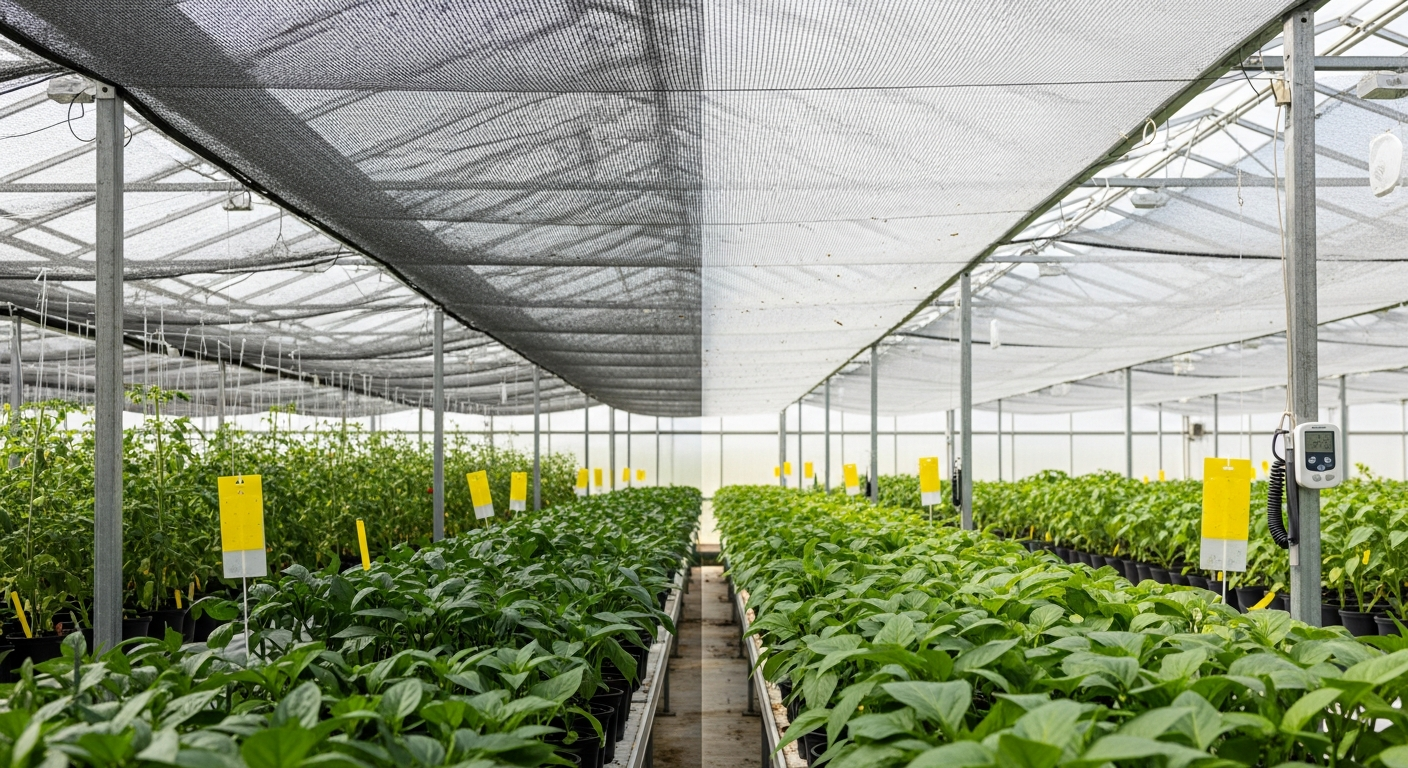
Shade cloth fundamentally alters this microclimate. By blocking a percentage of incoming solar radiation, it directly reduces ambient air temperature, cools plant surfaces, and decreases the intensity of light reaching the canopy. These primary changes trigger a cascade of secondary effects, impacting everything from plant physiology to the behavior and survival rates of the tiny creatures that call the greenhouse home. For growers, recognizing these connections is the first step toward leveraging shade cloth not just for plant comfort, but as a strategic tool in their pest control arsenal.
Direct Impacts of Shade Cloth on Common Greenhouse Pests
The altered microclimate beneath shade cloth can directly influence pest populations in several ways, making the greenhouse less hospitable for some, while potentially having little effect or even inadvertently favoring others.
- Reduced Temperature and Slower Life Cycles: Many greenhouse pests, such as aphids, whiteflies, and spider mites, are poikilothermic, meaning their body temperature and metabolic rates are directly influenced by the ambient temperature. Cooler temperatures beneath shade cloth can significantly slow down their development and reproductive cycles. For instance, a reduction of a few degrees can add days or even weeks to a pest’s lifecycle, meaning fewer generations per season and thus, slower population growth. This subtle deceleration can buy growers valuable time for intervention.
- Lower Light Intensity and Pest Behavior: Some pests exhibit phototactic behaviors, meaning they are attracted to or repelled by light. Thrips, for example, are known to prefer higher light conditions. Reduced light intensity from shade cloth might make the greenhouse less appealing for their initial entry and subsequent colonization. Whiteflies also tend to be more active and dispersive in brighter conditions. Conversely, pests like fungus gnats thrive in damp, shadier conditions, though humidity is often a greater driver for them than light intensity.
- Increased Relative Humidity: While shade cloth doesn’t directly add moisture, cooler air temperatures often lead to higher relative humidity, assuming ventilation rates remain constant. For pests like spider mites, which thrive in hot, dry conditions, increased humidity can be a significant deterrent, impairing their reproduction and survival. However, higher humidity levels could inadvertently favor other issues, such as certain fungal diseases or pests like fungus gnats, which prefer moist growing media.
- Physical Barrier (Indirectly): While not its primary function, a finely woven shade cloth can also act as a partial physical barrier, deterring larger flying insects from entering, especially when used on vents or sidewalls. However, this is usually a secondary benefit compared to its environmental modification properties and less about “dynamics” once pests are already inside.
Specific Pest Responses to Shaded Environments:
- Aphids: Slower reproduction due to cooler temperatures; reduced dispersal flights.
- Whiteflies: Reduced activity and dispersal in lower light; slower development.
- Thrips: Less attractive environment due to lower light, potentially slower reproduction.
- Spider Mites: Significantly hampered by cooler temperatures and increased humidity, leading to reduced egg laying and mortality.
- Leafminers: May also experience slower development rates.
Indirect Effects on Beneficial Insects and Predators
The impact of shade cloth isn’t limited to pests; it also influences the beneficial insects growers deploy or encourage for biological pest control. This aspect is critical for integrated pest management (IPM) strategies.
- Enhanced Survival and Efficacy of Beneficials: Many beneficial insects, such as predatory mites (e.g., Phytoseiulus persimilis), predatory bugs (e.g., Orius insidiousus), and parasitic wasps (e.g., Encarsia formosa), are sensitive to extreme heat and direct sunlight. Shade cloth creates a more moderate environment, which can improve their survival rates, extend their foraging activity periods, and enhance their overall effectiveness. By reducing heat stress, beneficials can spend more time actively searching for and preying on pests.
- Impact on Foraging Behavior: While some beneficials might forage more effectively in cooler conditions, others, particularly those that rely on visual cues, might find their efficiency slightly reduced in lower light levels. However, the overall benefit of reduced thermal stress often outweighs this potential minor drawback.
- Plant Health and Resilience: Shaded plants are typically under less heat and light stress. Less stressed plants are generally more vigorous and better equipped to withstand pest feeding. Furthermore, healthier plants can better support beneficial insects by providing a more stable and less desiccating microhabitat within the plant canopy. This indirect effect on plant health contributes significantly to a balanced greenhouse ecosystem.
In essence, shade cloth can help create a greenhouse environment where the scales are tipped slightly in favor of the beneficials, making it harder for pests to proliferate unchecked.
Strategic Use of Shade Cloth for Integrated Pest Management (IPM)
Incorporating shade cloth effectively into your pest management strategy requires thoughtful consideration of several factors:
1. Choosing the Right Shade Percentage:
- Light Requirements of Crops: The primary consideration must always be the light needs of your specific crops. Too much shade can hinder photosynthesis and reduce yields.
- Pest Pressure: If you consistently face high pressure from heat-loving pests like spider mites, a slightly higher shade percentage (e.g., 30-50%) might be beneficial. For pests that prefer bright light, even moderate shading can help.
- Climate Zone: Growers in hotter, sunnier climates will naturally use higher shade percentages than those in cooler, cloudier regions.
2. Timing and Deployment:
- Seasonal Application: Shade cloth is most commonly used during the hottest months of the year when pest pressure is often highest and beneficials are most vulnerable to heat stress.
- Early Intervention: Deploying shade cloth early in the season, before pest populations explode, can help maintain lower initial numbers.
3. Combining with Other IPM Strategies:
- Scouting: Regular and thorough scouting remains paramount. Shade cloth is a modifier, not a cure-all. You still need to monitor pest and beneficial populations to assess its effectiveness and decide on further interventions.
- Biological Controls: Shade cloth significantly complements biological control programs by creating a more hospitable environment for predatory insects and mites.
- Cultural Practices: Maintain good sanitation, ensure proper ventilation (even with shade cloth), and manage irrigation to avoid excessive humidity that could favor other problems.
- Physical Barriers: Consider combining shade cloth with insect netting over vents for comprehensive pest exclusion, especially if your shade cloth has a coarser weave.
Practical Tip: Observe your specific greenhouse environment. How do your target pests respond to varying light and temperature? How do your beneficials perform? Keep detailed records to fine-tune your shade cloth strategy year after year. Experiment with different shade levels on small sections if possible.
Conclusion
Shade cloth is an indispensable tool in greenhouse cultivation, offering far more than just protection from harsh sunlight. By strategically altering the greenhouse microclimate, it plays a vital, often understated, role in managing insect pest populations and enhancing the efficacy of beneficial organisms. Reduced temperatures slow pest development, while increased humidity can deter specific pests like spider mites. Simultaneously, the moderated environment supports the survival and activity of predatory insects and mites, making biological control agents more effective. For greenhouse growers committed to sustainable and effective pest management, understanding these intricate dynamics is key to harnessing the full potential of shade cloth – transforming it from a simple environmental control measure into an integral component of a robust integrated pest management program. Thoughtful deployment, combined with continuous monitoring and other IPM tactics, ensures a healthier greenhouse and thriving crops.