
The scorching summer sun can be a greenhouse operator’s toughest adversary. As temperatures soar during peak daylight hours, your carefully cultivated plants risk succumbing to heat stress, slowed growth, and even permanent damage. While internal ventilation and shade cloths are essential tools, they sometimes aren’t enough to combat extreme conditions. What if there was an effective, energy-efficient way to tackle the heat load before it even enters your growing space? Enter external water sprays – a powerful, often underestimated, strategy for robust peak-hour greenhouse cooling that leverages the simple, yet profound, power of evaporative cooling directly on your greenhouse’s exterior. Let’s delve into how this technique can transform your climate control strategy.
Understanding the Science Behind External Spray Cooling
External water sprays work on a fundamental principle of physics: evaporative cooling. This isn’t just about wetting the roof; it’s about a controlled process that dramatically reduces the heat entering your greenhouse structure.
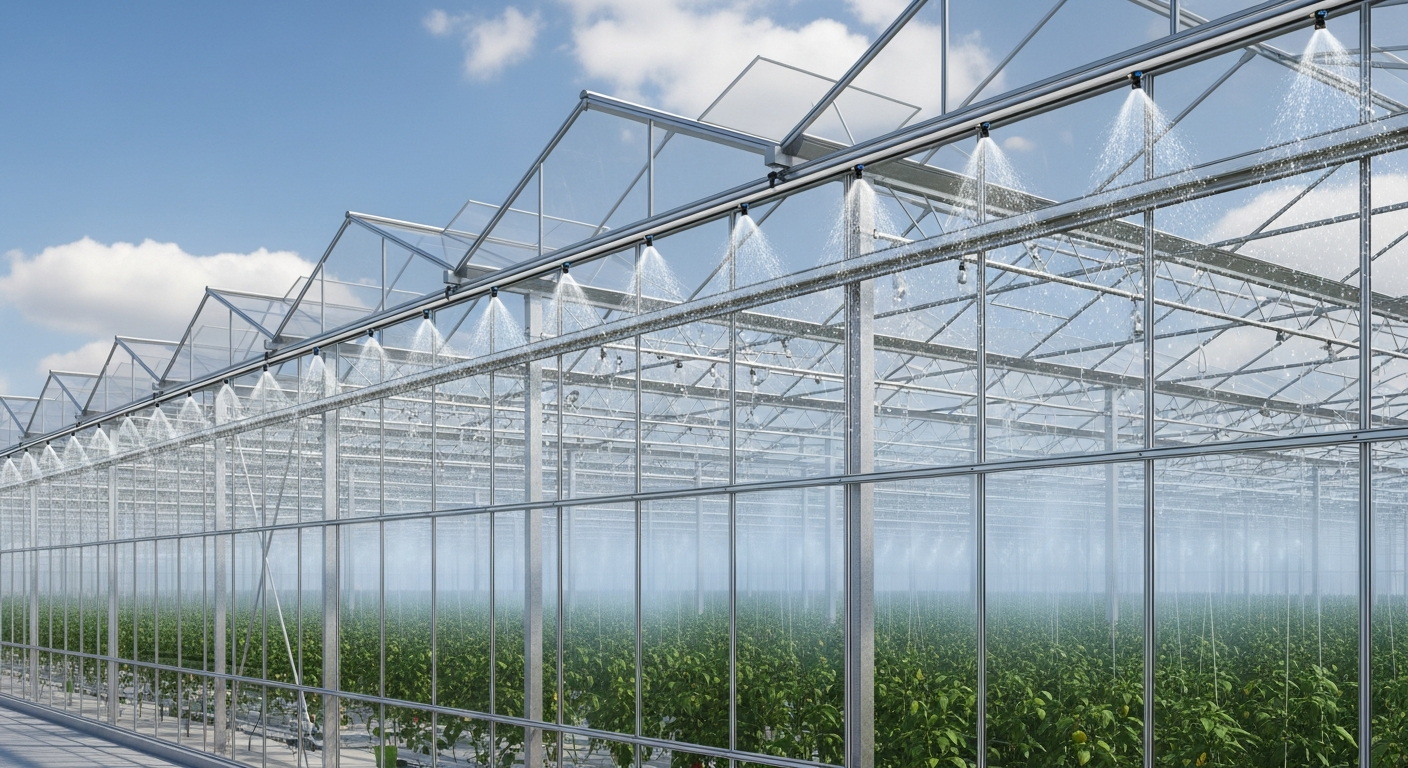
The Evaporative Cooling Principle
When water turns from a liquid into a gas (evaporates), it absorbs a significant amount of latent heat from its surroundings. Think of how your body sweats to cool down – the evaporation of sweat from your skin removes heat. The same concept applies to your greenhouse roof. As fine droplets of water are sprayed onto the exterior surface of the glazing and evaporate, they pull heat directly from the greenhouse surface itself, preventing that heat from radiating inwards. This process can significantly lower the temperature of the glazing, reducing the overall heat load on your plants.
Radiant Heat Reduction
The primary source of heat in a greenhouse during sunny periods is solar radiation. Sunlight passes through the glazing, heats internal surfaces (plants, soil, benches), and those surfaces then radiate heat. External water sprays tackle this problem head-on. A thin film of water on the roof not only promotes evaporative cooling but also reflects a small percentage of incoming solar radiation, further reducing the amount of heat that penetrates the structure. By lowering the roof’s surface temperature, you effectively create a cooler barrier, diminishing the transfer of radiant heat to the interior and making it easier for your internal cooling systems to maintain optimal conditions.
Benefits Beyond Temperature Reduction
- Reduced Internal Cooling Load: By preventing heat from entering, external sprays lessen the burden on internal fans, vents, and pad systems, often leading to lower energy consumption.
- Improved Plant Health: Mitigating extreme peak temperatures directly reduces plant heat stress, leading to healthier growth, better yields, and improved crop quality.
- Extended Equipment Lifespan: Less strain on internal cooling equipment can extend its operational life and reduce maintenance costs.
- Better Humidity Control: While internal misting raises humidity, external cooling reduces the *need* for excessive internal cooling, potentially helping to manage internal humidity more effectively.
Designing Your External Water Spray System
A well-designed external water spray system is critical for efficient and effective greenhouse climate control. It requires careful consideration of components and layout.
Component Selection
- Nozzles: This is where precise application happens.
- Types: Foggers, misters, or fine spray jets are ideal, producing small droplets that evaporate quickly. Avoid large sprinkler heads designed for irrigation, as they waste water and provide less efficient cooling.
- Spray Pattern & Droplet Size: Look for nozzles that produce a fine mist with a wide, even coverage. Smaller droplets evaporate faster but are also more susceptible to wind drift.
- Material: UV-resistant and corrosion-resistant materials (e.g., brass, stainless steel, high-quality plastics) are crucial for longevity.
- Pumps: Select a pump capable of delivering the required pressure and flow rate to all your nozzles simultaneously. Consult nozzle specifications for optimal operating pressure.
- Piping: Use UV-stabilized PVC or polyethylene tubing. Size the pipes appropriately to ensure even pressure distribution across the entire system.
- Filtration: Absolutely critical! Fine nozzles clog easily. Install a robust filtration system (e.g., screen filters, disc filters) to remove sediment and particulate matter from your water source.
- Automation: For optimal efficiency, automate your system.
- Timers: Essential for scheduling on/off cycles.
- Temperature Sensors: Integrated sensors can activate the system automatically when the external temperature reaches a predefined threshold.
- Humidity Sensors: While less direct for external sprays, they can help fine-tune operation by indicating when conditions are less favorable for evaporative cooling (e.g., very high ambient humidity).
- Wind Sensors: Can temporarily suspend operation during strong winds to prevent excessive water drift.
Placement and Coverage
Strategically place nozzles to ensure uniform coverage over the entire greenhouse roof. Pay particular attention to south and west-facing slopes, which typically receive the most intense solar radiation during peak hours. Overlapping spray patterns prevent dry spots and ensure consistent temperature management. Consider prevailing wind directions and adjust nozzle angles or spacing to minimize drift and maximize coverage.
Water Source and Quality
A reliable and clean water source is paramount. Hard water can lead to mineral buildup (lime scale) on your glazing, reducing light transmission and requiring frequent cleaning. If your water is hard, consider water softening or reverse osmosis systems, or select nozzles less prone to mineral deposits. Regular cleaning of nozzles is a good practice regardless of water quality.
Operational Strategies for Peak-Hour Cooling Efficiency
Implementing an external water spray system effectively goes beyond just turning it on. Smart operational strategies maximize cooling benefits while conserving water and energy.
Timing is Everything: Proactive Cooling
The most effective use of external sprays is *proactive* cooling. Don’t wait until the greenhouse is already sweltering. Begin spraying before the peak heat hits, typically in the late morning (e.g., 10-11 AM) and continue through the hottest part of the afternoon (e.g., until 3-4 PM). This prevents the heat from building up in the first place, making it much easier to maintain stable temperatures.
Intermittent vs. Continuous Spraying
Continuous spraying is rarely the most efficient approach. A “pulse” method, where the system sprays for a short duration and then pauses, is often more effective. This allows the water to evaporate completely from the surface, maximizing the evaporative cooling effect during the “on” cycle, and preventing excessive runoff during the “off” cycle. A common cycle might be 5-10 minutes on, followed by 10-20 minutes off, but this should be adjusted based on your specific climate, greenhouse structure, and sensors.
Monitoring and Adjustment
Regularly monitor both external and internal temperatures. Your automation system should ideally adjust spray frequency and duration based on real-time data. On very hot, dry, and sunny days, you might need more frequent or longer spray cycles. On cloudy or humid days, you can reduce operation to conserve water and prevent overcooling or excess moisture. Wind speed is also a factor – higher winds can increase evaporation rates but also lead to more water drift. Fine-tune your system as you observe its performance.
Water Management and Conservation
Efficient water usage is critical for sustainable greenhouse operations.
- Optimize Cycles: As mentioned, use intermittent cycles to maximize evaporative cooling per unit of water.
- Leak Checks: Periodically inspect your entire system for leaks, which can waste significant amounts of water over time.
- Rainwater Harvesting: For larger operations, consider collecting rainwater to supplement your water supply for external sprays, reducing reliance on municipal or well water.
Winter Considerations
Before the first freeze, completely drain your external spray system to prevent pipes, pumps, and nozzles from freezing and bursting. Clean the nozzles thoroughly to remove any mineral deposits or algae that may have accumulated, ensuring they are ready for the next cooling season.
Integrating External Sprays with Other Cooling Methods
External water sprays are most powerful when used as part of a holistic climate control strategy, complementing other cooling technologies.
Synergy with Shade Cloths
While external sprays reduce direct solar heat, shade cloths physically block a percentage of sunlight. Used together, they create a powerful defense against peak heat. External sprays can cool the air around and above a shade cloth, or even cool the shade cloth itself if designed appropriately, enhancing its effectiveness. This combination significantly reduces the overall heat load, allowing for greater control over internal temperatures.
Ventilation and Fan & Pad Systems
External sprays directly reduce the amount of sensible heat that needs to be removed by your internal ventilation and fan & pad evaporative cooling systems. By preventing heat from entering the greenhouse, external sprays make your internal systems work less hard, often enabling them to maintain target temperatures with lower fan speeds or less frequent operation, saving energy and reducing wear and tear.
Internal Misting/Fogging
Internal misting or fogging systems are excellent for direct air cooling and humidity augmentation. However, relying solely on them in extremely hot conditions can lead to excessive internal humidity, potentially fostering fungal diseases. By using external sprays to handle a significant portion of the heat load from the outside, you can reduce the demand on internal misting systems, maintaining a better balance of temperature and humidity within the growing environment.
Conclusion
External water sprays offer a highly effective, energy-efficient, and sustainable solution for combating peak-hour heat in your greenhouse. By harnessing the power of evaporative cooling directly on your greenhouse’s exterior, you can significantly reduce the radiant heat load, protect your plants from stress, and optimize your overall climate control strategy. With thoughtful design, smart component selection, and proactive operational management, an external water spray system can be an invaluable addition to your arsenal, ensuring your plants thrive even when the summer sun is at its most intense. Take control of your greenhouse climate and unlock new levels of plant health and productivity.