
Shade cloth is an invaluable tool for many greenhouse growers, primarily known for its ability to mitigate excessive heat and reduce intense light, protecting plants from scorching and stress. While its benefits for temperature and light management are widely understood, its influence on a crucial atmospheric component—carbon dioxide (CO2) concentration—is often overlooked or misunderstood. The relationship between shade cloth and greenhouse CO2 levels is complex, involving a delicate interplay of photosynthesis, plant respiration, and ventilation strategies. Understanding this dynamic is key to optimizing your greenhouse environment for maximum plant health and productivity.
The Dual Role of Shade Cloth: More Than Just Cooling
Most growers deploy shade cloth when temperatures soar or light intensity becomes too strong, especially during peak summer months or in regions with high solar radiation. By scattering and blocking a percentage of incoming sunlight, shade cloth:
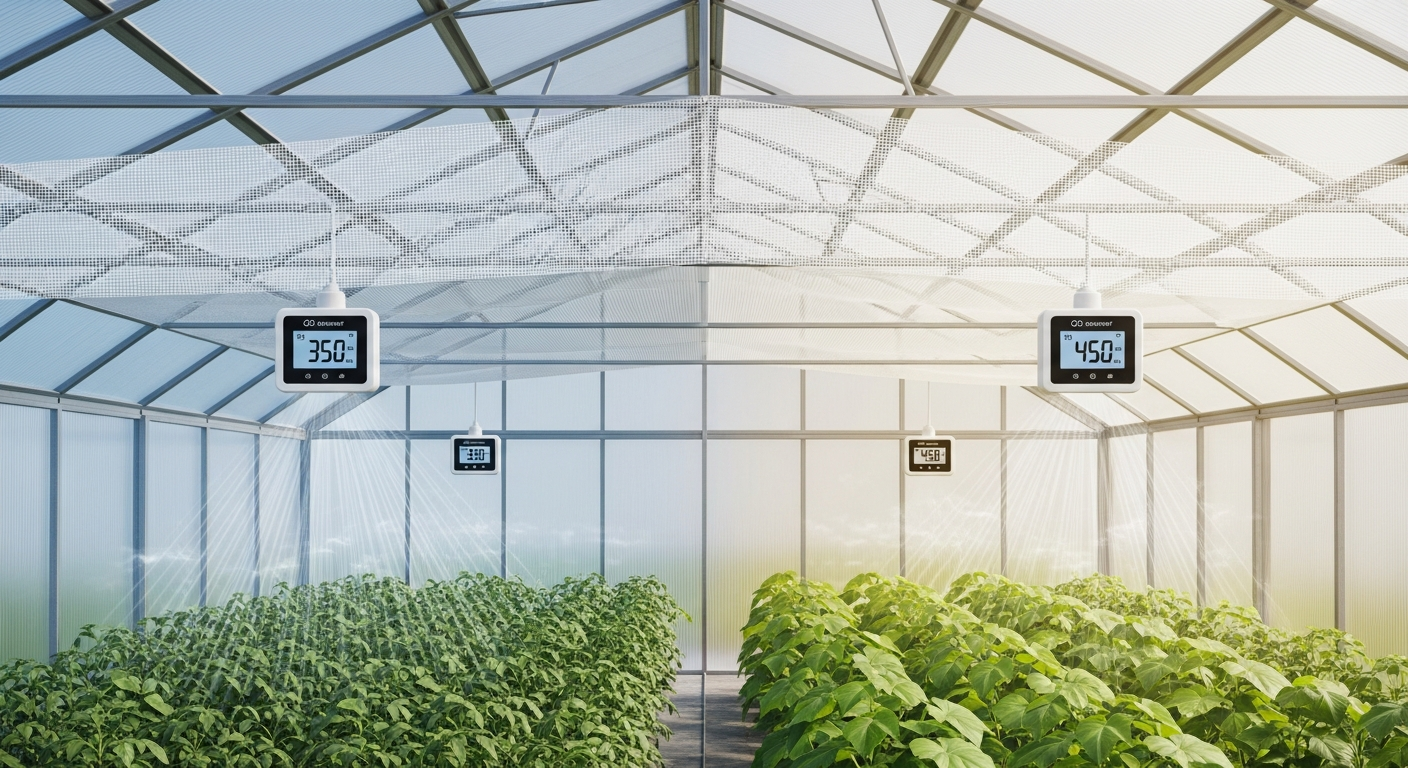
- Reduces Greenhouse Air Temperature: Less direct solar radiation means less heat buildup inside the greenhouse, lowering both air and leaf temperatures.
- Moderates Light Intensity: It protects sensitive plants from sunburn, reduces water stress, and can extend the growing season for certain crops by creating a more favorable light environment.
- Impacts Evapotranspiration: By lowering temperature and light, shade cloth can also reduce the rate at which plants transpire and water evaporates from the soil, thus conserving moisture.
However, these direct effects cascade into indirect impacts on your greenhouse’s CO2 dynamics. Lower light and temperature conditions fundamentally alter plant metabolic processes and your greenhouse’s ventilation requirements, both of which are central to CO2 management.
How Shade Cloth Influences Greenhouse CO2 Dynamics
The concentration of CO2 inside your greenhouse is a result of a continuous push and pull: plants consume it during photosynthesis, while they, along with soil microbes, release it during respiration. Ventilation, whether active or passive, constantly exchanges inside air with outside air, affecting CO2 levels. Shade cloth can significantly alter each of these factors.
1. Impact on Photosynthesis (CO2 Consumption)
Photosynthesis, the process by which plants convert light energy into chemical energy, requires CO2. Light intensity is a primary driver of photosynthetic rates. When shade cloth reduces the Photosynthetically Active Radiation (PAR) reaching your plants, it can:
- Decrease CO2 Uptake: With less light, plants photosynthesize at a slower rate, even if CO2 levels are abundant. This means they will consume less CO2 from the greenhouse atmosphere.
- Shift Light Saturation Point: Plants grown under lower light conditions (due to shade) may have a lower light saturation point, meaning they won’t be able to effectively utilize very high CO2 concentrations, as light becomes the limiting factor.
In a non-CO2 enriched greenhouse, reduced photosynthesis means CO2 levels might not drop as rapidly as they would under full sun. However, in an enriched environment, it means plants may not be able to fully capitalize on elevated CO2 if light is significantly limiting, potentially making enrichment less efficient.
2. Impact on Respiration (CO2 Production)
Both plants and soil microbes release CO2 through respiration. Respiration rates are temperature-dependent. When shade cloth lowers greenhouse temperatures:
- Reduced Plant Respiration: Cooler air and leaf temperatures slow down plant metabolic processes, including respiration. This means plants release less CO2 into the atmosphere.
- Reduced Soil Respiration: Soil temperature also influences the activity of beneficial microbes that decompose organic matter, releasing CO2. Lower soil temperatures under shade can decrease this microbial activity, resulting in less CO2 production from the soil.
A reduction in overall respiration (from both plants and soil) means less CO2 is being *added* to the greenhouse atmosphere naturally. This can be significant in greenhouses that do not implement CO2 enrichment, potentially leading to lower overall ambient CO2 levels if not properly managed.
3. Impact on Ventilation (CO2 Exchange)
This is arguably the most critical aspect of shade cloth’s influence on CO2. A primary reason to use shade cloth is to prevent overheating, which in turn reduces the need for aggressive ventilation. Ventilation exchanges the inside air with outside air, equalizing CO2 levels between the two environments. When ventilation is reduced due to shade:
- CO2 Retention: If CO2 is being enriched, less ventilation means less of that expensive CO2 escapes the greenhouse. This significantly improves the efficiency of your CO2 enrichment system, allowing you to maintain target CO2 levels with less consumption.
- CO2 Depletion Risk: Conversely, in greenhouses without active CO2 enrichment, if plants are still actively photosynthesizing (even at a reduced rate under shade) and ventilation is minimal, CO2 levels can quickly drop below ambient outdoor concentrations (around 400 ppm). This can severely limit plant growth, as plants will essentially “starve” for CO2.
- Altered CO2 Gradients: Reduced air exchange can lead to more stratified CO2 levels within the greenhouse, with higher concentrations near the enrichment source and lower levels in areas of high plant density if air circulation is poor.
Therefore, shade cloth fundamentally alters the ‘CO2 leakage’ rate of your greenhouse, turning ventilation from a cooling mechanism into a primary CO2 management tool.
Optimizing CO2 Under Shaded Conditions
Given the complex interactions, managing CO2 in a shaded greenhouse requires a nuanced approach. Here are practical tips:
1. Monitor CO2 Levels Continuously
Never guess. Invest in reliable CO2 sensors placed at plant canopy height. Monitor levels throughout the day and night to understand the fluctuations. This data is invaluable for making informed decisions, especially when shade cloth is in use. Look for patterns of rapid depletion or unwanted buildup.
2. Adjust CO2 Enrichment Strategies
If you enrich with CO2, shade cloth can be your friend. Because ventilation is reduced, you might be able to achieve your target CO2 levels (e.g., 800-1200 ppm) with a lower CO2 injection rate or for shorter durations. This leads to significant savings on CO2 costs. However, be mindful that if light is severely limiting, maintaining excessively high CO2 levels might be wasteful as plants simply cannot utilize it all.
- Integrate with PAR Sensors: Link your CO2 enrichment system to a PAR light sensor. This allows you to enrich CO2 only when there is sufficient light for plants to photosynthesize effectively, preventing wasted CO2 when light is too low due to dense shade or overcast conditions.
3. Balance Light, Temperature, and CO2
Shade cloth is just one tool in your environmental control arsenal. Optimal plant growth is a delicate balance. Even with shade, aim for sufficient PAR light for your crop. If shade cloth is making light too limiting, consider a shade cloth with a lower percentage of shade, or only using it during peak sun hours. Remember:
- Light is still paramount: While CO2 enrichment is important, adequate light is the fundamental energy source for photosynthesis. Don’t let excessive shade become the primary limiting factor.
- Temperature targets: Shade cloth helps achieve ideal temperatures. Ensure these temperatures are within the optimal range for CO2 uptake by your specific crop.
4. Manage Ventilation Strategically in Non-Enriched Greenhouses
In greenhouses without CO2 enrichment, shade cloth might reduce the need for aggressive ventilation for temperature control. However, you might still need to introduce fresh air periodically to replenish depleted CO2, even if it slightly raises temperatures. Consider:
- Timed Ventilation: Program exhaust fans or open vents for short, timed bursts, especially if CO2 sensors indicate levels dropping below ambient outdoor concentrations.
- Circulation Fans: Ensure good internal air circulation to prevent CO2 stratification and ensure all plants have access to available CO2.
5. Consider the Type and Density of Shade Cloth
Shade cloth comes in various densities (e.g., 30%, 50%, 70%). The denser the shade, the more light it blocks and the greater its impact on temperature and, subsequently, CO2 dynamics. Choose a density appropriate for your crop, climate, and time of year. For instance, a 30% shade cloth might be sufficient for light-sensitive crops in moderate climates, while a 70% might be necessary for extreme summer heat.
Conclusion
Shade cloth is a crucial component of effective greenhouse climate management, extending its influence far beyond mere temperature and light control. It significantly alters the CO2 landscape within your greenhouse by reducing photosynthetic CO2 consumption, decreasing respiratory CO2 production, and, most notably, modifying ventilation requirements. For growers utilizing CO2 enrichment, shade cloth can be a boon, enhancing enrichment efficiency by reducing CO2 loss. However, for those without enrichment, it necessitates careful monitoring and strategic ventilation to prevent CO2 depletion.
By understanding these intricate relationships and leveraging real-time data from CO2 sensors, growers can transform what might seem like a simple protective measure into a sophisticated tool for optimizing their greenhouse’s CO2 environment. Embrace an integrated approach to climate control, where shade cloth, ventilation, and CO2 enrichment work in harmony to foster robust, healthy plant growth and maximize your yields.