
As summer temperatures soar, maintaining an optimal climate inside your greenhouse becomes a critical challenge. The intense sun, while vital for growth, can quickly turn your controlled environment into an oven, leading to plant stress, reduced yields, and increased cooling costs. While a single layer of shade cloth might offer some relief, a truly resilient and energy-efficient strategy hinges on something far more sophisticated: a multi-layered shading system. This approach provides unparalleled flexibility, allowing you to precisely control light intensity, manage heat, and protect your precious plants from the harshest elements, ensuring they thrive even on the hottest days. Let’s delve into how you can engineer such a dynamic system for your greenhouse.
Why Single-Layer Shading Falls Short in Summer
Many greenhouse growers start with a basic shade cloth, and while it’s a good first step, it often lacks the versatility needed for diverse summer conditions. A fixed percentage shade cloth, for instance, might be perfect for a scorching midday sun but excessive on a cloudy afternoon, unnecessarily reducing vital light. Relying on a single layer means you’re making a constant compromise: either your plants get too much sun during peak hours or not enough on milder days. This “one-size-fits-all” approach can hinder photosynthesis, waste energy on over-cooling, or expose plants to damaging UV radiation and heat stress.
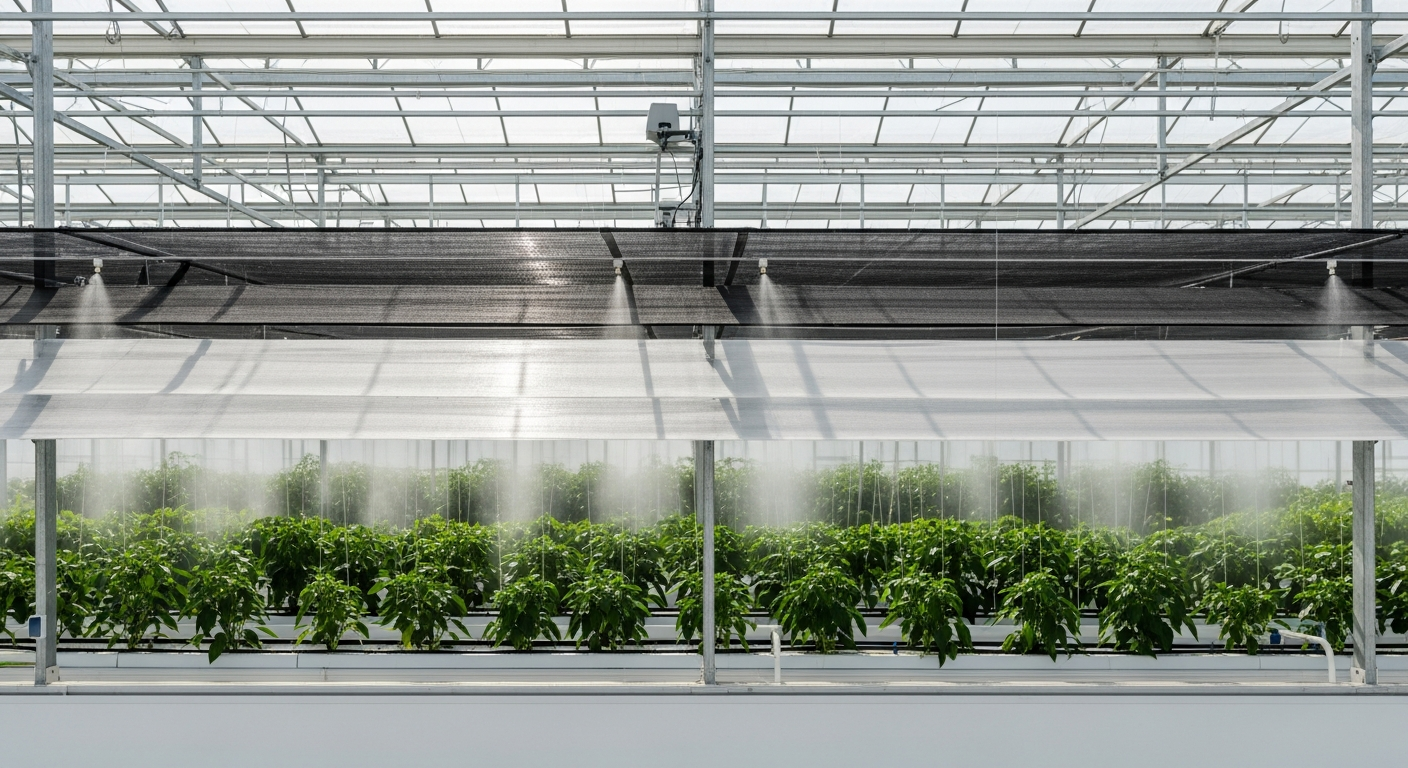
A multi-layered shading strategy, however, addresses these limitations head-on. It allows you to adapt to hourly changes in weather, different growth stages of plants, and varying light requirements across your greenhouse. By combining various shading elements, you gain the power to fine-tune your environment, creating ideal conditions that promote robust growth, conserve water, and significantly cut down on energy consumption for cooling and ventilation.
Essential Components of a Multi-Layered Shading System
Building a robust multi-layered shading system involves understanding and integrating several key components. Each layer serves a specific purpose, contributing to the overall climate control strategy.
Exterior Shading Systems
These are your first line of defense against intense solar radiation. By intercepting sunlight before it even reaches the greenhouse glazing, exterior shades are incredibly effective at preventing heat build-up inside. This significantly reduces the load on internal cooling systems.
- Retractable Exterior Shade Screens: These automated or manually operated systems can deploy a woven shade cloth (often 30-60% shade factor) over the greenhouse roof. They are ideal because they can be retracted completely on cloudy days or extended fully during peak sun, offering maximum flexibility. Materials are typically UV-stabilized polyethylene or polyester.
- Liquid Shading / Shade Paint: For growers seeking a semi-permanent solution, liquid shade coatings can be applied directly to the greenhouse glazing. These compounds, often water-based and breathable, reflect a significant portion of solar radiation. They are designed to wear off naturally over the season or can be removed with specific cleaners. The main advantage is uniform diffusion of light, but they offer less flexibility than retractable screens.
- Permanent Exterior Structures: While less flexible, strategically placed pergolas or trellises with climbing plants (deciduous vines for winter light) can offer localized shading and add to the aesthetic appeal.
Interior Shading & Thermal Screens
Interior screens work within the greenhouse structure. They not only provide additional shading but also play a crucial role in energy conservation, particularly as thermal screens.
- Retractable Interior Shade Screens: Similar to exterior screens, these offer adjustable shading, typically with lower shade percentages (15-40%) to supplement the exterior layer or provide shading when exterior options aren’t feasible. They can be deployed to block direct sun on specific areas or entire sections.
- Thermal Energy Screens: Often made from reflective aluminum strips woven into a transparent or semi-transparent fabric, these screens serve a dual purpose. During the day, when partially closed, they reflect solar radiation, acting as a shade layer. At night, when fully closed, they trap heat inside the greenhouse, significantly reducing heating costs. This makes them a vital component for year-round climate control and energy efficiency.
- Diffused Screens: Some interior screens are designed not just to block light but to diffuse it, spreading light more evenly throughout the canopy. This reduces hot spots and improves light penetration to lower leaves, enhancing photosynthesis.
Natural and Supplementary Shading
- Strategic Planting: Tall trees or hedges on the south or west side of your greenhouse can provide natural shading during the hottest parts of the day. Remember to choose deciduous species if winter sunlight is important.
- Internal Barriers: For specific plant zones, temporary screens, hanging shade cloth sections, or even tall companion plants can create microclimates.
Designing Your Multi-Layered Strategy for Optimal Growth
The key to a successful multi-layered strategy lies in thoughtful design and understanding your specific needs. There’s no one-size-fits-all solution, but rather a customizable approach based on your greenhouse type, climate, and the plants you grow.
Assessing Your Greenhouse Needs and Climate
Before implementing any system, consider:
- Sunlight Intensity: How many hours of direct, intense sunlight does your greenhouse receive, especially during summer? A light meter can be invaluable for accurate assessment.
- Plant Requirements: Do you grow sun-loving tomatoes, shade-preferring orchids, or a mix? Different plants have different optimal light levels (Daily Light Integral – DLI). Your shading should allow you to meet these diverse needs.
- Greenhouse Orientation: East-west oriented greenhouses receive more intense midday sun on the south side, while north-south oriented ones get more sun on the east and west ends.
- Ventilation: Shading reduces heat gain, but proper ventilation (ridge vents, side vents, circulation fans) is still crucial for air movement and cooling.
Layering for Different Intensities and Flexibility
Think about how your layers will work together. For instance:
- Base Layer (Exterior): Start with an exterior shade system (e.g., 40-50% shade cloth or liquid shade) to handle the bulk of summer sun. This significantly reduces heat load. This is your primary defense against extreme solar radiation and
UV protection . - Secondary Layer (Interior): Add a retractable interior shade screen (e.g., 20-30%) as a flexible supplement. This allows you to fine-tune light levels. On very bright days, both layers can be deployed. On partly cloudy days, you might only need the interior screen or a partial deployment of the exterior.
- Thermal Layer: Integrate an interior thermal screen that can be used for both daytime shading (reflecting heat) and nighttime heat retention. This is crucial for
energy efficiency year-round.
Practical Tip: Consider using different shade percentages for different zones within a large greenhouse, if possible, especially if you grow a variety of plants with distinct light requirements.
Automation and Control for Precision
To truly maximize the benefits of a multi-layered system, automation is highly recommended. Climate control systems can:
- Monitor Light and Temperature: Sensors continuously measure light intensity, internal and external temperatures.
- Automate Shade Deployment: Based on programmed set points (e.g., deploy exterior shade when light exceeds 60,000 lux or internal temperature exceeds 80°F), the system can automatically extend or retract screens.
- Integrate with Ventilation: Shading systems can be linked with
greenhouse ventilation and cooling pads for a holisticclimate control solution. This ensures that when shades are deployed, adequate airflow is maintained.
An automated system ensures consistent
Implementing and Optimizing Your Shading System
Once you’ve designed your multi-layered shading strategy, the next step is careful implementation and continuous optimization.
- Installation: Ensure all screens are properly installed, securely fastened, and operate smoothly. For retractable systems, regular lubrication of moving parts and inspection of cables/wires is essential.
- Monitoring: Continuously monitor your greenhouse environment. Use thermometers and light meters (or even just observe your plants) to see how the system is performing. Are plants still showing signs of
heat stress (wilting, bleaching)? Are they stretching due to insufficient light? - Adjustment: Don’t be afraid to adjust your shade percentages or automation set points. What works perfectly in June might need tweaking in August. Factors like plant maturity, cloud cover patterns, and external humidity can all influence the effectiveness of your shades.
- Maintenance: Keep shade cloths clean from dust and debris, as this can reduce their effectiveness. Inspect them annually for tears or damage. Liquid shade coatings might need reapplication if they wash off too quickly or unevenly.
- Seasonality: Remember to adjust your strategy as seasons change. As summer transitions to autumn, you might reduce your shading to maximize available light and passively gain heat.
A well-maintained and dynamically adjusted multi-layered system is a powerful tool for achieving
Conclusion
Creating a multi-layered shading strategy for your greenhouse is more than just buying a shade cloth; it’s an investment in sophisticated