
In the world of greenhouse gardening, mastering the environmental conditions is paramount to cultivating healthy, thriving plants. One of the most critical tools in a grower’s arsenal for regulating light and temperature is shade cloth. While many factors influence the ideal shade percentage, a fundamental consideration that often goes overlooked by beginners is geographic latitude. The angle at which the sun’s rays hit the Earth varies dramatically from the equator to the poles, directly impacting the intensity of solar radiation your greenhouse receives. Understanding this relationship is key to selecting the perfect shade cloth and ensuring your plants get just the right amount of light without suffering from heat stress or sunburn.
Understanding Shade Cloth and Its Vital Role
Shade cloth, at its core, is a woven or knitted material designed to reduce the amount of sunlight entering a greenhouse. It works by scattering and absorbing a portion of the incoming solar radiation, thereby lowering light intensity and heat buildup. This simple yet effective tool plays several vital roles in greenhouse management:
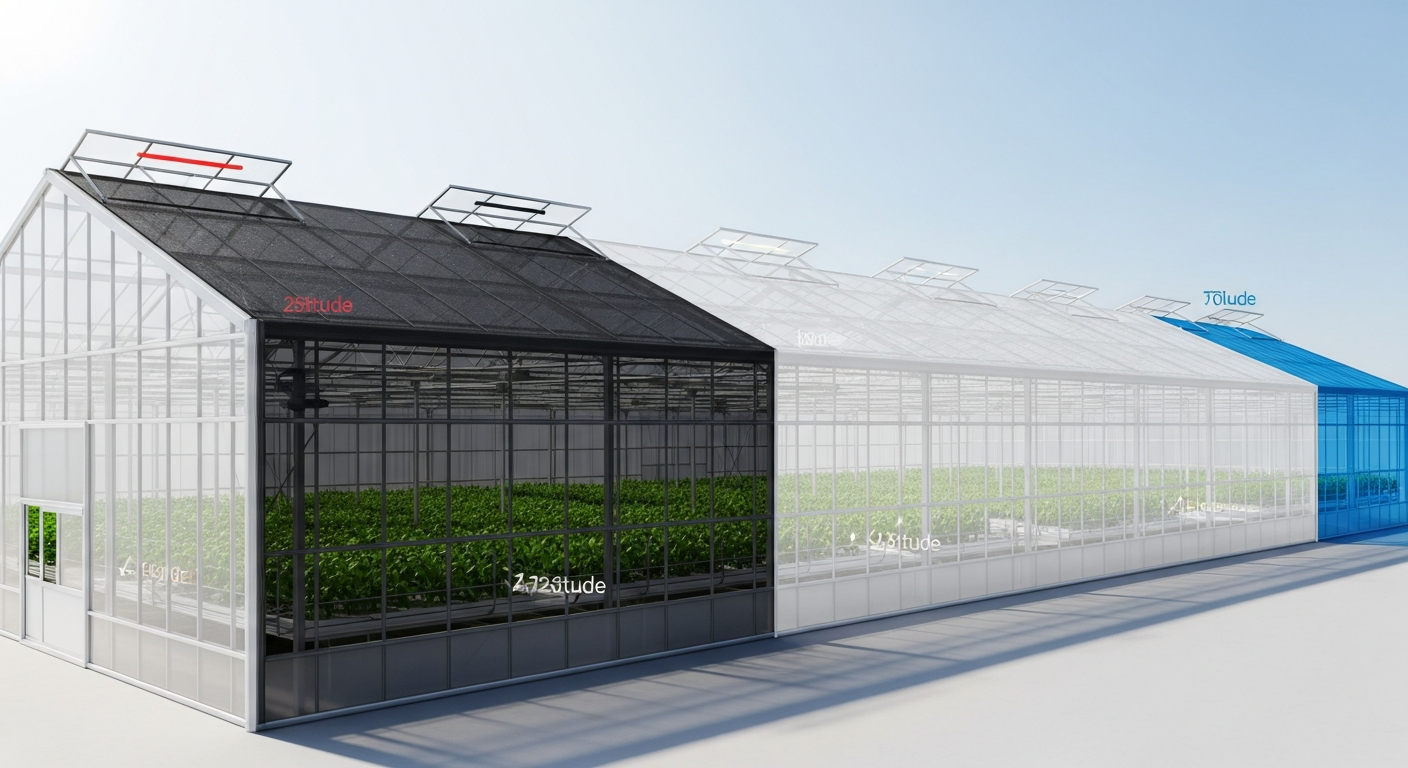
- Preventing Sunburn: Just like humans, plants can get “sunburned” when exposed to excessive UV radiation and intense light, leading to bleached or scorched leaves and stunted growth.
- Reducing Heat Stress: High light intensity often accompanies high temperatures. Shade cloth helps to significantly reduce the ambient temperature inside the greenhouse, creating a cooler, more comfortable environment for plants and workers alike. This is crucial for preventing wilting, reducing water consumption, and ensuring optimal physiological processes.
- Optimizing Photosynthesis: While light is essential for photosynthesis, too much can be detrimental, leading to photoinhibition. The right amount of shade can help ensure plants are photosynthesizing efficiently without being overstressed.
- Extending Growing Seasons: By mitigating extreme heat, shade cloth allows growers in hot climates to extend their growing seasons, cultivating crops that might otherwise struggle during peak summer months.
- Water Conservation: Cooler temperatures reduce plant transpiration and soil evaporation, leading to more efficient water use within the greenhouse.
Shade cloth is typically categorized by its “percentage,” which indicates the approximate amount of sunlight it blocks. A 30% shade cloth blocks about 30% of incoming light, allowing 70% to pass through, while a 60% shade cloth blocks 60% and allows 40% through. Choosing the right percentage is not a one-size-fits-all decision; it requires careful consideration of several environmental and crop-specific factors, with geographic latitude being a primary guide.
The Impact of Geographic Latitude on Sunlight Intensity
Geographic latitude is arguably the most significant natural determinant of solar radiation intensity on Earth. Here’s why:
- Equatorial Regions (0° Latitude): Near the equator, the sun’s rays strike the Earth’s surface almost perpendicularly throughout the year. This results in incredibly intense, direct sunlight and minimal seasonal variation in light intensity. Greenhouses in these regions experience high levels of solar radiation consistently.
- Tropical and Subtropical Regions (0° – 40° N/S): Moving away from the equator, the sun’s angle becomes slightly less direct, but still very intense. While these regions experience more noticeable seasonal changes than the equator, summer months still bring very high levels of solar radiation.
- Temperate Regions (40° – 60° N/S): In temperate zones, the angle of the sun changes significantly with the seasons. Summers can have moderately intense, long days, while winters bring much weaker, shorter days. The overall solar intensity is lower than in tropical regions.
- Polar Regions (Above 60° N/S): At higher latitudes, the sun’s angle is always low, and sunlight intensity is significantly reduced. These regions experience extremely long daylight hours in summer and very short or no daylight in winter. Intense shade is rarely, if ever, needed here.
Understanding this global pattern of sunlight intensity is the foundational step in selecting the appropriate shade cloth percentage for your greenhouse. A greenhouse in Costa Rica will require a vastly different approach to shade than one in Canada.
Recommended Shade Cloth Percentages by Latitude Zone
Based on the typical solar radiation levels associated with different geographic latitudes, here are general recommendations for shade cloth percentages:
Tropical and Equatorial Regions (0° – 23.5° N/S)
Greenhouses in areas like Central Africa, Southeast Asia, and parts of South America experience extremely high light intensity and consistently warm temperatures. Plants here are highly susceptible to heat stress and sunburn if unprotected.
- Recommended Shade: 50% to 70%
- Why: This range provides substantial protection against intense midday sun and excessive heat buildup, ensuring plant comfort and preventing damage.
- Practical Tip: Consider a permanent high-percentage shade cloth, or a dual system where you can layer a lower percentage over a higher one during extreme peaks. Even “sun-loving” plants in these regions benefit greatly from significant shade within a greenhouse environment.
Subtropical and Arid Regions (23.5° – 40° N/S)
Areas such as the Mediterranean, parts of the Southern US, Mexico, and Australia’s interior fall into this category. Summers are often very hot with intense sun, while winters can be milder.
- Recommended Shade: 40% to 60%
- Why: This provides strong protection during the peak summer months. The slightly lower range compared to equatorial regions allows for more flexibility during less intense periods.
- Practical Tip: A retractable shade system is highly beneficial here. You might apply 60% shade during the hottest parts of summer and then reduce it to 40% or remove it entirely during cooler spring, autumn, and winter months to maximize available light.
Temperate Regions (40° – 60° N/S)
Much of Europe, North America (excluding southern states), and parts of Asia and Southern Chile fall into this extensive category. These regions experience distinct seasons, with moderate to high sun intensity in summer.
- Recommended Shade: 30% to 50%
- Why: During the peak summer months (June-August in the Northern Hemisphere, December-February in the Southern), a 30-50% shade cloth is typically sufficient to prevent scorching and reduce excessive heat, especially for heat-sensitive crops.
- Practical Tip: For many growers in temperate zones, shade cloth is a seasonal requirement. It’s often installed for 3-4 months during the hottest part of summer and then removed to maximize light penetration during spring and autumn, which are critical growth periods. A 30% fixed shade, or a 40-50% retractable system, offers good flexibility.
Cool Temperate and Northern Regions (Above 60° N/S)
Areas like Scandinavia, parts of Russia, Alaska, and Northern Canada experience much lower overall solar intensity, even during their long summer days.
- Recommended Shade: 20% to 30% (or none at all for most plants)
- Why: High shade percentages are rarely necessary. Even in summer, the sun’s angle is low, and the intensity is not comparable to lower latitudes. Very light shade might be considered only for extremely sensitive plants or during an exceptionally hot spell.
- Practical Tip: Focus more on maximizing light penetration and heat retention in these regions. If any shade is used, it should be minimal and likely only for a very short period for specific crops like orchids or certain delicate herbs. Many growers here will not need shade cloth at all.
Beyond Latitude: Other Influential Factors
While geographic latitude provides an excellent starting point, fine-tuning your shade cloth choice requires considering other critical elements:
- Specific Crop Requirements: This is perhaps the most important factor after latitude.
- High-Light Crops: Tomatoes, peppers, cucumbers, many fruiting plants often thrive in high light but can still suffer from extreme heat. They might prefer 30-40% shade in temperate zones, and 50% in tropical zones.
- Medium-Light Crops: Lettuce, spinach, herbs, many flowering plants. These often benefit from more significant shade (e.g., 40-50% in temperate zones, 60% in tropical).
- Low-Light/Shade-Loving Crops: Orchids, ferns, some foliage plants. These delicate plants require substantial shade (60-70% even in temperate zones, potentially 80% or more in tropical areas).
- Greenhouse Glazing Material: Different glazing materials inherently block varying amounts of light and heat. Polycarbonate sheets, for instance, can diffuse light and block some UV, impacting the total light reaching your plants even before shade cloth is applied.
- Ventilation and Cooling Systems: A greenhouse with excellent natural ventilation, evaporative coolers, or exhaust fans might be able to tolerate slightly less shade, as these systems actively combat heat buildup.
- Local Microclimate: Proximity to large bodies of water, altitude, urban heat islands, or surrounding buildings can all create localized variations in temperature and light intensity that deviate from general latitude norms.
- Time of Year and Seasonality: As discussed, even within a specific latitude, the sun’s intensity changes dramatically from winter to summer. The most effective greenhouse management involves adjusting shade cloth application seasonally.
- Plant Growth Stage: Young seedlings often require more shade than mature plants. Fruiting plants might need more light during fruit development than during vegetative growth.
Conclusion
Selecting the optimal shade cloth percentage is a cornerstone of effective greenhouse climate control and critical for the health and productivity of your plants. While geographic latitude serves as an indispensable guide, providing a strong initial framework for your decision, it’s crucial to remember that it’s just one piece of the puzzle. By understanding the typical solar intensity for your region and then carefully considering your specific crops, greenhouse structure, local microclimate, and the time of year, you can fine-tune your shade strategy. Always observe your plants for signs of stress (either too much or too little light), utilize tools like light meters (PAR meters), and be prepared to adapt your approach. With thoughtful planning and attentive observation, you’ll create an environment where your greenhouse plants can truly flourish, protected from the harshness of excessive sun and heat.