
The gentle hum of growth, the vibrant green of thriving plants – a modern greenhouse is a marvel of agricultural innovation. However, maintaining that idyllic environment, especially as global temperatures rise and the demand for year-round produce intensifies, presents a significant challenge: heat. Traditional cooling methods often come with hefty energy bills and a considerable carbon footprint, counteracting the very essence of sustainable agriculture. But fear not, for the horticultural world is abuzz with innovative cooling technologies designed to keep your crops comfortable, your energy costs down, and your operation truly sustainable. Welcome to the future of greenhouse climate control.
The Imperative for Advanced Greenhouse Cooling in a Changing Climate
For centuries, growers have wrestled with the sun’s powerful embrace. While essential for photosynthesis, excessive heat can quickly turn a productive greenhouse into a hostile environment, leading to plant stress, reduced yields, and increased susceptibility to pests and diseases. The stakes are higher than ever: a growing global population demands more food, and consumers increasingly prioritize sustainably produced goods. This necessitates a shift from merely mitigating heat to actively engineering an optimal, energy-efficient climate.
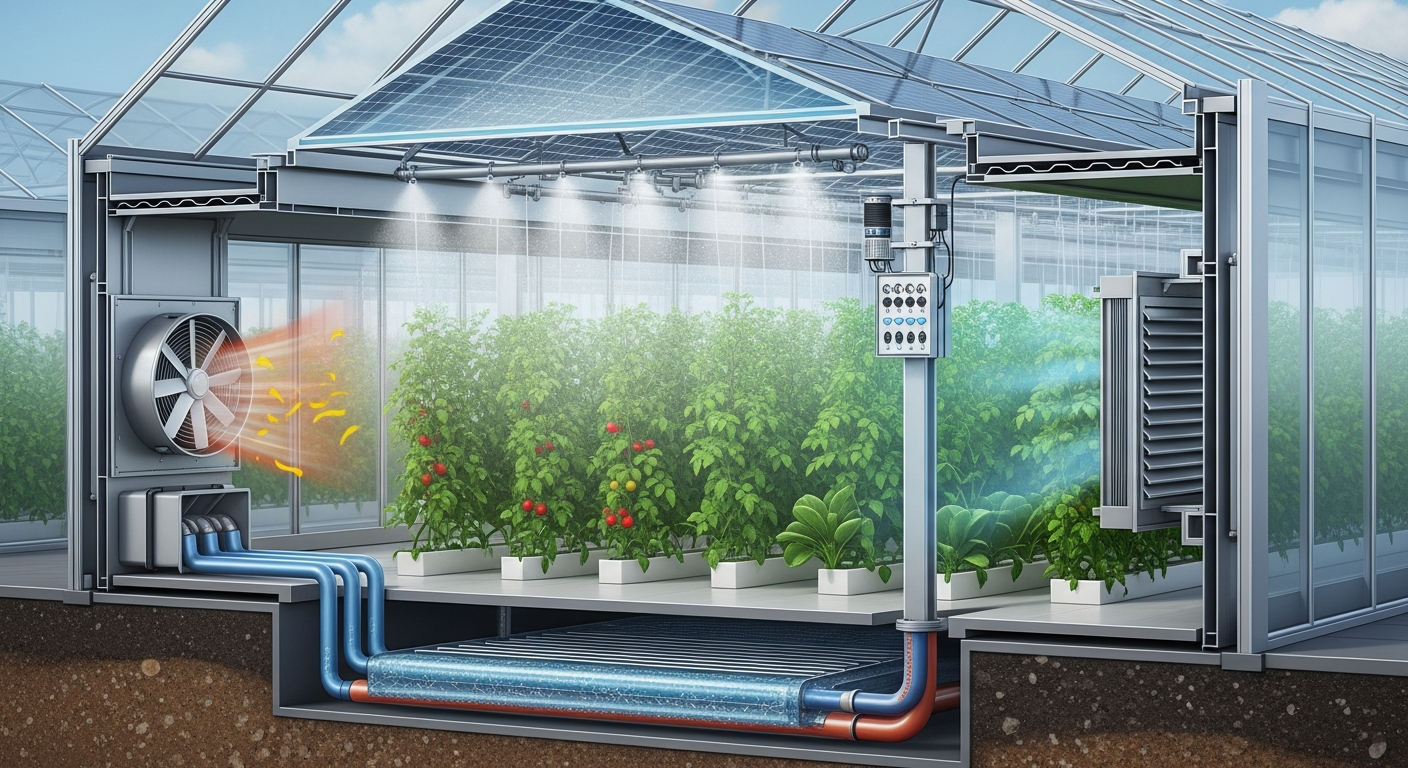
Old-school cooling often relied on brute force – large fans and copious amounts of water or electricity. This approach is no longer viable in an era focused on resource conservation and reducing operational costs. Modern sustainable greenhouses require systems that are precise, responsive, and integrate seamlessly with other environmental controls. The goal is not just to lower the temperature, but to optimize relative humidity, airflow, and CO2 levels while minimizing energy and water consumption. Achieving this balance is crucial for maximizing crop quality, yield, and ultimately, the profitability of a forward-thinking greenhouse operation.
Passive & Low-Energy Cooling Strategies: The Foundation of Sustainability
Before engaging complex active systems, smart greenhouse design harnesses natural principles to keep temperatures in check. These passive and low-energy approaches are the bedrock of any truly sustainable cooling strategy.
Natural Ventilation & Greenhouse Architecture
- Ridge and Side Vents: The most fundamental form of passive cooling involves strategically placed vents that allow hot air to escape from the highest points (ridge vents) while drawing in cooler air from lower levels (side vents). This creates a natural chimney effect, circulating air without mechanical assistance.
- Greenhouse Orientation: Positioning a greenhouse correctly to minimize direct summer sun exposure on large surface areas, or to maximize beneficial breezes, can significantly reduce heat gain.
- High Ceilings: Taller greenhouses provide a larger volume of air, allowing heat to stratify higher above the plant canopy before it needs to be vented.
Practical Tip: Integrate automated vent openers that respond to temperature changes, ensuring optimal airflow even when you’re not present. Combining ridge and side vents provides superior cross-ventilation.
Advanced Shading Solutions
- External Shading Screens: Placed above the greenhouse, these physically block sunlight before it even enters, preventing heat buildup more effectively than internal screens. Modern versions can be automated to deploy based on light intensity or temperature.
- Internal Thermal Screens/Shade Cloths: While primarily used for energy saving in winter, reflective internal screens can also deflect solar radiation in summer. They are often automated to retract or deploy.
- Liquid Shading: A translucent coating applied to the greenhouse roof, which becomes opaque when wet (from rain or irrigation) or under intense sun, and clears when dry or in lower light. This dynamic shading adapts to real-time conditions.
- Smart Glass/Dynamic Glazing: Emerging technologies include glass that can dynamically change its tint or reflectivity in response to electric currents or temperature, offering precise control over light and heat transmission.
Practical Tip: Choose shading materials based on your specific crop needs for light intensity. For instance, leafy greens might require more aggressive shading than fruiting vegetables.
Thermal Mass & Ground-Coupled Systems
- Earth Tubes / Ground-to-Air Heat Exchangers: These systems draw greenhouse air through underground pipes, where it exchanges heat with the cooler surrounding soil. The cooled air is then returned to the greenhouse. This provides both cooling in summer and pre-heating in winter.
- Thermal Ponds/Water Tanks: Large bodies of water inside or adjacent to the greenhouse absorb excess heat during the day and release it slowly at night, moderating temperature swings.
- Phase Change Materials (PCMs): These materials absorb and release large amounts of latent heat as they change phase (e.g., from solid to liquid) at specific temperatures, providing a thermal buffer.
Practical Tip: Implementing thermal mass solutions often requires significant initial investment and planning during the greenhouse construction phase, but offers substantial long-term energy savings.
High-Efficiency Active Cooling Technologies: Precision & Performance
When passive methods aren’t enough, active cooling steps in, but with a focus on maximizing efficiency and minimizing resource use compared to older systems.
Advanced Evaporative Cooling Systems
- Pad-and-Fan Systems with Smart Controls: While not new, modern pad-and-fan systems are significantly more efficient. They use high-efficiency fans and optimized cellulose pads, coupled with sophisticated sensors that modulate fan speed and water flow based on real-time temperature and humidity, preventing overcooling or excessive humidity.
- High-Pressure Fogging/Misting Systems: These systems atomize water into extremely fine droplets that flash-evaporate, absorbing heat from the air without significantly wetting plants. They offer highly precise temperature and humidity control, crucial for sensitive crops. Modern versions integrate water filtration and UV sterilization to prevent nozzle clogging and disease spread.
Practical Tip: Ensure proper water quality for fogging/misting systems to prevent mineral buildup and extend equipment life. Consider rainwater harvesting and filtration for these systems.
Desiccant Dehumidification & Cooling
In highly humid climates, simple evaporative cooling can become ineffective. Desiccant cooling systems use materials (like silica gel or lithium chloride) to absorb moisture from the air, effectively dehumidifying it. This dry air can then be more easily cooled, often using less energy than traditional refrigeration, or even waste heat to regenerate the desiccant. This is particularly valuable for crops that thrive in lower humidity.
Geothermal Heat Pumps (Ground-Source Heat Pumps)
Often associated with heating, geothermal heat pumps are excellent for cooling too. They transfer heat from the greenhouse air into the relatively stable temperature of the earth, or vice-versa. While the initial investment can be substantial, their operating costs are significantly lower due to their high efficiency and utilization of renewable ground energy.
Absorption Chillers (Waste Heat Powered)
These innovative chillers use a heat source (often waste heat from combined heat and power – CHP – systems, or solar thermal collectors) to drive a cooling cycle, rather than electricity. This is an incredibly sustainable solution for greenhouses that already generate waste heat or have access to it, turning a byproduct into a valuable resource for climate control.
Practical Tip: When selecting active cooling, consider the lifecycle cost, not just the initial purchase price. Energy consumption, water usage, and maintenance are critical factors in the long-term ROI.
Smart Climate Control & Integration: The Future of Optimal Environments
The true power of modern greenhouse cooling lies in its integration with intelligent climate control systems. These aren’t just thermostats; they are sophisticated brains orchestrating every aspect of the greenhouse environment.
AI and Sensor-Driven Automation
- Predictive Cooling: Advanced systems use AI algorithms to analyze historical weather data, current conditions, and plant growth models to predict cooling needs hours or even days in advance. This allows for proactive adjustments, preventing temperature spikes before they occur.
- Dense Sensor Networks: Beyond just temperature and humidity, sensors now monitor CO2 levels, light intensity, vapor pressure deficit (VPD), substrate moisture, and even plant physiological responses.
- Adaptive Algorithms: The control system learns and adapts over time, fine-tuning its cooling strategies for maximum efficiency and optimal crop health.
Integrated Pest Management (IPM) Considerations
Cooling isn’t just about plant comfort; it’s also a powerful tool in IPM. By maintaining precise temperature and humidity ranges, growers can create environments less favorable to common greenhouse pests and diseases, reducing the need for chemical interventions. Smart cooling can also be coordinated with biological control releases to ensure the beneficial insects thrive.
Water Recirculation & Efficiency
Many advanced cooling systems, particularly evaporative ones, can be integrated with water recirculation and purification systems. This minimizes water waste, a critical aspect of sustainable operations. Excess water from evaporative pads or fogging can be collected, treated, and reused, significantly reducing the ecological footprint.
Actionable Advice: Invest in a robust, scalable climate control system that can integrate various cooling, heating, ventilation, and irrigation components. Look for platforms that offer remote monitoring and control, data logging, and custom programming capabilities to truly optimize your greenhouse climate.
Conclusion: Cultivating a Cooler, Greener Future
The journey towards truly sustainable greenhouse cultivation is paved with innovation, especially when it comes to climate control. By embracing a holistic approach that prioritizes passive design, leverages high-efficiency active technologies, and integrates smart, data-driven automation, modern growers can create ideal growing environments while significantly reducing their environmental impact and operational costs.
From the subtle power of natural ventilation to the cutting-edge precision of AI-powered fogging and geothermal systems, the options for innovative cooling are more diverse and effective than ever before. Choosing the right combination of technologies for your specific crops, climate, and budget is key. The investment in these advanced systems not only ensures thriving plants and maximized yields but also solidifies your commitment to a cooler, greener, and more profitable future in horticulture. Explore these possibilities and transform your greenhouse into a paragon of efficiency and sustainability.