
Maintaining optimal temperatures within a greenhouse is perhaps the most critical aspect of successful plant cultivation. As the sun beats down, temperatures can soar to dangerous levels, jeopardizing your precious plants. While ventilation and shading offer a first line of defense, dedicated cooling systems often become indispensable. When it comes to active cooling, two primary contenders often emerge: evaporative coolers and traditional air conditioning units. But which one is the right fit for your unique greenhouse environment? Understanding the nuances of each system is key to making an informed decision that benefits both your plants and your wallet.
Understanding Evaporative Coolers for Greenhouse Climate Control
Often referred to as “swamp coolers,” evaporative coolers operate on a simple, ancient principle: the cooling effect of evaporating water. Hot, dry air is drawn into the unit and passed over water-saturated pads. As the water evaporates, it absorbs heat from the air, effectively lowering the air’s temperature. This cooler, moistened air is then circulated throughout the greenhouse.
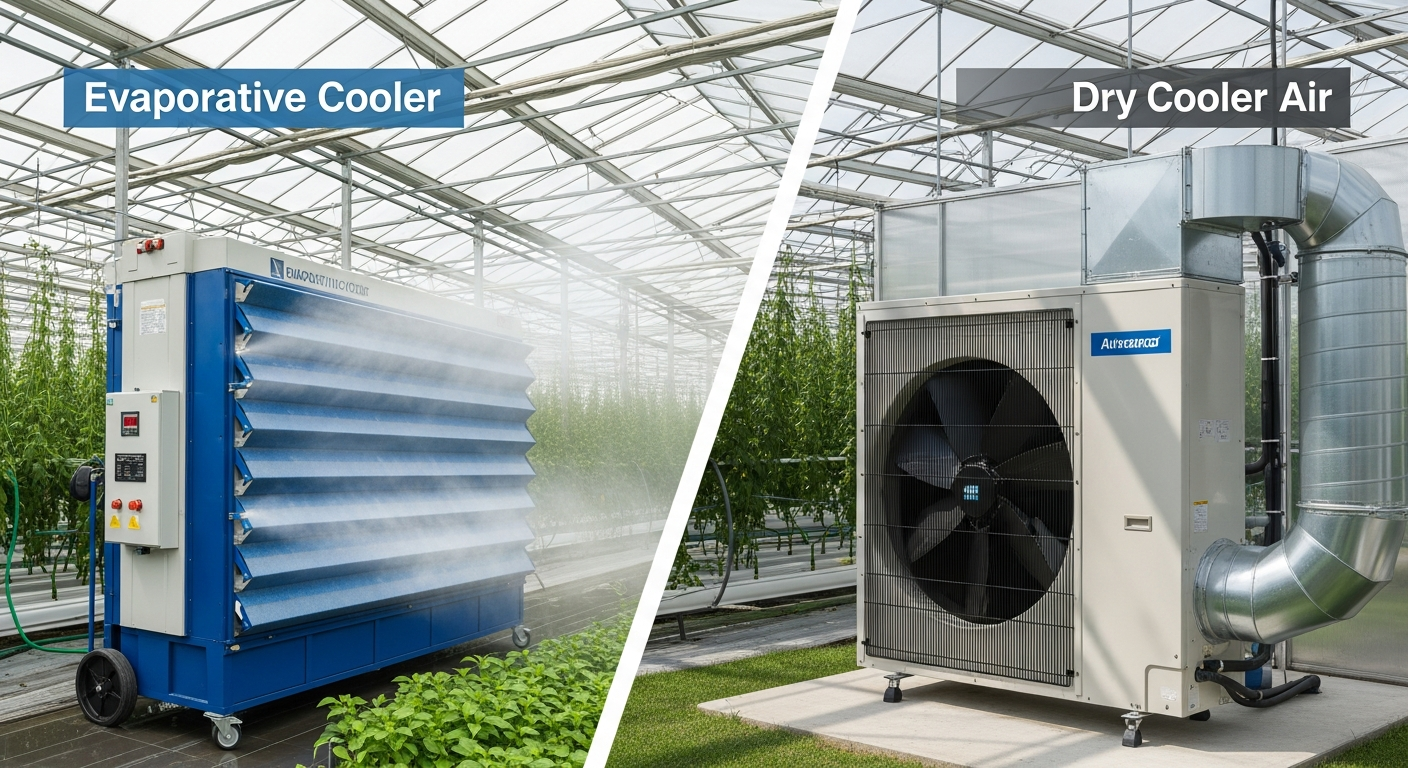
How Evaporative Coolers Work
- Air Intake: A fan pulls warm, dry air from outside the greenhouse into the cooling unit.
- Water Saturated Pads: The air passes through absorbent pads (typically cellulose or aspen fiber) that are continuously saturated with water by a small pump.
- Evaporation: As the warm air moves through the wet pads, water evaporates. This phase change requires energy, which is drawn from the air in the form of heat, thus cooling the air.
- Air Discharge: The now cooler, more humid air is pushed into the greenhouse.
Advantages of Evaporative Coolers for Greenhouses
- Energy Efficiency: Evaporative coolers consume significantly less electricity than traditional air conditioners because they don’t use a refrigerant compressor. This translates to much lower operating costs, a major benefit for greenhouse owners constantly monitoring their budget.
- Cost-Effective Installation: Generally, the upfront cost of purchasing and installing an evaporative cooling system is lower than that of a conventional AC unit.
- Introduces Fresh Air: Unlike sealed AC systems, evaporative coolers continuously pull in fresh outdoor air, which is beneficial for plant respiration and overall air quality within the greenhouse. This constant air exchange helps prevent the buildup of stale air and some airborne pathogens.
- Increases Humidity: For many tropical and subtropical plants, the increased humidity provided by an evaporative cooler is a significant advantage, promoting lush growth and reducing transpiration stress.
- Environmentally Friendly: They use only water and electricity, avoiding chemical refrigerants that can have a negative environmental impact.
Disadvantages of Evaporative Coolers for Greenhouses
- Effectiveness Dependent on Humidity: This is the most crucial limitation. Evaporative coolers work best in hot, dry climates. In areas with high ambient humidity, the air is already saturated with moisture, making it difficult for more water to evaporate, thus significantly reducing the cooling effect.
- Increases Humidity: While an advantage for some plants, increased humidity can be detrimental for others (e.g., succulents, Mediterranean plants) and can create an environment conducive to fungal diseases like botrytis or powdery mildew if not properly managed with good air circulation.
- Water Consumption: Evaporative coolers require a constant supply of water. While efficient in terms of energy, they can use a considerable amount of water, which might be a concern in drought-prone areas or for large installations.
- Maintenance: Regular cleaning of water reservoirs and replacement of cooling pads are necessary to prevent algae growth, mineral buildup, and maintain efficiency.
Understanding Traditional Air Conditioning for Greenhouse Climate Control
Traditional air conditioning, or refrigeration-based cooling, is a more common sight in homes and commercial buildings. These systems use a refrigerant cycle to remove heat and moisture from an enclosed space, offering precise control over the indoor climate.
How Traditional Air Conditioning Works
- Refrigerant Cycle: An AC unit contains a refrigerant that cycles between liquid and gas states.
- Heat Absorption: The refrigerant absorbs heat from the greenhouse air as it evaporates in the evaporator coil.
- Heat Rejection: The heated refrigerant is then compressed and moved to an outdoor condenser coil, where it releases its heat to the outside air as it condenses back into a liquid.
- Dehumidification: As warm, humid air passes over the cold evaporator coil, moisture condenses out of the air, effectively dehumidifying the space.
- Air Circulation: A fan blows the cooled, dehumidified air back into the greenhouse.
Advantages of Traditional Air Conditioning for Greenhouses
- Precise Temperature Control: AC units offer unparalleled precision in maintaining a set temperature, regardless of external conditions.
- Effective in All Climates: Unlike evaporative coolers, traditional AC performs consistently well even in hot, humid environments, making it ideal for tropical and subtropical regions where many valuable plants thrive.
- Excellent Dehumidification: The ability to remove moisture from the air is a significant advantage, especially for plants that prefer drier conditions or for preventing humidity-related diseases.
- Sealed Environment: By creating a sealed environment, AC can help keep out pests and airborne pathogens more effectively than systems that constantly pull in outside air.
Disadvantages of Traditional Air Conditioning for Greenhouses
- High Energy Consumption: This is the primary drawback. The compressor in an AC unit is a significant power draw, leading to substantially higher electricity bills, especially for continuous greenhouse operation.
- Higher Initial and Operating Costs: The purchase price and installation of AC systems are generally higher than evaporative coolers, and their energy demands escalate operating expenses dramatically.
- Environmental Impact: Many refrigerants used in older AC units (and some newer ones) are potent greenhouse gases, contributing to climate change if released into the atmosphere. While newer refrigerants are less harmful, the energy consumption remains an environmental concern.
- Lack of Fresh Air Exchange: AC systems typically recirculate indoor air. Without supplementary ventilation, this can lead to stale air and CO2 depletion, which can negatively impact plant growth.
- Dry Air: While dehumidification is often an advantage, some plants require higher humidity levels, which traditional AC actively works against. Supplemental humidification might be needed.
Direct Comparison: Key Factors for Greenhouse Climate Control
When choosing between these two cooling giants for your greenhouse, several critical factors must be weighed:
Energy Efficiency and Operating Costs
Evaporative Coolers: Win hands down on energy efficiency. They use a fraction of the electricity, primarily for a fan and a small water pump. This translates directly to significantly lower utility bills, a major consideration for any greenhouse operation.
Traditional AC: Are energy hogs by comparison. The compressor is a powerful component that consumes a lot of electricity. For a system that might run for several hours a day, the operating costs can be astronomical.
Humidity Impact and Plant Health
Evaporative Coolers: Increase the relative humidity within the greenhouse. This is fantastic for tropical plants like orchids, ferns, and many leafy greens, but can be problematic for succulents, cacti, or other arid-loving species, potentially leading to rot or fungal issues.
Traditional AC: Decrease the relative humidity. This is ideal for plants that prefer drier conditions or for preventing humidity-related diseases. However, for humidity-loving plants, this might necessitate the use of additional humidifiers.
Climate Suitability
Evaporative Coolers: Excel in hot,
Traditional AC: Are effective in
Initial Investment and Maintenance
Evaporative Coolers: Generally have a lower initial purchase and installation cost. Maintenance primarily involves cleaning the water reservoir, checking the pump, and replacing the evaporative pads annually or biannually.
Traditional AC: Typically have a higher initial cost. Maintenance involves cleaning filters, checking refrigerant levels, and ensuring coils are clear, which might require professional service.
Making the Right Choice for Your Greenhouse
The “best” cooling system isn’t universal; it’s highly dependent on your specific circumstances:
- Assess Your Local Climate: This is the single most important factor. If you live in a region with consistently low summer humidity (e.g., deserts, arid plains), an evaporative cooler is likely your most efficient and cost-effective choice for greenhouse cooling. If you’re in a humid coastal area or the subtropics, traditional AC will provide more reliable cooling and crucial dehumidification.
- Know Your Plants’ Needs: What kind of plants are you growing? Are they tropical varieties that thrive in high humidity, or do they prefer drier air? Match your cooling system to your plants’ environmental requirements.
- Consider Your Budget: Factor in both the upfront installation cost and the long-term operating costs (electricity and water). While AC has higher initial costs, its consistent performance might be invaluable for high-value crops in challenging climates.
- Greenhouse Size and Design: Larger greenhouses might require multiple units or more robust systems. Consider how well each system integrates with your existing ventilation and shading strategies.
- Hybrid Solutions: For some growers, a combination approach might be ideal. An evaporative cooler could serve as the primary cooling method, while a smaller AC unit or dehumidifier is used selectively to manage humidity peaks or during particularly oppressive weather.
Practical Tip: Integrate your chosen cooling system with smart thermostats and environmental controllers. These devices can automate your cooling based on temperature and humidity setpoints, optimizing plant health and energy usage.
Conclusion
Choosing between an evaporative cooler and traditional air conditioning for your greenhouse climate control is a significant decision. Evaporative coolers offer an energy-efficient, fresh-air solution that excels in dry climates and benefits humidity-loving plants, all while keeping operating costs low. Traditional air conditioning, on the other hand, provides precise temperature and humidity control, performing reliably in all climates, but comes with a higher energy bill and environmental footprint. By carefully evaluating your local climate, the specific needs of your plants, and your budget, you can select the optimal cooling strategy to ensure your greenhouse remains a thriving haven for growth, regardless of the heat outside.